Search
IOP 9, 11-12 Dec 2001
IOP 9: 11-12 December 2001
Time Period of IOP
1800 UTC 11 Dec-0200 UTC 12 Dec
Overview of IOP
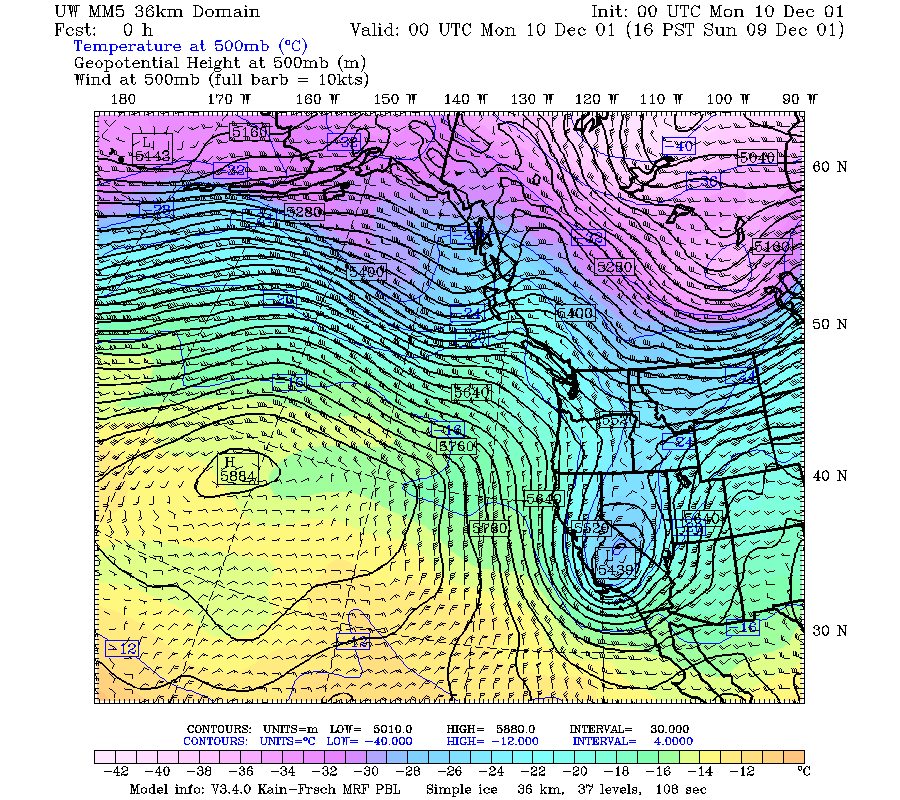
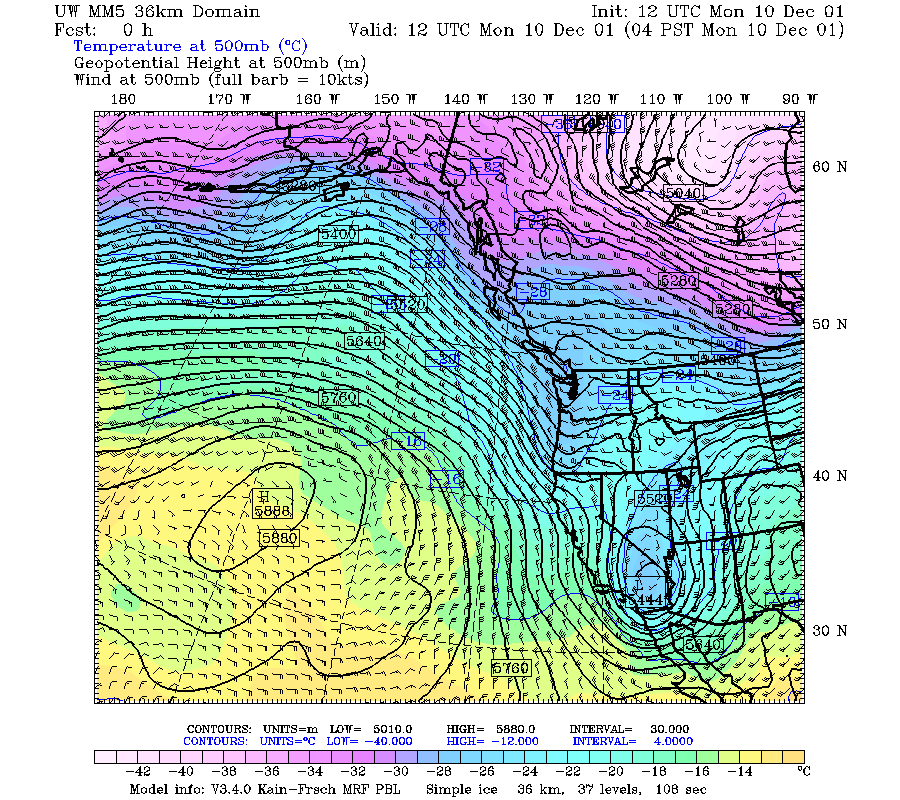
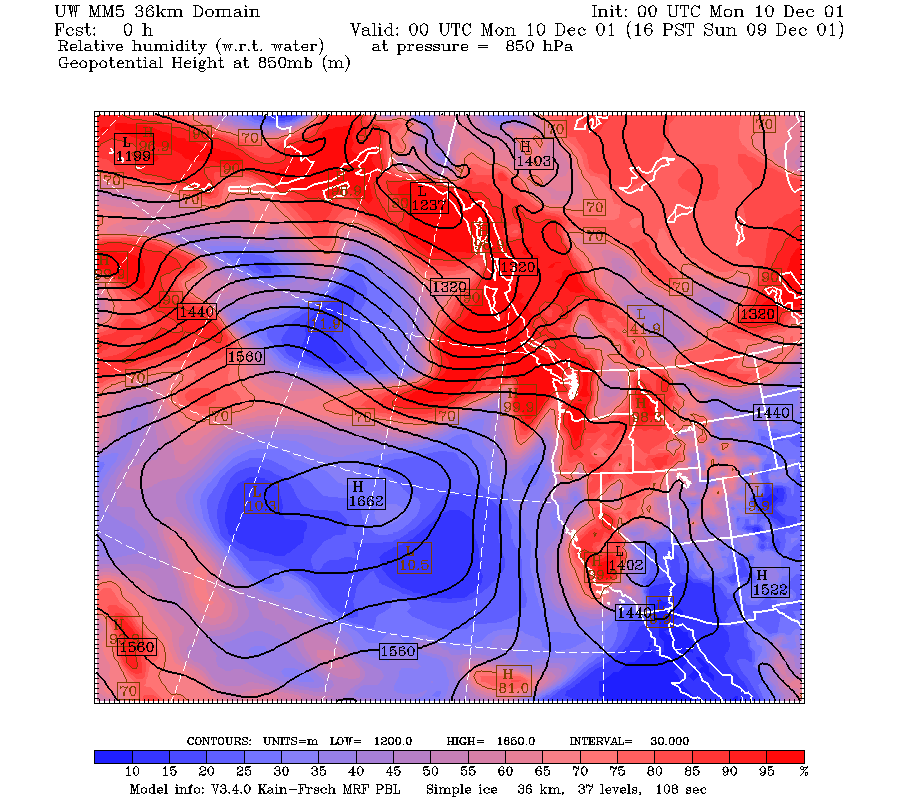
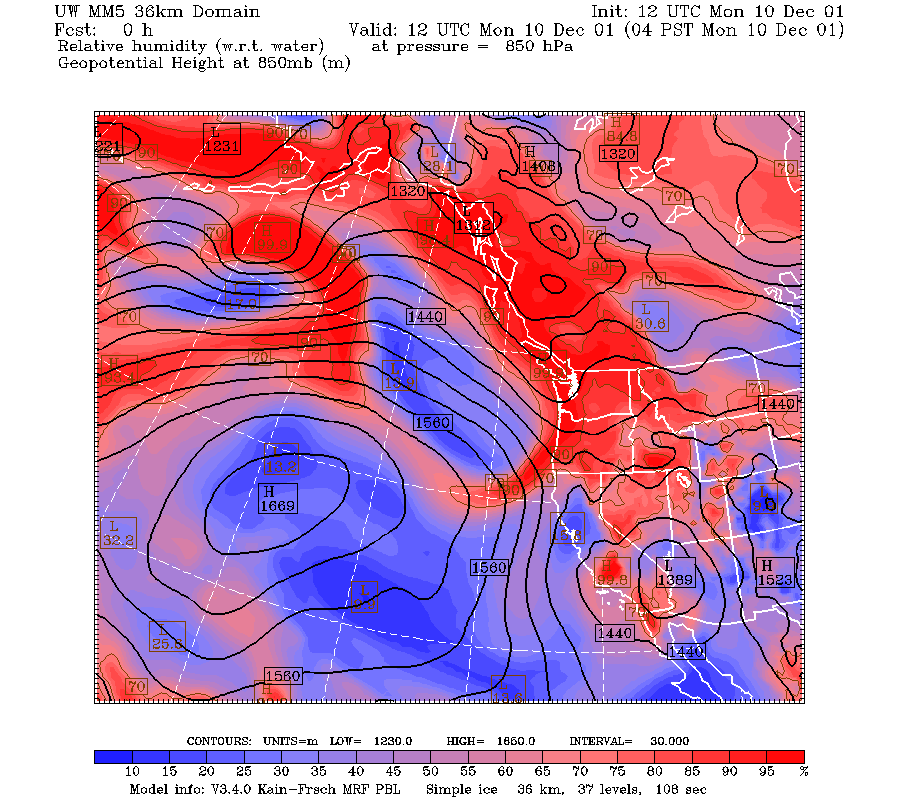
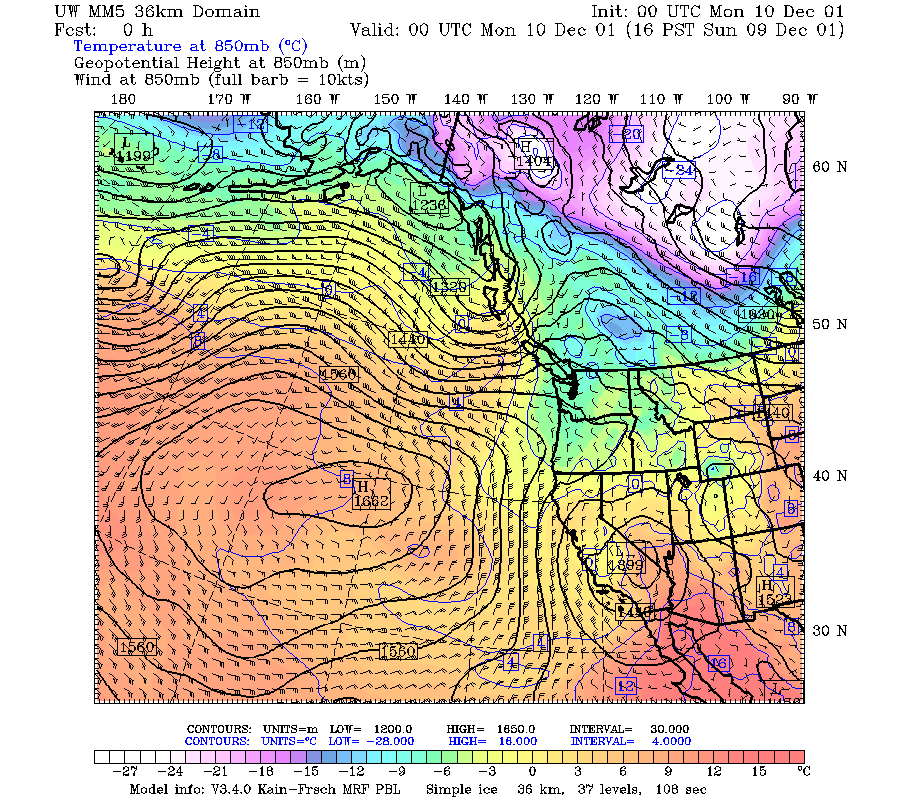
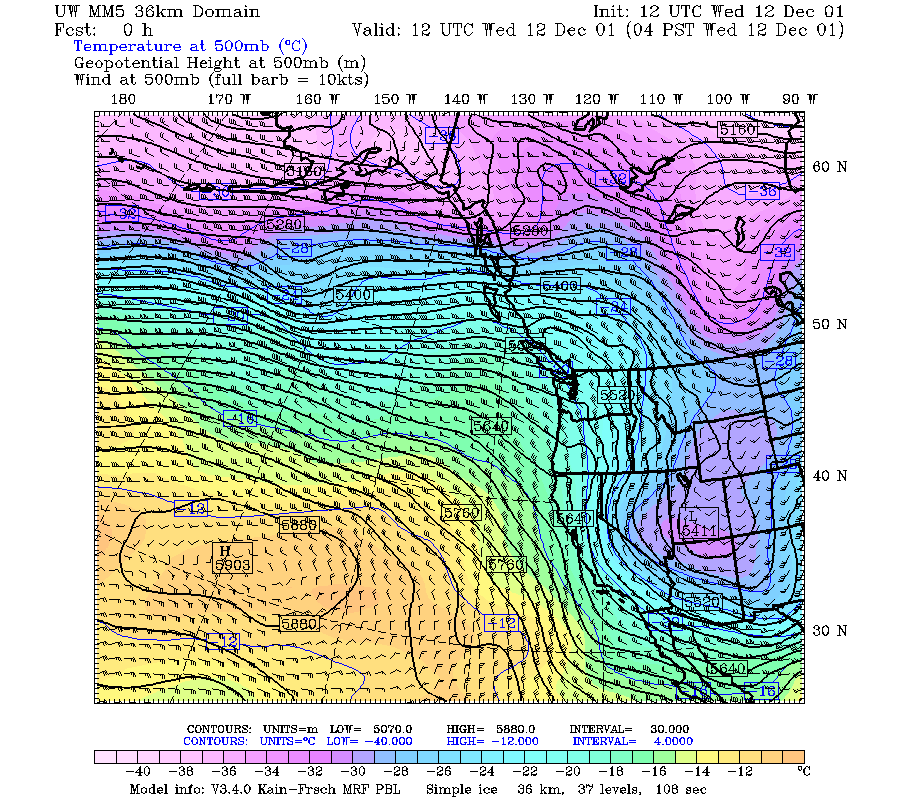
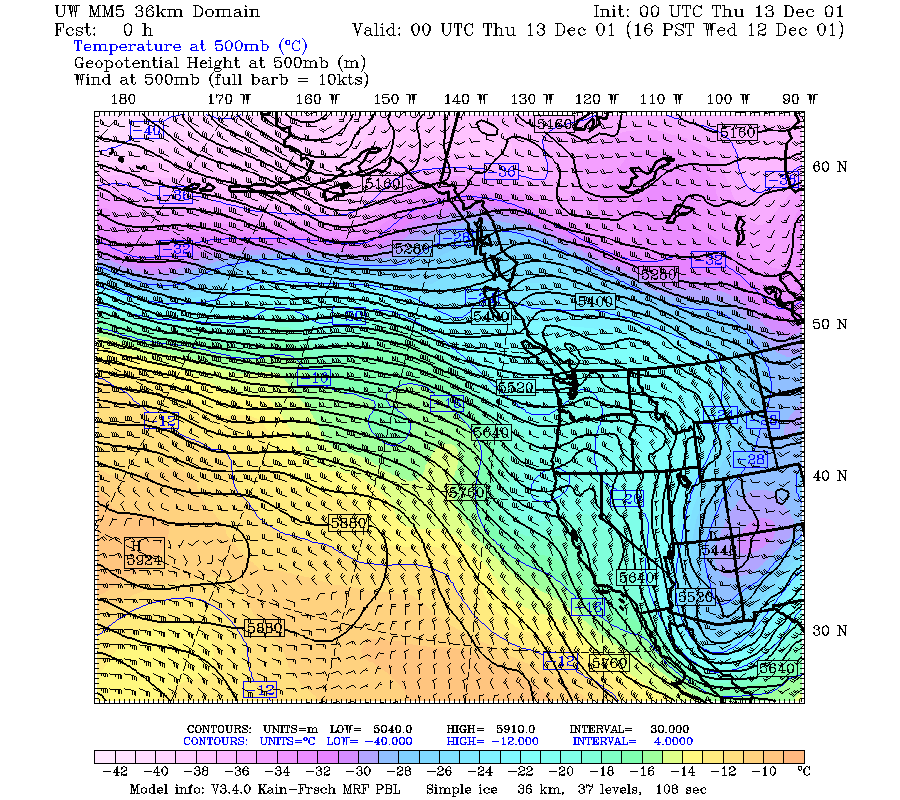
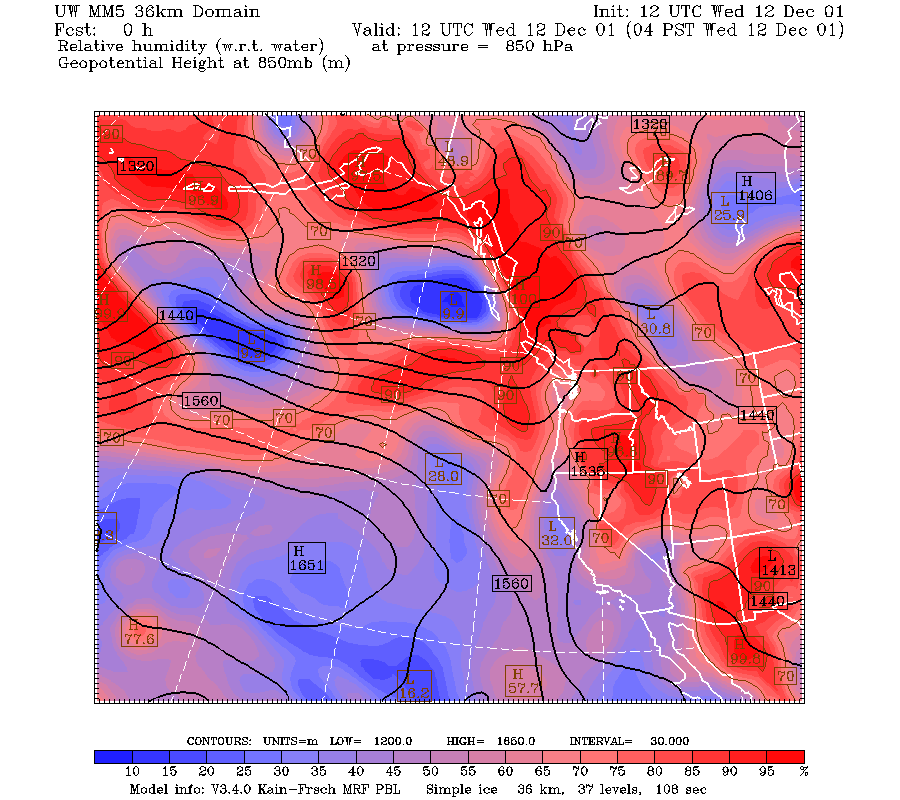
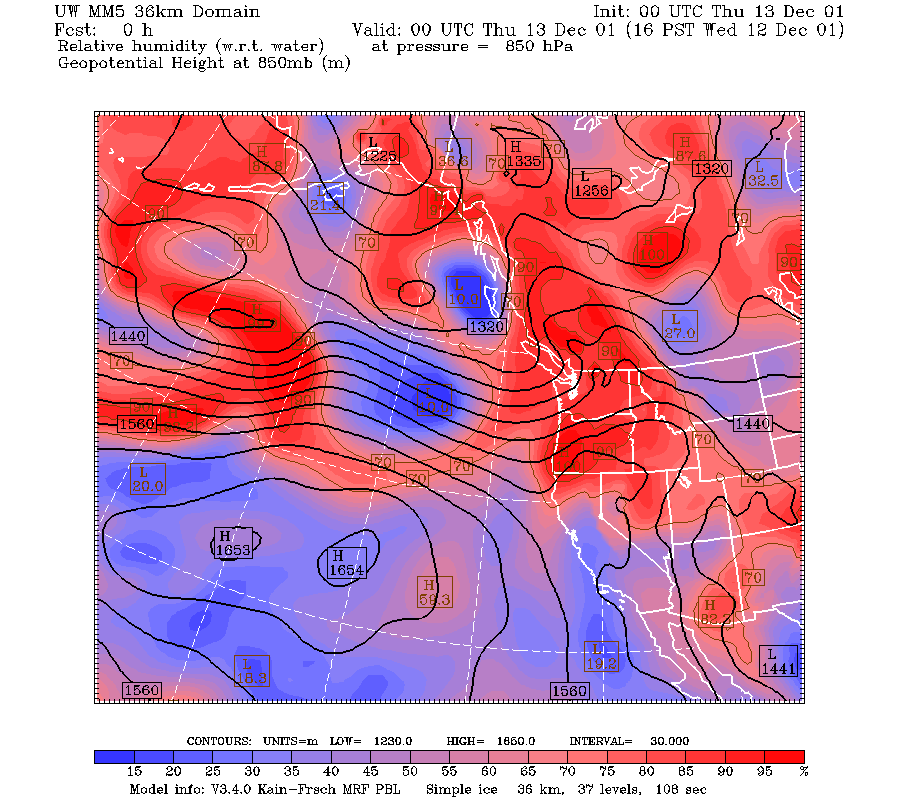
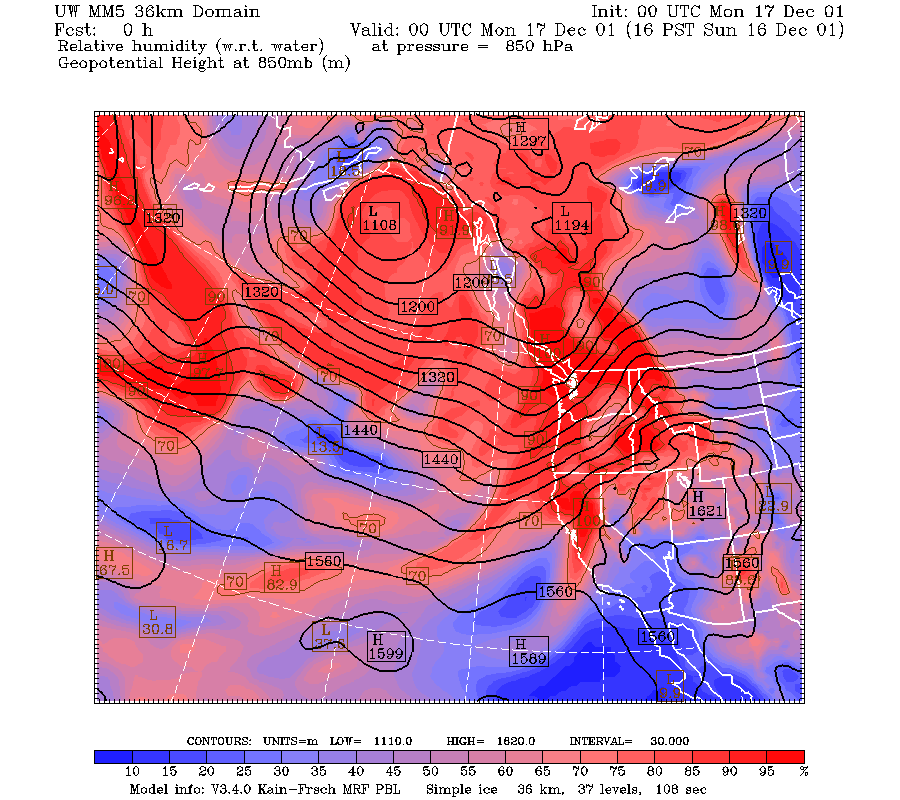
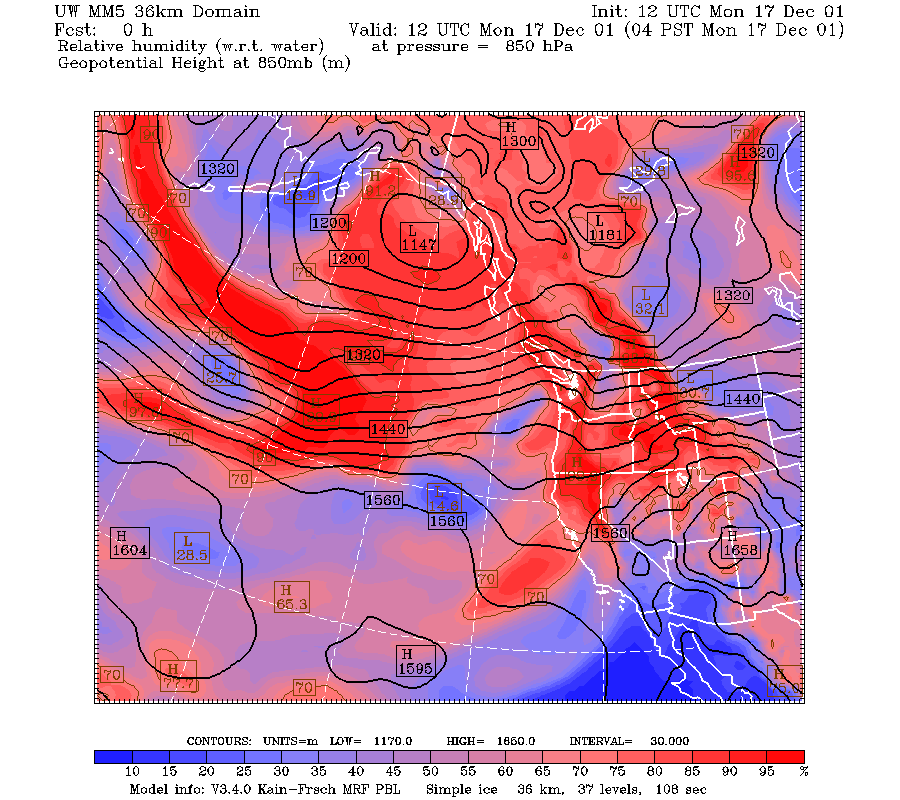
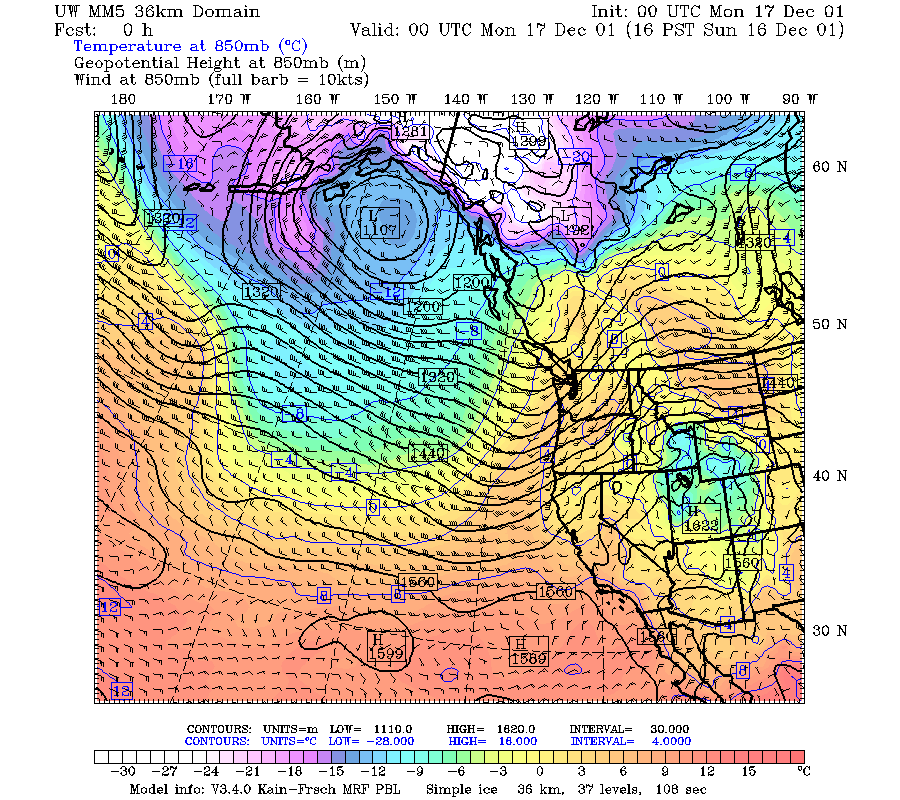
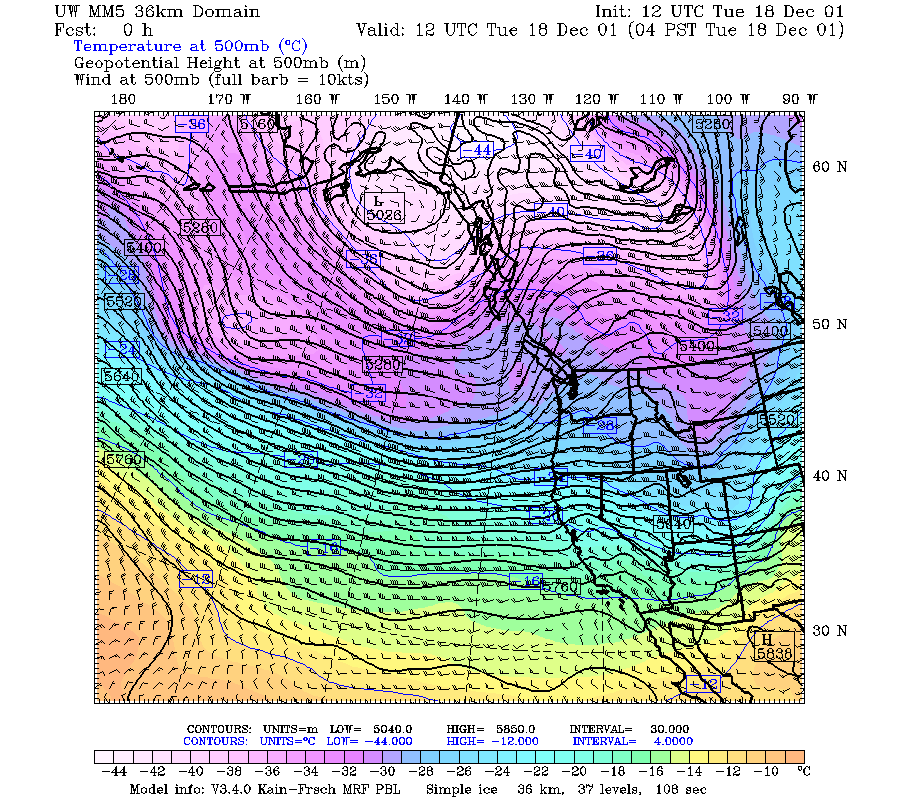
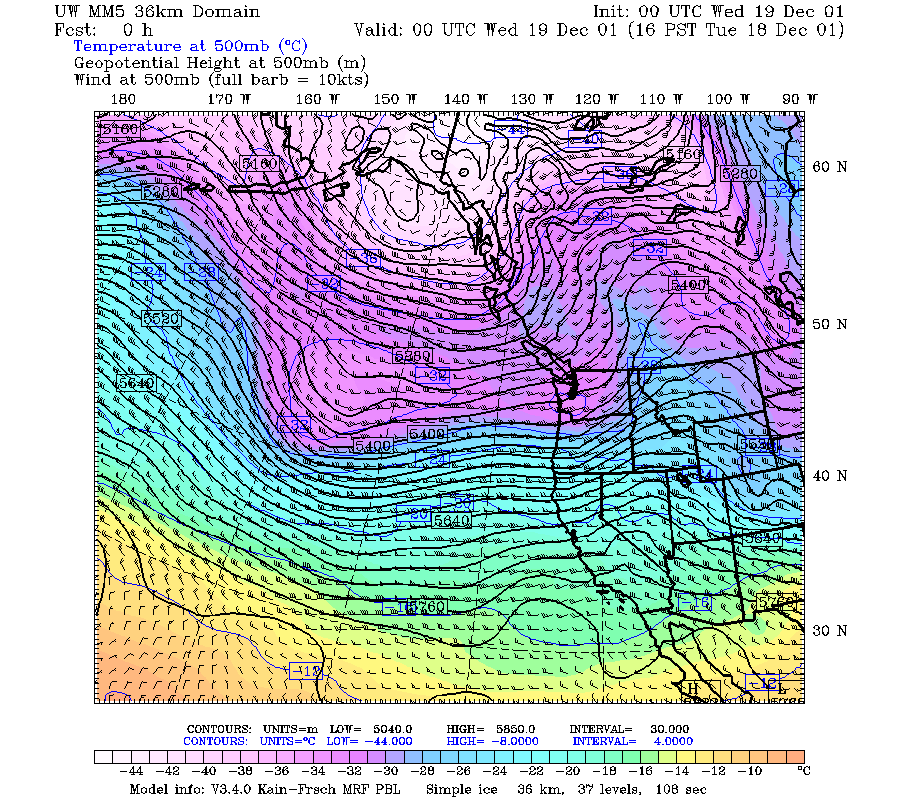
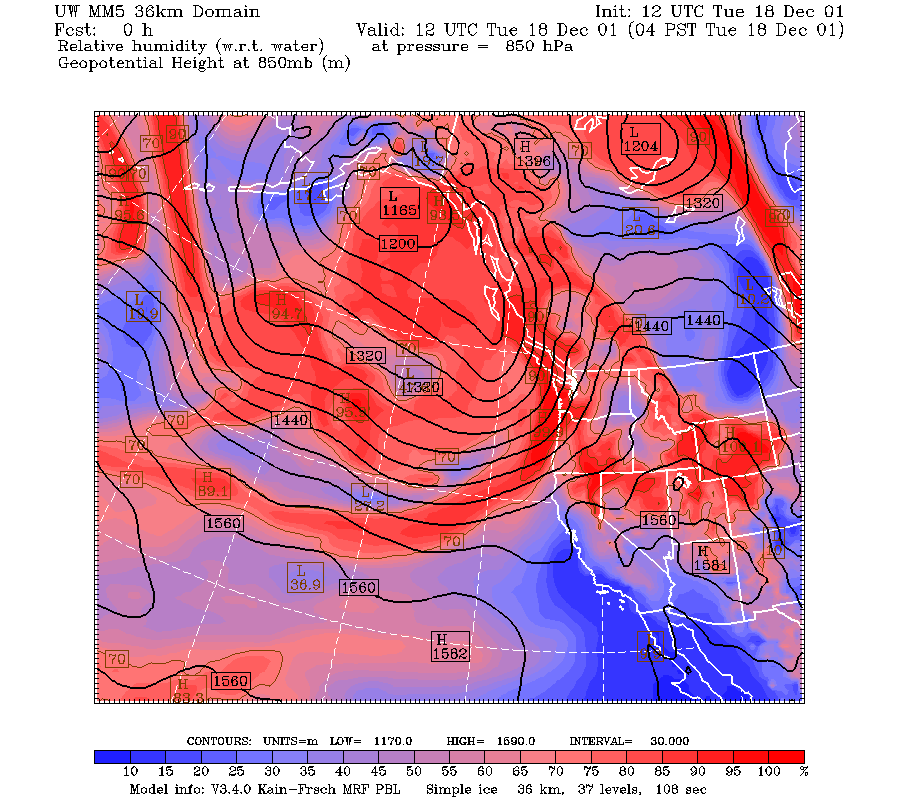
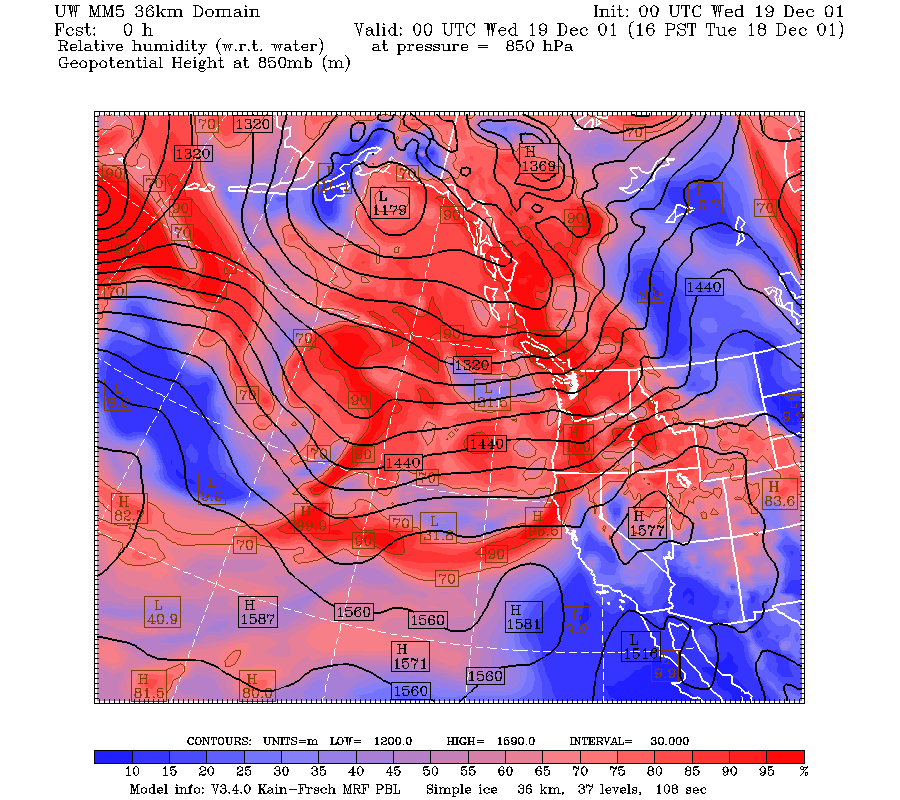
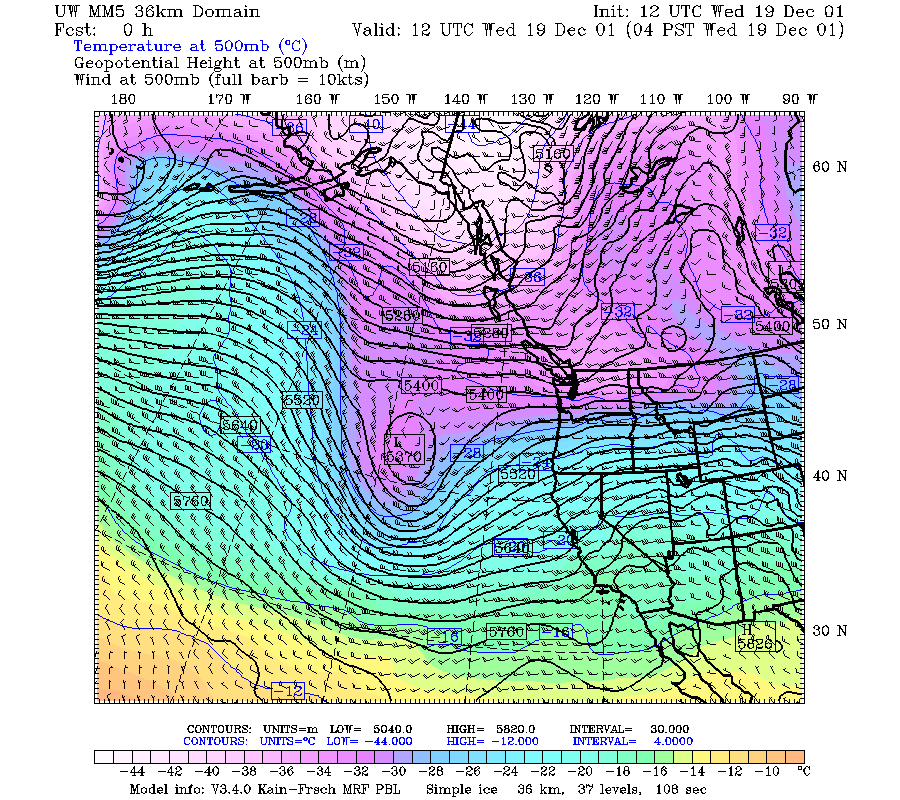
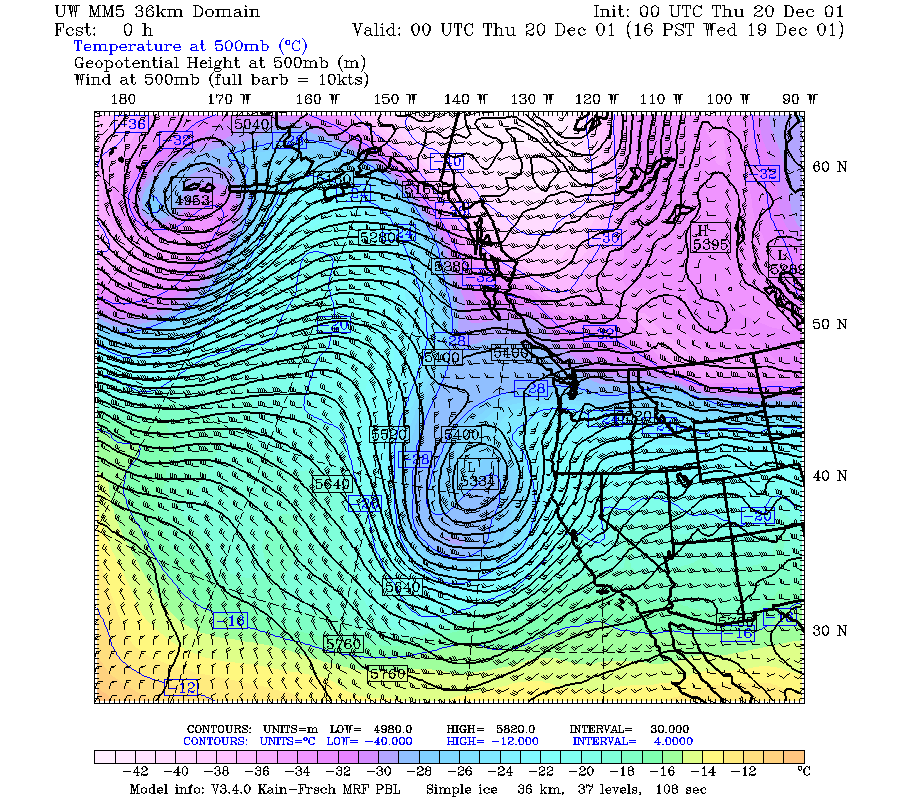
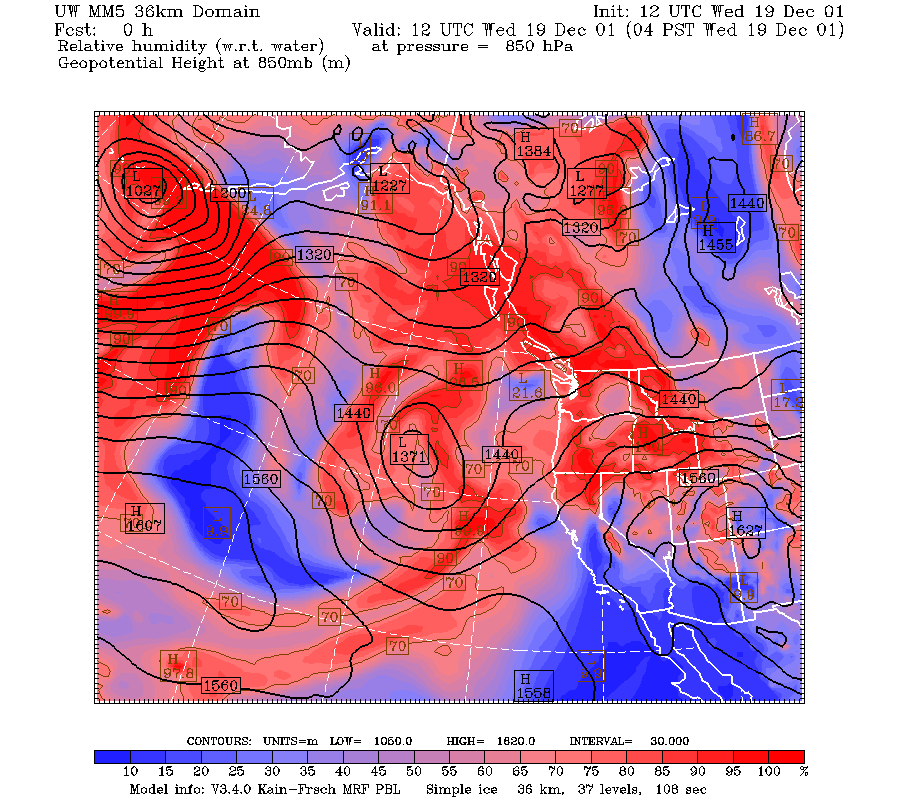
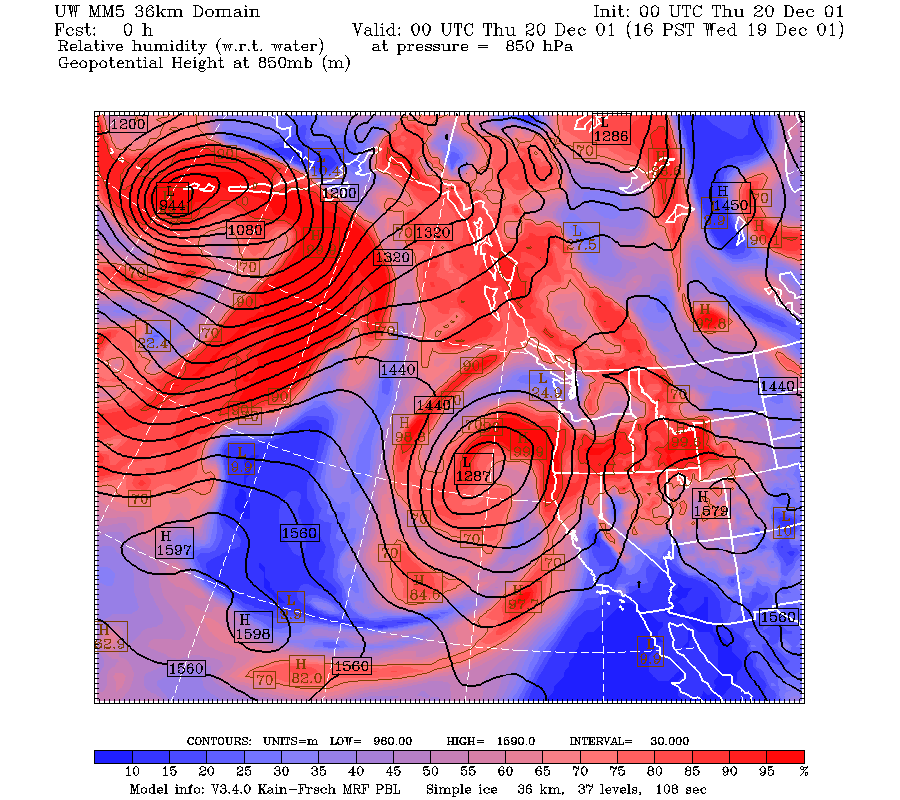
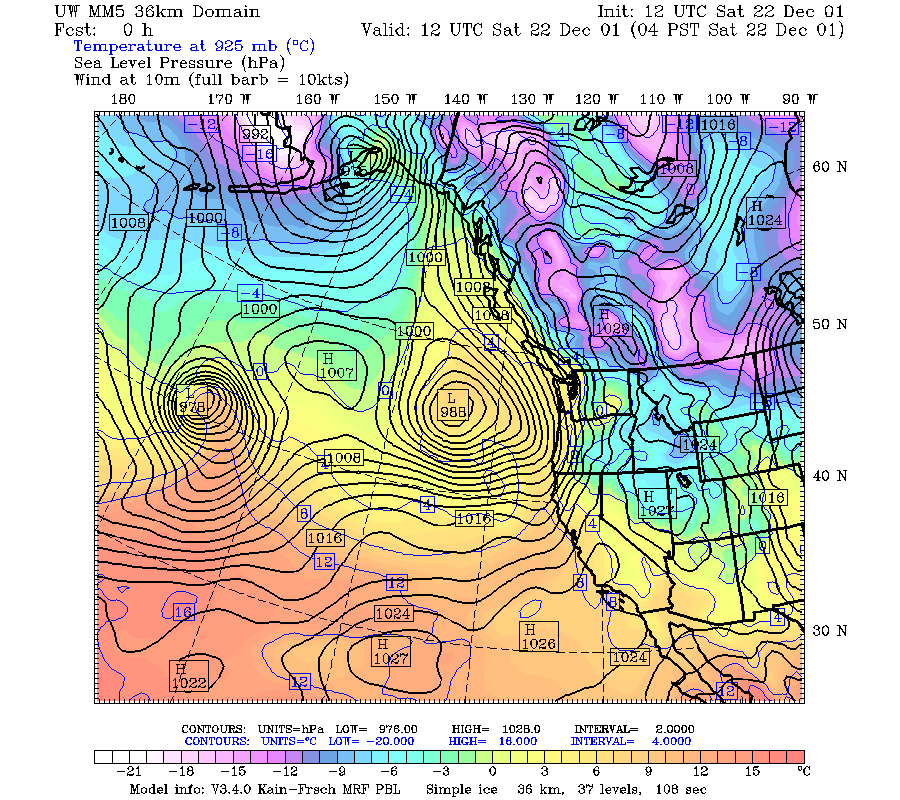
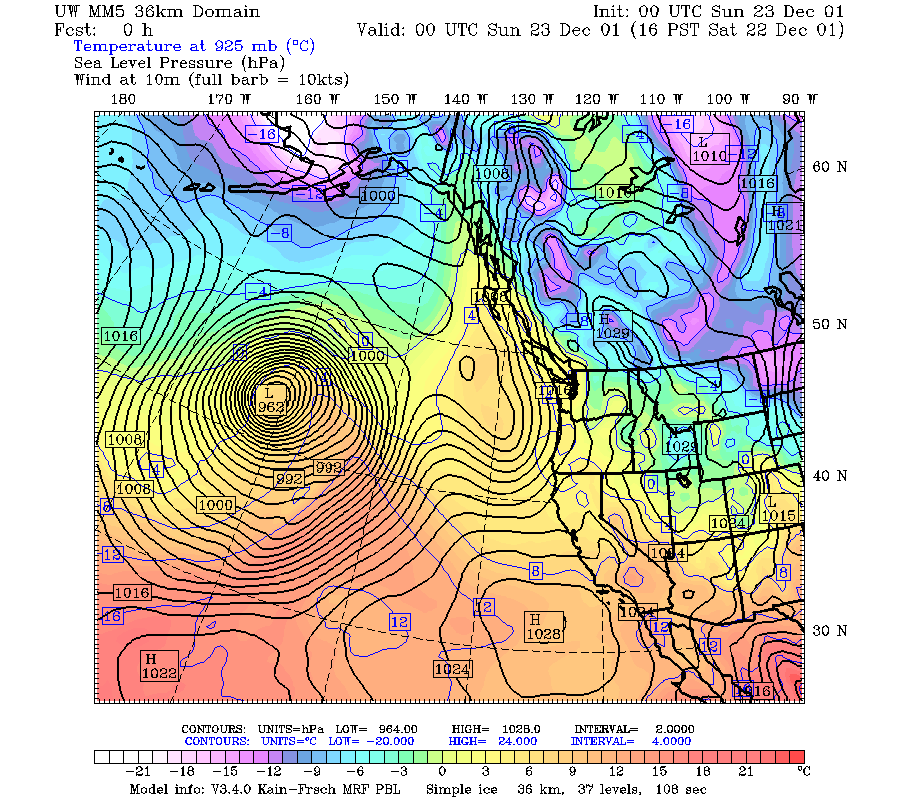
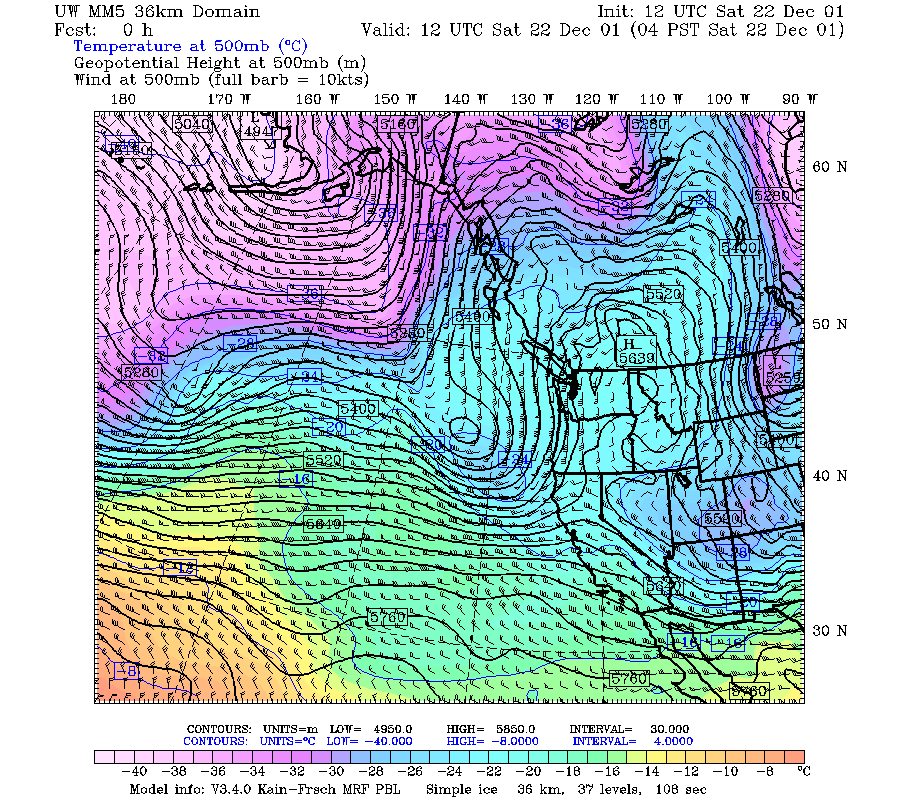
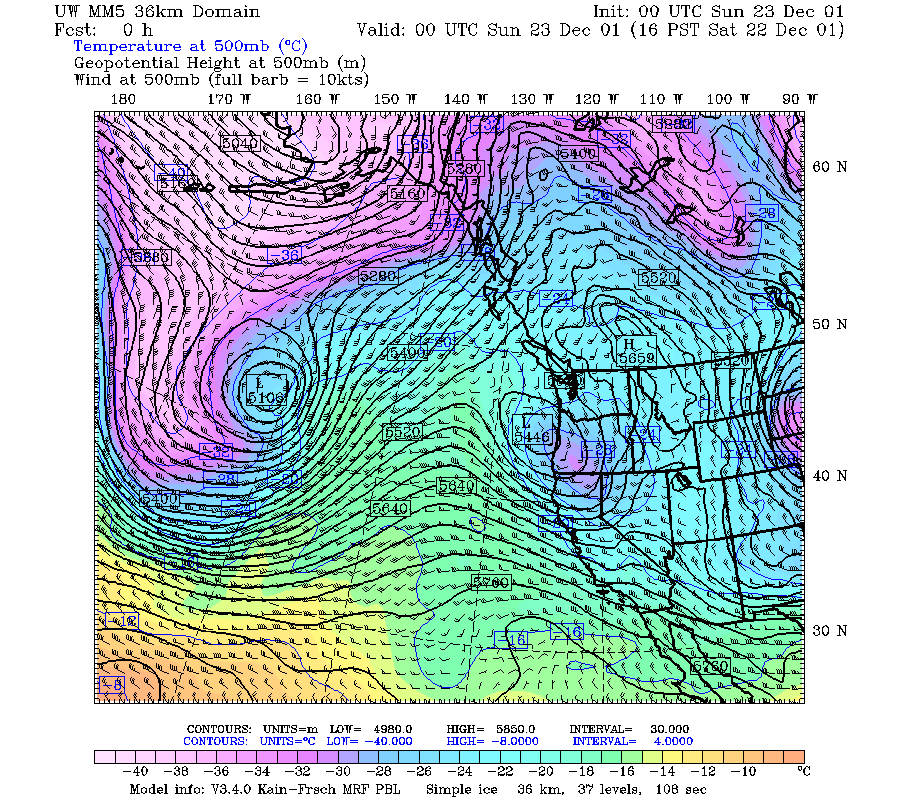
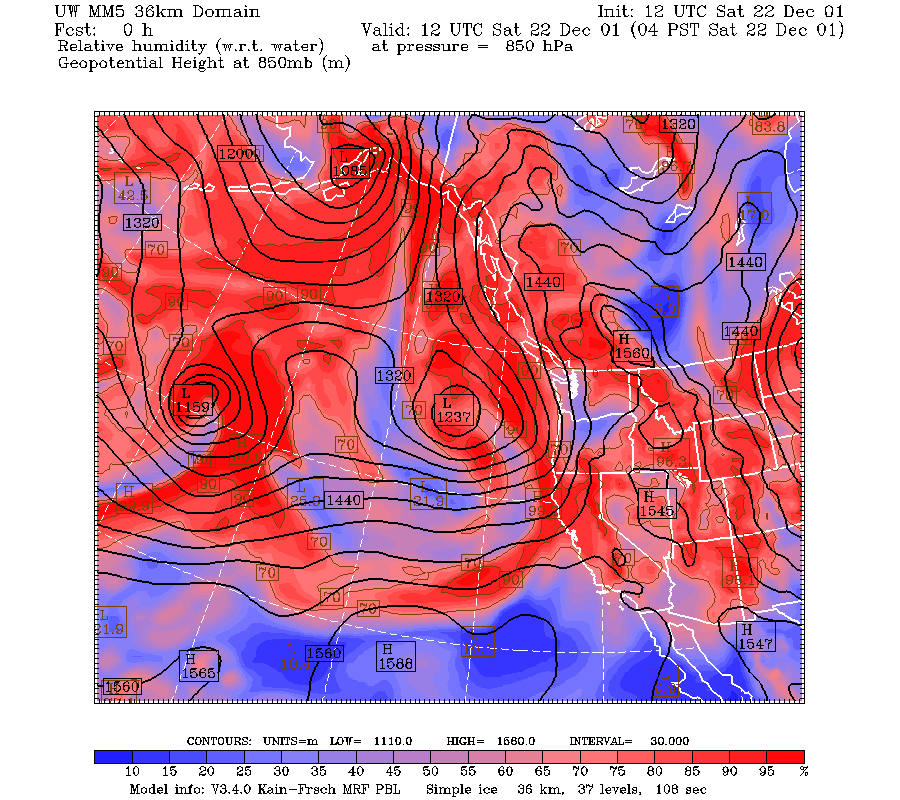
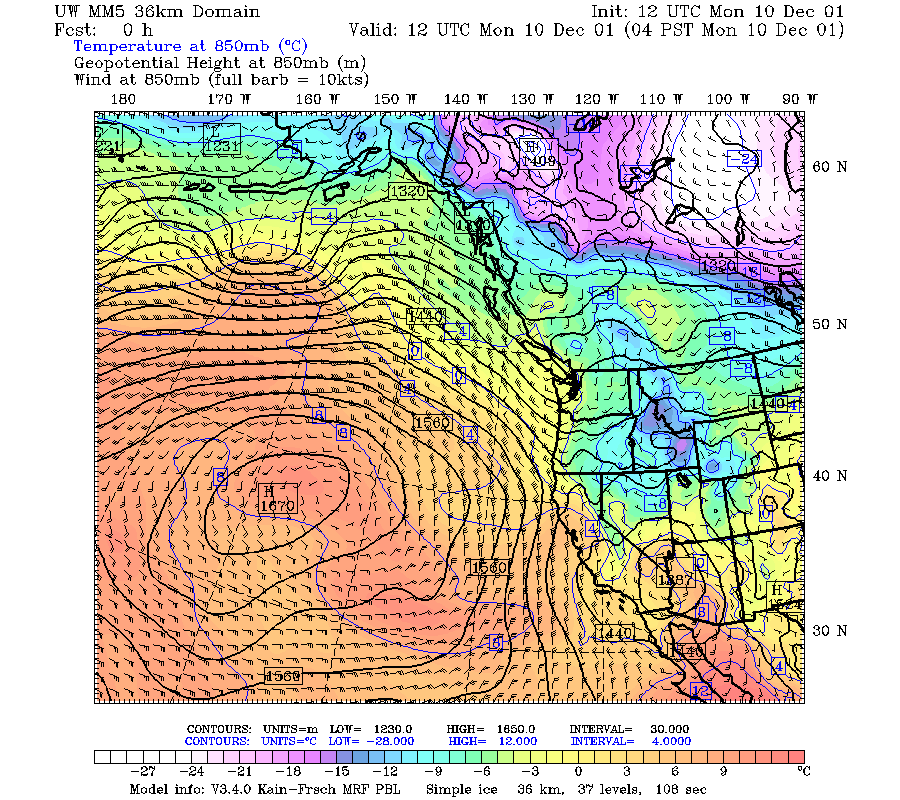
A short wave trough in the northwesterly jet moved from the northwest into Oregon at 500 mb from 0000 to 1200 UTC 10 December 2001 (Fig. 1a, Fig. 1b). The 850 mb trough moved in a similar manner, and the 850 mb wind shifted to weak westerly by 1200 UTC (Fig. 2a, Fig. 2b). The tongue of high relative humidity did not extend far south in this case (Fig. 3a , Fig. 3b).
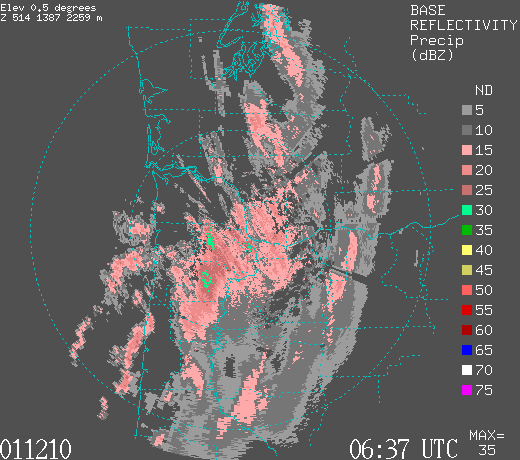
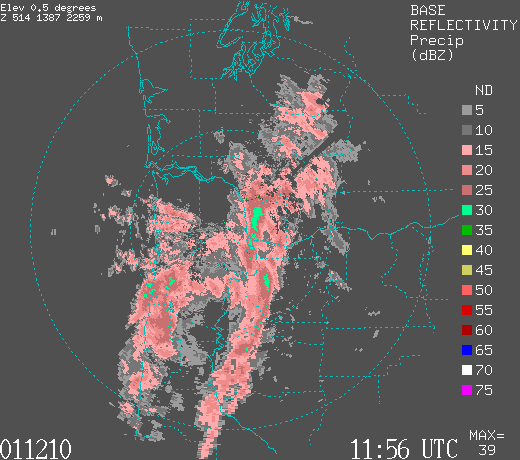
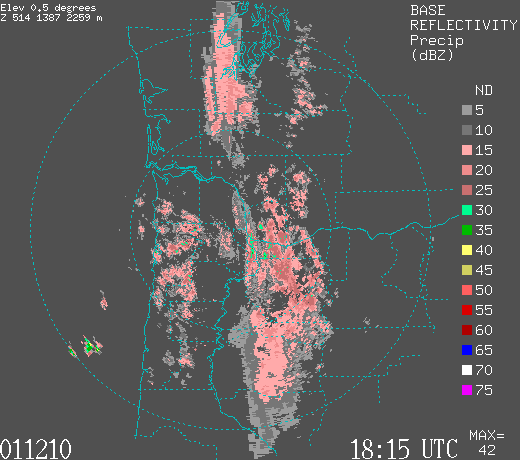
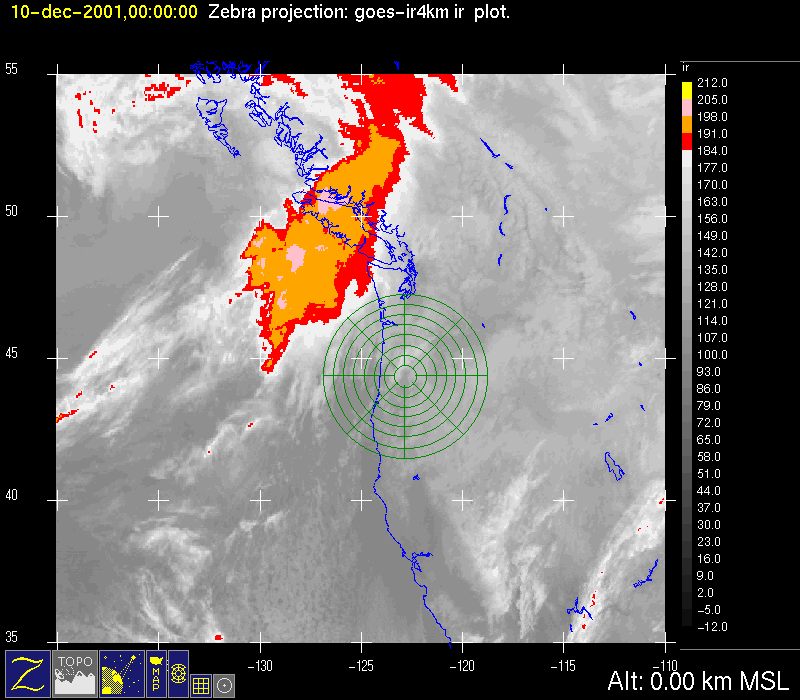
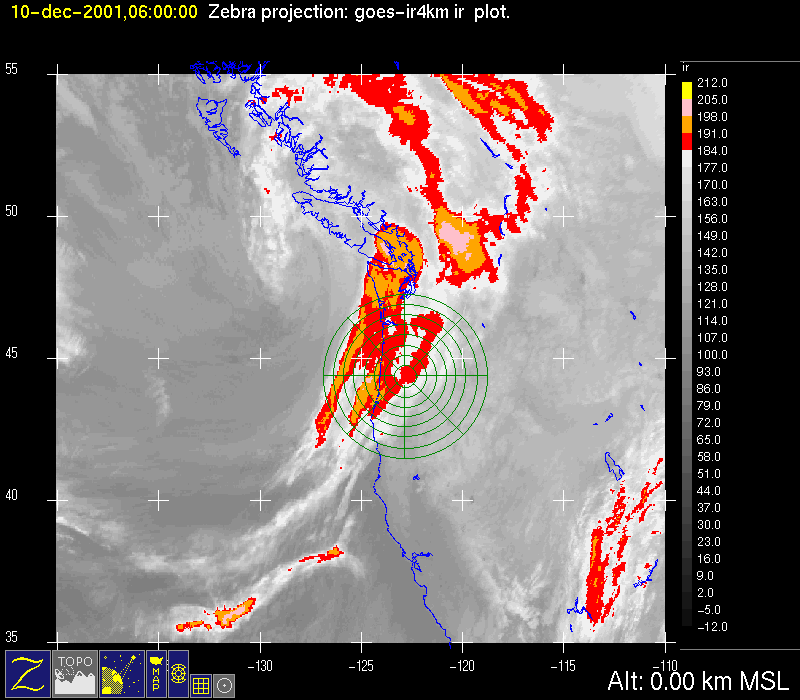
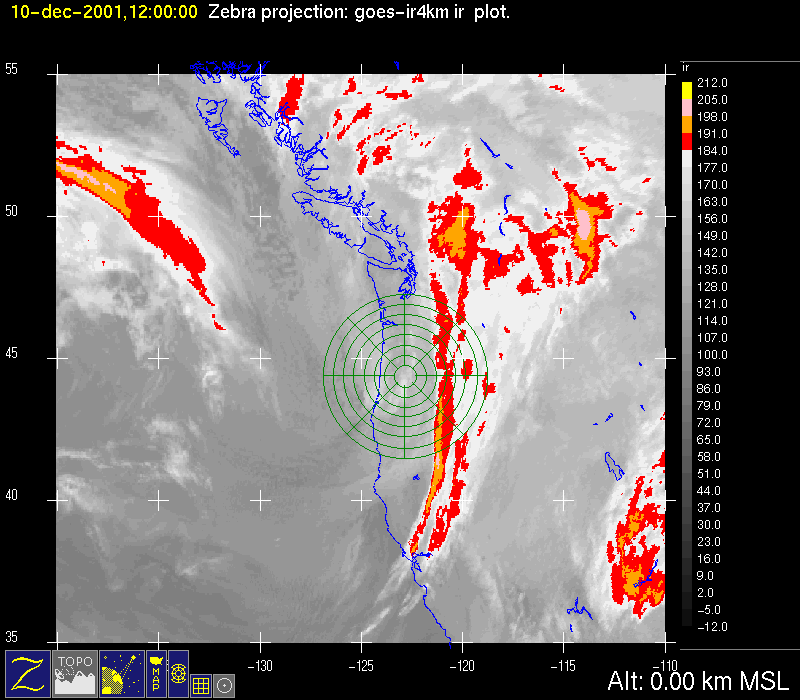
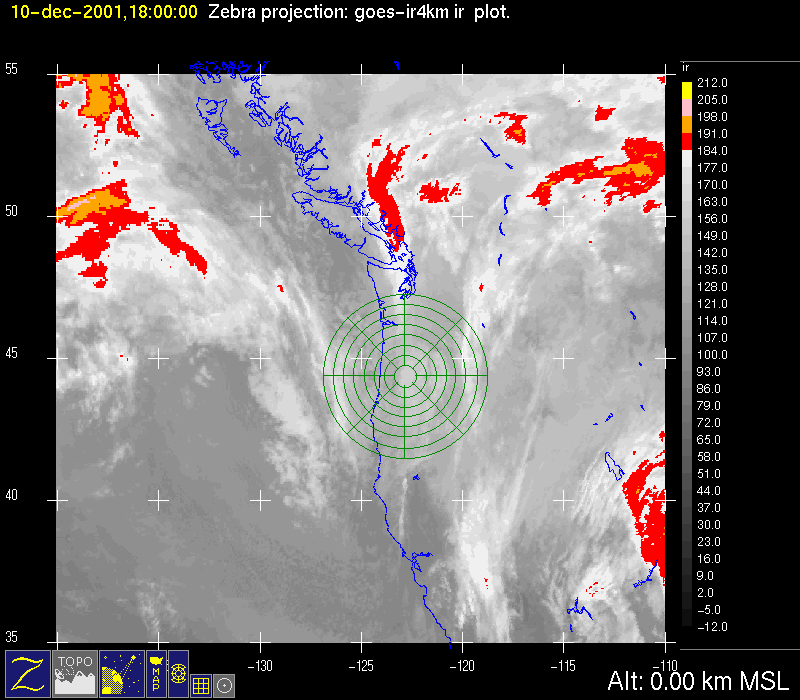
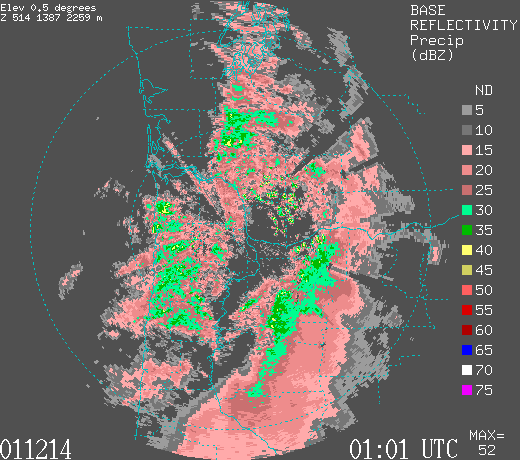
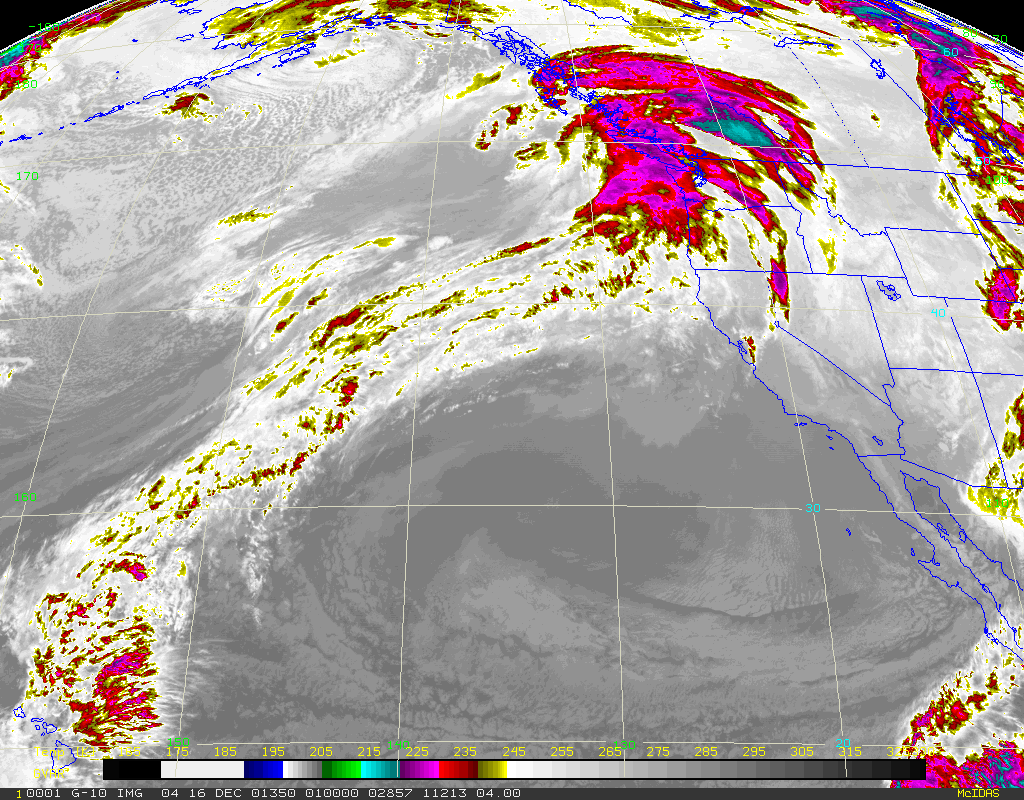
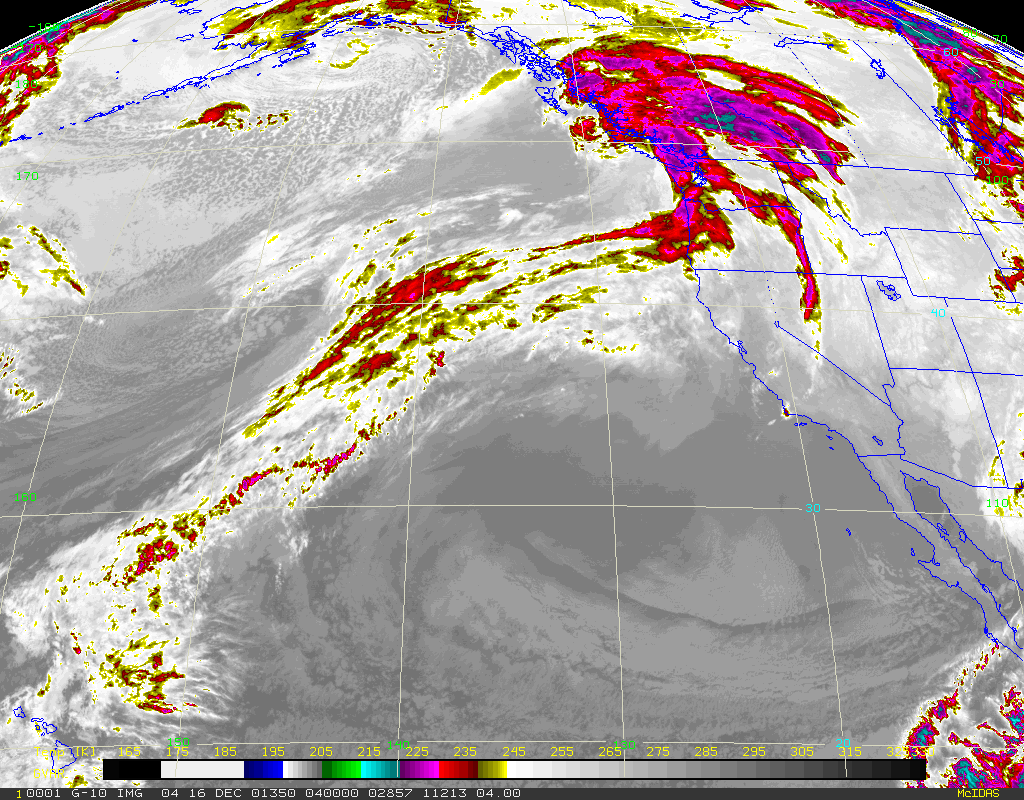
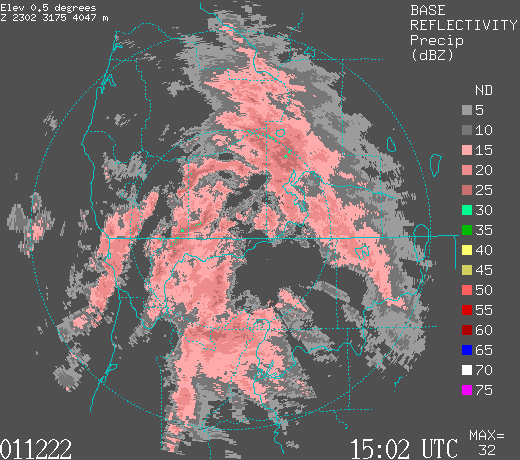
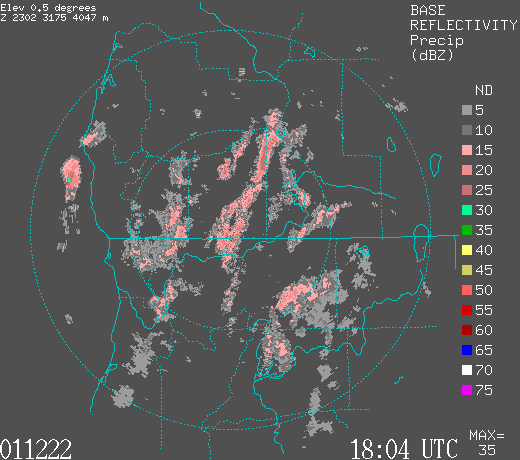
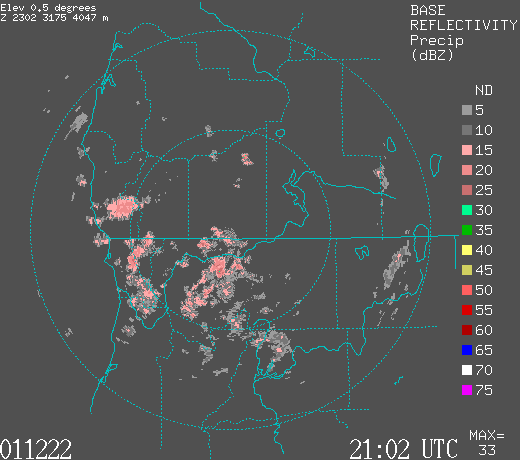
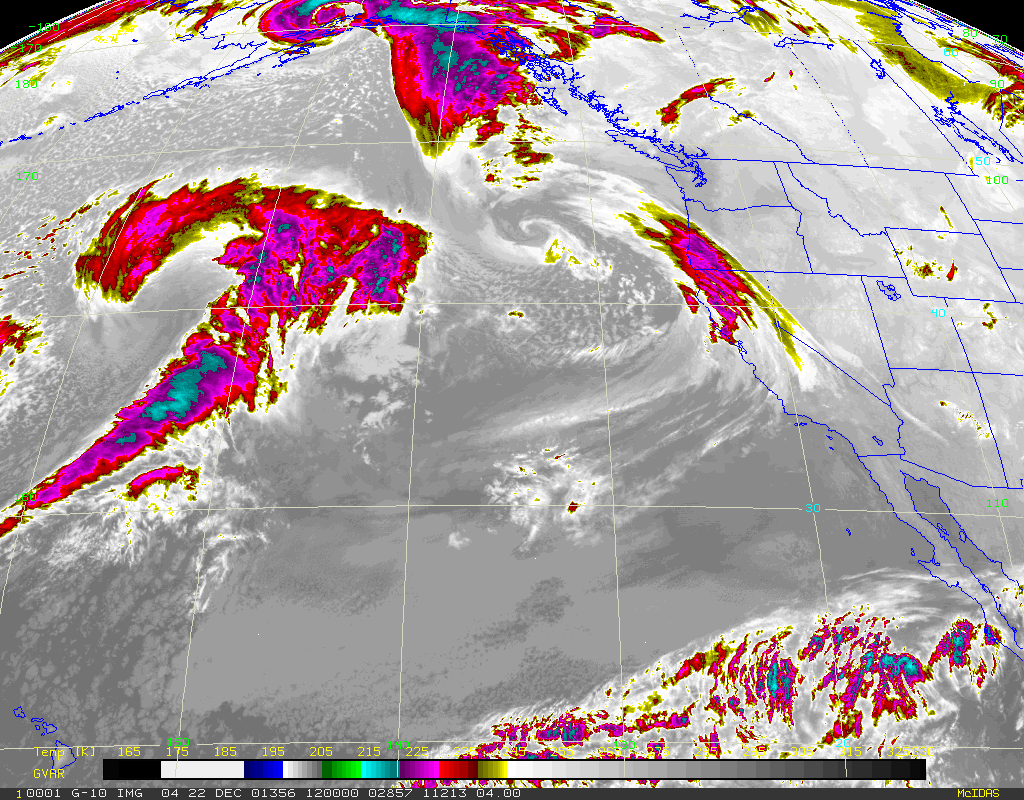
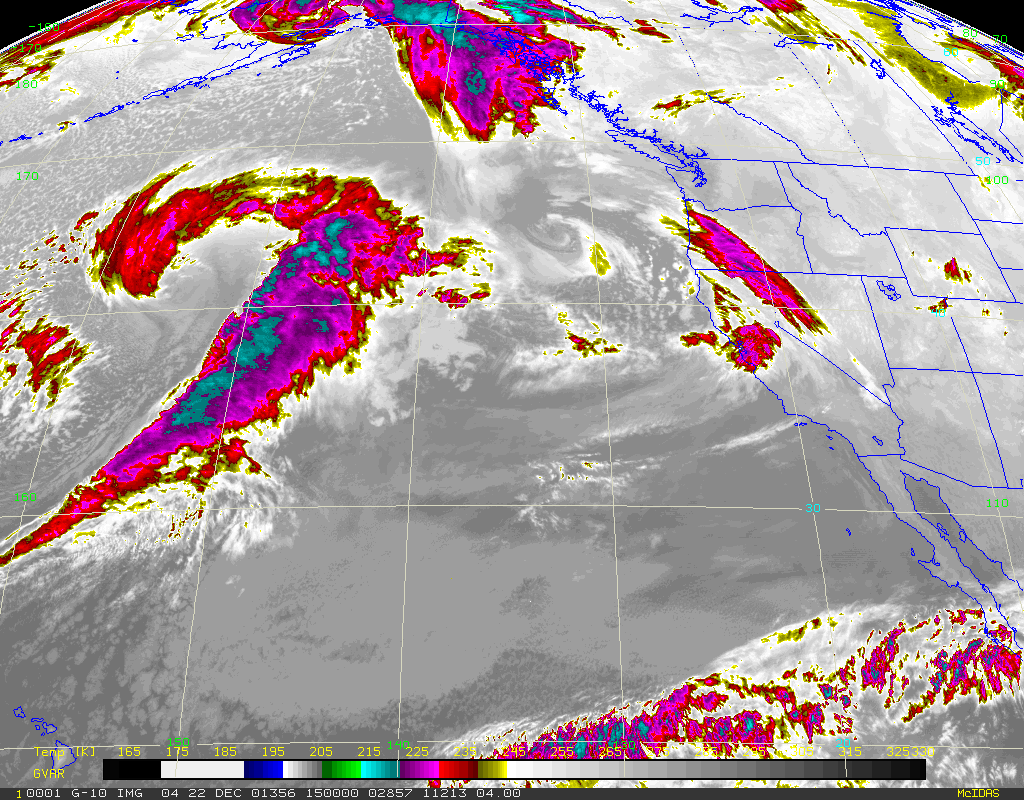
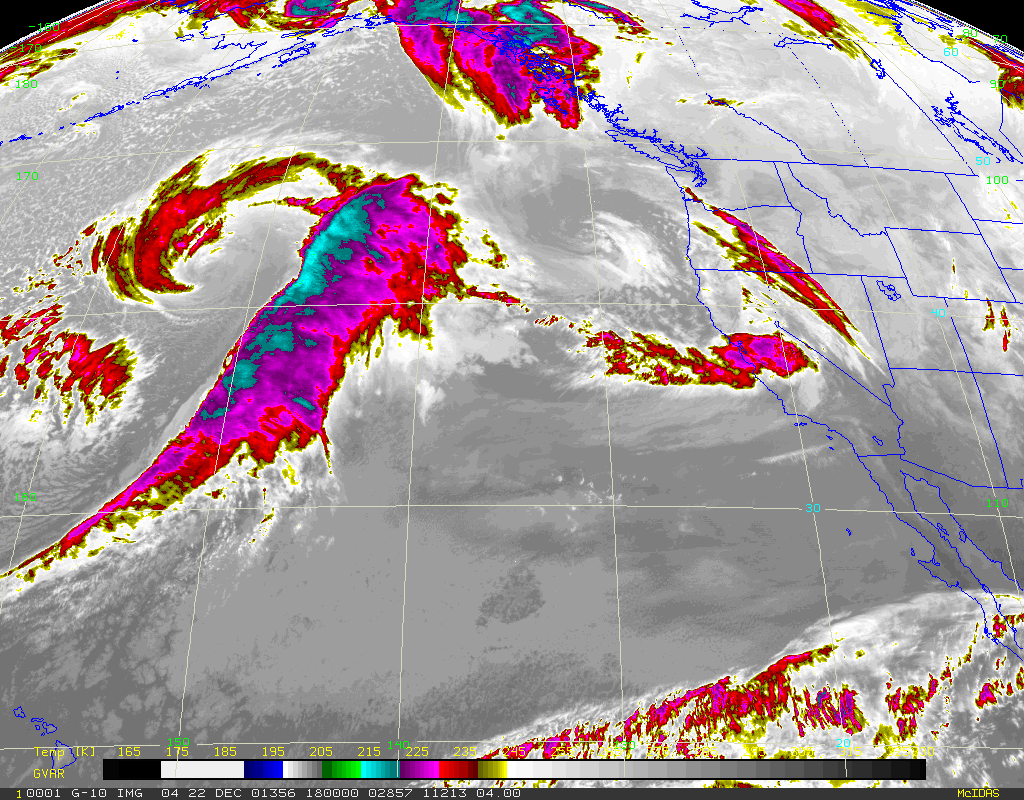
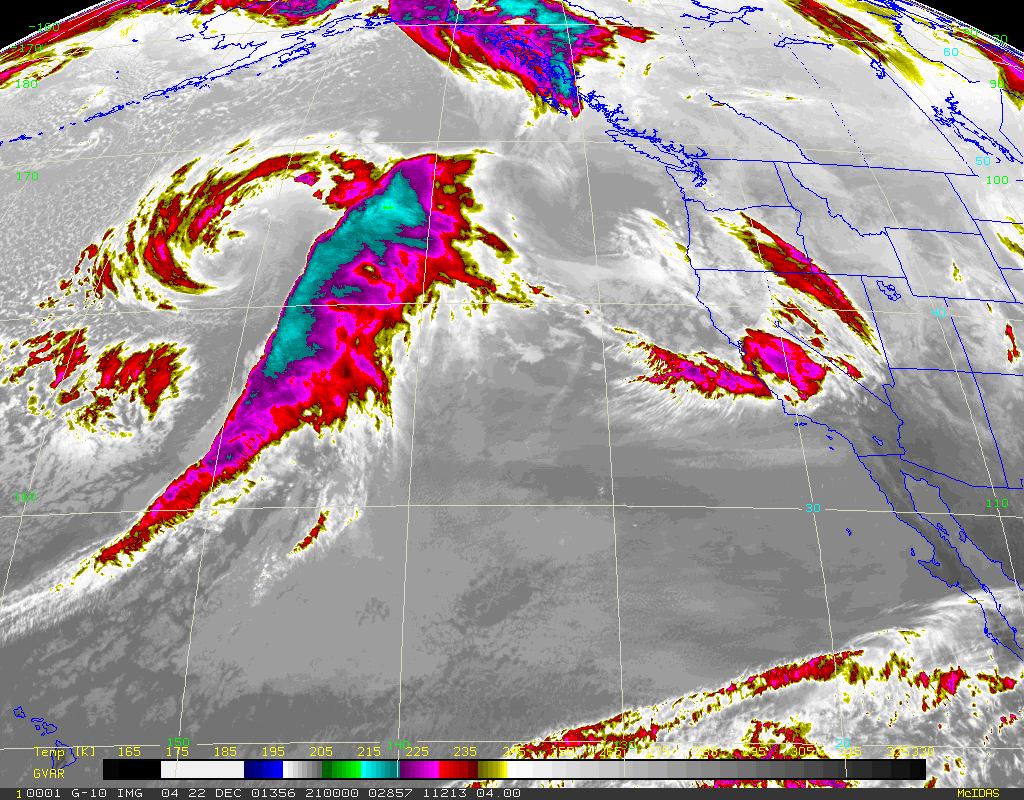
The cloud pattern associated with this short wave had a frontal structure in the infrared satellite imagery. It was approaching the S-Pol radar area from the northwest at 0000 UTC 10 December Fig. 4a and was directly over the region at 0600 UTC Fig. 4b. The Portland radar showed a broad region of continuous radar echo at 0637 UTC (Fig. 5a). By 1200 UTC, the coldest cloud top band was past the S-Pol radar area Fig. 4c. The Portland radar nonetheless showed a broad region of radar echo with postfrontal convective lines offshore (Fig. 5b). The precipitation over and to the east of the radar at this time was either frontal, orographic, or both. By 1800 UTC the infrared imagery showed mid-level cloud tops over the mountains just east of S-Pol (Fig. 4d). The Portland radar showed the orographic precipitation over the mountains distinctly at this time (Fig. 5c).
Orographic precipitation in the Oregon Cascades continued through 11 December. The Little Meadows Oregon Snotel observing site, located on the western slope of the Cascade Mountains just east of the S-Pol radar, recorded 1.6 inches of precipitation between 1200 UTC 10 December and 1200 UTC 12 December.
Convair-580 Summary
No flight
P-3 Summary
No flight
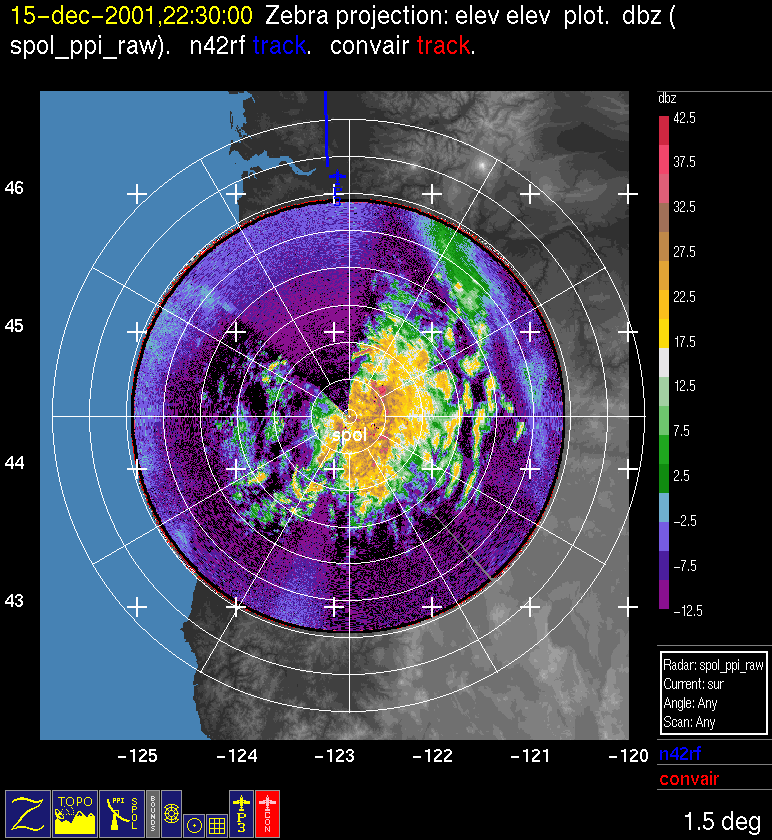
The S-Pol radar was run continuously in the same mode of operation for the entire length of the field project.
Summary of Mobile Upstream Sonde Launches
Launch times at: Rowland, OR, Lat: 44.2800, Lon: -123.0650, Elev: 97 m
2208 UTC 11 Dec
Summary of Leeside Sonde Launches
Launch times at: Black Butte Ranch, OR (a.k.a. ISS-3), Lat: 44.379, Lon: -121.679, Elev: 1027 m
1800 UTC 11 Dec
2100 UTC 11 Dec
0000 UTC 12 Dec
Summary of NWS Sonde Launches from Salem (SLE)
Launch times:
1800 UTC 11 Dec (special)
2100 UTC 11 Dec (special)
0000 UTC 12 Dec (standard)
Summary of Snow Crystal Ground Measurements
Measurement times:Every 15 minutes from
1900 UTC 11 Dec-0200 UTC 12 Dec (at Santiam Pass, Corbett, and Tombstone Sno Park)
IOP 10, 12-13 Dec 2001
IOP 10: 12-13 December 2001
Time Period of IOP
1800 UTC 12 Dec-0609 UTC 13 Dec
Overview of IOP
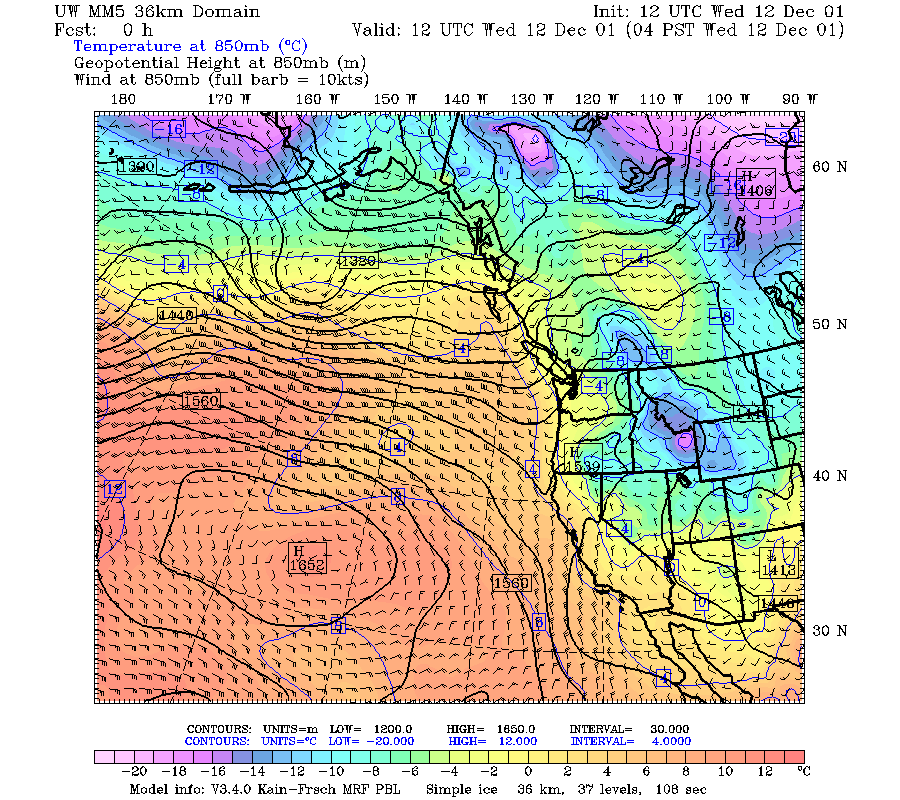
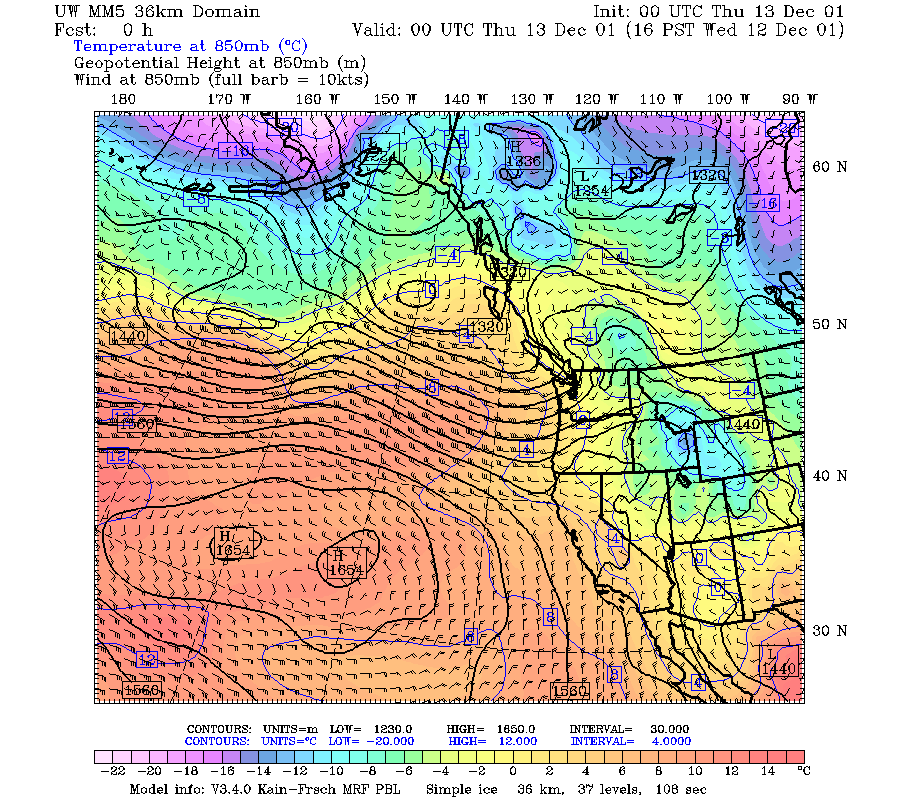
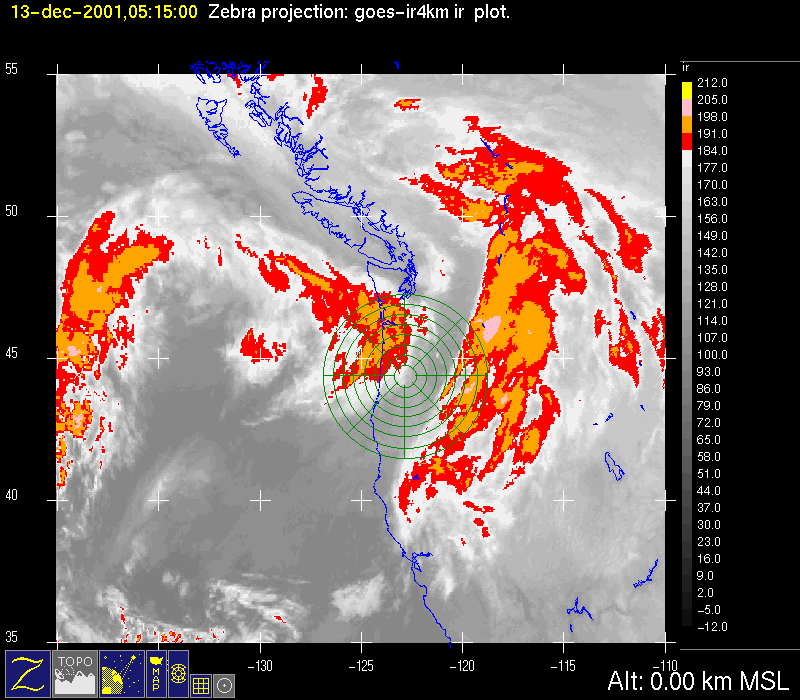
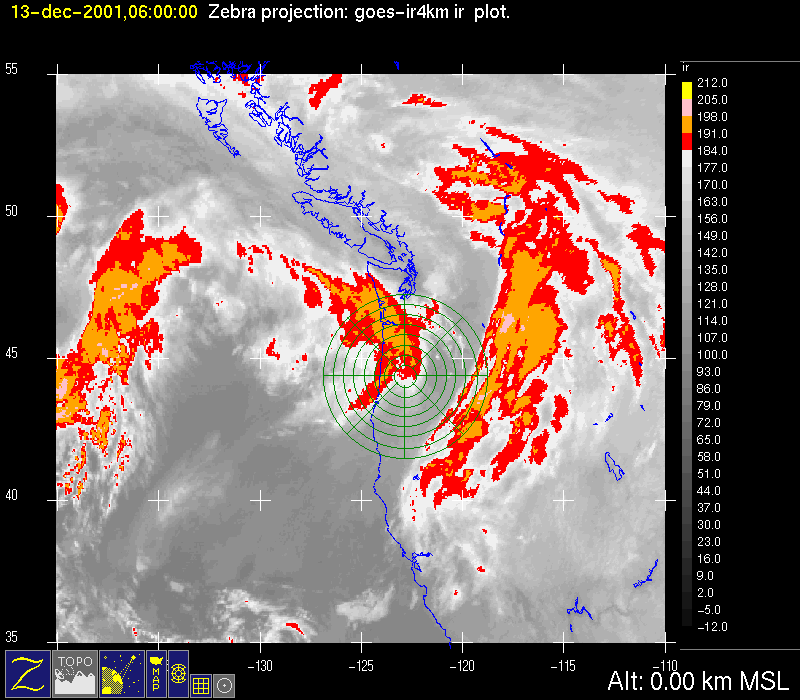
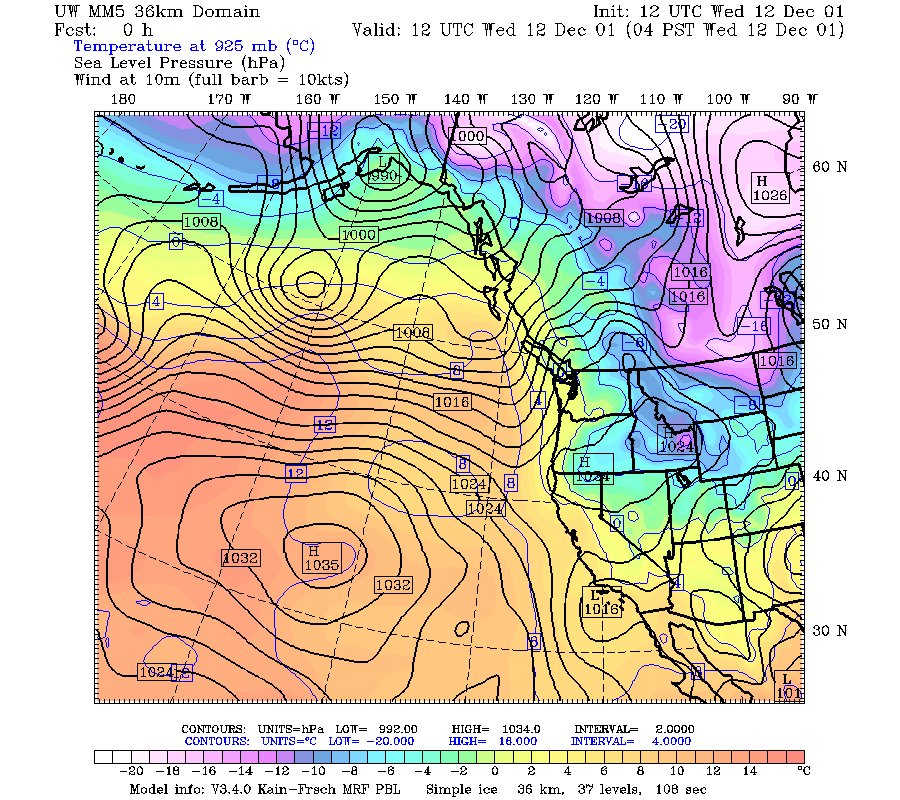
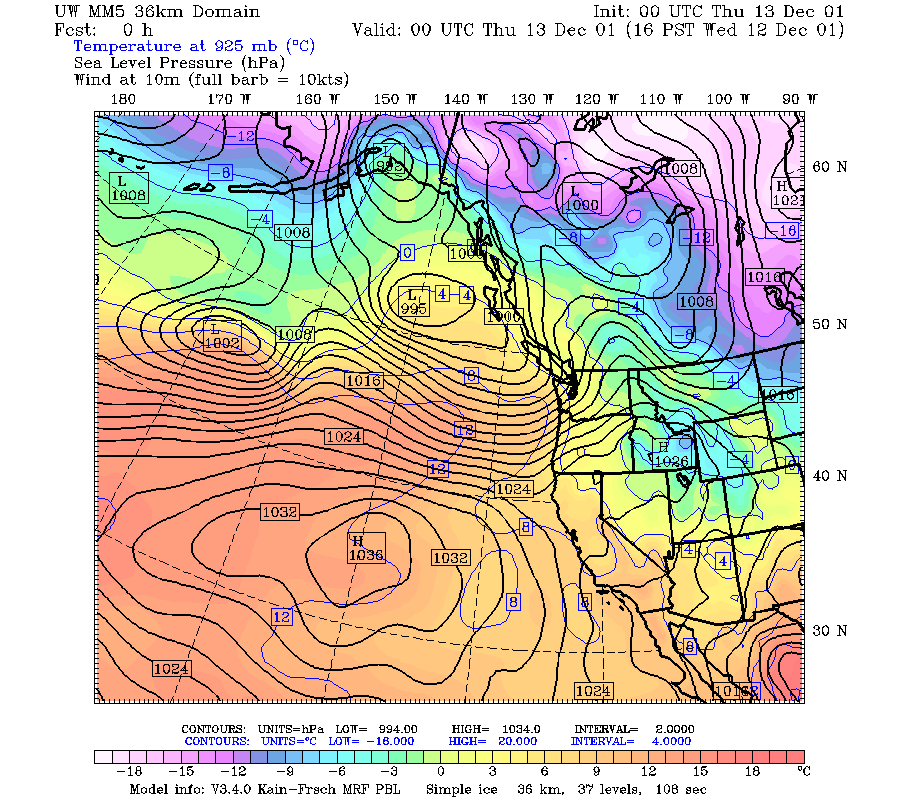
A barely perceptible trough at 137 oW at 1200 UTC 12 December 2001 UTC 12 December 2001 became better defined and was located on the Oregon coast at 0000 UTC 13 December (Fig. 1a, Fig. 1b). At 1200 UTC on 12 Dec, warm advection from a previous system was evident along the Oregon coast, and the formative trough at 137 west was just barely perceptible (Fig. 2a, Fig. 2b). By 0000 UTC the wind was stronger and southwesterly at 850 mb. The tongue of high relative humidity at 850 mb did not extend especially far south, only to about 25 oN (Fig. 3a, Fig. 3b). At the surface, the pressure gradient and warm advection intensified along the coast from 1200 UTC 12 December to 0000 UTC 13 December (Fig. 4a, Fig. 4b). Cold advection following this system was extremely weak.
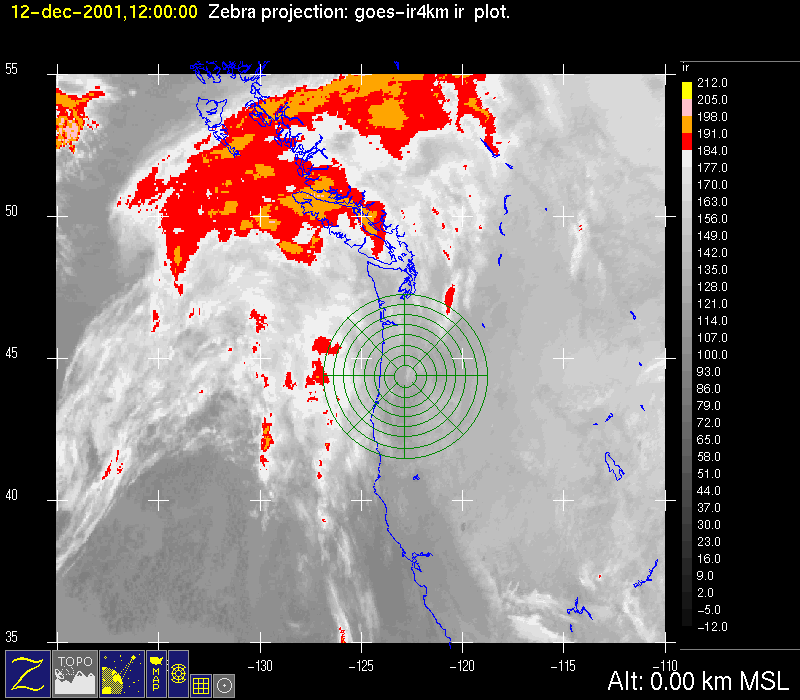
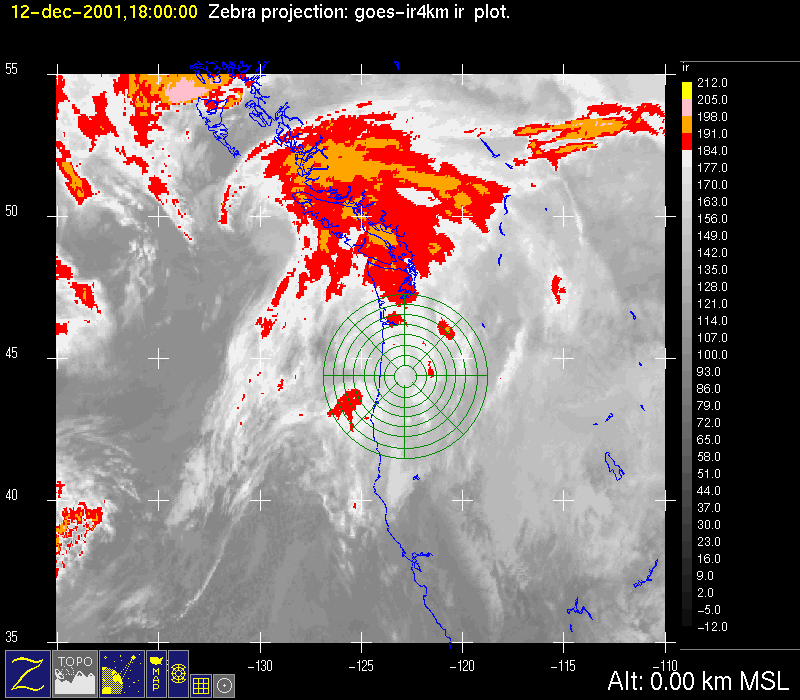
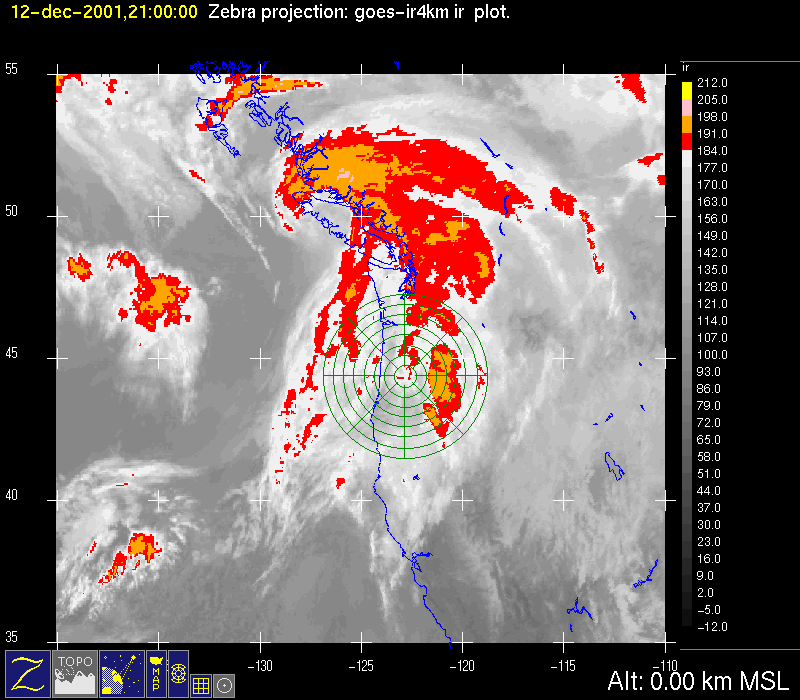
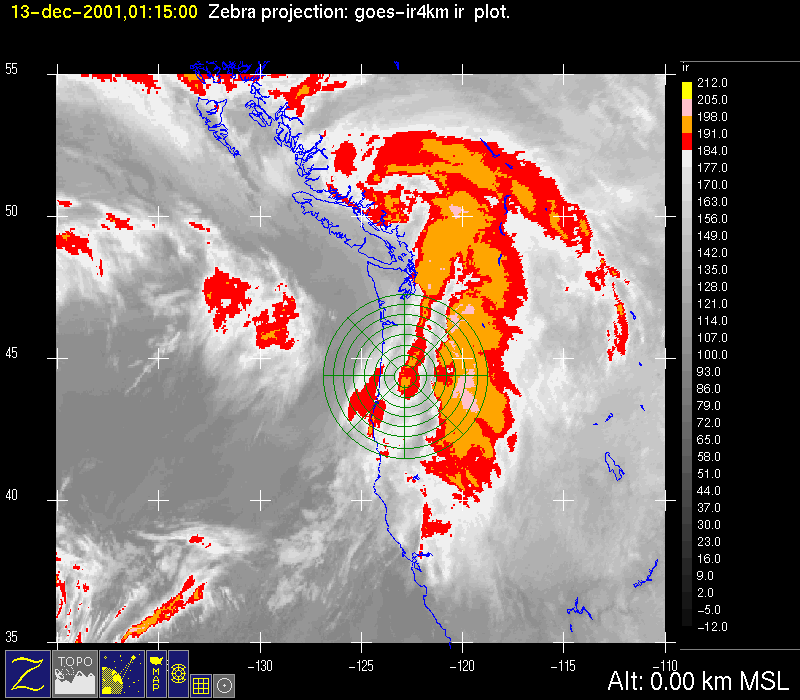
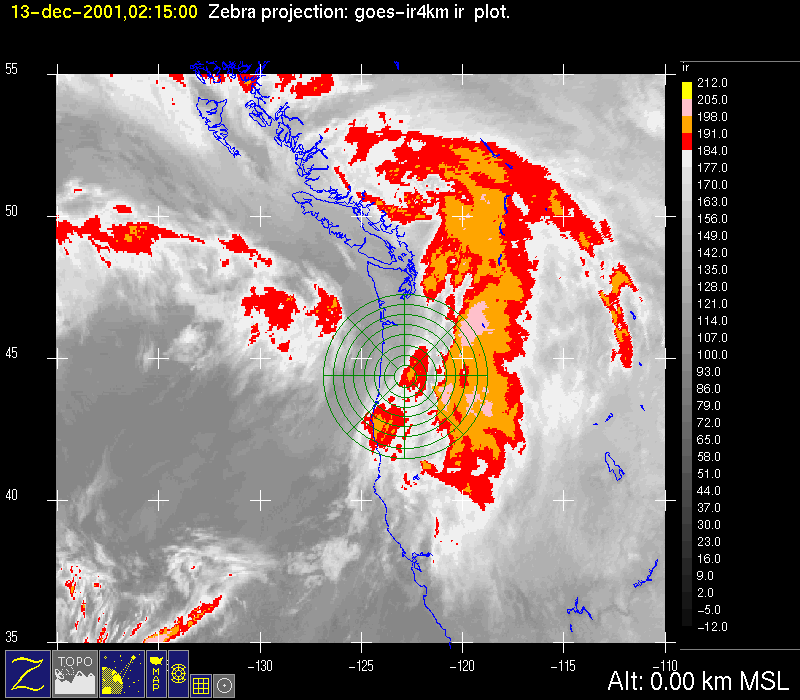
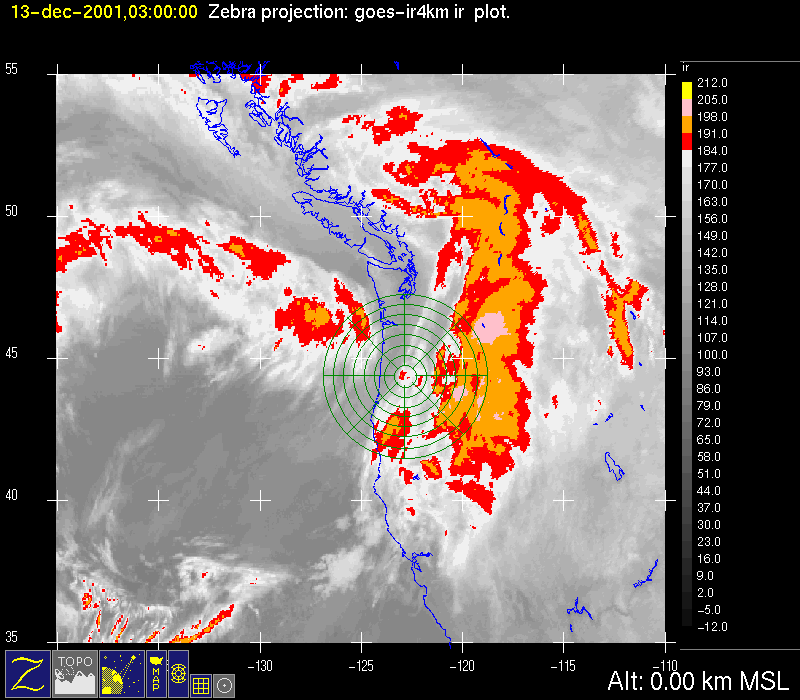
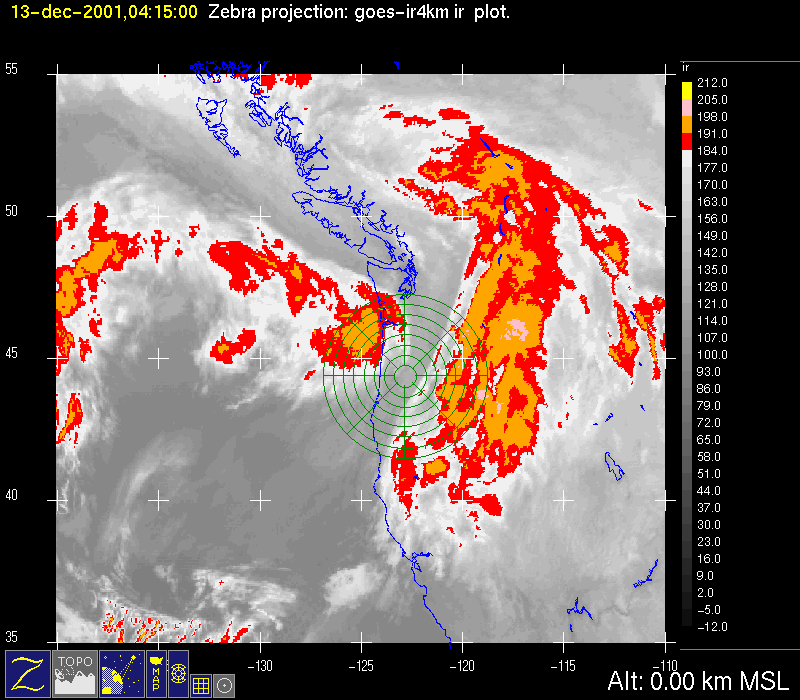
The infrared satellite imagery for 1200 UTC 12 December (Fig. 5a) showed clouds along the coast, apparently associated with the warm advection lingering there after the previous passed over the coast. This region of clouds eventually merged with the warm frontal region of the trough moving in from the west. The warm-frontal region of the cloud system was over the coastline and moving over the S-Pol radar area by 1800 UTC (Fig. 5b). By 2100 UTC (Fig. 5c), the warm-frontal part of the cloud system had become enhanced over the mountains, while the more intense cold frontal part of the cloud system was still over the ocean west of the S-Pol radar area.
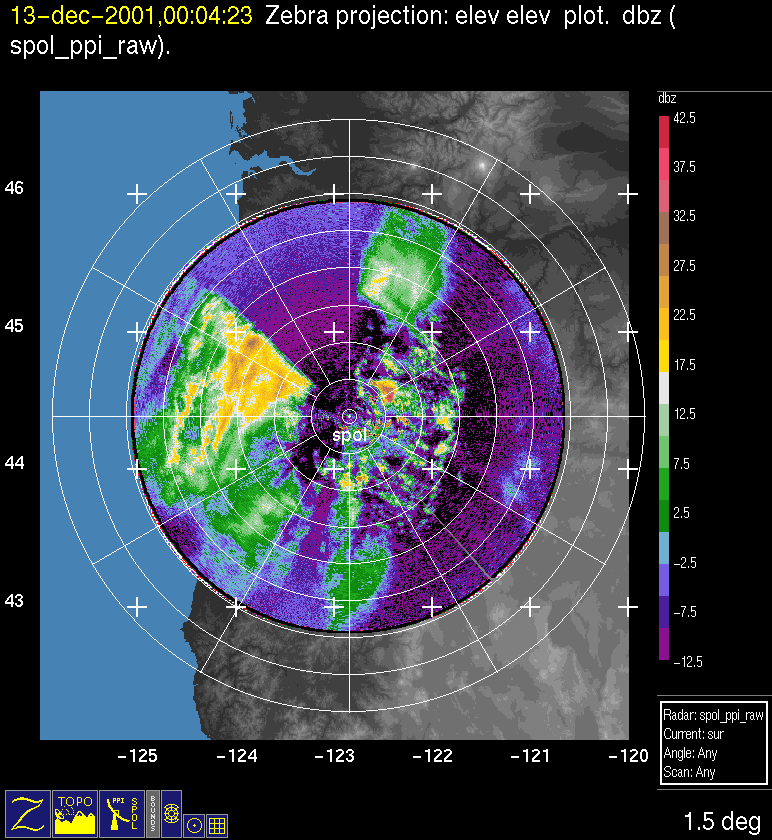
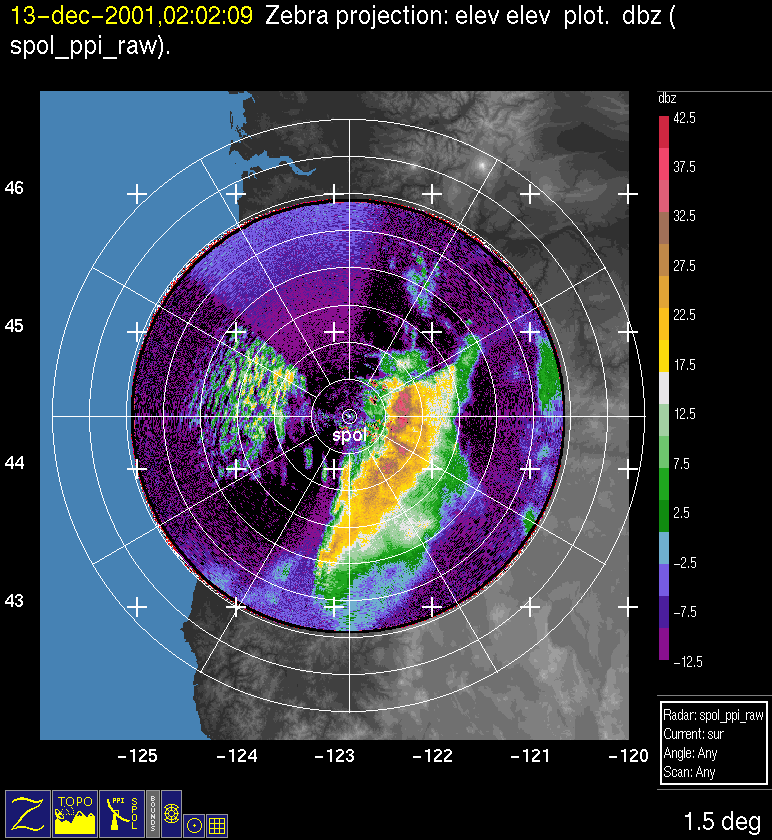
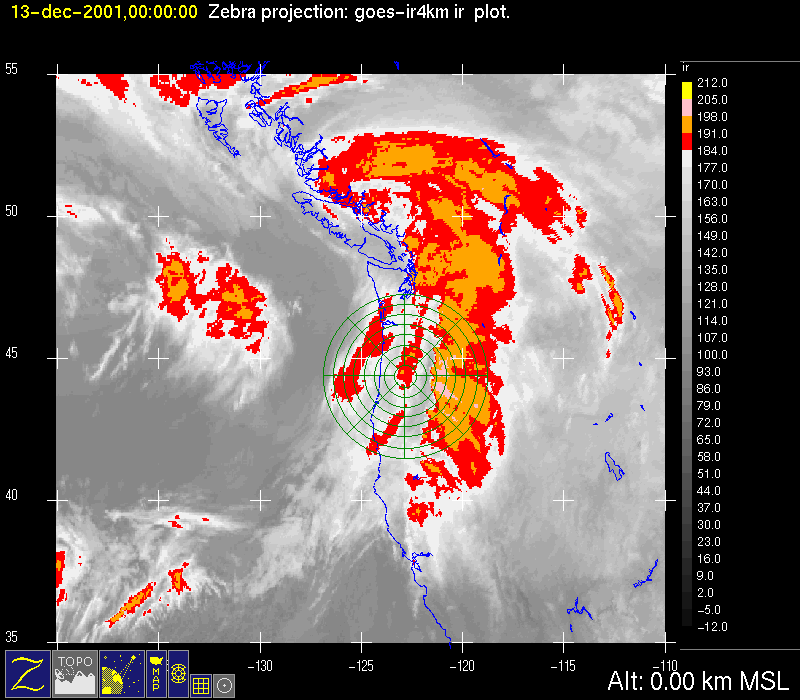
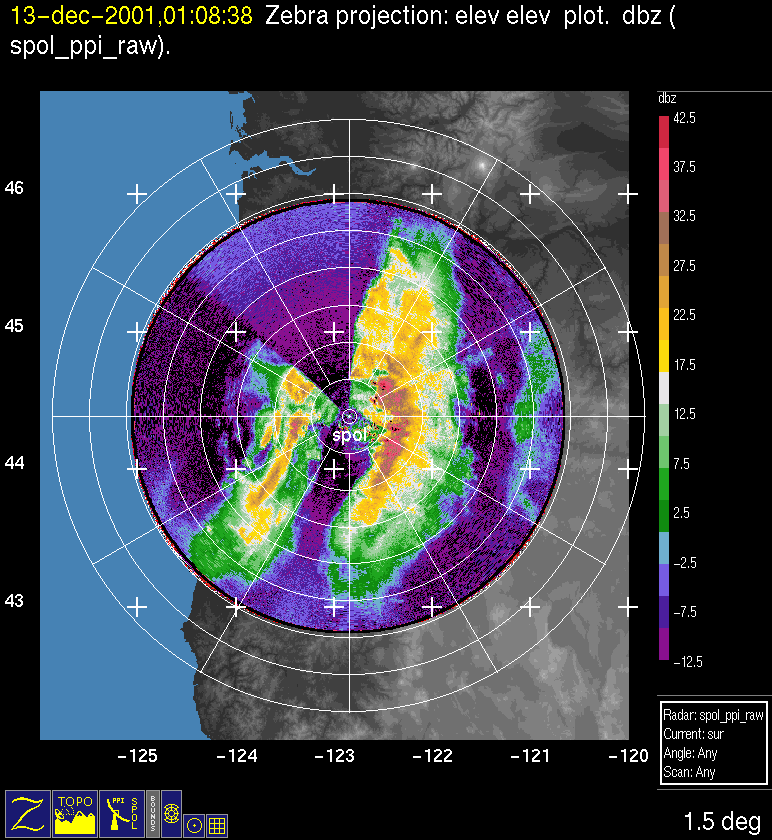
The Convair flew in this system from 2332 UTC 12 December-0548 UTC 13 December. The cold-frontal cloud and precipitation was moving over the western part of the S-Pol radar area at 0000 UTC (Fig. 5d, Fig. 6a). By 0100, the cold-frontal clouds had intensified over the mountains (Fig. 5e, Fig. 6b). At 0200 UTC the intensified frontal clouds over the mountains were still apparent, while weak postfrontal convective cells were appearing west of the radar (Fig. 5f, Fig. 6c). At 0300-0400 UTC the postfrontal convection was over the mountains and more was west of the radar, while a patch of intensified clouds was evident over the oceans on the leading edge of the warm advection region of the next frontal system approaching from the west (Fig. 5g, Fig. 5h, Fig. 6d, Fig. 6e). This patch of cloudiness was moving over the S-Pol radar area during the period 0500-0600 UTC (Fig. 5i, Fig. 5j, Fig. 6f, Fig. 6g).
Convair-580 Summary
UW Flight Number:
1899
Period of Flight:
2329 UTC 12 December-0549 UTC 13 December 2001
Main Accomplishment of Flight:
Profile over Santiam Pass in moderate precipitation (frontal passage?).
Instrument Problems:
PMS 1-D cloud probe counting in clear air. PMS 2-D cloud probe (?). Icing of FSSP-100.
Flight Scientist:
Nick Bond
Approximate UTC Timeline (Local time= UTC-8 hours) Activity for UW Flight 1899:
2329 |
Engines on. |
2334 |
Out of blocks. |
2345 |
Takeoff. |
2356 |
Potential science power problems. |
0005 |
HPVS and 2-DC probes look okay. |
0020 |
Lat 46˚/long 123˚, undercast just below flight level 16,000 ft. |
0031 at 45˚34'/123˚33' |
17,000 ft, wind 290 @ 27 m s–1. In clear air between undercast and thin overcast; some ice settling from aloft. |
0046 at 44˚41'/124˚14'. |
Changed west point 30' east. |
0049 at 44˚31'/124˚11' |
Main cloud decks coming together. Surprising winds (from ~300˚). Beginning first run at 18,000 ft. 2-DC and HVPS probes functioning. Temp –19˚C, wind ~300 @ 25 m s–1. |
0057 |
Very near cloud top; only small crystals showing on HVPS. |
0106 at 44˚20'/122˚48' |
Hitting higher ice crystal concentrations but near east end of precipitation band. |
0109 |
End of first east-west run; starting westward descent. |
0114 |
Suspicious winds (52 m s–1!). |
0117 . |
HVPS acting odd last 5 min |
0119 |
Out of precipitation, co-pilot's airspeed indicator out à bad winds. |
0126 |
End of second east-west run; between decks. |
0128 |
Beginning third east-west run at 16,000 ft.. |
0137 |
Early part of leg mostly in clear air. |
0138 at 44˚24'/122˚48'. |
Considerable concentrations of ice; some relatively large. |
0139 |
Airspeed and winds back (200˚ @ 24 m s–1). |
0142 |
End of third leg, TA -14. |
0143 |
Airspeed/winds bad again. Heading west. |
0147 at 44˚24'/122˚31'. |
Heavier precipitation here, light chop, winds back. Little precipitation aloft at west end of leg. |
0158 |
End of fourth leg; CLR. |
0200 |
Begin fifth east-west at 14,000 ft; between decks. |
0209 at 44˚25/122˚18'. |
In light precipitation. |
0348 |
Shed ice on viewing bubble. |
0350 |
In fairly thick cloud; few or zero large particles. |
0353 |
At 8,000 ft wind 250˚ @ 20 m s–1. Ice building up again. |
0356 |
Mostly out of precipitation; shedding ice again. |
0358 |
2-DC probes temporarily obscured. |
0359 |
Descending to 6,000 ft. |
0400 |
Descending to 4,000 ft. Freezing level about 5,000 ft. |
0405 |
Descending to 3,500 ft for CCN legs, then 3,000 ft, then 2,500 ft. |
0410-0415 |
Trying to find locally higher cloud bases. |
0417 |
Starting CN counter. Short intervals of diffuse thin clouds. |
0420-0424 |
Mostly in cloud, CN measurements compromised. |
0431 |
Finished low-level work not much below cloud base. |
0436 |
Freezing level about 8,000 ft. |
0458 |
In ice on ferry home. Temperature ~–15˚C. |
0509 |
Ice over. |
0526 |
Shutting down data systems. |
0544 |
Landed. |
0549 |
Engines off. |
P-3 Summary
No flight
S-Pol Radar Summary
The S-Pol radar was run continuously in the same mode of operation for the entire length of the field project.
Summary of Mobile Upstream Sonde Launches
Launch times at: Rowland, OR, Lat: 44.2800, Lon: -123.0650, Elev: 97 m
2110 UTC 12 Dec
2357 UTC 12 Dec
0226 UTC 13 Dec
0609 UTC 13 Dec
Summary of Leeside Sonde Launches
Launch times at: Black Butte Ranch, OR (a.k.a. ISS-3), Lat: 44.379, Lon: -121.679, Elev: 1027 m
2100 UTC 12 Dec
0000 UTC 13 Dec
0300 UTC 13 Dec
0600 UTC 13 Dec
Summary of NWS Sonde Launches from Salem (SLE)
Launch times:
1800 UTC 12 Dec (special)
2100 UTC 12 Dec (special)
0000 UTC 13 Dec (standard)
0300 UTC 13 Dec (special)
Summary of Snow Crystal Ground Measurements
Measurement times:Every 15 minutes from
2100 UTC 12 Dec-0445 UTC 13 Dec (at Santiam Pass, Corbett, and Tombstone Sno Park)
IOP 11, 13-14 Dec 2001
IOP 11: 13-14 December 2001
Time period of IOP
2040 UTC 13 Dec-0815 UTC 14 Dec
Overview of IOP
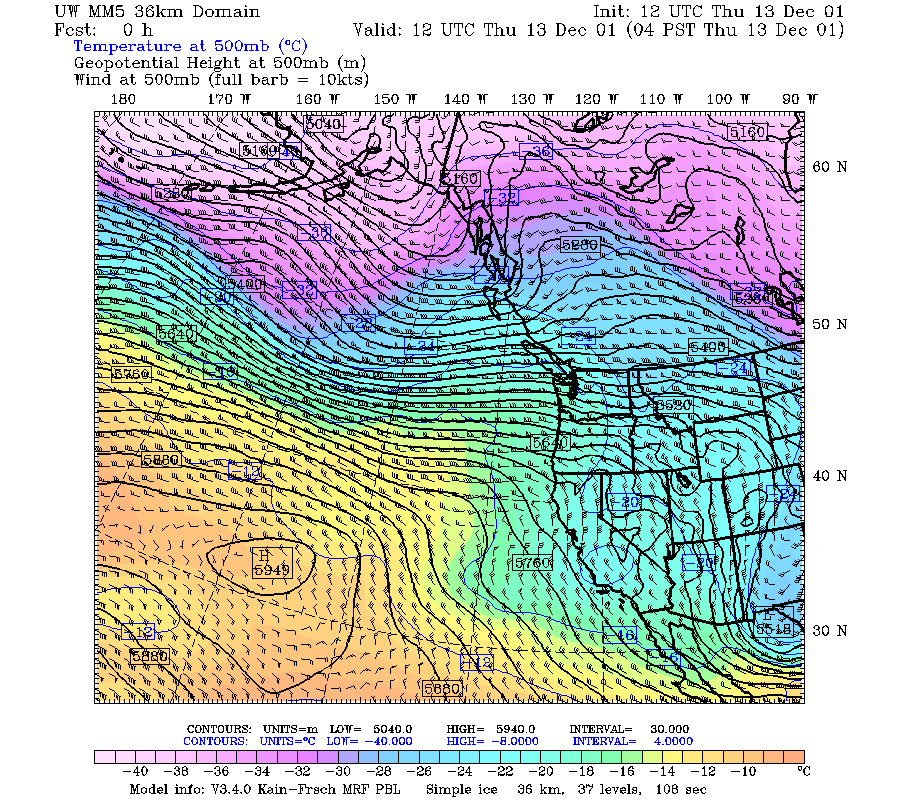
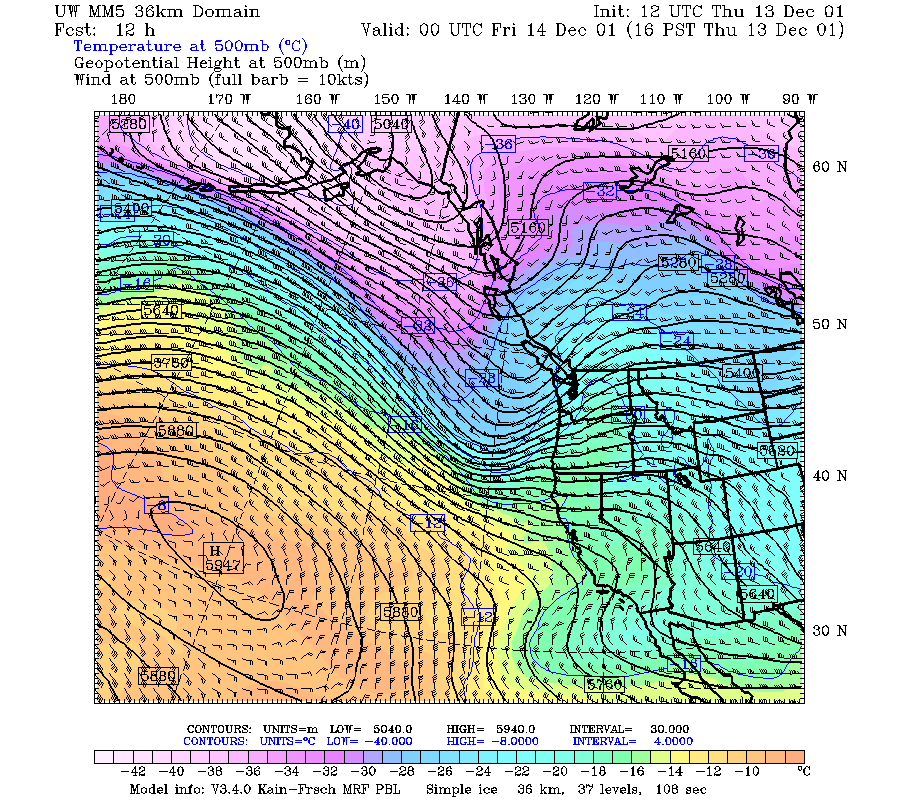
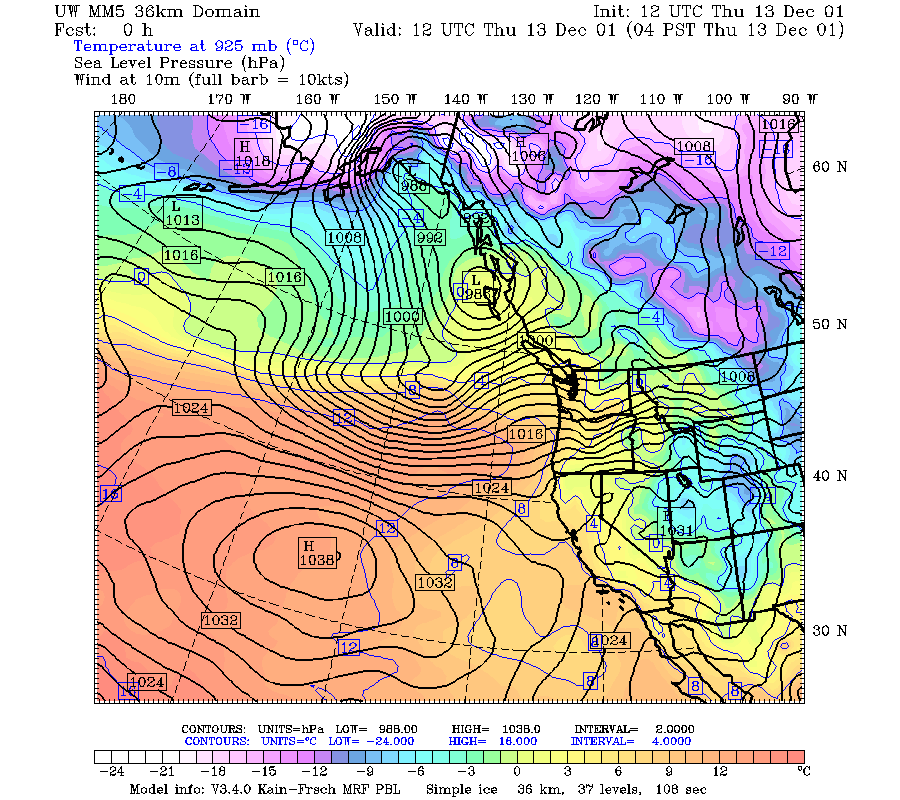
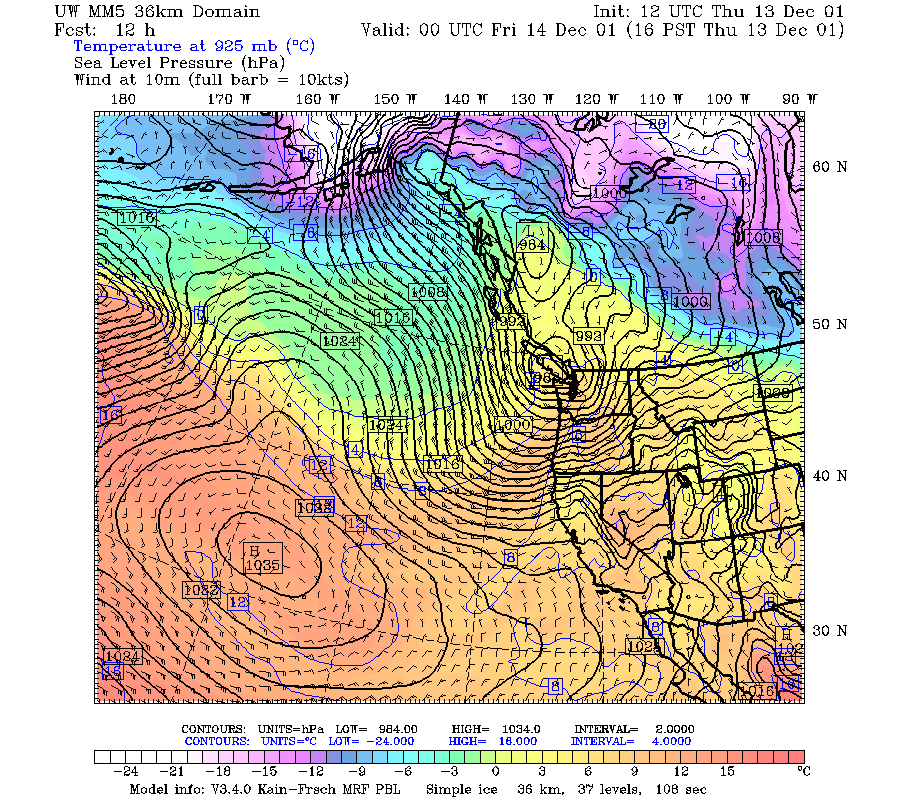
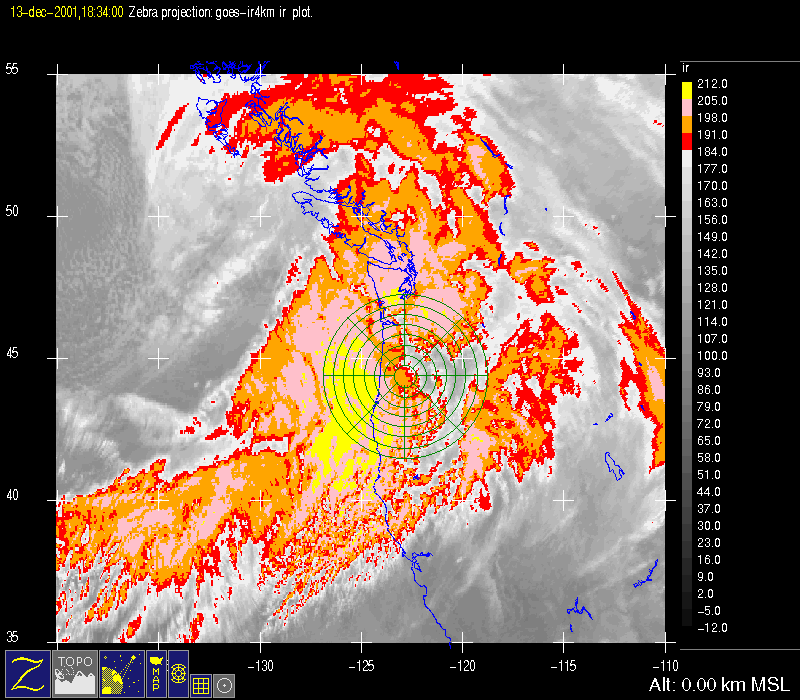
A rapidly deepening 500-mb short-wave trough approached the Pacific Northwest between 1200 13 December and 0000 14 December 2001 (Fig. 1a, Fig. 1b). During this period the surface cyclone rapidly deepened from 997 to 983 mb as it approached Vancouver Island (Fig. 2a, Fig. 2b). Meanwhile, a well defined baroclinic cloud shield was moving over the West Coast by 1900 UTC (Fig. 3), which was a little faster than forecast by the operational models. The 0000 UTC 13 December AVN numerical model run seemed to have the best timing for this event (not shown).
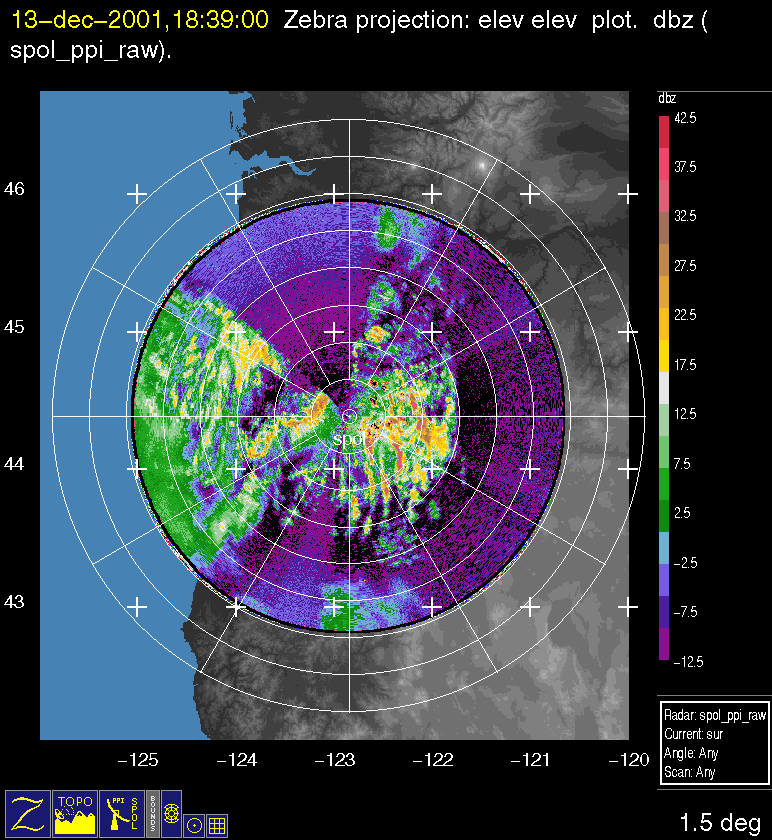
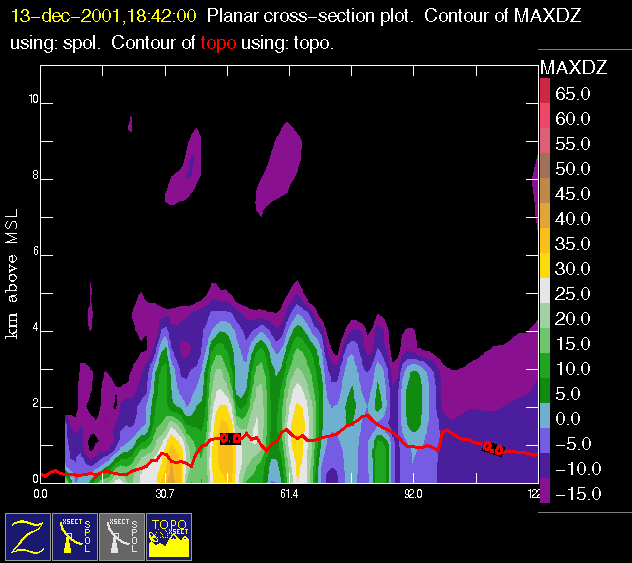
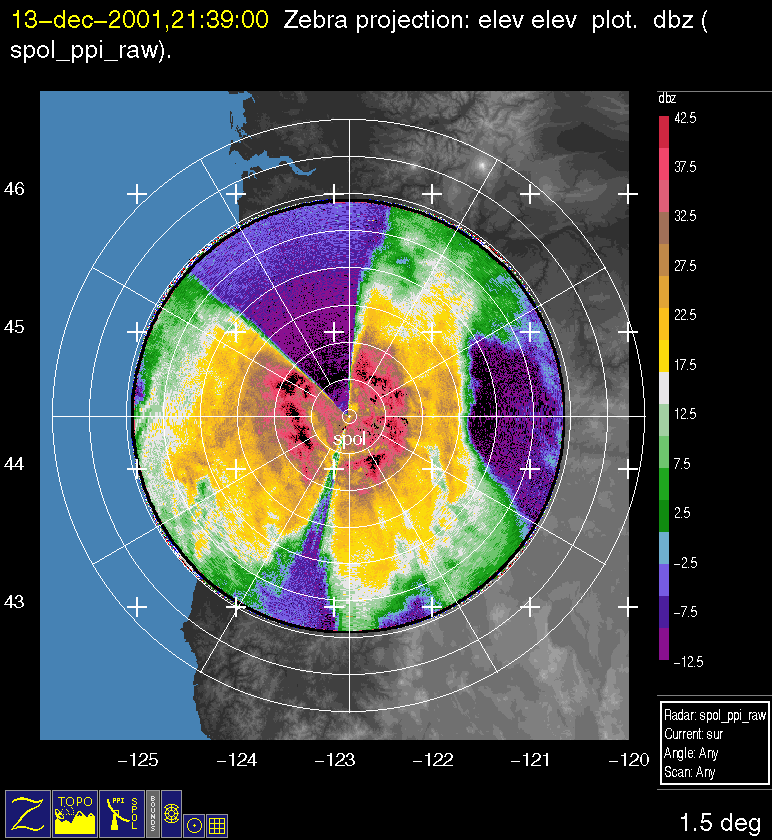
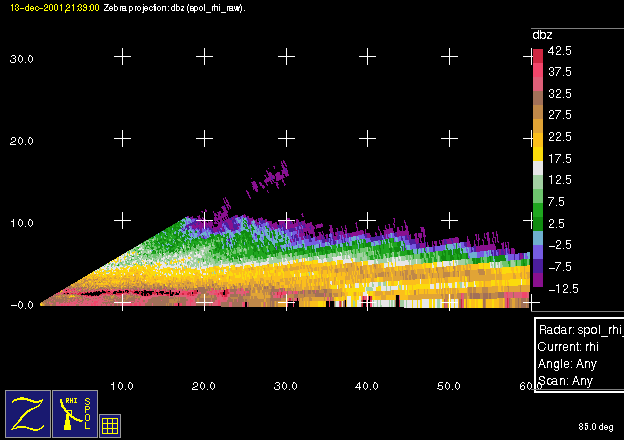
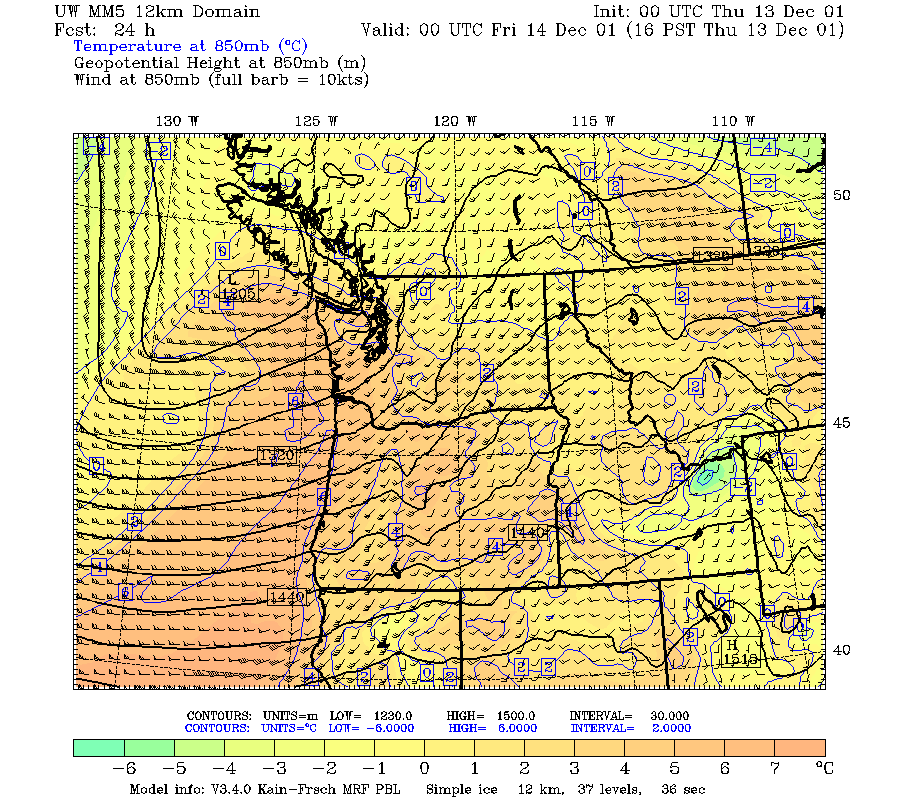
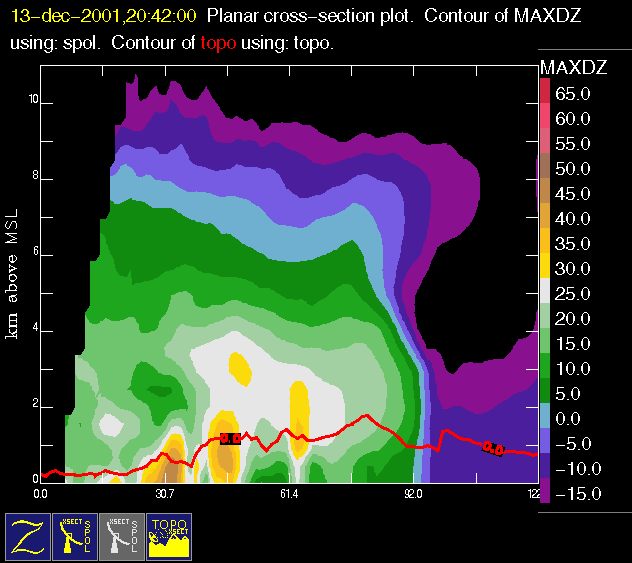
Before the start of the IOP at 1900 UTC, the precipitation was somewhat convective over the windward slope, with interesting north-south parallel bands over the barrier (Fig. 4). The convective plumes to 4 km ASL seemed to be situated near the various ridges along the western Cascades (Fig. 5). By 21:39 UTC widespread heavy stratiform precipitation was occurring over the IOP site (Fig. 6), with a well defined bright band to 45 dBZ near 2 km ASL and cloud tops above 8 km (Fig. 7). There was tremendous cross-barrier flow at 850 mb (Fig.8). As a result, there was significant orographic precipitation enhancement over the windward slopes around this time (Fig. 9), with an interesting area of reflectivity enhancement sloping downward from 4 to 2 km ASL from the first set of windward ridges. In addition, there was significant precipitation shadowing in the lee, an ice overhang above 7 km ASL, and low-level precipitation spillover in the immediate lee of the crest.
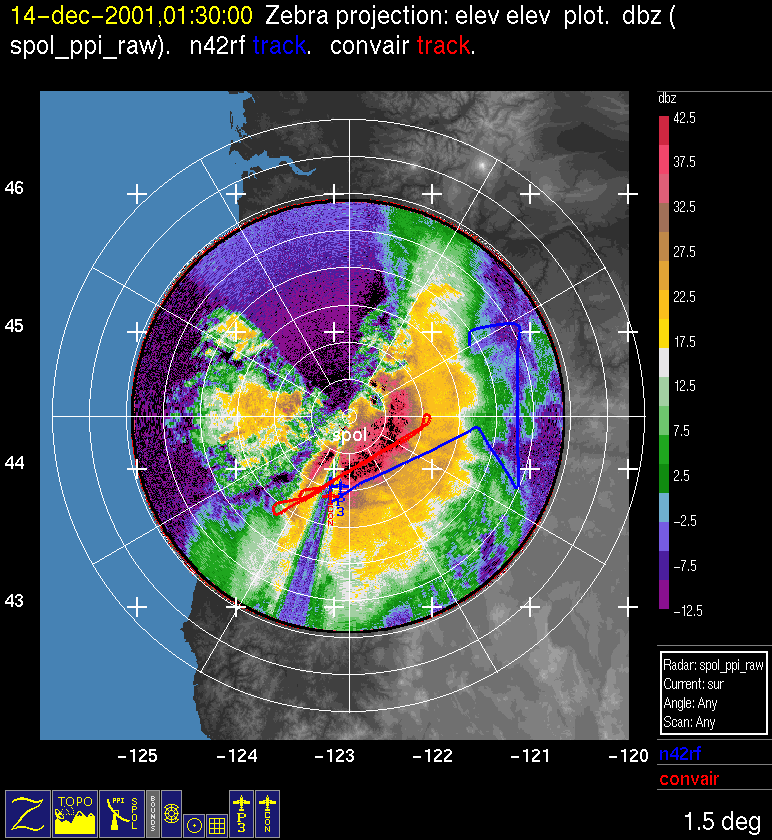
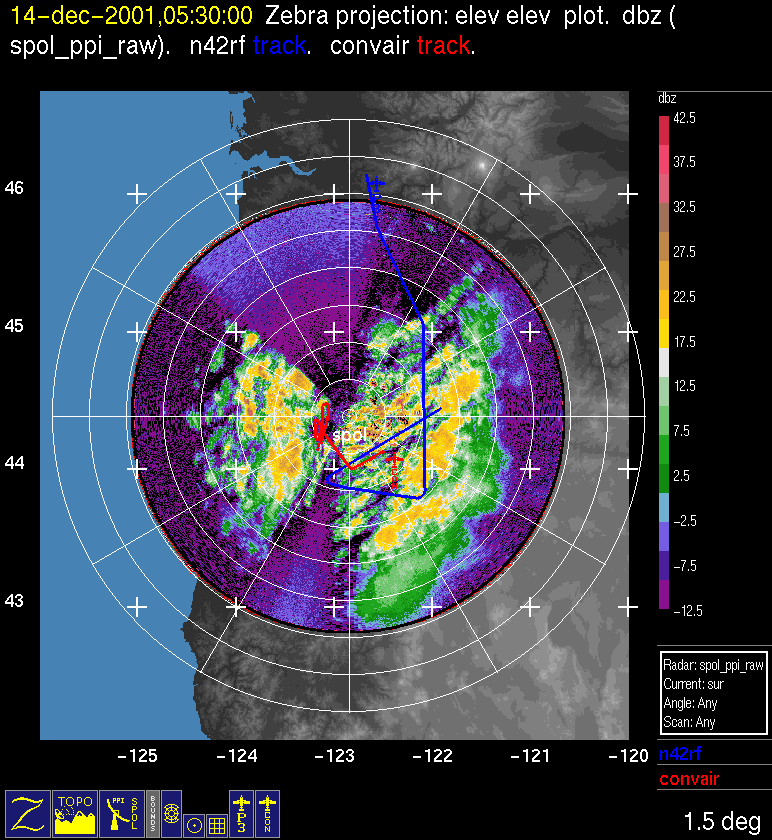
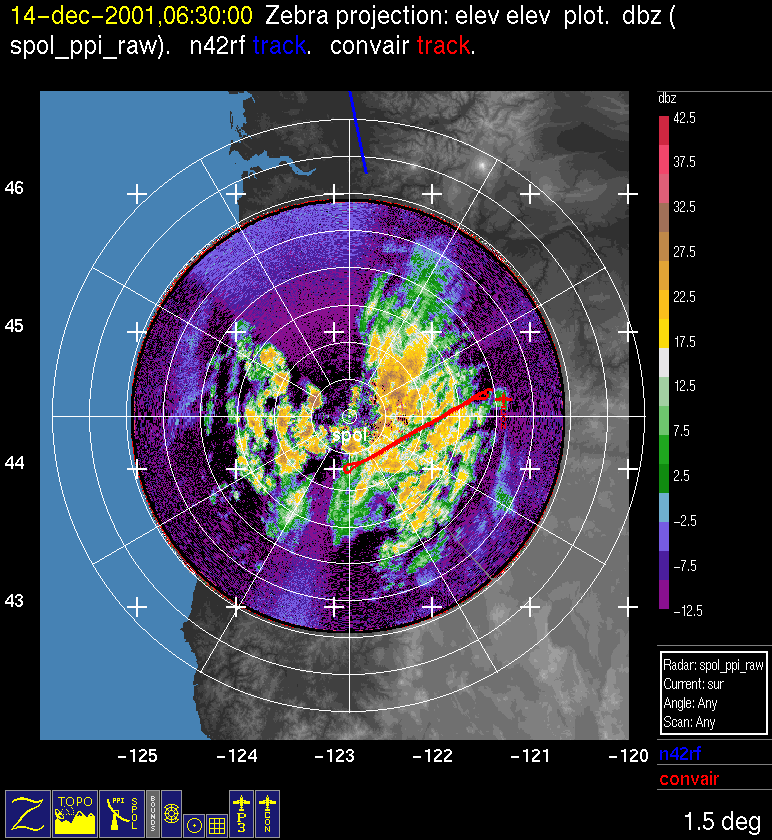
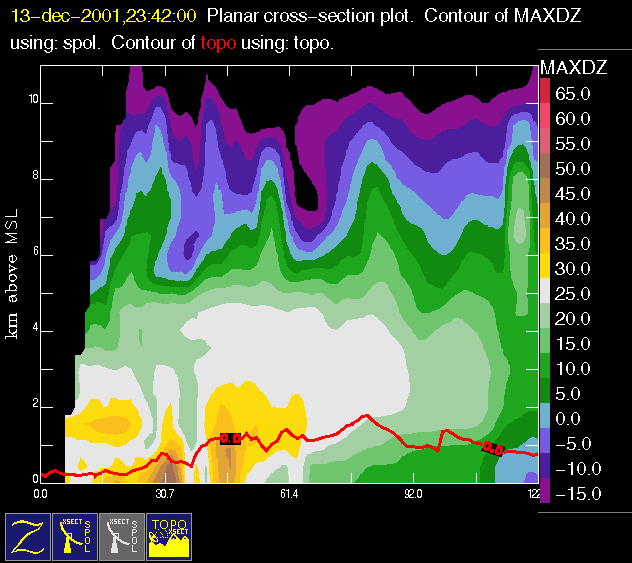
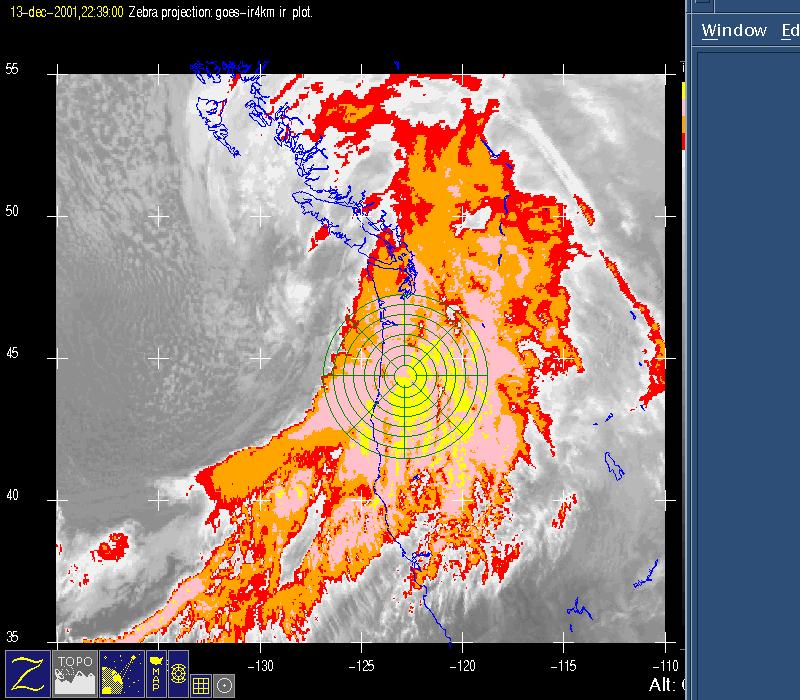
The P-3 and Convair reached the study area at about 2300 UTC. At this time there was still widespread stratiform precipitation. The P-3 successfully completed the full doppler north-S patterns between 2300 and 0100 UTC (Fig. 10a, Fig. 10b). During this period, the precipitation turned slightly more convective aloft (Fig. 11). This could also be seen on IR satellite, with the "ragged" area of cold cloud tops over the study area (Fig. 12). There was also significantly more precipitation in the lee at 2300 UTC compared to two hours ago (Fig. 9, Fig. 11), therefore allowing the P-3 to complete all north-south Doppler legs. Meanwhile, the Convair executed SW-NE flight tracks descending down from around 5.5 km ASL. Winds at the S-Pol radar site were gusting strongly. The peak gusts gradually increased from 30 to 37 m/s (the absolute peak value) during the period of about 2300 UTC 13 December through 0100 UTC 14 December. (Exposure of the anemometer was not ideal, so these values are only an indication of the actual speed. In any case it was exciting to be there!)
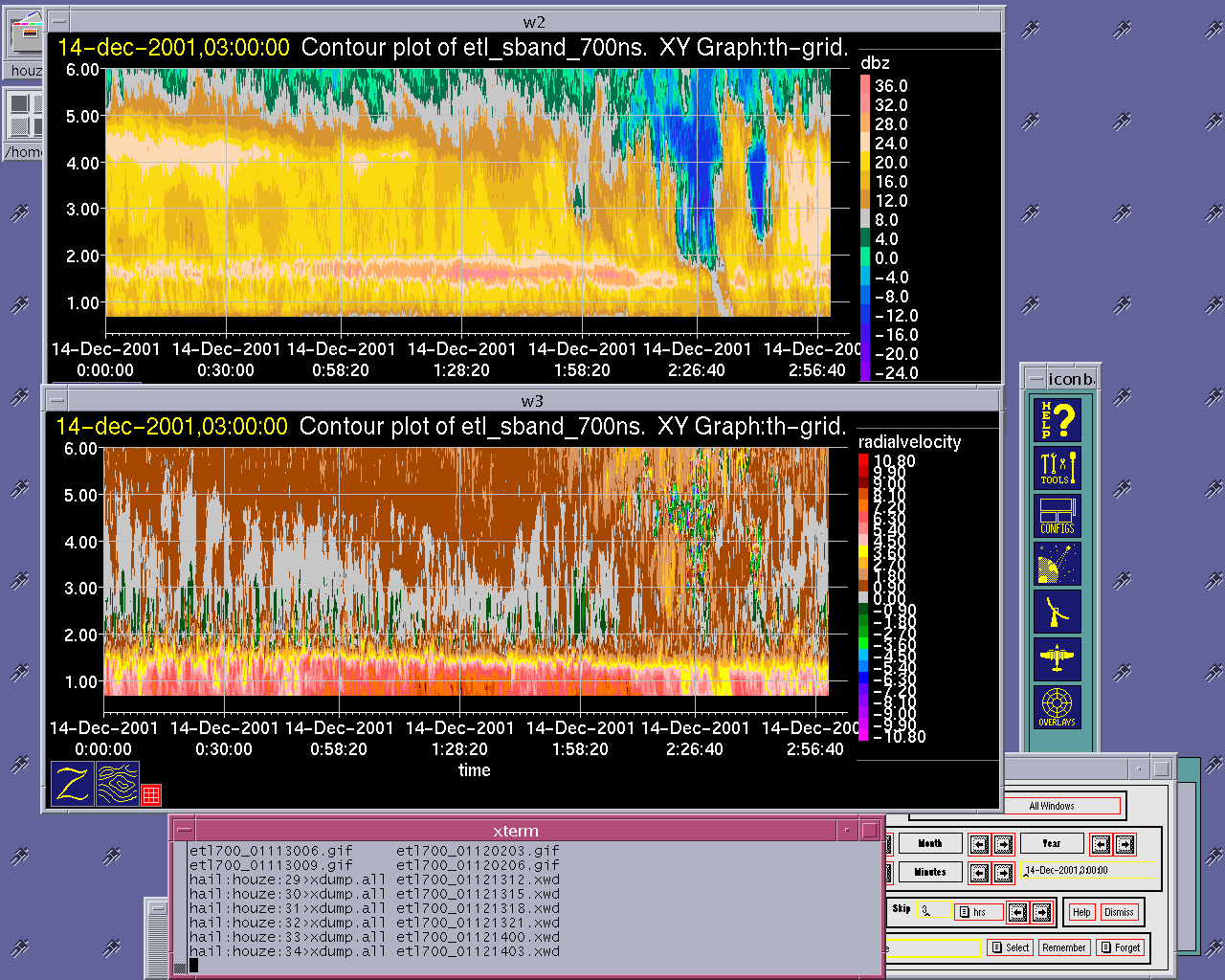
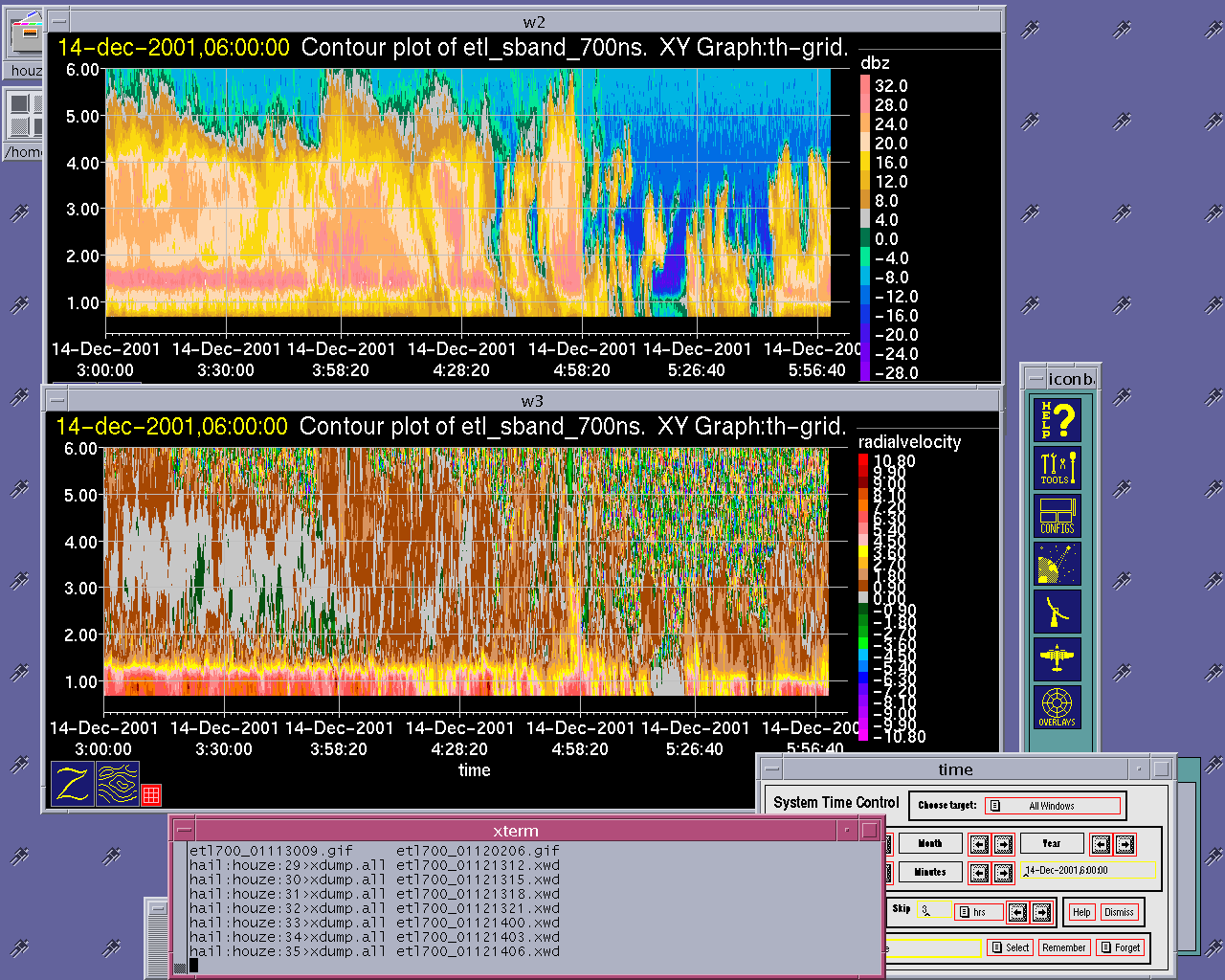
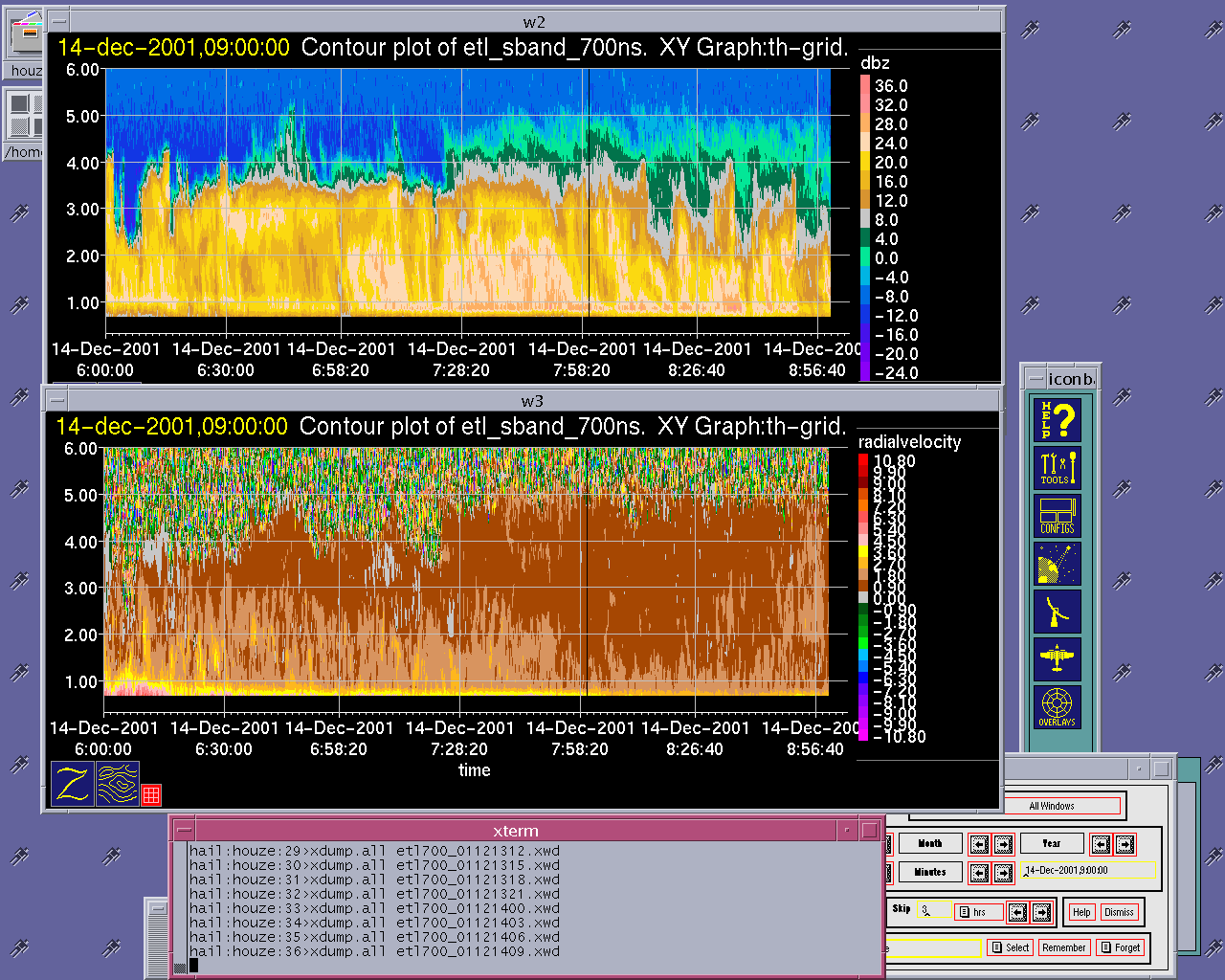
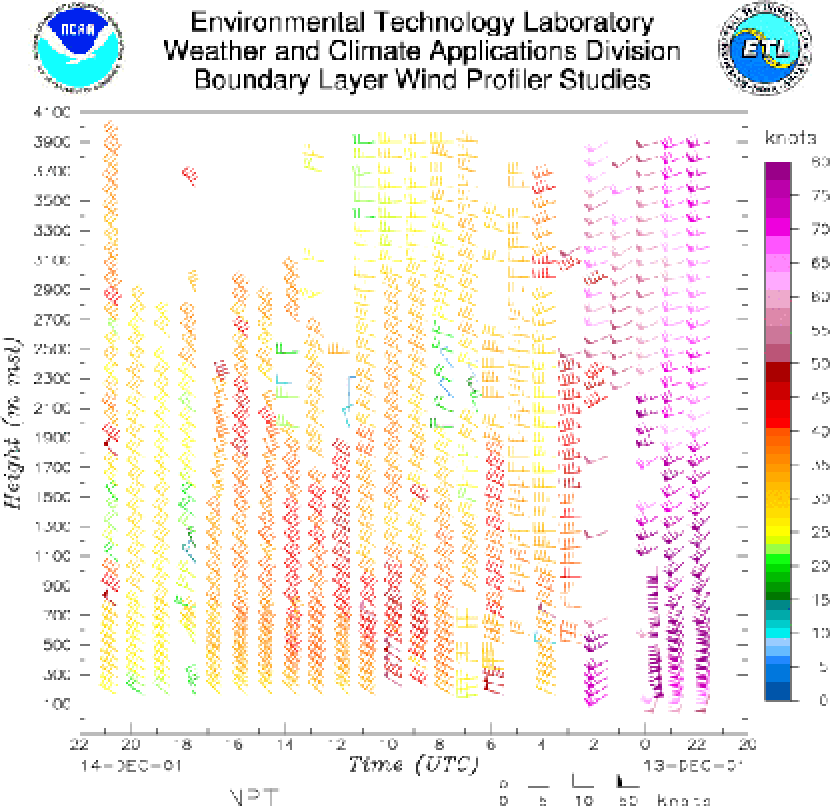
At 0000 UTC, the S-Pol particle identification algorithm indicated graupel above the bright band over an extensive region of echo (Fig. 17). The ETL S-band profiler showed a deep continuous layer of echo with a bright band at about 1.7 km AGL between 0000 and 0300 UTC (Fig. 18a). The radial velocity data in this figure showed a considerable region echo between 2 and 3.5 km AGL in which the radial velocity was zero or upward, indicating updraft of a meter per second or more. The pattern showed alternating convective scale cells of upward velocity, just above the melting layer. This pattern is consistent with the appearance of graupel at this level in the S-Pol particle identification field. The apparent upward vertical air motions were greatest when the cold air came in and the bright band dropped about 0200 UTC. After 0300, the S-band profiler showed the bright band drop eventually to the ground in the postfrontal period (Fig. 18b, Fig. 18c). Bob Houze and Brad Smull visited the S-band profiler site on the morning of the 14th and found a few inches of snow on the ground (Fig. 19a). Snow was falling while they were at the site, and Bob's dog Schaefer collected some aggregates (Fig. 19b).
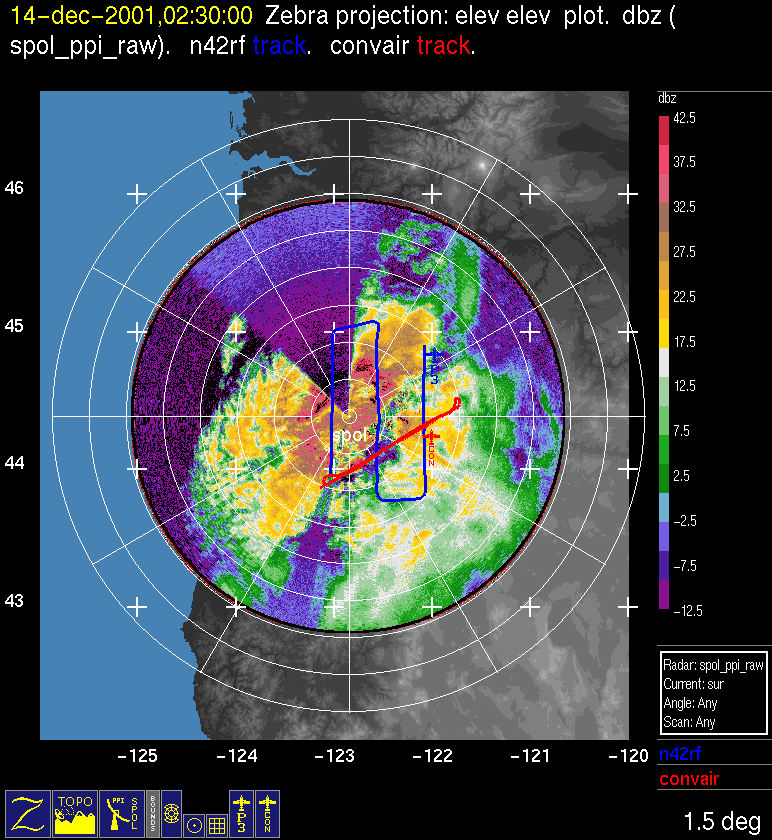
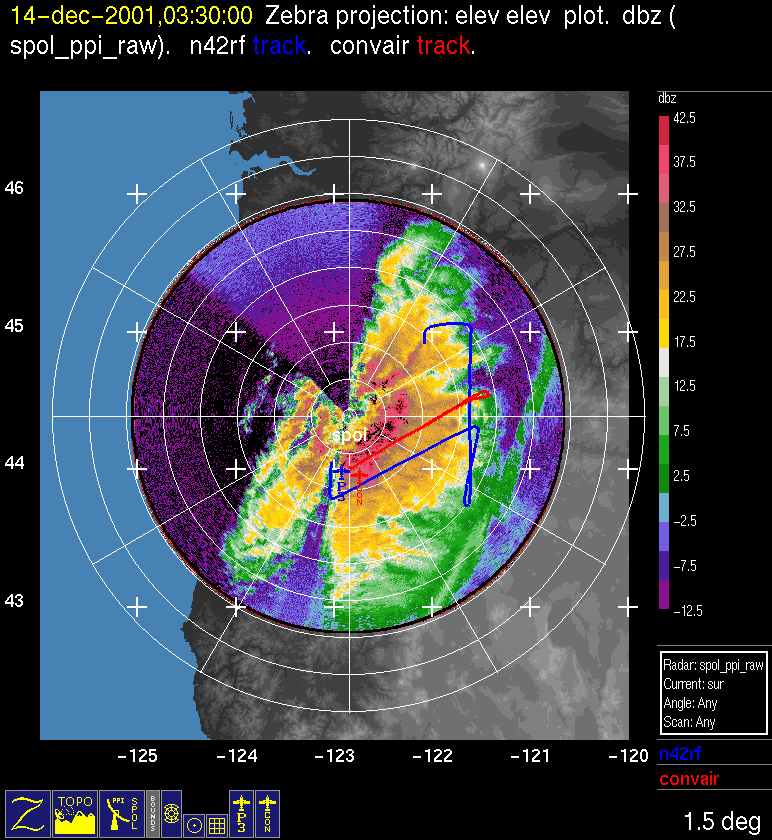
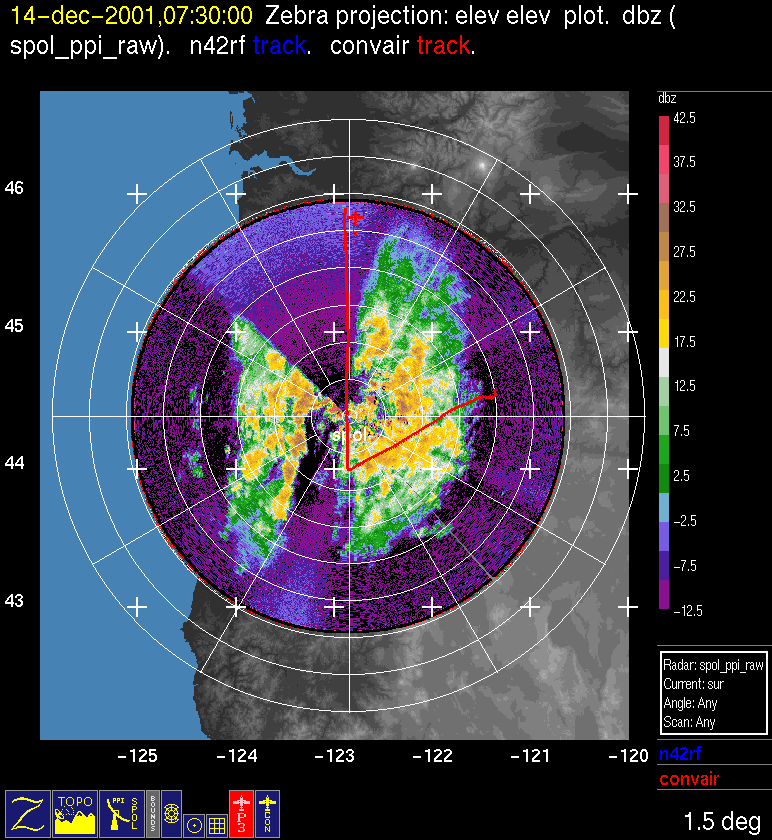
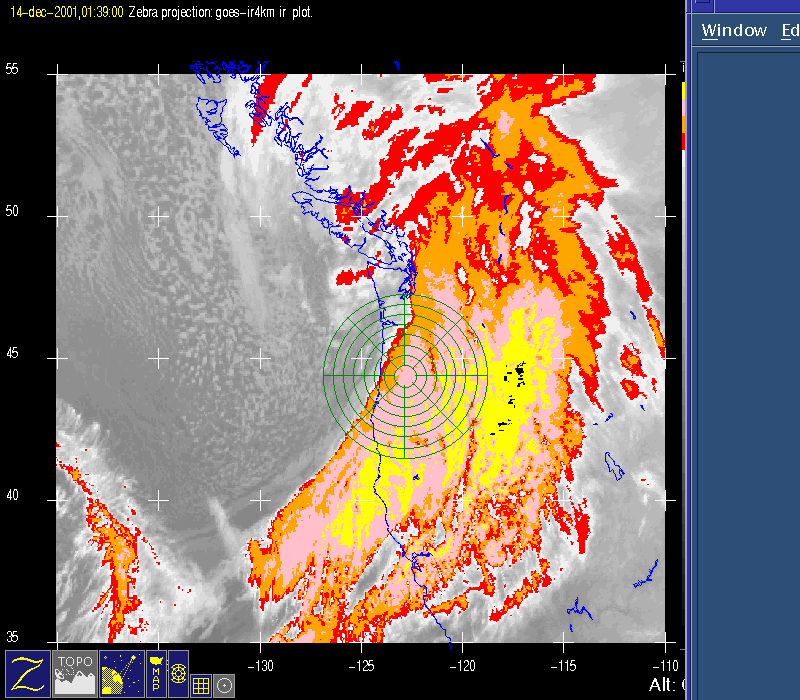
The P-3 began its second set of north-south Doppler legs along the lower windward slope by 0130 UTC. During this second set of legs the back edge of the deep upper level cloud/precipitation shield was moving across the study area (Fig. 13), while a second band was moving in from the west (Fig. 14, ). The P-3 continued to fly over the windward slope as these frontal precipitation bands moved across the region (Fig. 10c, Fig. 10d, Fig. 10e). The surface front made landfall at the coast shortly before 0300 UTC (Fig. 15).With the passage of the upper-level frontal band the winds diminished at flight level (2-3 km ASL) from near 40 m/s to 30 m/s but with no apparent wind shift and no surface frontal passage was reported yet. The precipitation character also turned more convective, with tops 4-6 km ASL. The P-3 encountered some lee wave activity at 0226 UTC and saw dramatic evidence of precipitation spillover to the north of Santiam Pass at 0232 UTC. The P-3 did not complete easternmost north-south leg because there was limited precipitation downwind of the Cascades.
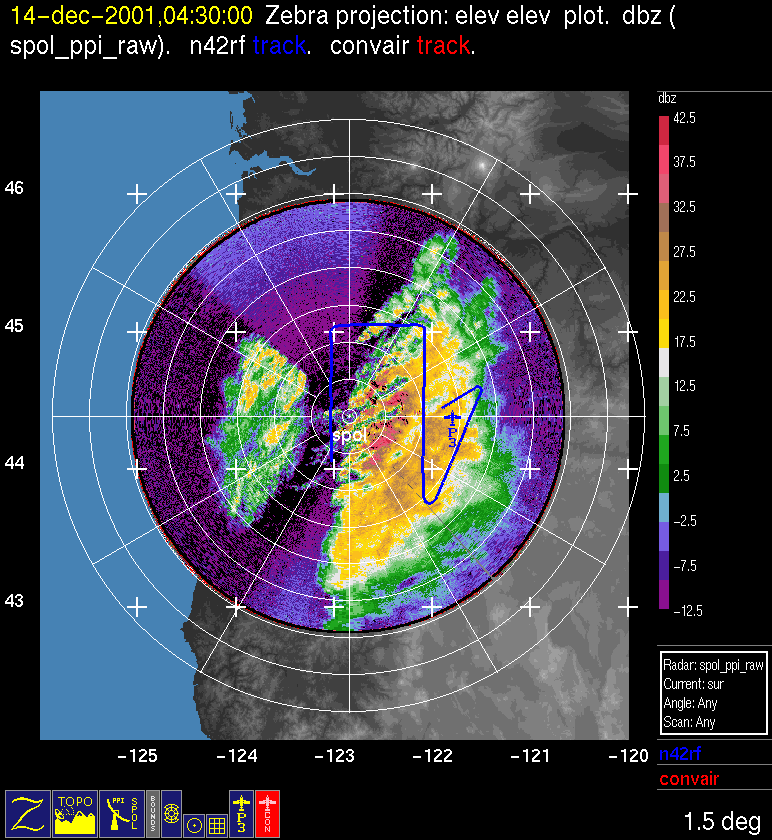
As the Convair began its second mission around 0400 UTC, the P-3 executed a NE-SW cross mountain transect over Santiam Pass at 10 kft (Fig. 10f). The surface front reached the study area at McKenzie Bridge by 0430UTC (Fig. 16). At 0500 UTC, scientists aboard the P-3 reported seeing a well defined orographic cloud extending 20-30 km upwind of Santiam Pass, to about 4.5 km AGL. The S-Pol radar during this time period showed SW-NE oriented wavelike bands of echo within this orographic cloud (Fig. 10g). The P-3 ended its mission at 0514 UTC, after completing its final south to north Doppler leg just west of Santiam Pass. The Convair continued to fly in postfrontal convection on the windward slopes till after 0730 UTC (Fig. 10h, Fig. 10i).
Convair-580 Summary
UW Flight Number:
1900
Period of Flight:
2131 UTC 13 December-0327 UTC 14 December 2001
Main Accomplishment of Flight:
Profile from 20,000 to 14,000 ft in southwest-northeast direction over Oregon Cascades in precipitation associated with main rainband of a strong cold front. (P-3 did "lawnmower" flight pattern for air motion measurements.) Convair-580 landed in Eugene, Oregon.
Instrument Problems:
PMS 2-D cloud probe erratic.
Flight Scientist:
Nick Bond
Approximate UTC Timeline (Local time= UTC-8 hours) Activity for UW Flight 1900:
2131 |
Engines on. |
2136 |
Out of blocks. |
2143 |
Takeoff. |
2203 |
Ferry in constant precipitation 2-DC probe down. |
2218 |
Winds 250˚ @ 28 m s–1 (15,000 ft). |
2220 |
2-DC back up but images look bad and suspiciously low concentrations. |
2230 |
Trying to restart 2-DC probe system. |
2244 |
HVPS temporarily down. |
2249 |
Larger crystals on HVPS. |
2304 |
2-DC looking okay. |
2322 |
At southwest starting point; begin first run, 20,000 ft, wind 250˚ @ 45 m s–1, T = –18˚ to –19˚C. |
2334 |
End of first leg. |
2338 |
Second leg heading southwest (20,000-18,000 ft). |
2352 |
No visual sign of back edge of band. |
2357 |
End of second leg. |
2359 |
Starting third leg heading northeast, 18,000 ft, wind 245˚ @ 45; T= –16˚ to –17˚C. |
0005 |
S-Pol and P-3 reporting echo tops of 7 & 8 km; latter seems more likely. |
0012 |
End of third leg. |
0015 |
Start of fourth leg (18,000-16,000 ft). |
0025 |
Everything working fine; appears to be low LWC (~0.01 g/m3). |
0035 |
Wind speeds dropping off 42 to 32 m s–1. |
0039 |
End of fourth leg. |
0041 |
Start of fifth leg heading northeast, 16,000 ft, wind 250˚ @ 31; T = –14˚ to –16˚C. 2‑DC looks kind of bad (will cycle power). |
0057 |
End of fifth leg. |
0101 |
Start sixth leg, head southwest, 16,000-14,000 ft. |
0120 |
A bit more intense precipitation, stronger winds and turbulence at southwest end of leg. End of sixth leg; clear slot at flight level right at end. |
0130 |
Start of seventh leg, heading northeast, 14,000 ft, wind 250˚ @ 40 m s–1; T –12˚ to –13˚C. Light to occasionally moderate chop at southwest end of leg. |
0141 |
Much smoother ride. |
0145 |
End of seventh leg. |
0148 |
Start of eighth leg heading southwest (14,000-12,000 ft). |
0149 |
Locally enhanced winds over Santiam Pass (~48 m s–1). |
0200 |
Some riming and small patches of high LWC. |
0217 |
End of eighth leg. |
0221 |
Start of ninth leg heading northeast, 11,000 ft, wind 255˚ @ 32 m s–1, T ~–8˚C. |
0228 |
Hitting some clear patches. |
0229 |
2-DC out then back. |
0237 |
End of ninth leg; considerable precipitation in lee of Cascade crest (aloft). |
0240 |
Start of tenth leg (stepped descent). |
0243 |
Apparently cracked a window. Short patches without precipitation in lee of crest, 10,000 ft, T ~–6˚C. |
0257 |
Hitting moderate chop. |
0304 |
Shed ice on window. |
0309 |
End last leg; heading for Eugene. |
0324 |
Landed at Eugene. |
0327 |
Engines off. |
UW Flight Number:
1901
Period of Flight:
0438-0815 UTC 14 December 2001
Main Accomplishment of Flight:
Takeoff from Eugene, Oregon. Profile across Santiam Pass in same storm system as UW Flight 1900 but in postfrontal conditions. (P-3 up only during initial portion of flight).
Instrument Problems:
-
Flight Scientist:
Nick Bond
Approximate UTC Timeline (Local time= UTC-8 hours) Activity for UW Flight 1901:
0438 |
Engines on. |
0450 |
Takeoff. |
0500 |
CCN instrument on. |
0505 |
Winds at 3,000 ft 280˚ @ 18 m s–1. |
0520 |
Broke off level work & climbing. |
0521 |
Many parameters not updating. |
0526 |
Hitting up to 0.4 g/m3 LWC and sizable ice crystals. |
0532 |
Heading for Santiam Pass. Cloud below 14,000-15,000 ft. |
0533 |
PVM zeroed. |
0536 |
Skimming tops at 13,700 ft. |
0540 |
Lighter but still continuous precipitation in lee until just before endpoint. |
0541 |
End of first leg. |
0545 |
Start second leg, heading southwest (13,700-12,000 ft). |
0547 |
Spotted some capped columns. |
0555 at 44˚17'/122˚9'. |
Out of most precipitation. |
0609 |
End of leg 2; continuous precipitation in last portion of leg. |
0613 |
Begin third leg heading northeast, 12,000 ft, wind 270˚ @ 17 m s–1. |
0620 at 44˚16'/122˚11' |
Winds now 245-250˚ @ 25 m s–1. |
0625 |
Precipitation cut off in immediate lee (some occasional bursts). |
0629 |
End of third leg. |
0633 |
Starting fourth leg (12,000-10,000 ft). |
0636 |
Sizeable patches of precipitation in lee. |
0643 |
Dropping to 10,000 ft west of pass. |
0649 |
Large flakes at ~9,000 ft and T ~–10˚C. |
0654 |
Dropping to 6,000 ft, columns appearing. |
0658 |
End of fourth leg; some needles near end. Heading to Paine Field. |
0706 |
Ascent for ferry heading due north over S‑Pol radar, precipitation up to 166. |
0810 |
Landed. |
0815 |
Engines off. |
P-3 Summary
P-3 Flight Number:
011213H, Improve 05
Period of Flight:
2040 UTC 13 December-0611 UTC 14 December 2001
Main Accomplishment of Flight:
-
Instrument Problems:
-
Flight Scientist:
Brian Colle
Approximate UTC Timeline (Local time= UTC-8 hours) Activity for P-3 Flight 05:
204023 UTC (47.90025, -122.28064) 99.084°, 972.9 mb, 3.0 m Engine Start. Wind 198o@2.4 kts. T=6.4 oC. Td=6.3 oC Psfc=973
204606 UTC (47.90031, -122.28116) 337.734°, 972.7 mb, 9.0 m Block Out
205210 UTC (47.92112, -122.28416) 358.712°, 973.6 mb, 7.0 m Radar up
205238 UTC (47.92168, -122.28316) 83.813°, 973.3 mb, 8.0 m One hour delay called. Number one start valve problem. Heading back to the hangar.
205850 UTC (47.90800, -122.28348) 177.899°, 972.1 mb, 9.0 m Radar down.
215401 UTC (47.90053, -122.28056) 91.433°, 969.3 mb, 3.0 m Engine Start. Variable light wind 170-250o
220054 UTC (47.90047, -122.28058) 176.032°, 968.9 mb, 3.0 m Block out
T=7.1;Td=6.8. Wind on taxiway 179@13.9. Psfc=969.5
220921 UTC (47.90670, -122.28555) 179.077°, 970.8 mb, 5.0 m Take off.
221213 UTC (47.81314, -122.35242) 276.158°, 882.5 mb, 839.0 m Radar starting up.
222037 UTC (47.53315, -122.66292) 193.810°, 706.0 mb, 2696.0 T=3.9 oC; Td=3.9 oC; Z=9700m. Needle and aggregates.
222600 UTC (47.26814, -122.87079) 220.686°, 628.9 mb, 3626.0 m Excellent radar coverage. Precip. highly stratiform with clearly visible bright band.
224401 UTC (46.10787, -123.01904) 177.581°, 560.7 mb, 4382.0 m Still very good radar coverage. Temperature warming as we move south. T= -12.4 oC. Dendrites.
225323 UTC (45.47267, -122.97414) 180.315°, 564.4 mb, 4474.0 m Start descent to 6000ft. Wind 255o/57 kts at 14250.
-8C: 12200ft. Dendrites. Few needles and needle clusters. Wind 252o/59. RH 100%
-4C: 9900ft. More needles. Wind 249o/66 kts. Area of moderate chop.
225855 UTC (45.12265, -123.00816) 204.683°, 731.3 mb, 2497.0 m Freezing level. 7650Ft. wind 241o/59 kts. Moderate chop.
230244 UTC (44.94910, -123.06636) 175.970°, 798.0 mb, 1732.0 m Point A. 6450Ft AMSL. T1.6. RH=100%+. Wind 238o/77 kts. Moderate chop. Convective cell about 15km ahead.
230558 UTC (44.78348, -123.05608) 179.093°, 798.2 mb, 1758.0 m 6450 ft. 60 mile from PT F. Wind 235o/70 kts. T=1.9. Mainly liquid water. Some aggregated melting ice. Good radar coverage. Mainly stratiform with some embedded cells. Chop still moderate.
231338 UTC (44.37650, -123.03514) 178.358°, 798.8 mb, 1739.0 m 35 miles from F. Whole AF leg at 6450 feet so far. T:1.2 oC, wind 235o/69 kts. Gust to 80 kts. Hurricane force winds just reported by pilot:)
231934 UTC (44.07651, -123.02928) 180.249°, 798.4 mb, 1727.0 m Surface visible. Cloud base approx. 6100.
Traffic seen. Climbing to 8000 early.
232047 UTC (44.00908, -123.02951) 180.162°, 797.9 mb, 1702.0 m False alarm. Staying at 6450ft. 12Miles from F. T=1.4 oC, wind 238o/74 kts. Smooth air
232439 UTC (43.81005, -123.02853) 181.999°, 797.1 mb, 1667.0 m At point F. Climbing to 8000ft. T=1.5 oC, wind 236o/68 kts.
AF Leg took 23mins 40 secs
FreeUTCing:7400ft.
Level 8350ft. T=-1.6 oC. Moderate chop. Aggregates
232753 UTC (43.77461, -122.69901) 91.271°, 743.1 mb, 1485.0 m Radar down. Wind 233o/68 kts
233127 UTC (43.96507, -122.56126) 357.398°, 742.8 mb, 2008.0 m Just north of G. 62 miles to B. 8350Ft. T=-2C. Wind 234o/68.
F->G : 3min 55sec
233349 UTC (44.13544, -122.56654) 359.674°, 742.9 mb, 2094.0 m Radar up. 50 miles from B. T=-2.6 oC; Td=-1.5 oC, wind 235o/70. Moderate chop. Td>T for some time now. Supersat water expected but some values look a little too sat. Prob. OK but worth checking. Radar coverage is still excellent. Some cellular echoes to the west.
233827 UTC (44.48302, -122.56723) 357.889°, 743.0 mb, 1595.0 m Microphysics down. 30 miles from B
234526 UTC (45.00491, -122.56227) 28.705°, 741.7 mb, 1994.0 m At point B. G->B leg done at approx 8350ft. G->B took: 16mins 30secs
T=-1.7. 240/75. Making the turn and climbing to 11K.
Physics back up.
234746 UTC (45.03534, -122.29631) 90.753°, 677.8 mb, 1969.0 m 10800: T=-5.9 oC, wind 249o/80 kts
Note: -4 oC at 9780 feet. Needles, aggregates and some rimed dendrites
234912 UTC (45.03246, -122.12306) 111.936°, 660.5 mb, 2136.0 m At point C. 11360 feet. T= -6.6 oC. Td= -7 oC, wind 247o/75.
B->C 4 mins.
235147 UTC (44.88167, -122.08351) 178.777°, 660.9 mb, 1787.0 m Predominately needles. Lots of them. T= -6.8 oC. Smooth air
235624 UTC (44.61497, -122.08304) 179.572°, 661.0 mb, 2333.0 m Still almost all needles. Starting to get a some ice on the wing.
At 41 miles from H T= -6 oC. Td= -7.2 oC, wind 250o/83.
000331 UTC (44.20911, -122.08203) 179.647°, 661.0 mb, 2073.0 m Microphysics down again. Enhancement over terrain ridges seen on radar.
000955 UTC (43.81623, -122.08873) 171.254°, 661.2 mb, 1817.0 m C -> H leg completed in 21min 3secs. Leg at 11350 ft. Pretty smooth leg.
T= -7.6 oC; Td= -8.3 oC, wind 257o/81
001152 UTC (43.77084, -121.89420) 98.640°, 622.8 mb, 2260.0 m H->I Climbing to 13 kft.
13380Ft: T=-10.2 oC; Td=-10.7 oC, wind 255o/82 kts
001344 UTC (43.74422, -121.66594) 98.596°, 609.9 mb, 2677.0 m At I. H->I Approx 4 mins.
T=-9.8 oC; Td=-10.1 oC; wind 254o/80. Microphysics still down.
002204 UTC (44.30367, -121.62157) 355.846°, 609.9 mb, 2946.0 m T=-9.7. Td=-10.8 oC. Wind 255o/77 kts. Very smooth air.
003200 UTC (45.02245, -121.55893) 76.014°, 613.6 mb, 2990.0 m At point D. I->D completed at approx 13380 ft. Time: 16mins 34secs
T=-8.9 oC ;Td=-13.2 oC; wind 261o/60 kts.
003213 UTC (45.02721, -121.53154) 76.456°, 618.9 mb, 2954.0 m Descending to 10000ft towards pt east.
-8 oC@12200ft
11000ft: t=-5.4 oC; Td=-8 oC, wind 255o/84 kts
003506 UTC (45.06289, -121.16113) 105.521°, 686.9 mb, 2266.0 m At Pt east. Time for D-> E 4mins 5secs.
10360Ft: t=-4 oC; Td=6.2 oC, wind 256o/80. Heading towards Pt J
Precip thinning substantially to the east
004154 UTC (44.66370, -121.13007) 178.466°, 687.4 mb, 2276.0 m Radar down. 53 miles from Pt J
004430 UTC (44.51184, -121.13329) 182.143°, 687.4 mb, 2127.0 m Radar up. 42 miles from J. T= -4.7 oC; Td=-5.2 oC; wind 250o/74 kts
004649 UTC (44.38351, -121.13603) 181.523°, 687.2 mb, 2146.0 m 36 miles from J. Slight chop.
005106 UTC (44.11162, -121.12985) 176.601°, 687.1 mb, 2032.0 m Microphysics back up.
RH is dropping rapidly in last 10 miles. Dropped 4 oC while I typed this. Now T= -2 oC, Td= -8.5 oC. No cloud particles
005526 UTC (43.86850, -121.14572) 275.722°, 676.7 mb, 1724.0 m At J. 11000. -4.1/-9.4. 251/80. E->J 20 mins 3 secs.
Heading to K and climbing to 13K
12200Ft: -6/-11.5
005922 UTC (44.04223, -121.29639) 326.311°, 610.0 mb, 2835.0 m Cloud particles observed again. Can see lee suppression on radar
010402 UTC (44.30408, -121.52985) 310.596°, 609.7 mb, 2997.0 m At K.
J->K 8mins 48 secs
011119 UTC (44.14043, -122.00313) 244.154°, 609.8 mb, 2898.0 m 49 miles from F. Huge dendrites very pristine dendrites visible.
Beautiful!
011255 UTC (44.10531, -122.10925) 246.192°, 610.7 mb, 2601.0 m Now descending slowly from 13K to 6K. 44 miles from F. Will get some descent data below:
13000: T=-10.9 oC; Td=11.1 oC; wind 255o/73 kts
12000: T=-9.1 oC; Td = -9.5 oC; wind 257o/71 kts. Big dendrites.
T=-8 oC; At UTC=11300; Td=-7.9 oC; wind 255o/65 kts.
11000: T=-7.4 oC; Td=-7.1 oC; wind 255o/65 kts
10000: T and Td= -5.4 oC; wind 256o/60 kts. Slight chop. Aggregates, rimed
t=-4; UTC=9100ft; td=-4.1; 252/52. Crystals look very rimed. Few needles appearing. Quite a lot of liquid water.
8000: t/td = 2.2/2.2 240/52. Moderate chop.
0C: UTC=6450ft Td=0.5 oC; 239/50 kts Nearly isothermal from 7100 to 6500 (0 to -0.9C). Areas of fairly severe chop.
012836 UTC (43.83696, -123.04393) 4.566°, 796.2 mb, 1684.0 m Missed the turn due to the chop! 69 miles to A. 6500 feet.
Sitting on the freezing level. Wind 237o/55 kts.
013404 UTC (44.24532, -123.02542) .590°, 796.3 mb, 1734.0 m 45 miles from A. Seem to be out of the rough stuff.
T/Td=0.7/-0.1. 231/57
014713 UTC (45.06541, -122.68637) 76.303°, 769.3 mb, 1993.0 m At A. T/Td= 0.4 oC/0.5 oC; wind 243o/62 kts. Mod. Chop. F->A approx 18min 20sec but approx as missed the turn at F. Leg done at 6500 feet.
Now heading to B and climbing to 8K. (Data taken at A, but LHS entry added between A and B
014911 UTC (45.02110, -122.54942) 187.778°, 769.2 mb, 1678.0 m At B. 7425. A->B 4mins 20 secs. T= -1.5 oC, Td=-1.2oC, wind 229o/57 kts. Moderate chop. Precip. Thinning around us but filling back in to the west.
015742 UTC (44.54487, -122.55588) 177.452°, 739.8 mb, 1603.0 m At 8450ft 45 miles from G. T/Td=-3.1 oC/-3.2 oC. Wind 239o/59 kts
020114 UTC (44.34431, -122.54181) 185.496°, 739.9 mb, 1587.0 m 34 miles from G. Just flew through a warm area. temperature rose to about -1.5 oC for same altitude (8450ft). Lots of needles seen.
020604 UTC (44.08192, -122.56676) 178.914°, 739.8 mb, 1287.0 m Moderately severe chop briefly. Precip. Seems to be filling in to our NW, with 40 dBZ on -ve tilt scan. Still very little echo directly around us. T/td= -3.2 oC/-3.6 oC, wind 240o/60kts
021123 UTC (43.78807, -122.52592) 123.970°, 710.9 mb, 2223.0 m Lots of needles. At G. T/Td=-3 oC/-5.2 oC, wind 148o/60 kts
Majority of BG flown at about 8450ft except initial part when still climbing. B->G time:22mins 10 secs.
021409 UTC (43.78519, -122.21391) 86.534°, 659.0 mb, 2452.0 m Reached H after Climb to 11400ft. T/Td=-8.4 oC/-7.7 oC. Very few cloud particles. Wind 246o/75 kts. G->H 4 mins 20sec.
021823 UTC (44.03703, -122.07861) 358.048°, 658.9 mb, 1934.0 m 58 miles from C. Radar is really thinning except to NW. T/Td=-9.3 oC/-8.5 oC; wind 238o/60 kts. Much more turbulent than first lawn mower leg.
022749 UTC (44.73656, -122.08429) 1.152°, 658.2 mb, 2190.0 m Just hit an updraft (poss gravity wave) at about 2:26:20. Jump in cloud particles and precip. At about the same time. Radar has really filled in again. Fair amount of large crystals.
023112 UTC (44.99904, -122.07504) 23.138°, 643.6 mb, 2836.0 m At point C. H->C 16 mins. Climbing to 13kft at heading to D.
023247 UTC (45.05436, -121.91560) 80.380°, 604.2 mb, 2899.0 m Levelled at 13600 and making the turn 10 miles from D. T=-13. Dewpoint sensor just failed ( possibly iced up). Slowly coming back to life. C->D 4mins 28sec
023533 UTC (45.02706, -121.60718) 171.953°, 608.1 mb, 2819.0 m Heading towards I. T=-11.6 oC (Dewpoint still all over the place). Wind 245o/60 kts. Fairly ice crystals. Td settling down to about -11.5 oC. Good radar to west. Looks like some embedded convection, thinner to the east. Hitting some more bumps. 3m/s at approx 2:40:30.
025855 UTC (43.85142, -121.65674) 9.896°, 607.9 mb, 2467.0 m Just passed I. Data at I: T/Td -12.4 oC/-12.8 oC, wind 248o/72.5 kts.
D->I 22mins 50secs. Leg done at 13473. Not doing JE leg. Now heading to K for slow descent to F. Nice dendrites.
030332 UTC (44.24029, -121.54128) 11.165°, 607.9 mb, 2920.0 m Can see upslope in radar and shallowing echo in the lee around the 20 km range ring.
030450 UTC (44.31419, -121.57469) 251.429°, 608.2 mb, 2965.0 m At K, 13460ft. Leg time: 7min 22sec. T=-11.5 oC; td=-15.9 oC; wind 251o/63 kts
030914 UTC (44.20963, -121.88518) 243.084°, 613.3 mb, 2404.0 m
13200: T/Td=-12 oC/-12.2 oC. Wind 250o/62 kts
12925: T/Td=-11.3 oC/-11.7 oC, wind 252o/67 kts
12000: T/Td=-10 oC/-10.1 oC, wind 248o/62 kts
T=-8 oC: Z=11150ft; Td=-8.8 oC; wind 250o/63 kts
11000: T/Td=-7.6 oC/-8 oC, wind 250o/60 kts. Transition to mostly needles
10000: T/Td=-6.9 oC/-6.3 oC, wind 250o/52 kts. Moderate turbulence 10100-10000.
9000: T/Td=-5.3 oC/-4.6 oC, wind 253o/51 kts. Still mod turb.
T=-4 oC: Z=8230ft; Td=-3.3 oC, wind 245o/53 kts.
8000: T/Td=-3.6 oC/-2.7 oC; wind 247o/49 kts
Rimed crystals and aggregates. Moderate turb.
6500: T/Td=-0.8 oC/-0.9 oC; wind 257o/36 kts.
Moderately severe turb. Good radar coverage. Cloud depth still about 6km.
032619 UTC (43.80268, -123.03801) 330.302°, 797.1 mb, 1651.0 m At point F. T/Td=-1.2 oC/-0.8 oC; wind 258o/44 kts
K->F 21min 45sec
033008 UTC (44.06456, -123.03282) .425°, 797.2 mb, 1699.0 m Nice view down below of Eugene! Much less precip. Here. Pretty smooth.
033239 UTC (44.23717, -123.03268) 358.915°, 797.5 mb, 1716.0 m Slight chop.
033747 UTC (44.58102, -123.03406) 359.874°, 797.2 mb, 1735.0 m Significant turb at 3:36:30. 8m/s vertical motion.
033946 UTC (44.71900, -123.03276) 359.356°, 797.5 mb, 1750.0 m Very little radar coverage at the moment. Almost no precip. A little cooler towards A too. T/Td=-2.2 oC/-2.4 oC, wind 256o/47 kts. Can see Salem
034239 UTC (44.91833, -123.03246) 357.954°, 797.4 mb, 1752.0 m Nose radar indicates a few cells ahead. And it was right!
034422 UTC (45.03324, -123.00653) 52.561°, 796.0 mb, 1760.0 m Made the turn at A. Hit a big bump. +7.5 and -10.0. Approx 3:44.
Climbed to 9500 heading to C.
Moderate to moderately severe chop. T=-6.6 oC/-6.3 oC, wind 249o/58 kts
F->A 18min 50sec.
034955 UTC (45.05311, -122.38309) 91.384°, 708.6 mb, 1851.0 m 12 miles from C 9570ft. Radar coverage increasing again as we near the crest. Now climbing to 11000ft
035157 UTC (45.05337, -122.14508) 92.811°, 658.5 mb, 2444.0 m 2.5 miles from C. 11465Ft. Making the turn. T/Td=-9.9 oC/-10.6 oC, wind 258o/55 kts. Needles and plates. Heading to H.
A-> C 8 mins 25 sec
040230 UTC (44.40169, -122.08786) 178.701°, 657.9 mb, 2129.0 m 37 miles from H. T/Td=-10.6 oC/-12 oC, wind 251o/55 kts
Moderate chop. Good dual Dopplar coverage
041230 UTC (43.75751, -122.01875) 82.840°, 644.4 mb, 1866.0 m At point H. T/Td=-10.5 oC/-10.9 oC, wind 256o/47 kts
C->H 19 min 50sec
Leg flown at 11468ft. Fairly smooth until 6 miles from H, then slight chop.
041315 UTC (43.79543, -121.95770) 25.337°, 624.4 mb, 2051.0 m Climbing to 13 kft
-14 oC@13450ft Td=-16 oC. Heading to Q at 13500ft. Good radar coverage in this area Some cells off to the right
042236 UTC (44.50196, -121.54060) 23.526°, 607.4 mb, 2810.0 m 2 miles from Q at 13500. About 5 mins ago saw amazing St.Elmos fire on the Cockpit window. Just like a plasma ball. I wonder what the ice crystals looked like.
T/Td=-14.2/-16 252/63.
042542 UTC (44.56725, -121.62730) 239.508°, 618.9 mb, 2943.0 m Descent to 10500:
12000:T/Td= -11.2 oC/-12.2 oC, wind 263o/55 kts. Slight chop.
11000: T/Td=-9 oC/-10.8 oC, wind 261o/51 kts
Moderate chop at 10500ft.
043048 UTC (44.42516, -121.95438) 240.069°, 684.9 mb, 1820.0 m Moderate to moderately severe turbulence.
043339 UTC (44.34417, -122.14482) 237.510°, 683.0 mb, 1718.0 m Fairly high frequency turbulence. Radar sketchy to right (NW), but good coverage to left (SE) with some embedded convection.
043710 UTC (44.24981, -122.36620) 240.271°, 684.1 mb, 2100.0 m 36 miles from P. Much calmer air. T/Td=-9.7 oC/-14 oC, wind 246o/56 kts. Almost no precip at flight level
043912 UTC (44.19259, -122.49872) 239.014°, 683.5 mb, 2423.0 m More moderate chop. 28 miles from P. Main echo still off to left, much less to the right, though it seems to be weakening everywhere now especially forward scan.
044740 UTC (43.94512, -123.06372) 221.651°, 683.9 mb, 2881.0 m At P T/Td=-10.5 oC/-12 oC, wind 250o/38 kts. QP leg 24min 25sec.
Climbing to 11500 feet heading to pt H.
045132 UTC (43.85425, -122.72160) 98.068°, 660.9 mb, 2591.0 m Experiencing some moderate chop. 4:48:37 VV=7m/s.
22 miles from H. UTC=11400ft. T/Td= -12.1 oC/-12.8 oC, wind 246o/58 kts
045647 UTC (43.79759, -122.12804) 73.223°, 660.3 mb, 2164.0 m 2.5miles from H. T/Td=-11.4 oC/-14.2 oC, wind 253o/65 kts
PH leg: 9mins 25 secs. Starting H->C at 11400ft
050117 UTC (44.11195, -122.08255) 359.948°, 660.1 mb, 1752.0 m Moderate turbulence. Radar really filling out again to east with terrain enhancement. Can see echo sloping up the terrain.
050656 UTC (44.52946, -122.08780) 359.636°, 659.5 mb, 2335.0 m Short burst of dendrites and/or hex columns interrupting the previously boring crystals. T=-12.2 oC; Td=-12.8 oC
051019 UTC (44.78056, -122.08989) .205°, 660.2 mb, 2236.0 m Haven't seen a detectable wind shift but its getting colder along this leg. At H it was -11.4 oC/-14.2 oC. Now it is –13 oC/-13 oC. Humidity is fluctuating rapidly between supersaturated and about 90%.
051328 UTC (45.00151, -122.08720) 359.738°, 660.1 mb, 2475.0 m t C: UTC=11400ft A->C 16mins 35secs
T/Td=-12.5 oC/-13 oC. Wind 246o/47 kts.
Now climbing out to cruising altitude and heading home.
051656 UTC (45.22256, -122.20308) 334.582°, 576.4 mb, 3772.0 m
14000: T/Td=-19.1 oC/-19.1 oC
15500: T/Td=-21 oC/-27.6 oC
16500: T/Td=-24 oC/-25.5 oC, wind 242o/49 kts
Level at 16600: T/Td=-23 oC/-27 oC, wind 246o/47 kts
Above precip. But a fair depth of ice still overhead.
055332 UTC (47.74178, -122.55676) .859°, 853.7 mb, 1118.0 m Heading into final approach. 4700 feet. Starting to hit some chop. Wind 270o/10 kts, not seeing the expected strong southerlies yet.
4000ft: wind 270o/28 kts. 1.6C VV:+- 5m/s
3500ft: wind 300o/95.3 kts
3000ft: T/Td=3.2 oC/2 oC, wind 297o/11 kts
2500ft: T/Td=4 oC/3.4 oC, wind 297o/2 kts
2000ft: T/Td=5.3 oC/3.2 oC, wind 199o/8 kts
060951 UTC (47.90208, -122.28159) 104.958°, 964.8 mb, 10.0 m Landed about 0607UTC. Taxi to hangar.
061130 UTC (47.90023, -122.28058) 261.763°, 964.9 mb, 10.0 m Engines off.
S-Pol Radar Summary
The S-Pol radar was run continuously in the same mode of operation for the entire length of the field project.
Summary of Mobile Upstream Sonde Launches
Launch times at: Creswell, OR, Lat: 43.9200, Lon: -123.0250, Elev: 165 m
2101 UTC 13 Dec
2356 UTC 13 Dec
0405 UTC 14 Dec
0643 UTC 14 Dec
Summary of Leeside Sonde Launches
Launch times at: Black Butte Ranch, OR (a.k.a. ISS-3), Lat: 44.379, Lon: -121.679, Elev: 1027 m
2100 UTC 13 Dec
2211 UTC 13 Dec
0000 UTC 14 Dec
0300 UTC 14 Dec
0600 UTC 14 Dec
Summary of NWS Sonde Launches from Salem (SLE)
Launch times:
2100 UTC 13 Dec (special)
0000 UTC 14 Dec (standard)
0300 UTC 14 Dec (special)
0600 UTC 14 Dec (special)
Summary of Snow Crystal Ground Measurements
Measurement times:Every 15 minutes from
2100 UTC 13 Dec-0715 UTC 14 Dec (at Ray Benson Sno Park)
IOP 12, 15-16 Dec 2001
IOP 12: 15-16 December 2001
Time period of IOP
1800 UTC 15 Dec-0600 UTC 16 Dec
Overview of IOP
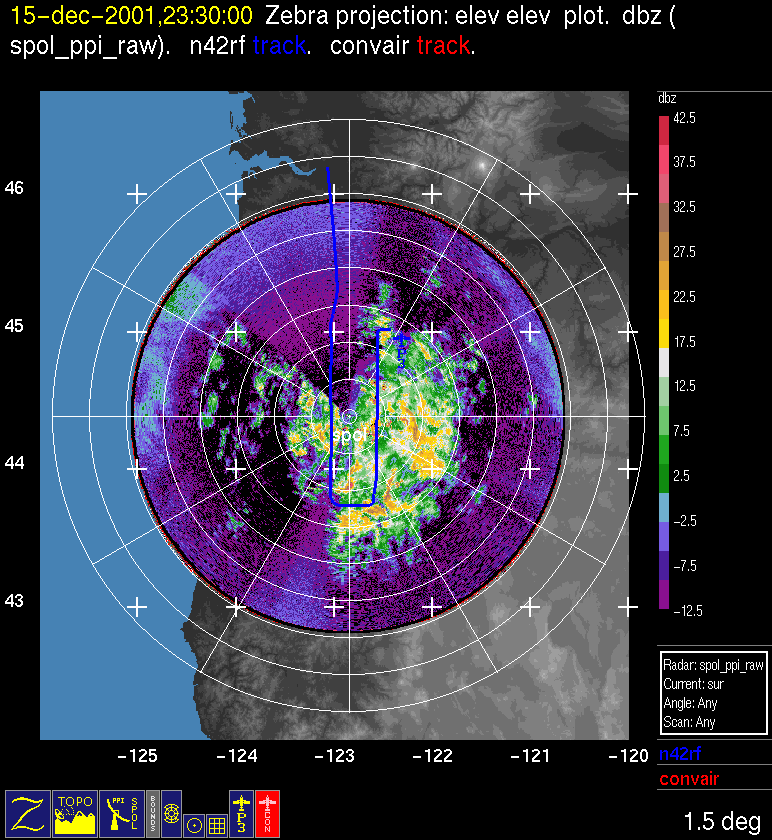
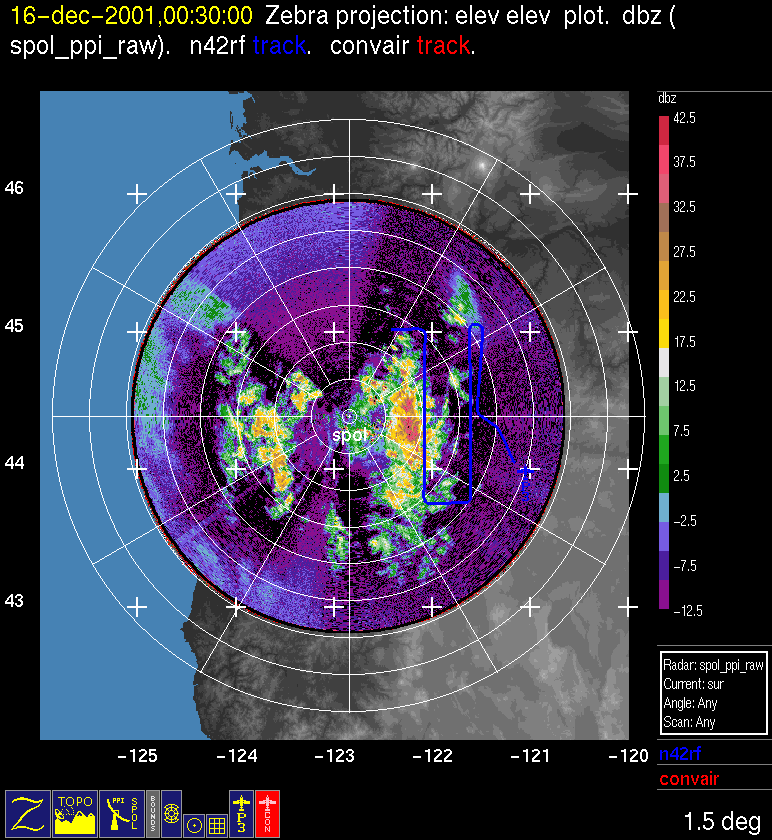
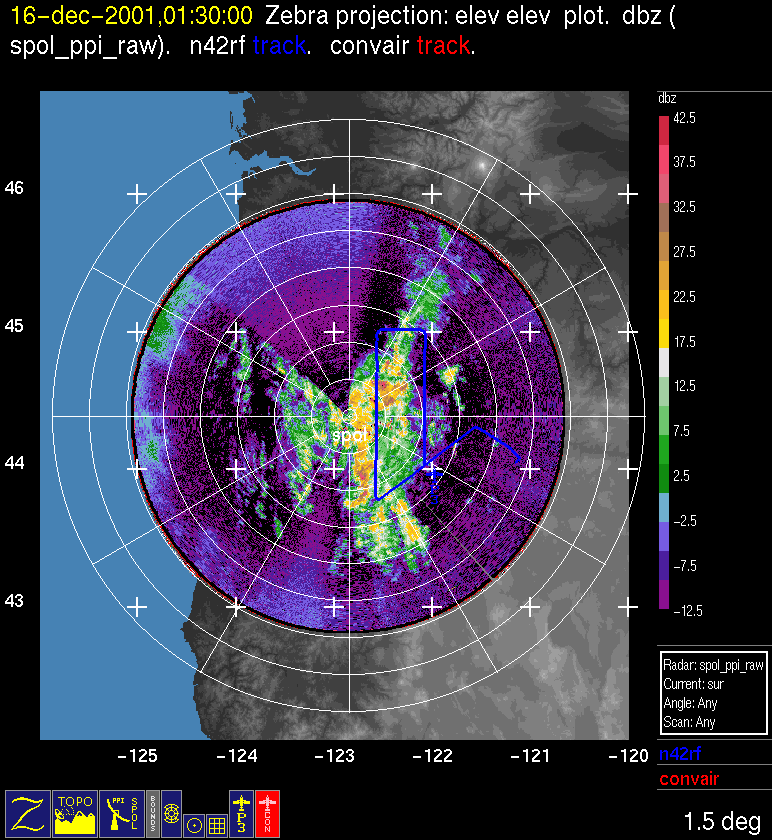
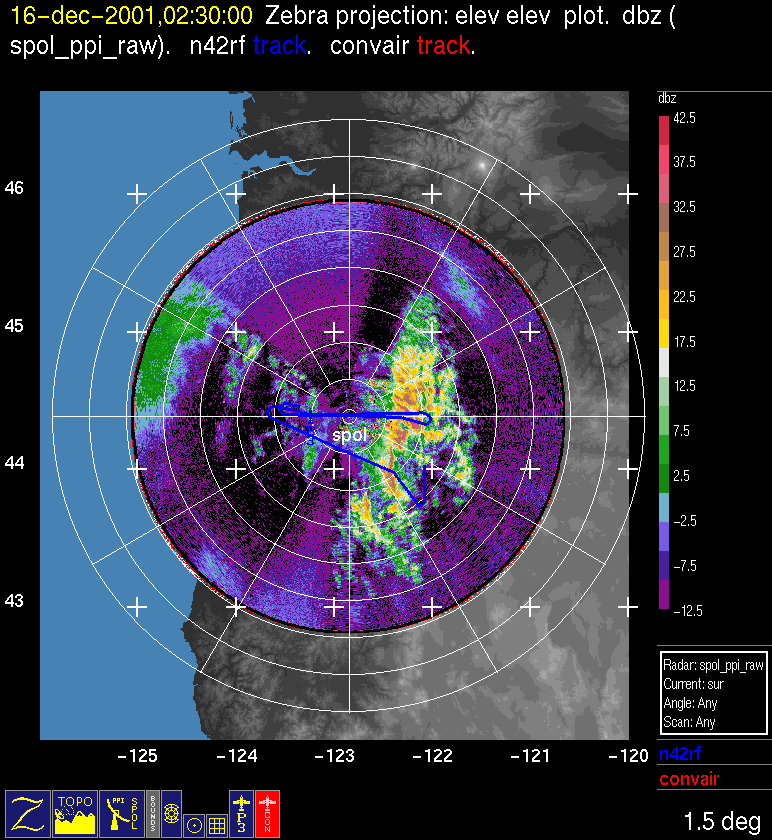
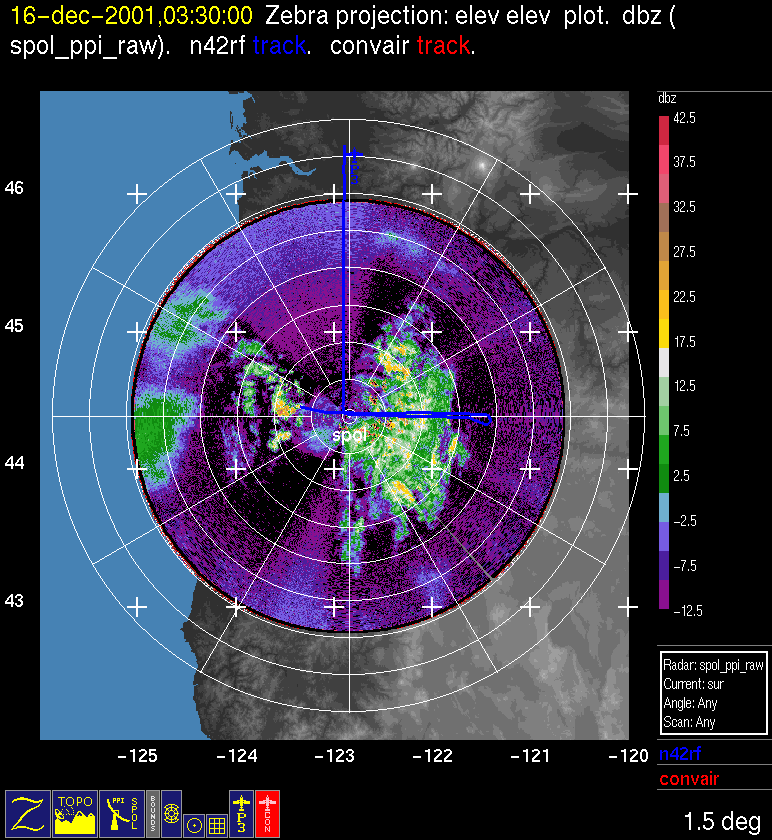
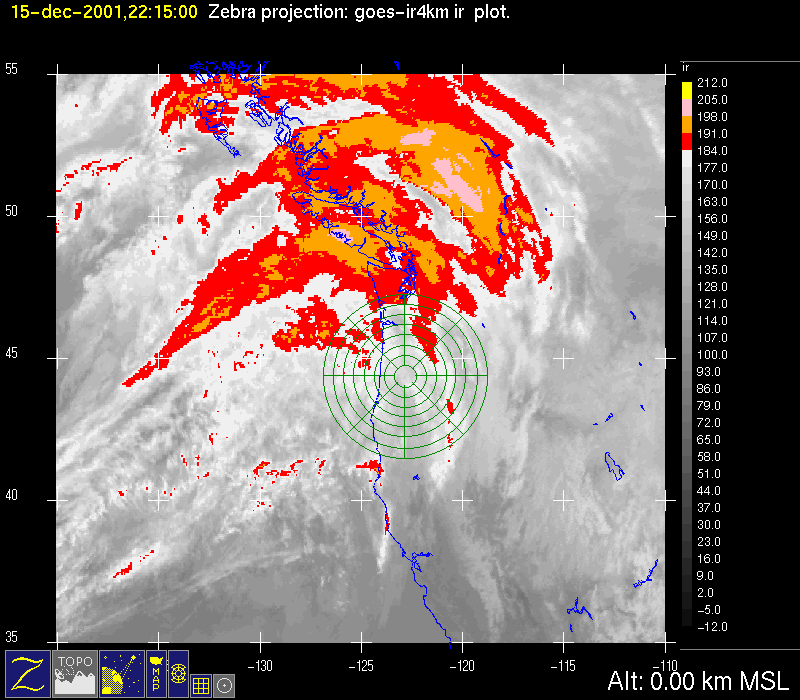
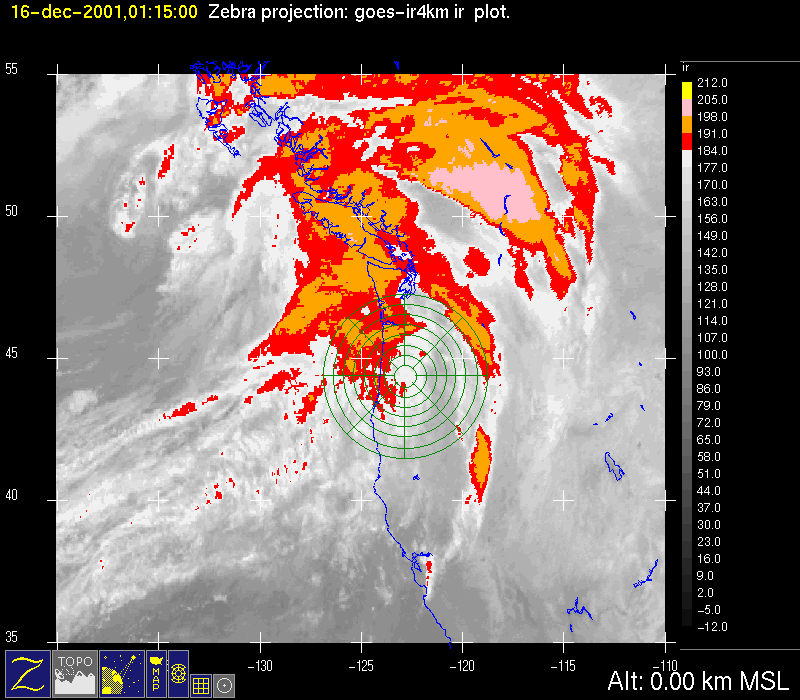
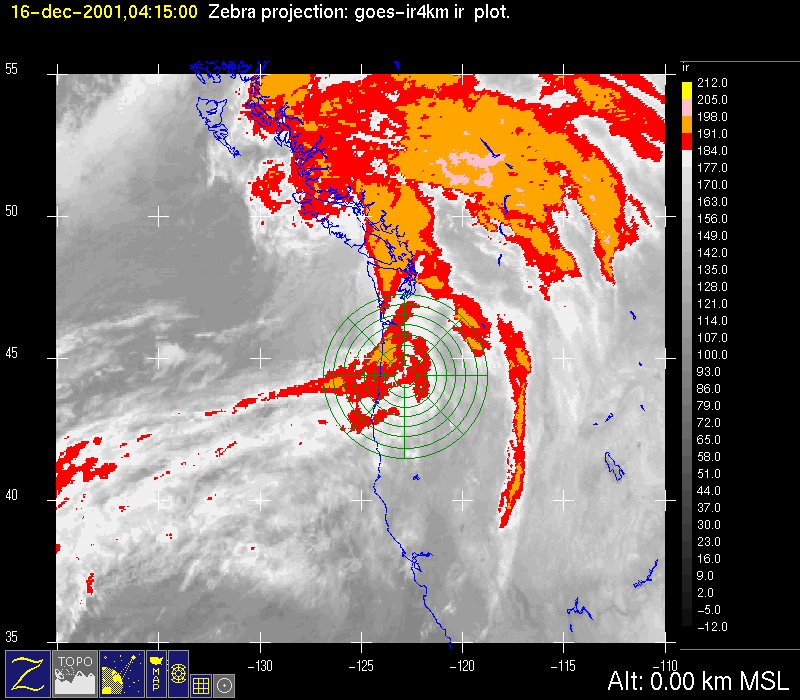
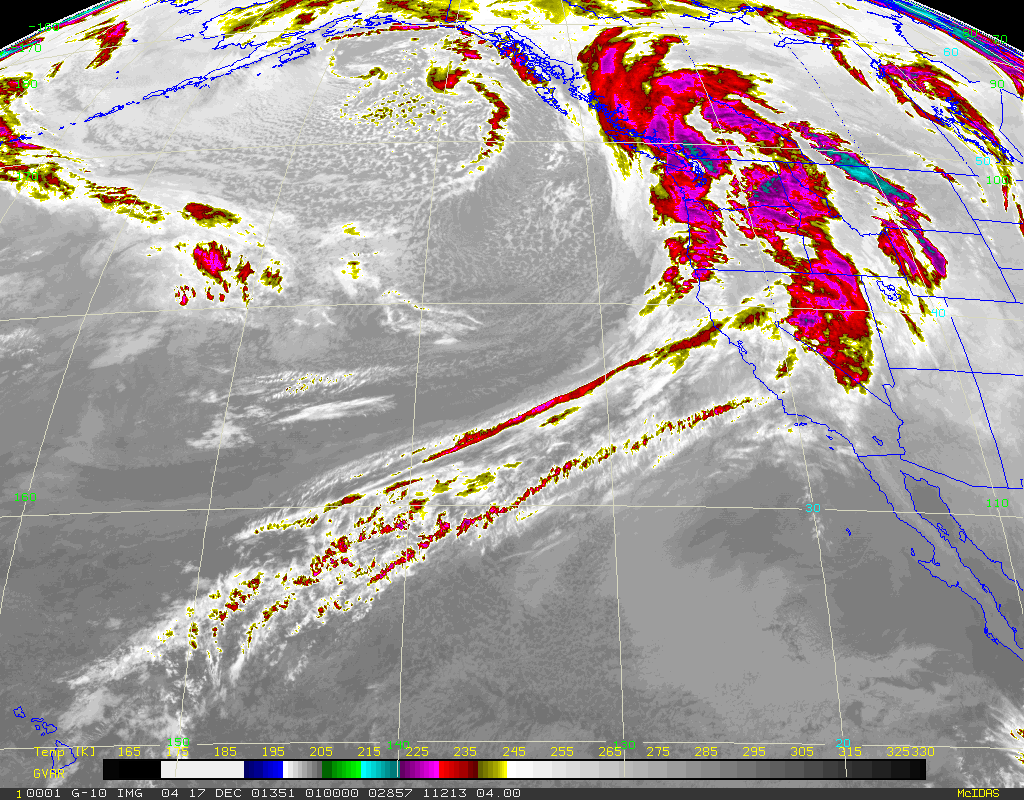
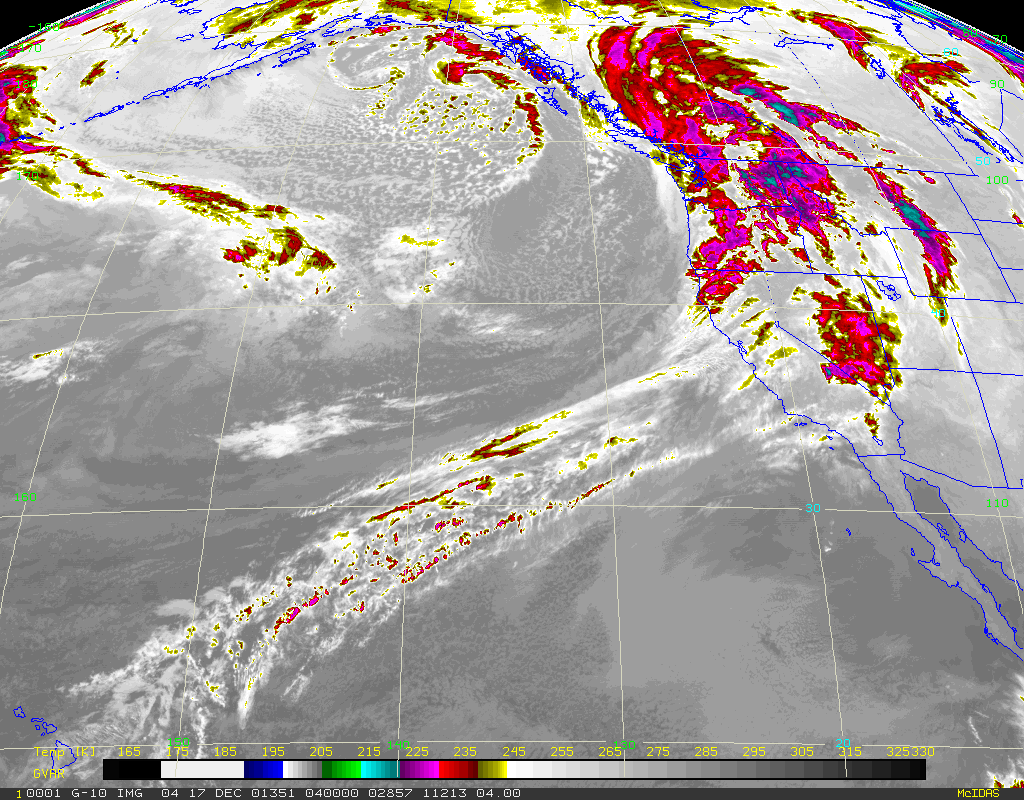
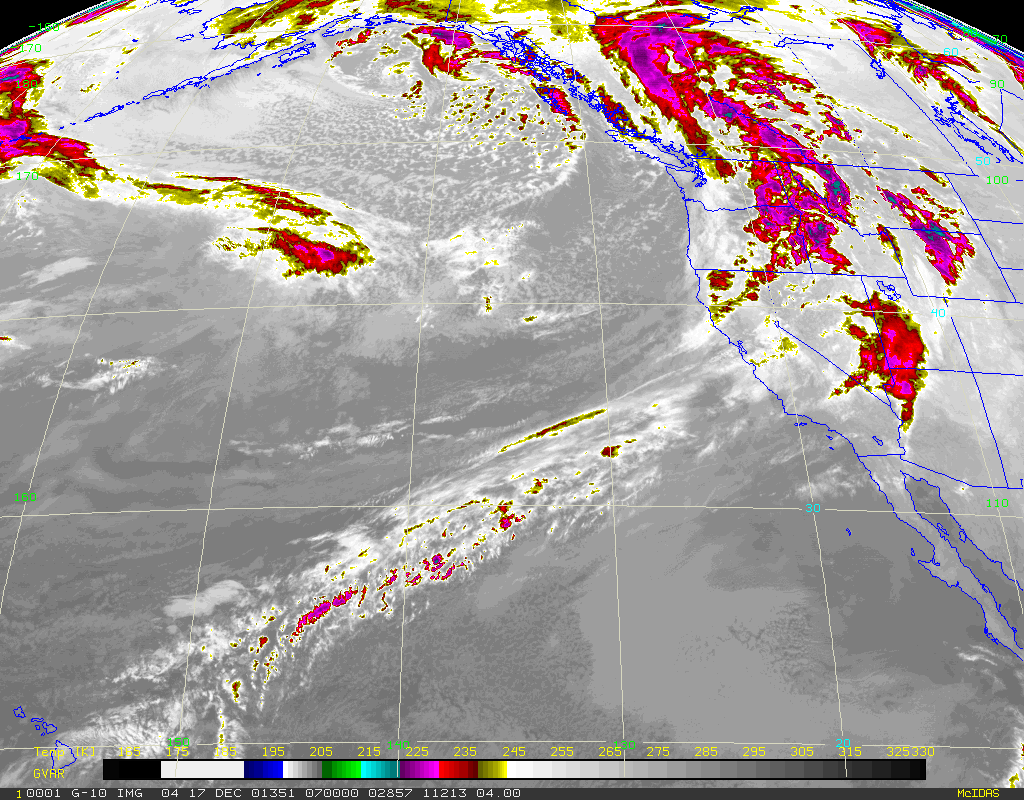
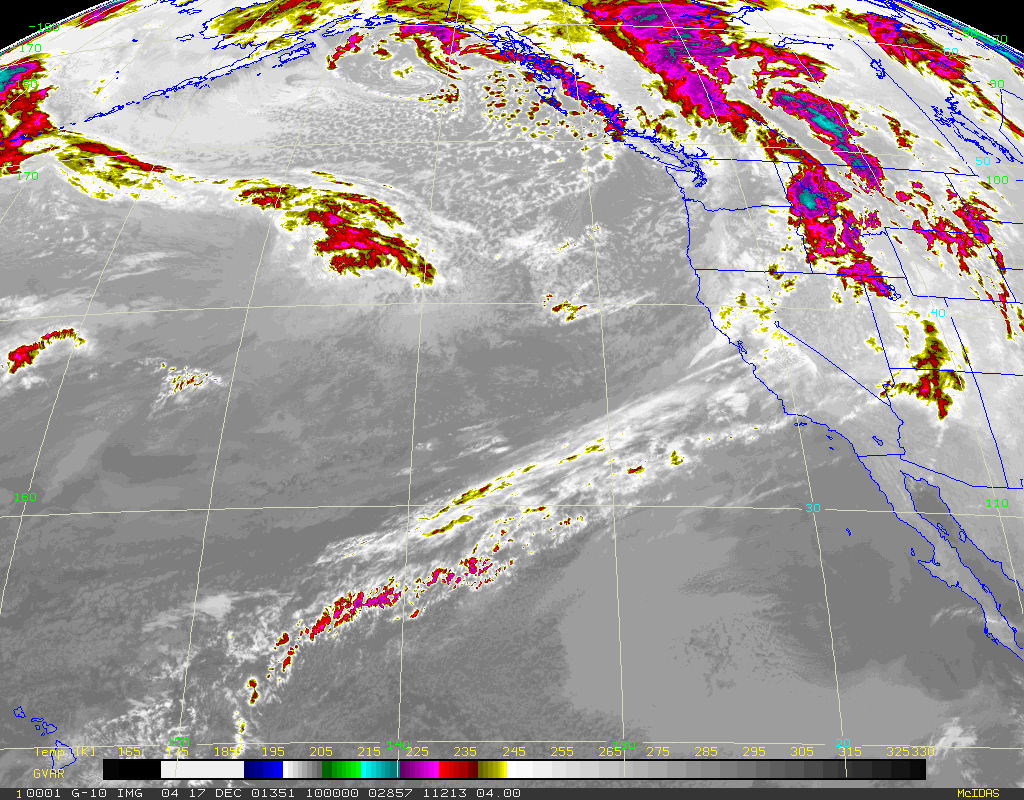
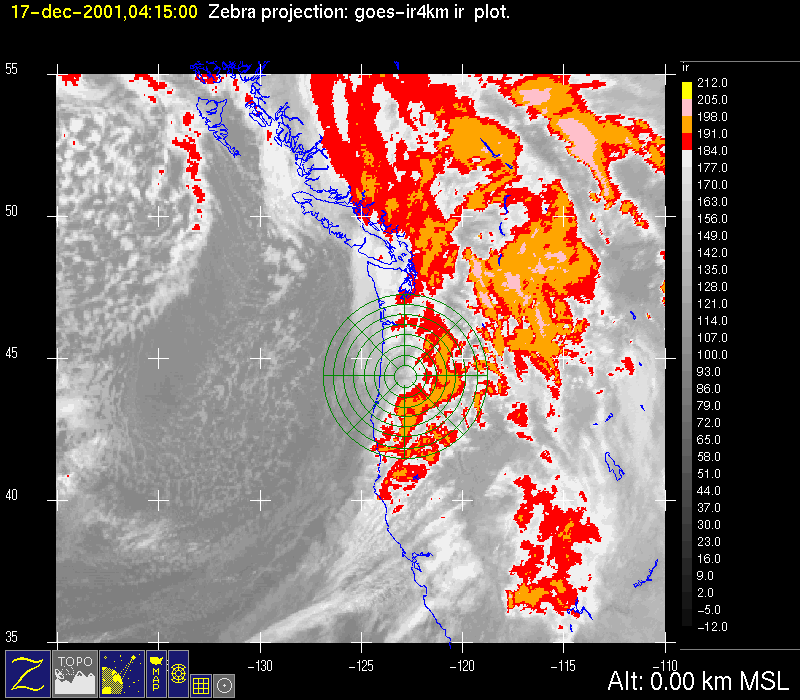
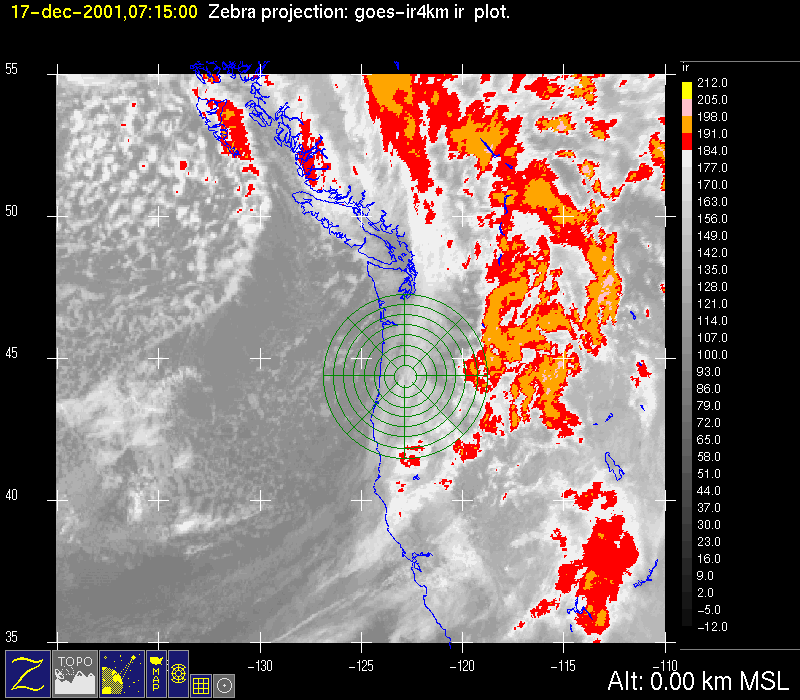
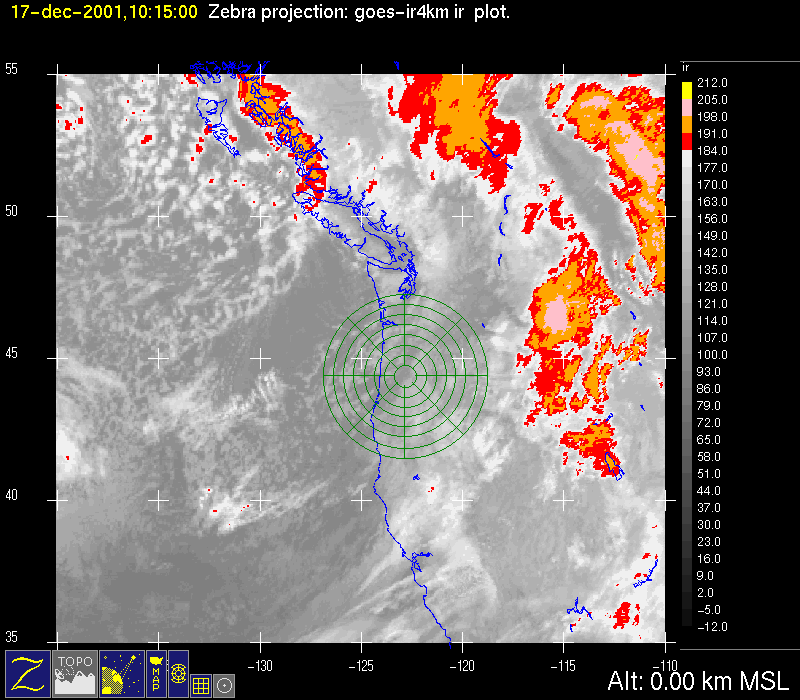
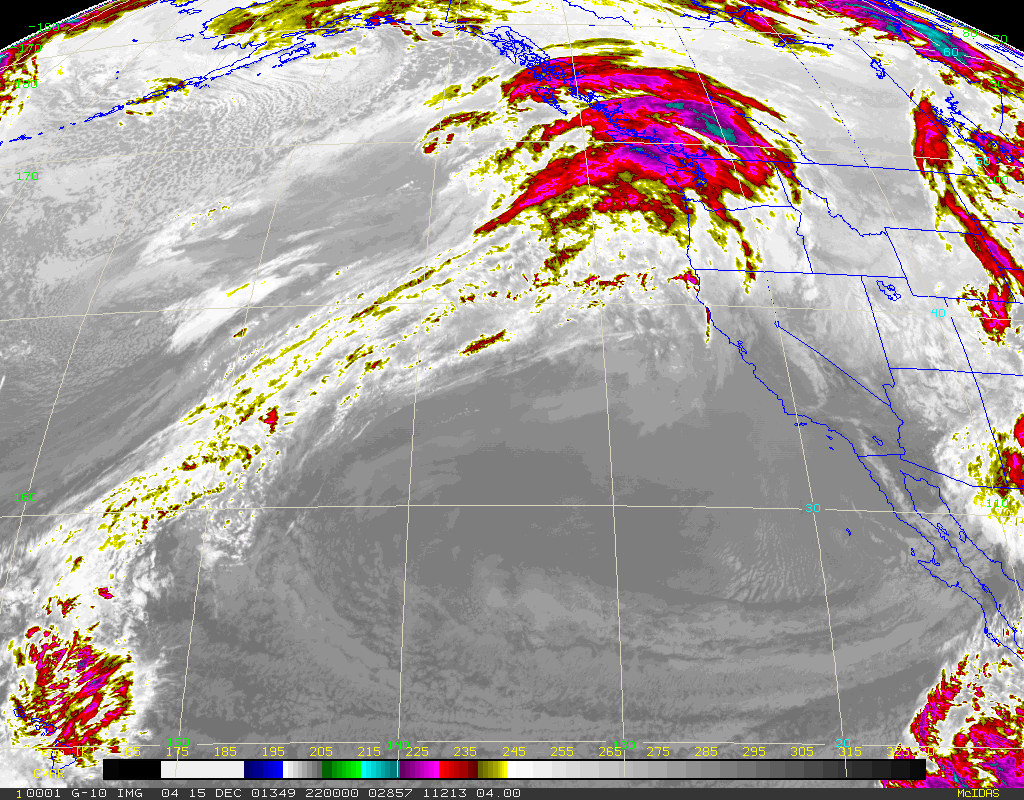
The P-3 flew from 2200 UTC 15 December-0400 UTC 16 December 2001. At 2200 UTC 15 December 2001, the infrared satellite imagery showed a frontal cloud pattern extending far to the southwest, into the tropics (Fig. 1a). A wave on the front centered at about 128 oW was just moving into the Pacific Northwest. A second wave was forming along the frontal cloud band at 150 oW. The warm-frontal sector of the first wave was moving across the S-Pol radar area (Fig. 2a). At 0100 UTC 16 December, the two waves on the frontal system were well defined and apparent at 125 oW and 145 oW (Fig. 1b). The warm-frontal clouds had moved east of the mountains. The region of most enhanced cloud cover (i.e. the leading portion of the cold-frontal cloud band), was moving across the radar area (Fig. 2b). At 0400 UTC, the cold-frontal cloud band of the first wave was over the radar area, with an apparent suppression of cloudiness east of the Cascade Range (Fig. 1c, Fig. 2c).
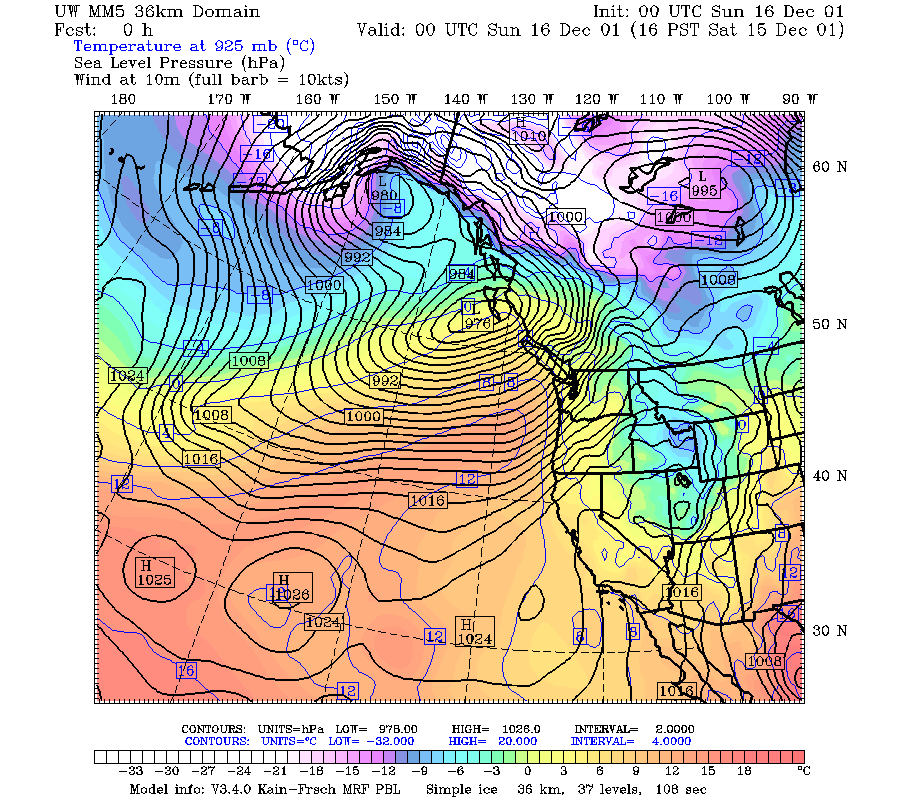
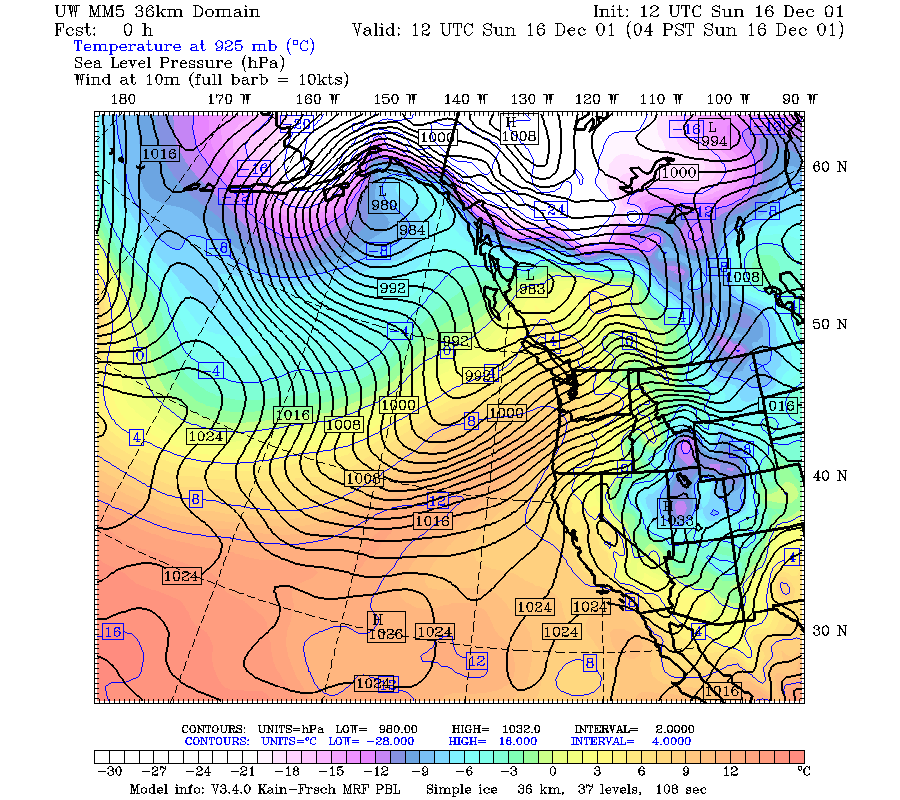
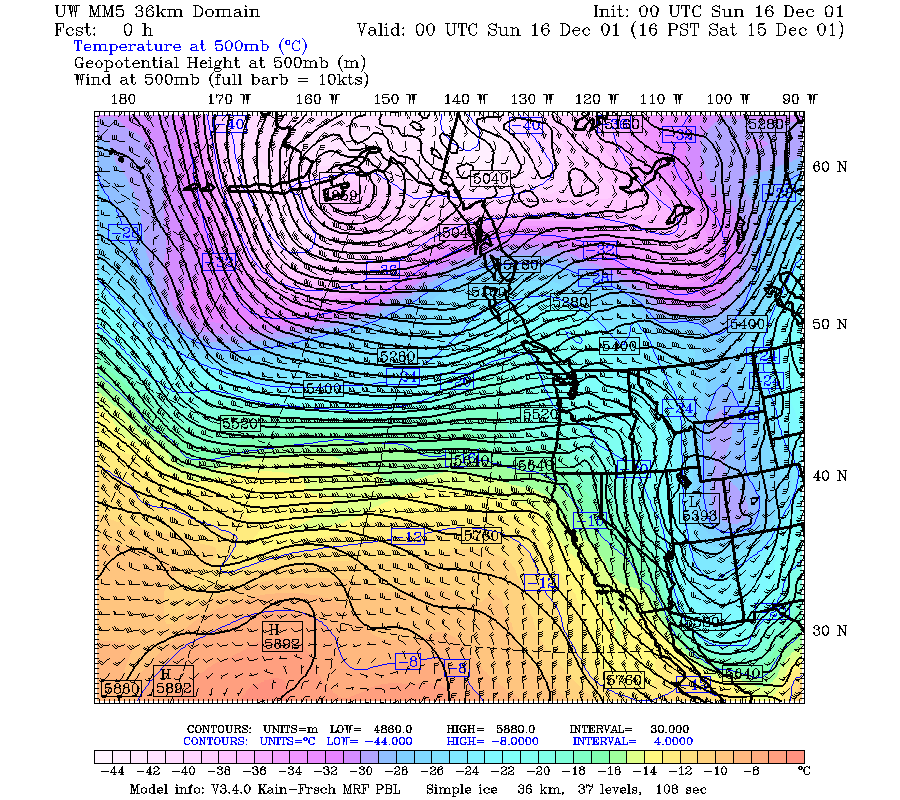
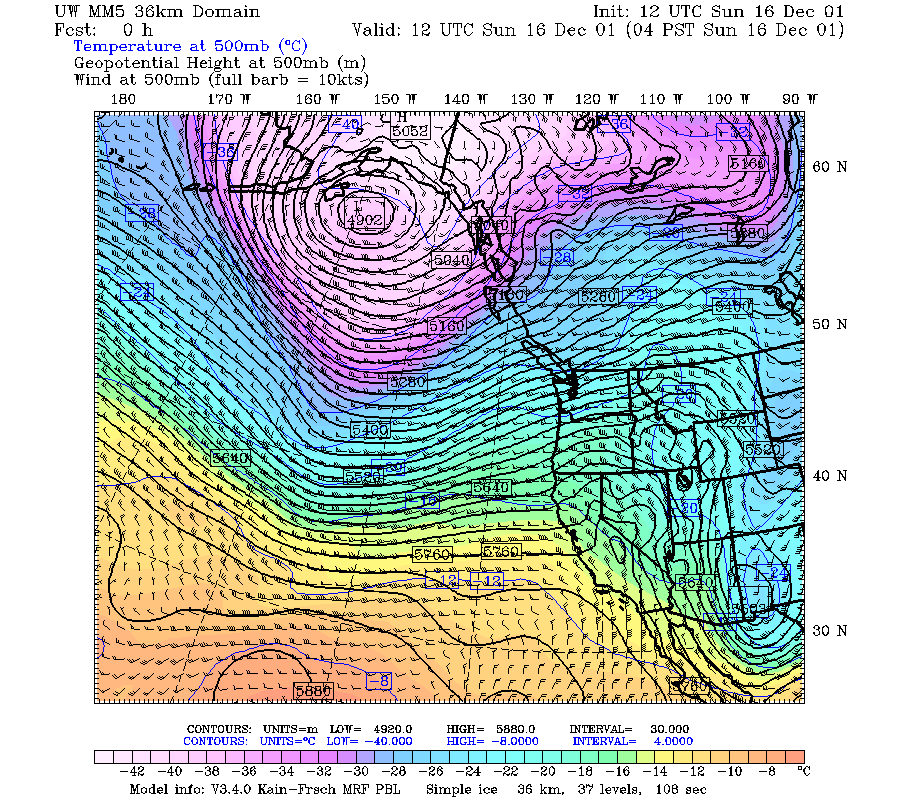
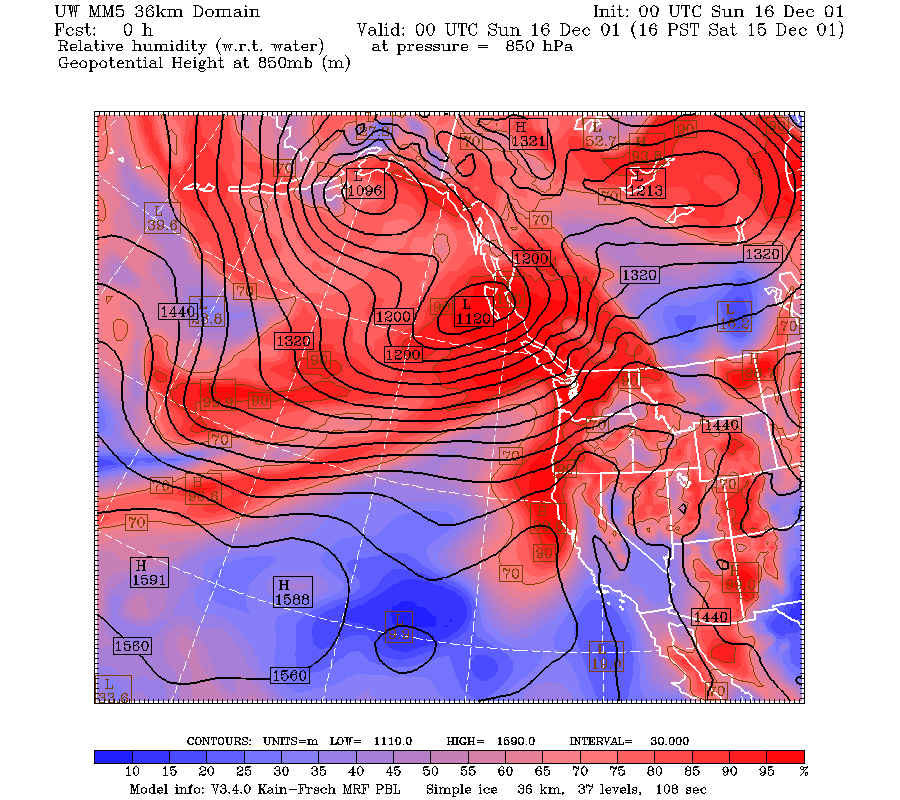
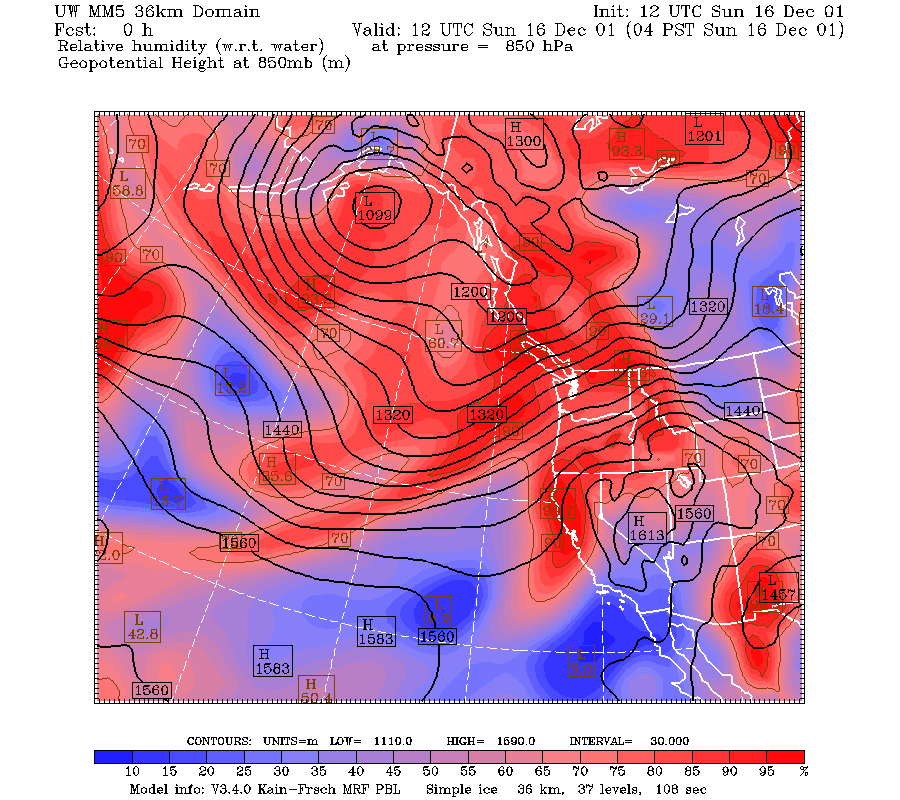
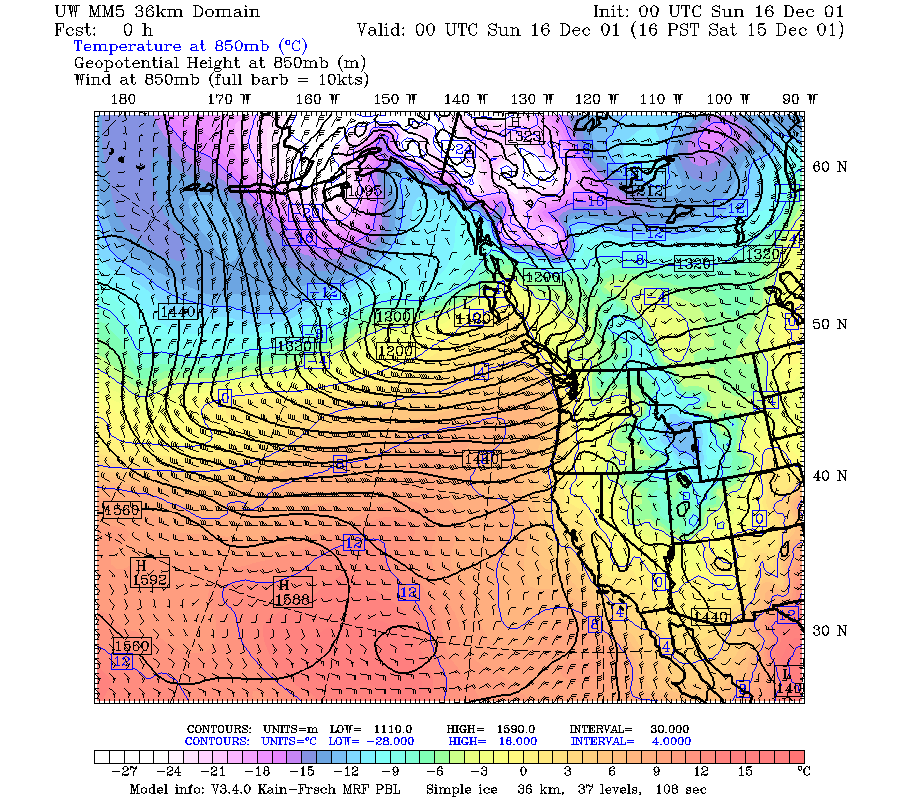
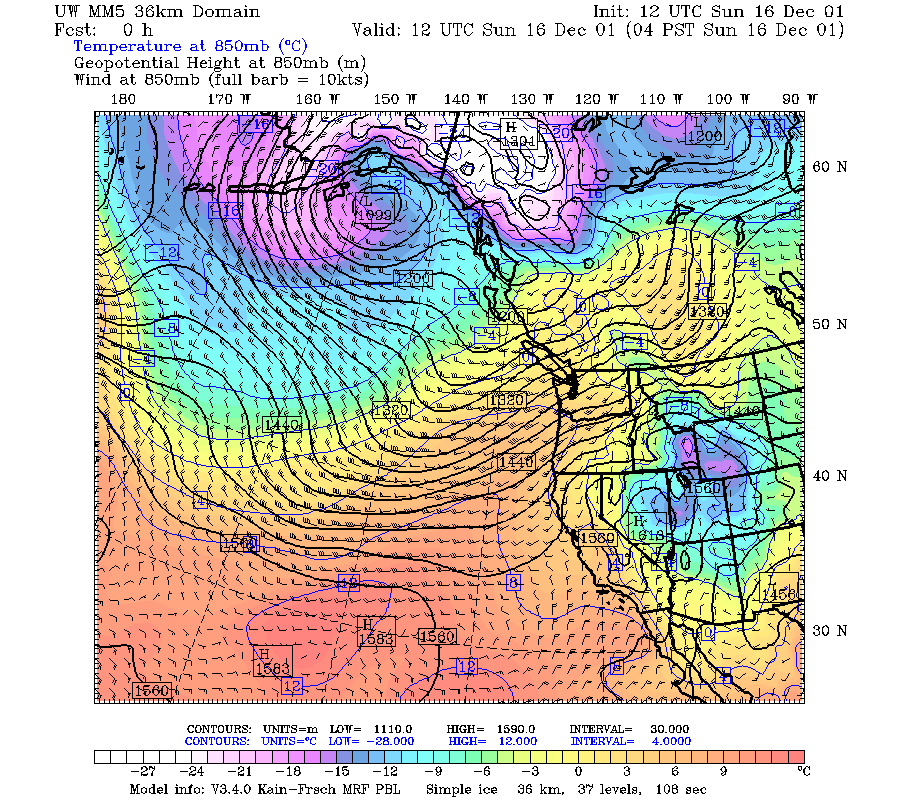
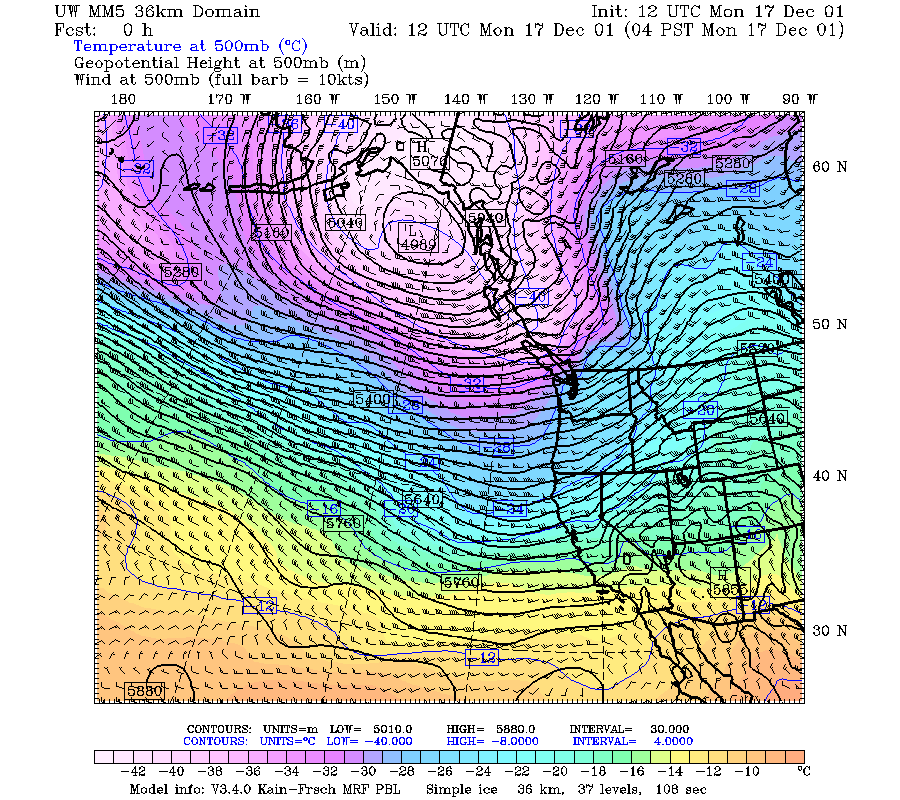
The two waves in the frontal cloud pattern were identifiable in the MM5 initial fields. At 0000 UTC 16 December, the 500 mb flow over the eastern Pacific was southwesterly, extending from a long wave trough line at 150 west all the way to the Oregon-Washington coast (Fig. 3a). The first short wave (hard to see in the 500 mb flow) was moving over the coast. The second short wave trough lay in the axis of the long wave trough at 150 west. By 1200 UTC, the first short wave had moved east of Washington and Oregon as had the long wave ridge, and the second trough had moved eastward over the ocean to about 145 west (Fig. 3b). The 850 mb map for 0000 UTC 16 December showed a frontal zone in the temperature pattern, extending from Vancouver Island southwestward to 160 west (Fig. 4a). The first wave seen in the satellite imagery was manifest as a warm front moving into Washington and Oregon. The P-3 flight described below took place in the warm frontal and warm sector region seen in this 850 mb pattern. By 1200 UTC 16 December the warm-frontal region had moved east of Oregon and Washington, and the frontal zone over the ocean had moved rapidly eastward (Fig. 4b). The 850 mb winds on these maps were strong southwesterly throughout the 0000-1200 UTC time period. The relative humidity pattern at 850 mb showed that this frontal system was drawing on humidity from well south of 20 north latitude (Fig. 5a, Fig. 5b). The surface map at 0000 UTC showed the warm front moving into the Washington-Oregon region (Fig. 6a). The surface map at 1200 UTC showed that the whole frontal system had moved rapidly eastward during the 0000-1200 UTC time period (Fig. 6b).
During the P-3 flight, the radar echo had a rather convective appearance, and the echo pattern was concentrated over the windward slopes just east of the S-Pol radar (Fig. 7a, Fig. 7b, Fig. 7c, Fig. 7d, Fig. 7e, Fig. 7f). The P-3 flew a short dual-Doppler pattern (north-south legs) followed by a cloud physics pattern. From the radar/flight track images, it can be seen that during the time of the flight the precipitation on the windward slopes varied in intensity. Convective bands oriented north-south appeared to move west-east into the mountains and intensify.
Convair-580 Summary
No flight
P-3 Summary
P-3 Flight Number:
011215H, IMPROVE 06
Period of Flight:
2159 UTC 15 December- ~03?? UTC 16 December 2001
Main Accomplishment of Flight:
The P-3 flew one complete box pattern.
Instrument Problems:
-
Flight Scientist:
Nick Bond
Approximate UTC Timeline (Local time= UTC-8 hours) Activity for P-3 Flight 06:
220528 UTC (47.70618, -122.59233).2 mb, 2309.0 m Heading for Pt. A after 2159 takeoff
220917 UTC (47.51405, -122.71321) 207.083°, 667.4 mb, 3156.0 m Near cloud top
221344 UTC (47.30615, -122.91550) 215.731°, 574.0 mb, 4399.0 m 2D probes turned on; in clear air
223953 UTC (45.42513, -122.97736) 176.836°, 573.0 mb, 4478.0 m Begin descent to Pt. A
225359 UTC (44.50285, -123.03435) 179.094°, 812.0 mb, 1716.0 m About halfway between Pt. A and Pt. F; breaks in pcp to west; more solid cellular pcp to east; cld phys shows droplets
225908 UTC (44.17738, -123.03098) 181.462°, 811.9 mb, 1555.0 m Aft scan shows higher echoes to west of cellular variety between 20 and 40 km
230529 UTC (43.78178, -123.02838) 154.401°, 808.9 mb, 1648.0 m Pt. F; never broke out of pcp completely as was expected; heaviest pcp just to the east during later part of the A-F leg
231255 UTC (43.96243, -122.56686) .868°, 752.5 mb, 1972.0 m Beginning of G-B leg; both aft and fore scans show 20-25 dBZ cells less than 20 km to west; rest of pcp is very shallow associated with low-level drizzle
232323 UTC (44.65295, -122.56152) .496°, 752.8 mb, 1507.0 m Back into "cloud sandwich", upper lvl cld not feeding low lvl cld. Radar echo is more scattered to the east now.
232552 UTC (44.81773, -122.56006) .509°, 752.5 mb, 1831.0 m Cirrus and cirrostratus aloft now, sun breaking through.
Moderate (20-24 dBZ) echoes to east 30-40km in fore scan.
233024 UTC (45.02323, -122.37131) 88.784°, 694.5 mb, 1963.0 m Hit pt. B, now heading east and up to 11,000 ft. Quickly back into solid pcp; needles and columns; occasional supercooled droplets; T=-5.0 oC
234639 UTC (44.07178, -122.08182) 178.854°, 670.3 mb, 1720.0 m Leg C-H; heavier pcp definitely to the west, not to the east; near and slightly above cloud top most of this leg (11000 ft)
000554 UTC (44.49175, -121.61642) .336°, 618.2 mb, 2692.0 m Fairly boring I-D leg; overcast above, undercast too;
dual Doppler showing shallow, spotty echoes to the east of the crest.
More consistent echoes to west between 20-60km
Visually, cloud top is deeper to the west.
Very dry air up here...11% RH and Td as low as -30 oC!!!
001611 UTC (44.95650, -121.49205) 183.439°, 618.1 mb, 3143.0 m 41 miles to K, hit burst of pcp just SE of pt. D
Td up to -9
Rimed looking ice in cld phys
001912 UTC (44.74217, -121.51292) 184.033°, 618.1 mb, 2936.0 m Shallow cloud below, in fact, breaks in clouds visible 24 miles to K
Nice view! Snow on ground...skiing anyone?
002434 UTC (44.36786, -121.45424) 124.980°, 619.5 mb, 3061.0 m Beginning descent to 500 feet AGL at Sisters Airport...
11000: cloud top
9000: rimed columns ... T/Td: -3 oC/-4 oC
7500: freezing level; cloud base nearly coincident
003055 UTC (44.09501, -121.12379) 318.655°, 736.8 mb, 1589.0 m Climbing back up from about 6000 feet...
8000: hit cloud base again
10000: occasional needles/columns; T/Td: -3.5 oC/-3.5 oC
11500: cloud top
13500: very dry air aloft; T/Td: -9.0 oC/-25.0 oC
14500: T/Td: -11.0 oC/-37.0 oC
004037 UTC (44.21339, -121.74120) 232.934°, 615.2 mb, 2372.0 m Headed SW to G, 13000 feet
Suddenly hit saturation; T/Td: -9.7/-10.0
Dual Doppler showing moderate echoes 5-20 km to NW
004557 UTC (44.01340, -122.10869) 232.812°, 695.4 mb, 1604.0 m 25 miles to G...overcast thickening, slight turbulence
Descended to 10000 feet
Supercooled water here; T/Td: -3.0 oC/-3.0 oC
8000 feet: freezing level...drizzle drops
005214 UTC (43.79205, -122.52101) 232.995°, 750.2 mb, 1829.0 m At G, turning to head north
Alt: 8070; T/Td: 0.6 oC /0.6 oC
Dual Doppler paints embedded convection with pretty high echo tops 20-40km to the west.
005605 UTC (44.00900, -122.57747) 1.434°, 750.5 mb, 1762.0 m Echoes creeping closer as we move north, fore scan shows a 24-28 dBZ cell about 25 km to the west.
56 miles to B
010253 UTC (44.47274, -122.56552) 359.646°, 750.6 mb, 1631.0 m Dual Doppler showing significant echo in this region and extending to the east about 30 km. Echoes around 28 dBZ.
Flight level is just below the melting level (8070 feet).
010659 UTC (44.75183, -122.56433) 359.728°, 750.5 mb, 2141.0 m Nearing B (15 miles to it)...
Temperature slightly lower, now below fzg; T/Td: -0.3 oC/-0.3 oC
Dual Doppler showing moderate convection 20 km to the east in both aft and fore scans.
011416 UTC (45.02063, -122.18108) 90.436°, 670.2 mb, 2093.0 m Nearing C (3 miles)...
supercooled water at 11000 feet; T/Td: -5.0 oC/-5.4 oC
some turbulence as we head south of C
mixture of crystals and supercooled droplets
011646 UTC (44.90257, -122.07399) 182.668°, 668.1 mb, 1886.0 m Heavier pcp showing up 5-10 km to the west.
Drying out a little bit at flight level; T/Td: -6.0 oC/-11.6 oC
012412 UTC (44.40771, -122.08272) 179.910°, 668.1 mb, 2108.0 m Heavier pcp now over 10km to west.
Main pcp appears to be 15-30 km to west.
Not really in cloud at this time, but picking up crystals nonetheless.
Crystals probably being carried by slightly stronger west wind aloft after being carried out of the top of the embedded convection to the west.
Hit pt. H; now heading NW to a point west of S-POL to begin west-east stack
014129 UTC (44.02298, -122.52454) 292.409°, 554.0 mb, 3927.0 m UTC=16000 feet
Still dry up here; T/Td: -14.5 oC/-35.7 oC; RH: 14%
021654 UTC (44.38802, -122.59798) 272.390°, 569.4 mb, 4244.0 m Finished east leg at UTC=16000 feet; now headed west at UTC=15000 feet (about 4.5 km)
clear air
022628 UTC (44.40033, -123.43687) 272.012°, 595.2 mb, 3993.0 m UTC=14000; nearing west point of west-east stack
clear air
023804 UTC (44.41163, -122.35083) 88.715°, 595.9 mb, 3329.0 m finally starting to see some meaningful echoes again
most of the action appears to be to the north
22 miles to Santiam Pass
grazing cloud top from time to time
not a smooth of a ride anymore
024912 UTC (44.37727, -121.61859) 293.549°, 644.9 mb, 2532.0 m Hit eastern point (O), pcp is dying out...
heading west again and descending to 10000 feet
last leg
025153 UTC (44.38393, -121.83156) 271.601°, 672.6 mb, 1906.0 m Seeing a mixture of supercooled droplets and columns on this leg
T/Td: -5.0 oC/-5.5 oC
Z=10300
025512 UTC (44.38754, -122.07114) 268.706°, 701.9 mb, 1299.0 m weak echo here...seeing some ice crystals now
T/Td: -3.0 oC /-3.0 oC
UTC=9500 feet
S-Pol Radar Summary
The S-Pol radar was run continuously in the same mode of operation for the entire length of the field project.
Summary of Mobile Upstream Sonde Launches
Launch times at: Creswell, OR, Lat: 43.9200, Lon: -123.0250, Elev: 165 m
0020 UTC 16 Dec
0339 UTC 16 Dec
Summary of Leeside Sonde Launches
Launch times at: Black Butte Ranch, OR (a.k.a. ISS-3), Lat: 44.379, Lon: -121.679, Elev: 1027 m
0000 UTC 16 Dec
0300 UTC 16 Dec
Summary of NWS Sonde Launches from Salem (SLE)
Launch times:
1800 UTC 15 Dec (special)
2100 UTC 15 Dec (special)
0000 UTC 16 Dec (standard)
0300 UTC 16 Dec (special)
0600 UTC 16 Dec (special)
Summary of Snow Crystal Ground Measurements
Measurement times:Every 15 minutes from
2230 UTC 15 Dec-0200 UTC 16 Dec ( at Santiam Pass and Corbett Sno Park)
IOP 13, 16-17 Dec 2001
IOP 13: 16-17 December 2001
Time Period of IOP
2300 UTC 16 Dec-0815 UTC 17 Dec
Overview of IOP
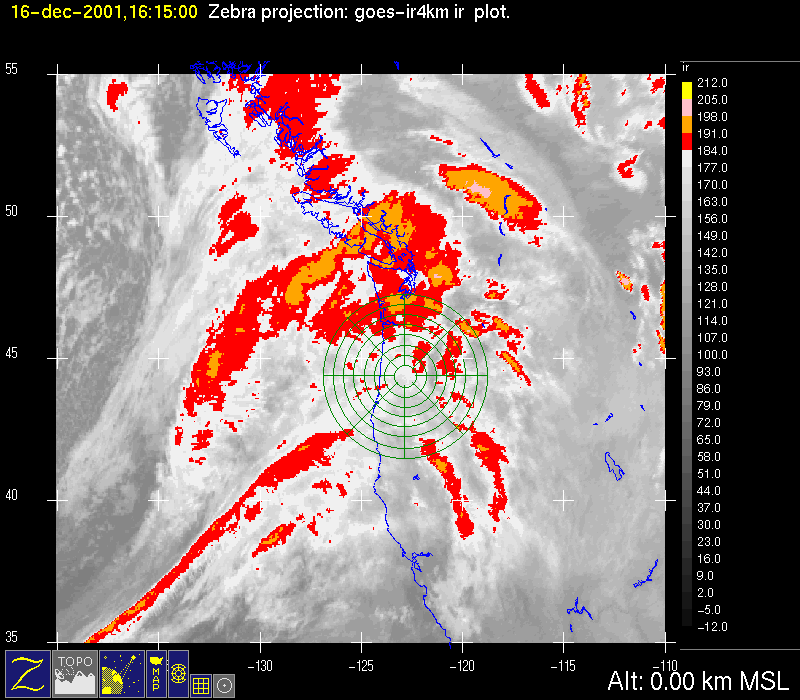
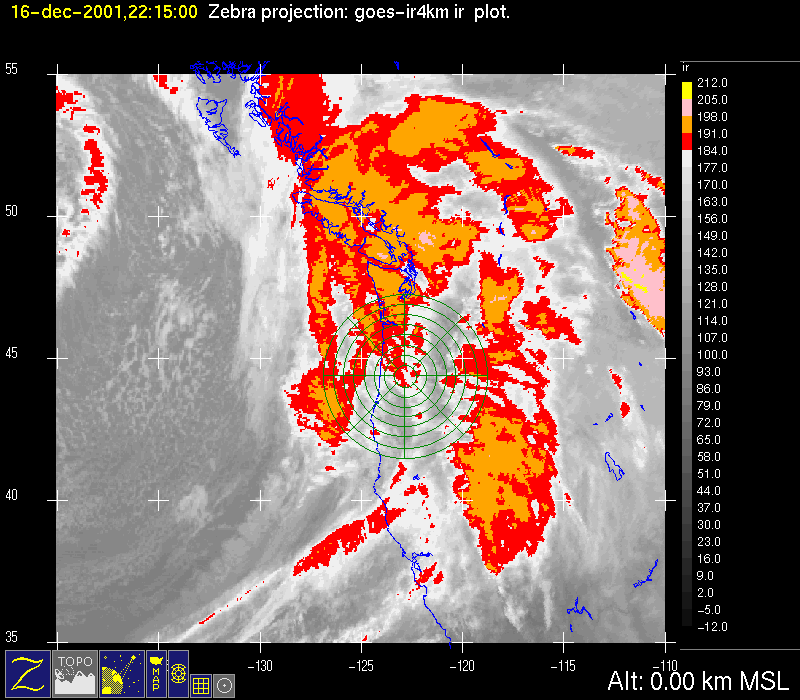
On 15-16 December, two frontal waves were located along the frontal system moving into the Pacific Northwest (see previous discussion). At 1000 UTC 16 December, the infrared satellite imagery showed the first frontal wave to the east of the Cascades; a region of enhanced cloudiness in advance of the leading edge of the warm-frontal clouds of the second wave was located over Washington at this time (Fig. 1a). A southward extension of the feature over Washington was over the S-Pol radar area (Fig. 2a). Warm-frontal clouds of the second wave were moving over the S-Pol area at 1600 UTC (Fig. 1b, Fig. 2b). By 2200 UTC, the cold-frontal cloud zone of the second wave was moving across the S-Pol radar area from the west (Fig. 1c), and clouds were being suppressed east of the Cascades (Fig. 2c).
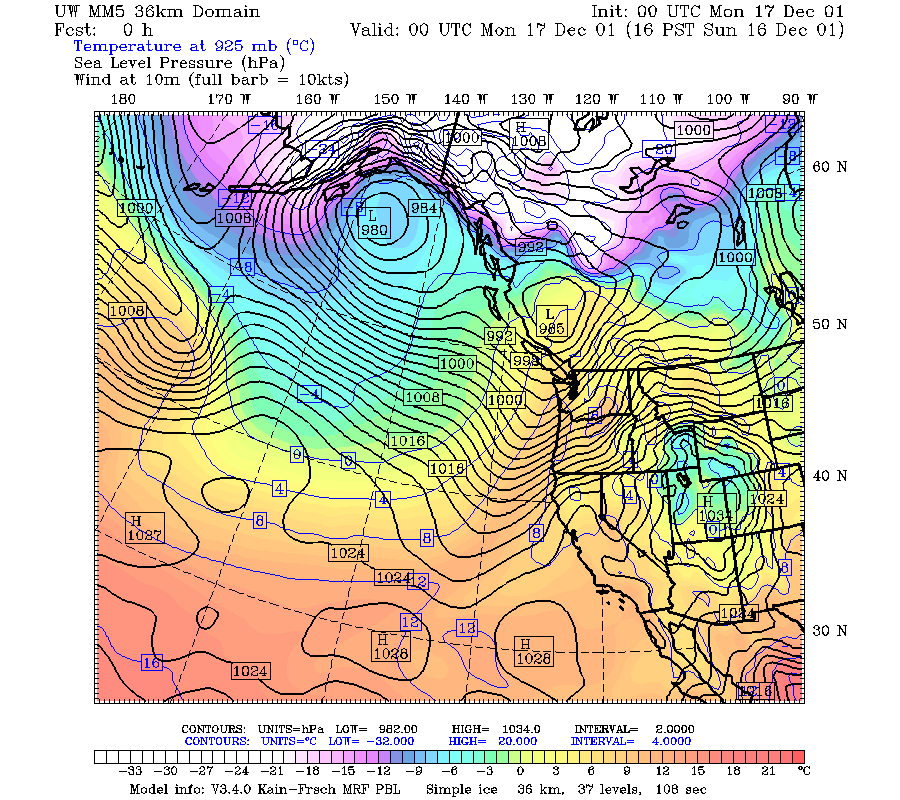
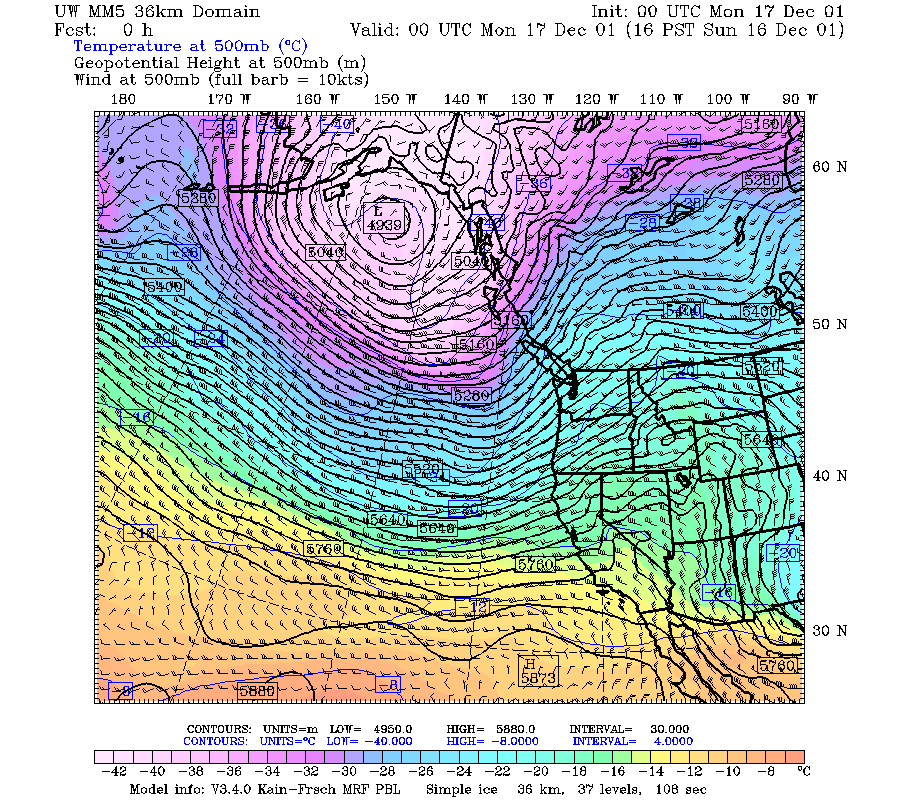
At 0000 UTC 16 December, the 500 mb trough was at 132 deg oW and moving rapidly toward Oregon and Washington (Fig. 3a). By 1200 UTC it had pass through the region (Fig. 3b). The 850 mb winds were strong southwesterly at 0000 UTC over Oregon in the warm air ahead of the trough (Fig. 4a). These winds turned to westerly with the trough passage (Fig. 4b). The tongue of high relative humidity extended southwestward into the tropics (Fig. 5a, Fig. 5b). At 0000 UTC, the cold front was approaching the coast (Fig. 6a), and by 1200 UTC it had passed through Oregon with the ridge building up behind it (Fig. 6b).
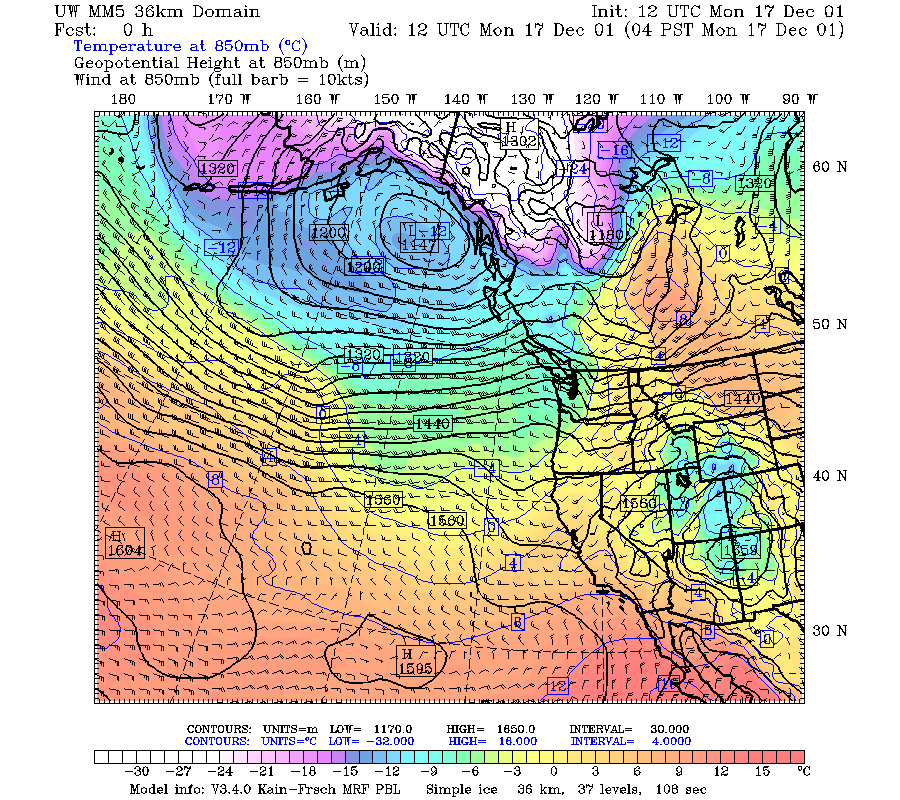
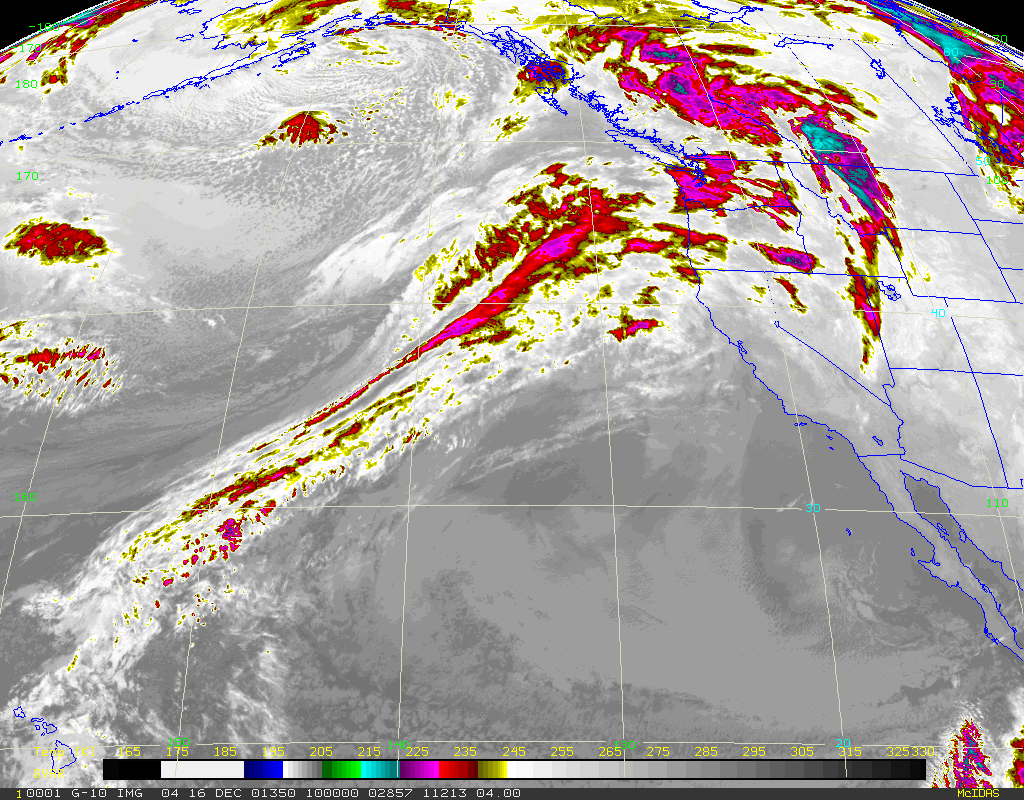
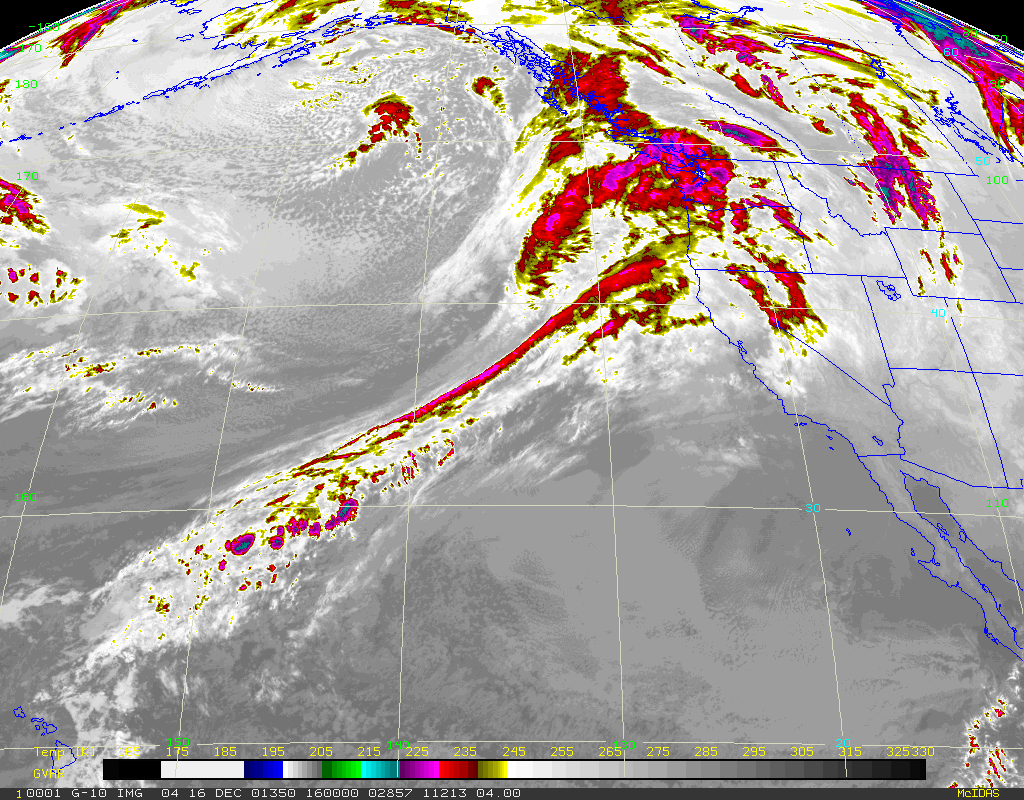
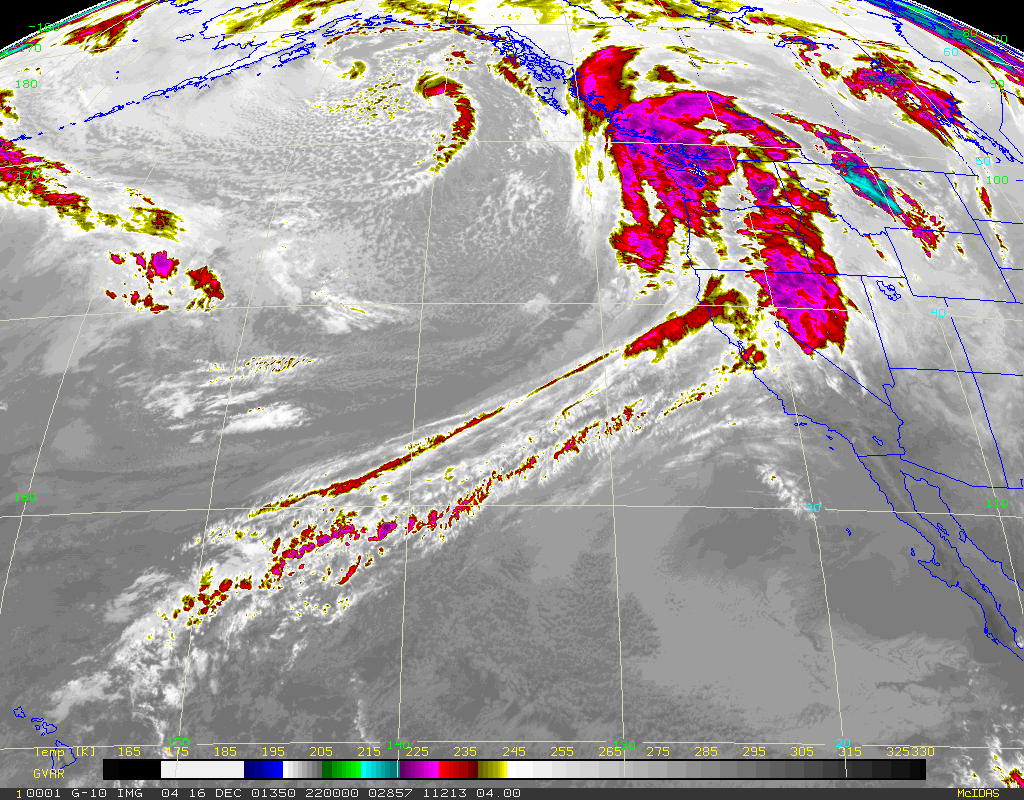
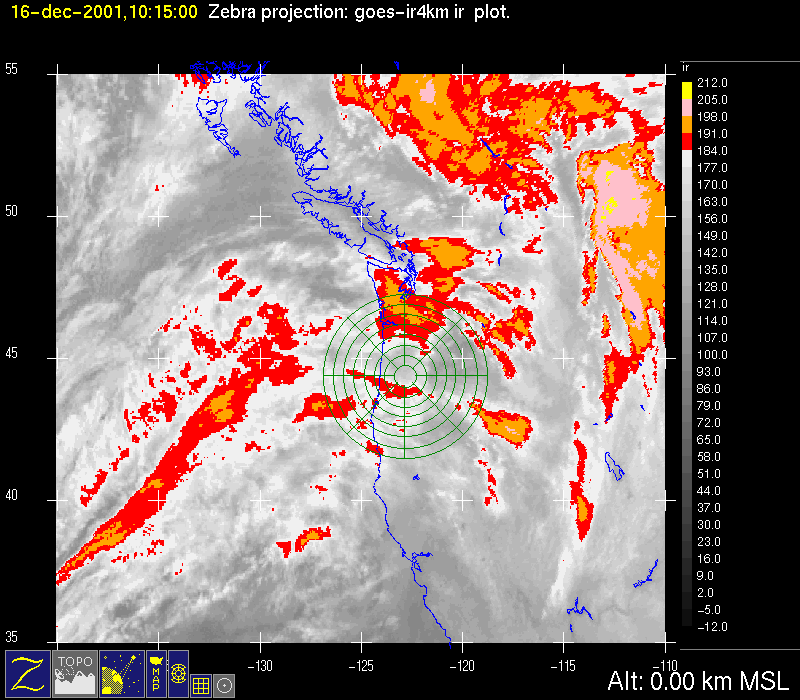
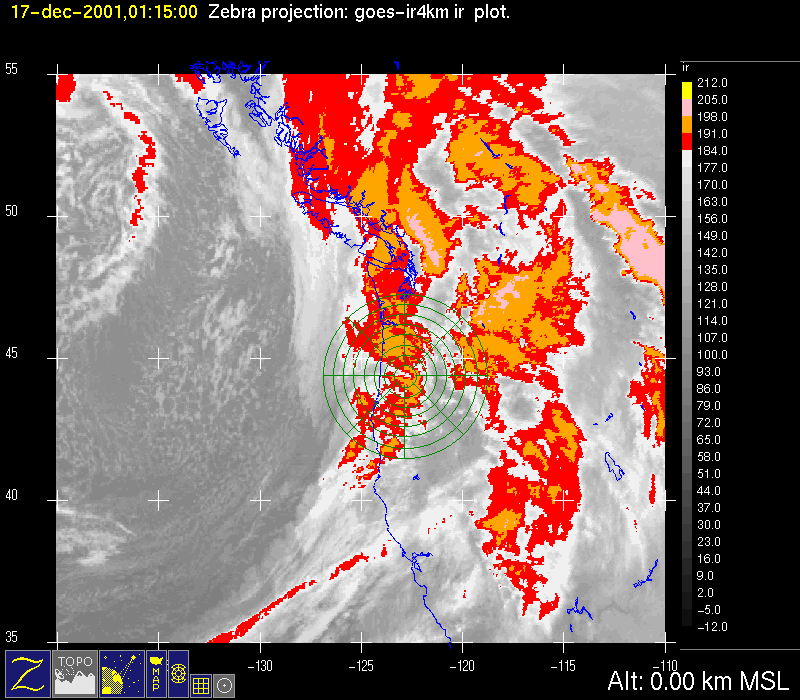
The P-3 flew a full duration mission from 2300 UTC 16 December-0900 UTC 17 December in this second wave (see further discussion and graphics below). At 0100 UTC 17 December, the cold-frontal cloud band was very well defined and intense in the infrared satellite imagery, and it was located over western Washington and Oregon (Fig. 1d, Fig. 2d). At this time, Bob Houze and Brad Smull were each driving along I-5 in southwest Washington in continuous heavy rain . Around Centralia and Chehalis, they experienced some of the heaviest rain they've seen in a Washington winter storm. Between 3 and 4 inches of rain fell at those locations. The P-3 was flying at this time (Fig. 7a). The radar echo at 1.5 deg elevation showed continuous snow over the S-Pol area with a well defined bright band. The echo maintained this structure for several hours. The P-3 was flying a dual-Doppler pattern through the snow layer. By 0400 UTC , the higher cloud tops had moved east of the mountains of central Oregon (Fig. 1e), but continuous cloud top of lesser height remained over the S-Pol radar area (Fig. 2e). The P-3 aircraft was flying a SW-NE microphysical track at this time, and the echo on S-Pol was beginning to appear more cellular in the western part of the region of radar coverage (Fig. 7b). At 0600 UTC, the S-Pol particle identification algorithms indicated a cellular echo with graupel just above the melting level (Fig. 8). At 0700 UTC, clouds related to the second frontal wave lingered over the Cascades, with a clear zone east of the mountains separating the clouds over the mountains from the higher clouds of the frontal wave far to the east (Fig. 1f, Fig. 2f). The P-3 was flying through the clouds over the mountains at this time, with isolated small cells of a postfrontal nature appearing over the western foothills of the mountains (Fig. 7c). By 1000 UTC 17 December, the cloud regime over western Oregon was entirely postfrontal (Fig. 1g, Fig. 2g).
Convair-580 Summary
No Flight
P-3 Summary
P-3 Flight Number:
011216H, IMPROVE 07
Period of Flight:
01?? UTC 17 December-07?? UTC 17 December 2001
Main Accomplishment of Flight:
The P-3 flew a partial box pattern followed by radar legs in a NCFR (narrow cold-frontal rainband)
Instrument Problems:
-
Flight Scientist:
Nick Bond
Approximate UTC Timeline (Local time= UTC-8 hours) Activity for P-3 Flight 01:
021911 UTC (43.70715, -123.58115) 328.251°, 500.6 mb, 5162.0 m starting over; at turn for start of SW-NE transect
022435 UTC (43.95130, -122.96837) 62.599°, 500.4 mb, 5316.0 m Can see hint of front about 40-50km west. Denser precip and horizontal shear are evident.
Storm is definitely picking up. We are at ~15000ft and still seeing lots of crystals.
031924 UTC (43.98421, -122.86287) 237.677°, 580.1 mb, 4024.0 m Belly radar shows clear line of heavier precip still offshore with NNE tilt. About 75km to the west.
032536 UTC (43.95229, -123.13086) 73.074°, 591.2 mb, 3836.0 m Just went through a dry spot. Are we near cloud top here?
032930 UTC (44.08142, -122.65938) 63.323°, 590.6 mb, 3586.0 m Keep going in and out of regions of crystals, maybe some weak imbedded convection here.
034714 UTC (44.33244, -122.03671) 240.765°, 608.4 mb, 2935.0 m Having radar troubles. I think tech guy is trying to reset it.
040608 UTC (44.12375, -122.67017) 75.041°, 640.1 mb, 3180.0 m Lost front in clutter of coastal range so it must be on shore now.
041138 UTC (44.35647, -122.02489) 57.504°, 639.9 mb, 2572.0 m icing looks to be picking up. Big sticky conglomerate globs of precip are building upon the wing.
042715 UTC (44.35844, -121.99722) 240.281°, 662.1 mb, 2350.0 m light-mod chop. Must be because we are low enough (11000ft) to feel terrain effects.
044240 UTC (44.12762, -122.67867) 73.919°, 691.9 mb, 2654.0 m interesting mix of needles and conglomerates.
044710 UTC (44.29021, -122.16708) 56.875°, 691.6 mb, 2080.0 m Tail radar stopped scanning so is being reset.
044903 UTC (44.38328, -121.96968) 59.209°, 691.6 mb, 1893.0 m Getting rougher. Steady mod chop with some roller coasters. We are at 10000ft and really feeling it.
Seeing large conglomerates again.
045910 UTC (44.48248, -121.67690) 240.882°, 691.9 mb, 2128.0 m ice appears to have cleared the wing. Probably got shaken off! We are still rockin and rollin.
051037 UTC (44.22898, -122.34285) 244.039°, 749.8 mb, 1138.0 mA At 8000ft now on leg of the stack. Catching some good up and down drafts.
051853 UTC (44.01534, -122.80423) 220.703°, 806.1 mb, 1305.0 m closing in on the cold front. Intense echos to our NW so as we make the turn to the north to start the lawn mower we will go right though it.
052202 UTC (43.89362, -122.93988) 217.630°, 807.0 mb, 1532.0 m Radar glitch...reset OK.
053222 UTC (44.03786, -123.01271) .102°, 806.4 mb, 1644.0 m at 6000ft headed north into front and near cloud base (can see lights below off and on). Steady light chop with occasional mod.
053606 UTC (44.29504, -123.01321) 358.893°, 806.2 mb, 1722.0 m Here it comes...nose radar shows narrow, intense band of precip oriented SW to NE.
053805 UTC (44.43284, -123.01038) 2.134°, 805.5 mb, 1751.0 m That was cool! Why did the wind shift from 260 to 220? Also decreased in speed from 50 to 30 kt
Nick's theory is we flew through divergence above a shallow cold front
060550 UTC (44.07926, -122.57018) 180.315°, 745.6 mb, 1344.0 m Radar Glitch. Tech guy is on it...
061607 UTC (43.80743, -122.06879) 357.591°, 663.0 mb, 2036.0 m Heading north on H to C leg. Can see good orographic effects with tail rader...that just went out again...just another reset.
070235 UTC (44.39352, -122.14847) 86.741°, 748.1 mb, 1145.0 m Going through the front again. Not as well defined as before but still holding together.
071458 UTC (45.20436, -122.07608) 1.648°, 648.4 mb, 2423.0 m exiting study area
S-Pol Radar Summary
The S-Pol radar was run continuously in the same mode of operation for the length of the field project.
Summary of Mobile Upstream Sonde Launches
Launch times at: Creswell, OR, Lat: 43.9200, Lon: -123.0250, Elev: 165 m
0001 UTC 17 Dec
0259 UTC 17 Dec
0332 UTC 17 Dec
Summary of Leeside Sonde Launches
Launch times at: Black Butte Ranch, OR (a.k.a. ISS-3), Lat: 44.379, Lon: -121.679, Elev: 1027 m
0000 UTC 17 Dec
0300 UTC 17 Dec
0600 UTC 17 Dec
Summary of NWS Sonde Launches from Salem (SLE)
Launch times:
0000 UTC 17 Dec (standard)
Summary of Snow Crystal Ground Measurements
Measurement times:Every 15 minutes from
0000 UTC 17 Dec-0815 UTC 17 Dec ( at Ray Benson Sno Park)
IOP 14, 18-19 Dec 2001
IOP 14: 18-19 December 2001
Time Period of IOP
1640 UTC 18 Dec-0600 UTC 19 Dec
Overview of IOP
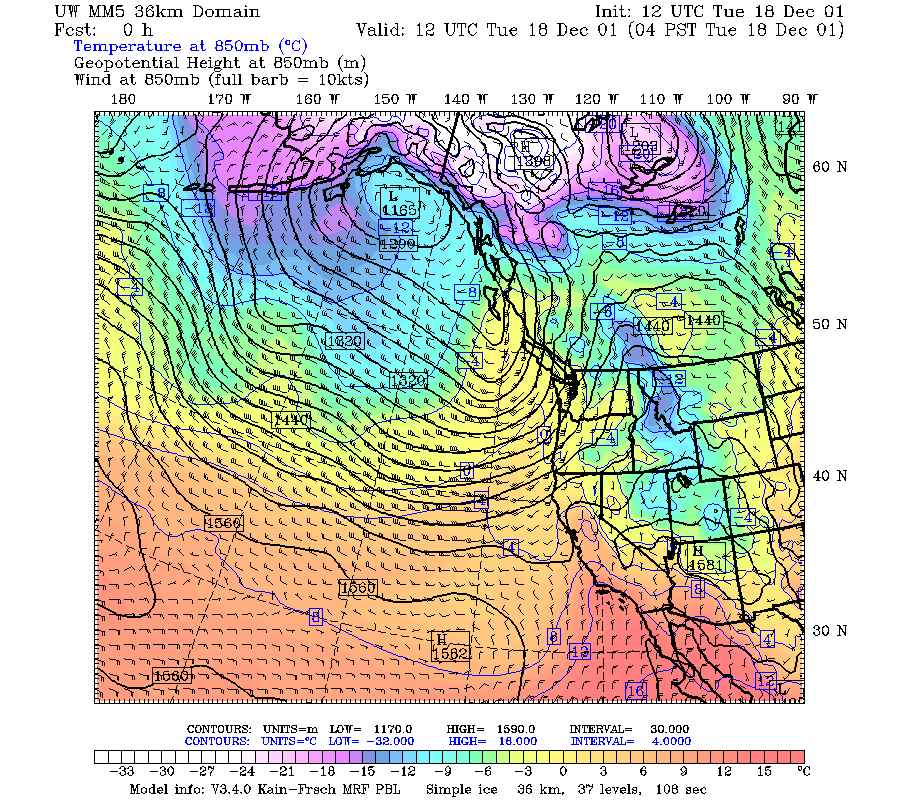
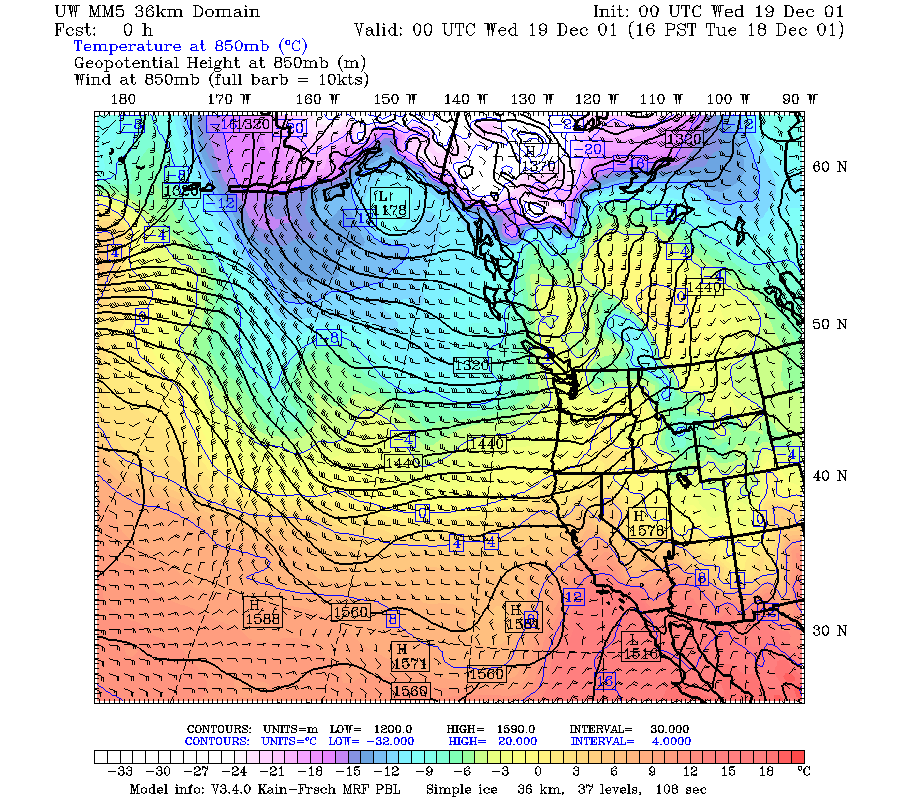
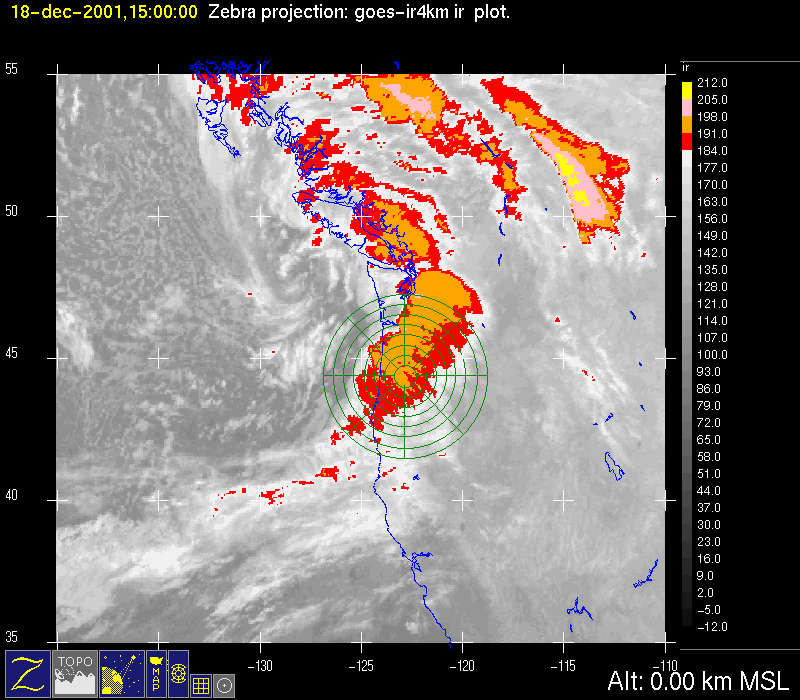
The 500 mb map for 1200 UTC 18 December 2001 showed a trough at about 130 oW approaching the Pacific Northwest coast (Fig. 1a). By 0000 UTC 19 December it had moved into Oregon (Fig. 1b). At 850 mb at 1200 UTC 18 December, the trough was well defined with moderately strong winds, but ahead of the trough, over the Oregon Cascades, the winds were only about 15 m/s from the SSW (Fig. 2a). By 0000 UTC 19 December, the 850 winds were 10-15 m/s from the SW over the Oregon Cascades (Fig. 2b). The tongue of high humidity at 850 mb did not extend south of 20 deg north (Fig. 3a, Fig. 3b). The surface map at 1200 UTC 18 December showed a moderately strong front over the ocean west of Oregon and a strong SW-NE pressure gradient across western Oregon (Fig. 4a). By 0000 UTC, the front had moved over the mountains and the pressure gradient over Oregon was weak (Fig. 4b).
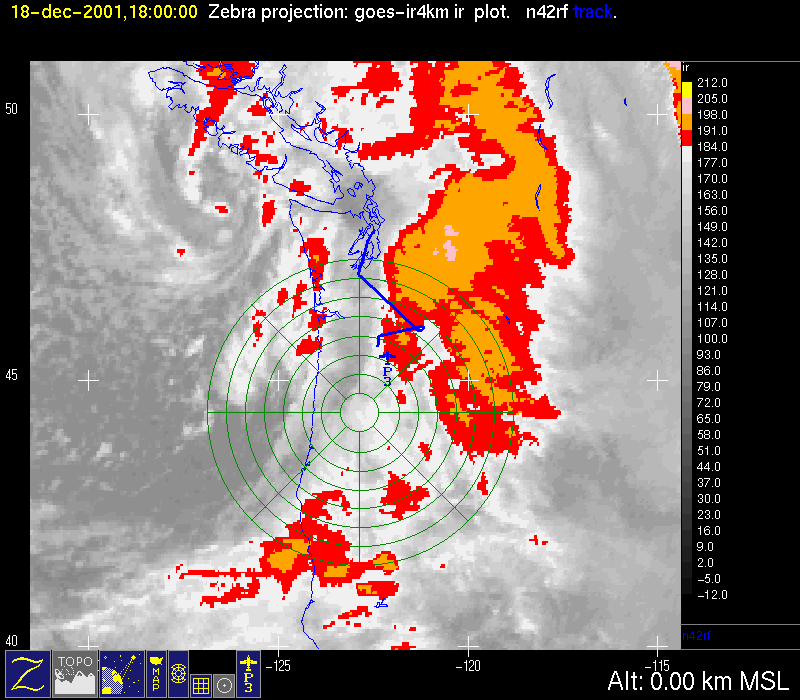
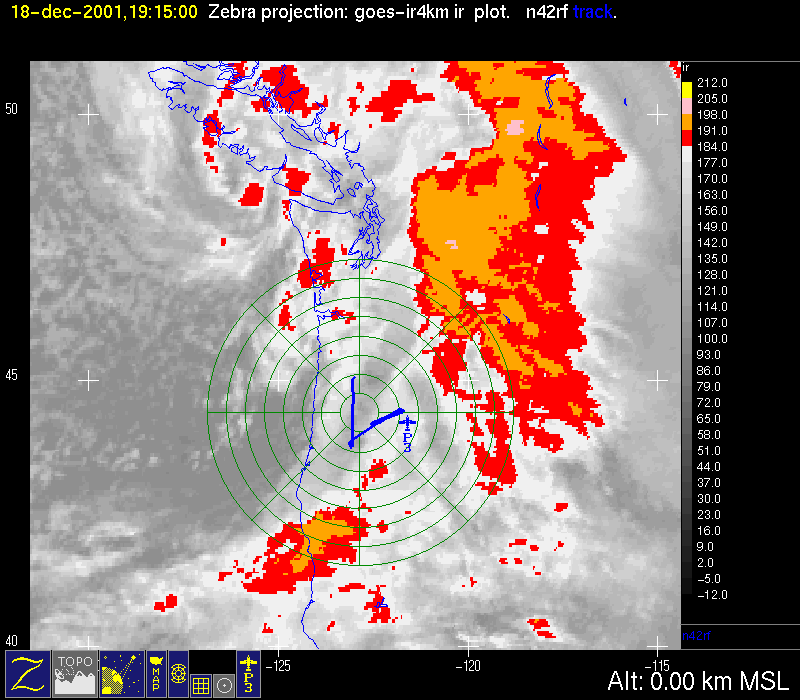
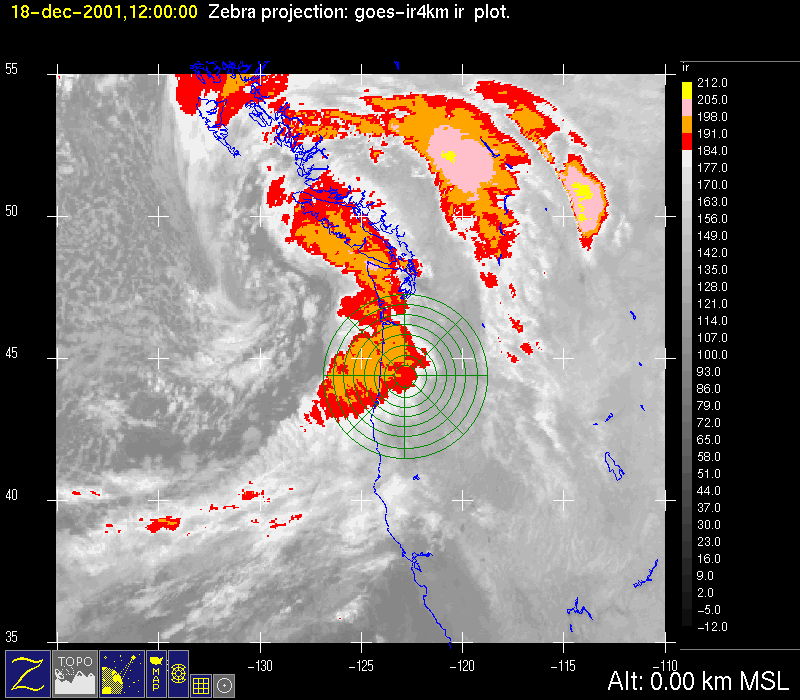
The infrared satellite imagery for 1200 UTC 18 December 2001 showed an intense frontal cloud band moving over the western portion of the S-Pol radar area (Fig. 5a). The back edge of the cold cloud top was offshore. The southwestern portion of the cloud band showed a small scale transverse banded structure, as has been seen in previous cases during the project. By 1500 UTC, the frontal cloud band was directly over the radar area, and a comma cloud was forming south of Vancouver Island (Fig. 5b).
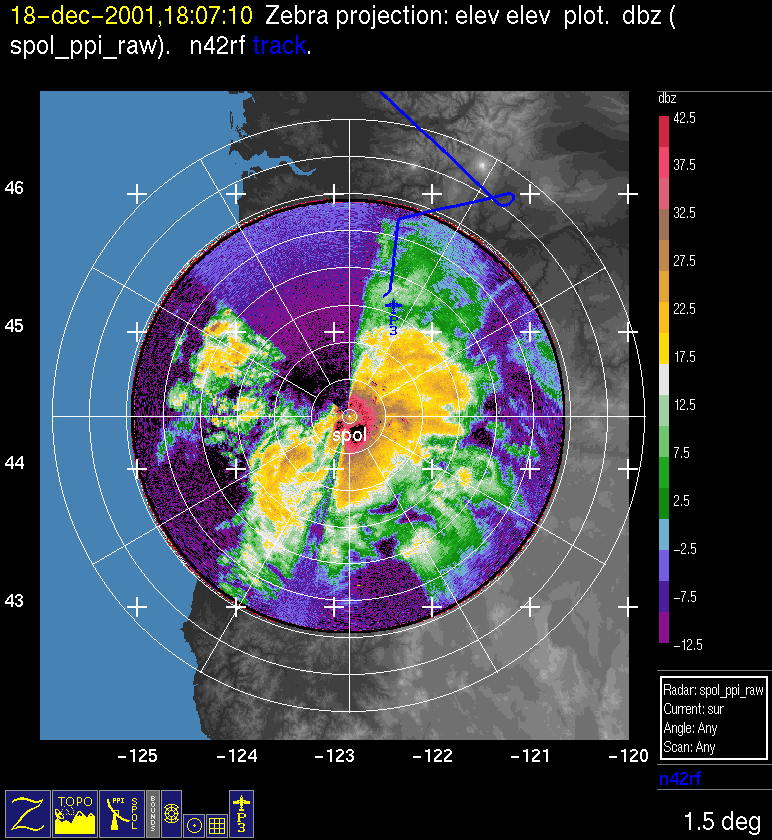
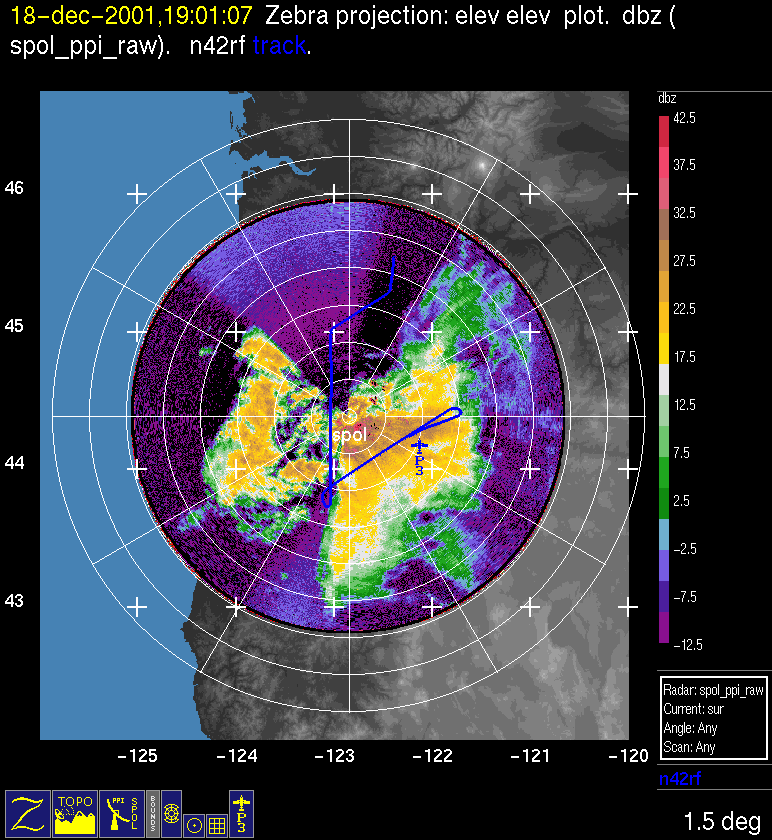
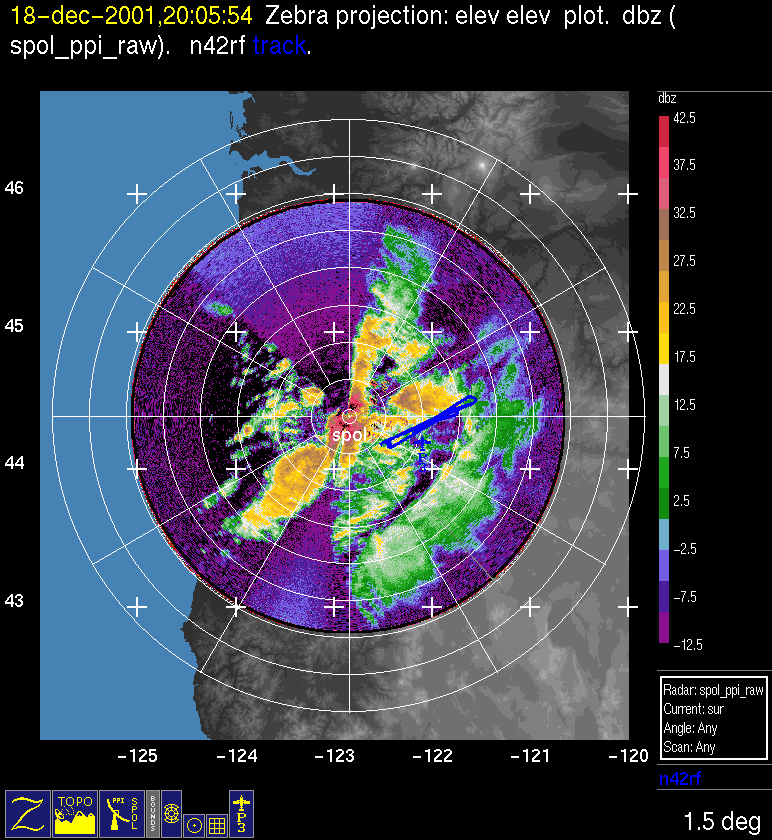
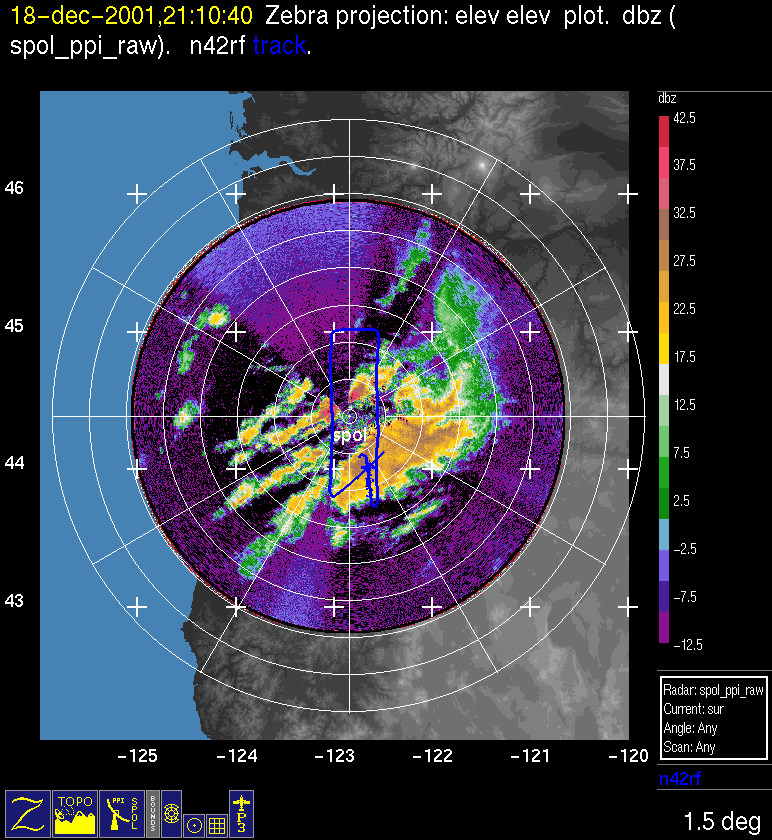
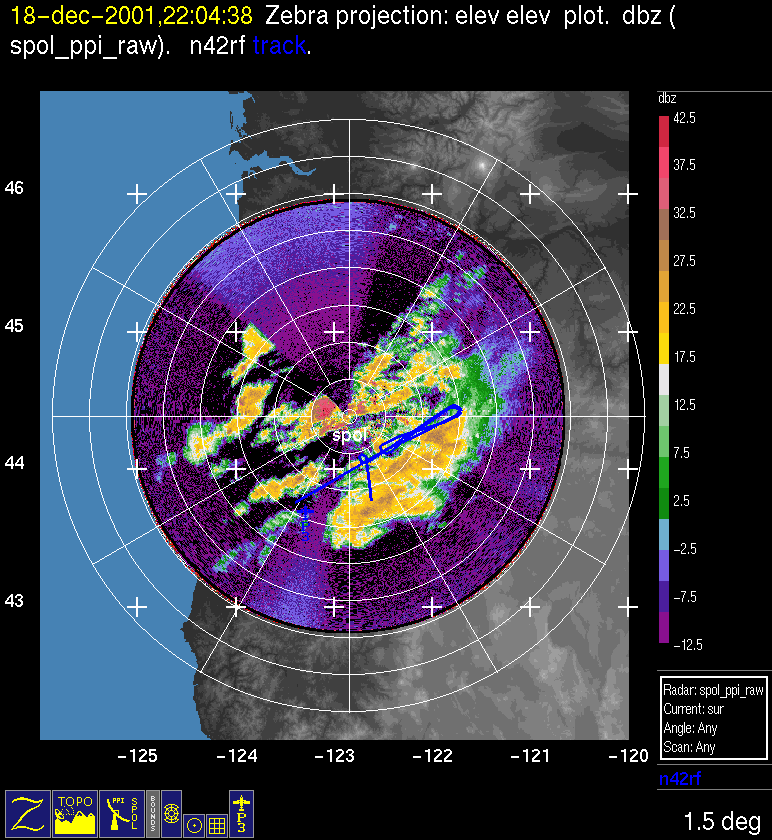
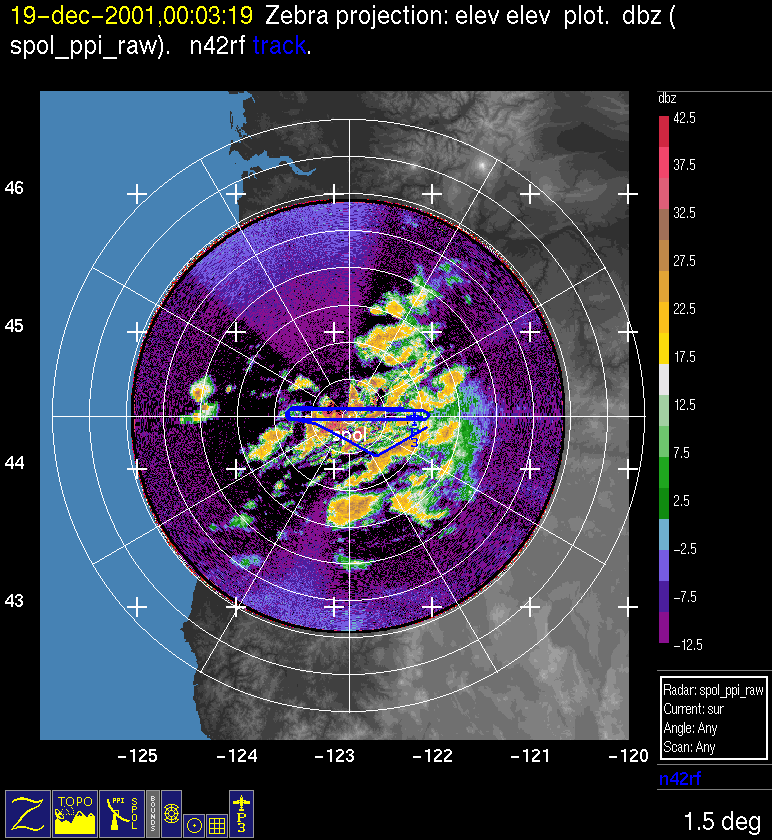
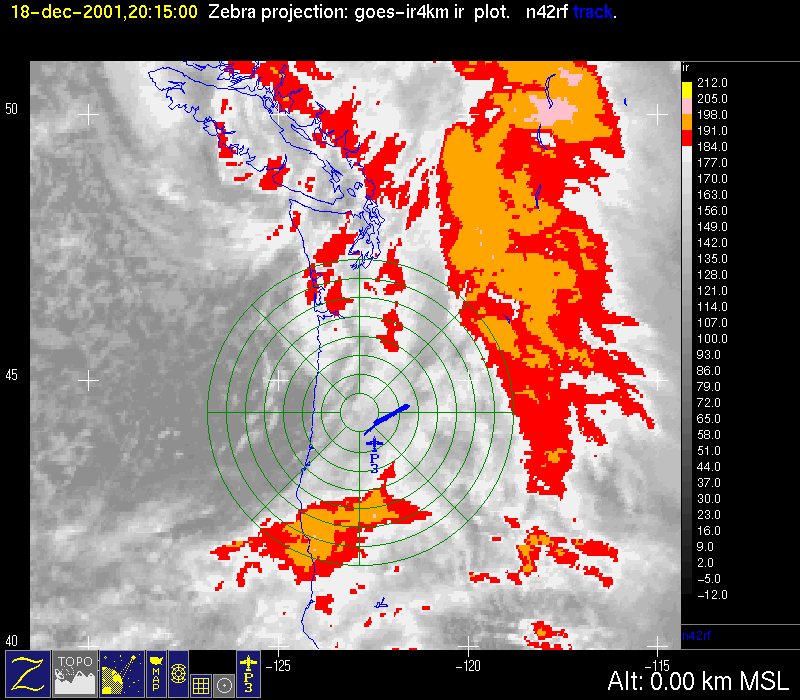
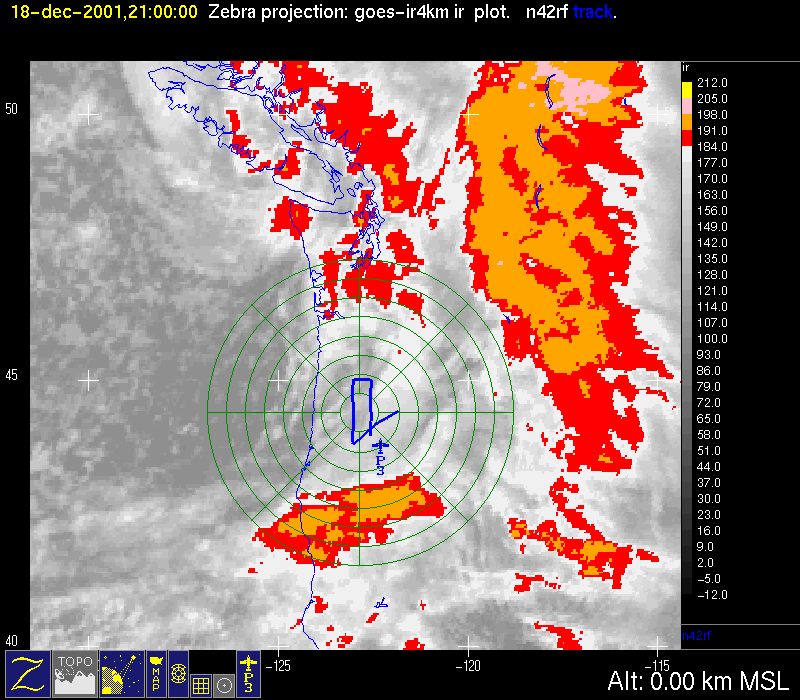
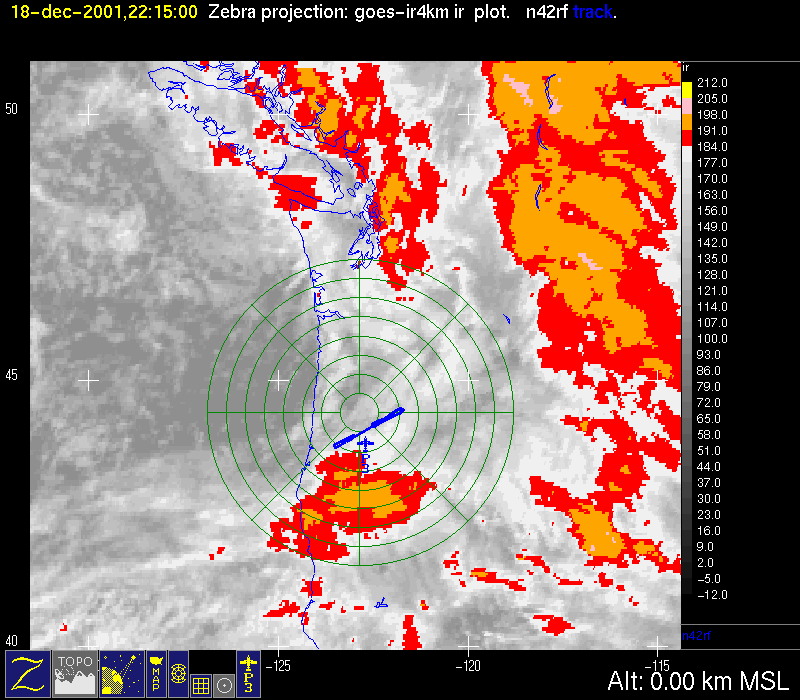
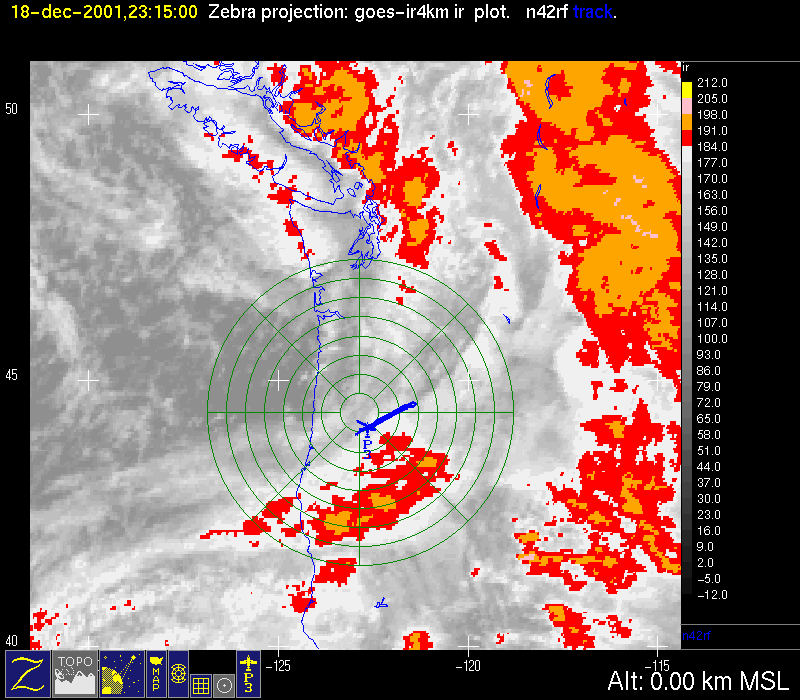
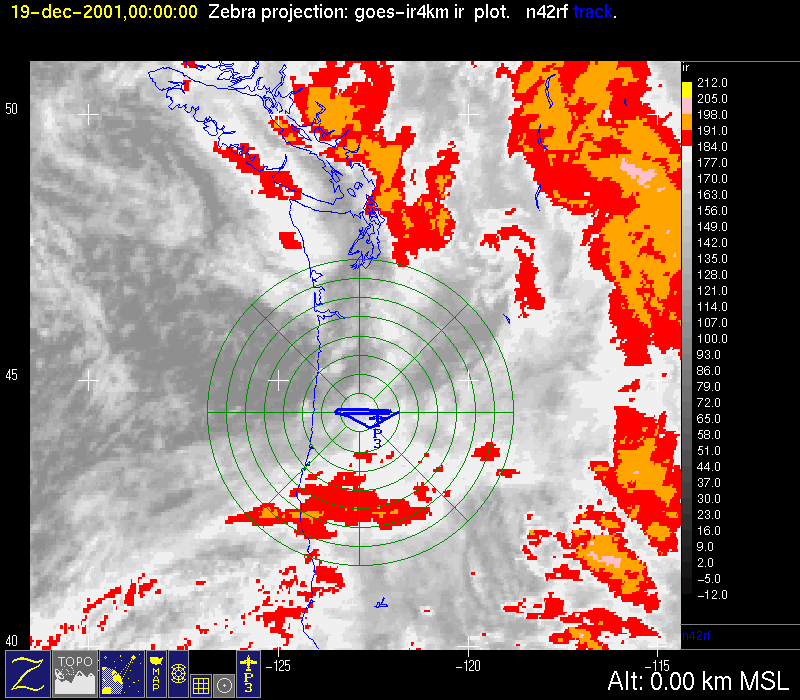
The P-3 aircraft flew from 1700 UTC 18 December-0200 UTC 19 December. The first part of the flight documented flow in the Columbia Gorge. The rear portion of the frontal cloud band was over the Gorge, with precipitation occurring and thus allowing for airborne dual-Doppler radar measurements. The aircraft therefore headed southeast out of Seattle to a point along the Columbia River and then flew WSW along the Gorge till about 1800 UTC (Fig. 5c). Then the P-3 headed south into the S-Pol radar area where they arrived about 1900 UTC (Fig. 6a). From about 1800-2000 UTC the P-3 flew a SW-NE track through the back edge of the frontal cloud and precipitation pattern over the mountains just east of the S-Pol radar (Fig. 5d, Fig. 5e). The 1.5 deg elevation echo in this region in which the P-3 was flying, had the smooth uniform appearance of stratiform snow, as has been typical of the frontal precipitation regions in previous systems seen in the project (Fig. 6b, Fig. 6c) The SW-NE oriented band of echo moving toward the radar from the west of the radar during this time period had a more convective appearance and was located in the tail of the comma cloud seen in the satellite imagery. From 2000-2300 UTC, the P-3 flew a dual-Doppler pattern in the tail of the comma cloud (Fig. 5f, Fig. 6d). The comma cloud was extremely prolific producer of liquid water (multiple excursions above 0.5 g/m**3) and moderate-to-severe icing. As the P-3 flew in the tail of the comma cloud, another cloud band, separated from the tail of the comma by a relatively clear gap in the satellite image, was moving in from the west (Fig. 5e , Fig. 6e, Fig. 5f). By 0000 UTC 19 December, the comma cloud was east of the Cascades, and the P-3 was flying in the next cloud band as it moved over the mountains (Fig. 5g, Fig. 6f). From the viewpoint of the P-3 this latter part of the flight pattern was described by Brad Smull as, "cold-core showers congealing into a more continuous though shallow precip shield as they piled into the Cascades." The shoulder of the next warm-frontal cloud pattern was in the southwest part of the S-Pol radar area. By 0300 UTC the regime over the S-Pol radar was generally postfrontal, with the shoulder of the next warm-frontal pattern still in the southwest quadrant of the radar area (Fig. 5h).
Convair-580 Summary
No Flight
P-3 Summary
P-3 Flight Number:
011218H, IMPROVE 08
Period of Flight:
1640 UTC 18 December-0156 UTC 19 December 2001
Main Accomplishment of Flight:
The P-3 took measurements in the Columbia River George in easterly flow, then flew south to the IMPROVE area to take further measurements.
Instrument Problems:
-
Flight Scientist:
Nick Bond
Approximate UTC Timeline (Local time= UTC-8 hours) Activity for P-3 Flight 08:
164021 UTC (47.90018, -122.28056) 187.461°, 984.3 mb, 6728.0 m Scientists in seats
164639 UTC (47.90016, -122.28053) 189.691°, 985.1 mb, 0.0 m Block-out
165656 UTC (47.91212, -122.28571) 179.011°, 986.3 mb, 0.0 m Takeoff Rwy 16R
170322 UTC (47.68405, -122.58386) 205.962°, 722.3 mb, 2636.0 m Radar system up & recording
172256 UTC (46.69894, -122.45473) 133.855°, 567.1 mb, 3729.0 m Very continuous stratiform precip along our track, echo top ~4 km
173711 UTC (45.99378, -121.41220) 134.405°, 567.6 mb, 3646.0 m Descending for gorge run. Echo still very continuous but weak, peaks ca. 20-25 dBZ. Beautiful cloud physics profile, rimed stellars.
174220 UTC (45.98515, -121.35172) 256.281°, 747.1 mb, 1865.0 m Level at freezing level 8kft/2.5 km, approaching gorge, precip still solid, a bit deeper than near Puget Sound, echo top ca 5 km, tracking along gorge
175002 UTC (45.89145, -121.94844) 257.064°, 747.1 mb, 1892.0 m Nearing west exit of gorge, echo remains continuous, tail Doppler data quality look excellent
175344 UTC (45.84782, -122.20552) 255.374°, 746.8 mb, 1606.0 m Tail radar back up after ~3min gap. Must have jinxed it w/ last comment...
175523 UTC (45.82664, -122.32658) 256.754°, 747.0 mb, 2060.0 m Turning to track 185. Planning south-bound run to Pt F and an abbreviated microphysics stack prior to Convair's arrival
180558 UTC (45.29343, -122.43539) 206.398°, 775.6 mb, 1930.0 m Climbing for south-bound run.
181104 UTC (45.16316, -122.71799) 235.741°, 640.9 mb, 3546.0 m Leveling at FL 120. Echo much reduced, patchy, thin mid-level layer at/just above FL.
181339 UTC (45.08992, -122.87631) 236.949°, 641.3 mb, 3538.0 m In sunshine. S-POL reports that first band is narrow & exiting area, however comma-cloud moving in from west
181545 UTC (45.02713, -123.01631) 230.996°, 641.7 mb, 3532.0 m At Pt A,. LF suggests widespread precip to our west beyond 100 km, but may be getting some sea clutter return as well.
181919 UTC (44.82338, -123.03435) 179.223°, 641.7 mb, 3403.0 m Seeing some 2nd trip return. Flight level wind speeds jumping up here in clear.
182056 UTC (44.73415, -123.02849) 174.951°, 641.6 mb, 3534.0 m Radar down briefly, back up at 1822:03
182503 UTC (44.50752, -123.03520) 183.449°, 641.7 mb, 3517.0 m Radar down again, back up at 1827:20. Echo picking up again, but not too widespread. More structure, suggestion of fallstreaks off RHS at 1828-29.
183452 UTC (43.92133, -123.03767) 177.886°, 641.7 mb, 3456.0 m Considering possibility of microphysical spiral (vs. Stack) through band to expedite sampling before it exits study area. Echo tops now 5-7 km.
183823 UTC (43.73472, -123.08307) 304.192°, 640.8 mb, 3200.0 m At Pt F, tracking toward north.
185220 UTC (44.44820, -121.78845) 79.123°, 514.1 mb, 4008.0 m Turning planning 200 ft/min from 17.5 to 15 kft for "short-stack" leg back to SW. Mass says comma is moving in quickly, makes for excellent/unique mission objective, so we'll expedite stack in order to be back in lawn-mower pattern for comma cloud arrival.
190720 UTC (44.23783, -122.37680) 67.458°, 568.9 mb, 3681.0 m Echo remains solid Now tracking NE
191404 UTC (44.39368, -121.78415) 253.015°, 579.5 mb, 3087.0 m Turning to track SW, descending on this leg. LF is showing signs of distinct north-south band
192306 UTC (44.16237, -122.43259) 288.319°, 628.9 mb, 2950.0 m Turning to track NE at 10 kft.
192733 UTC (44.33087, -122.06317) 56.763°, 629.4 mb, 2496.0 m Track adjustment. Coastal range terrain & lower altitude partially blocking LF view of approaching band (comma cloud?) but
193255 UTC (44.48905, -121.56305) 221.065°, 629.5 mb, 2545.0 m Turning to track SW
194013 UTC (44.31584, -122.04581) 239.107°, 679.8 mb, 2340.0 m Re-booting radar system. Recording back on at 1941.
194434 UTC (44.20309, -122.32155) 241.280°, 694.5 mb, 2095.0 m Seeing echo enhancement over sloped terrain on RHS.
194641 UTC (44.21304, -122.42740) 30.452°, 695.0 mb, 2189.0 m Turning to track NW. Echo fell off rapidly neat this end of stack, clouds looked more convective w/ blue sky surrounding. Bond notes that liquid water concentrations bumped up to 0.4-0.5 g/kg near SW end of track; picked up a lot of rime ice
195537 UTC (44.49869, -121.56516) 196.384°, 695.0 mb, 1776.0 m Turning to track SW, descending slowly to 6kft if possible. Ultimately climb to 17.5 kft and track to Point F (or location identical to IP)
200331 UTC (44.31933, -122.06152) 239.638°, 707.3 mb, 1680.0 m Nearing SW point, again more convective character visually
200922 UTC (44.17089, -122.41576) 216.541°, 751.6 mb, 1654.0 m SW point, tail down at 20:09:30, re-booting. Back up & recording 20:11. Continued eidence of orographic enhancement NW of our track. Descending to 6 kft as we near Pt F.
202402 UTC (44.06465, -123.03087) 2.049°, 812.0 mb, 1661.0 m On north-bound track F--->A. S+ (heavy snow) at flight level. King probe continues to show appreciable liquid water (ca. 0.5 g/kg) yet tail radar indicates only stratiform structure.
202755 UTC (44.32046, -123.01698) .582°, 812.0 mb, 1526.0 m Echo weakening. But thereafter quite cellular in patches
203743 UTC (44.97674, -123.02823) 11.706°, 811.9 mb, 1725.0 m At Pt A, re-booting radar at 2039; back up at
204447 UTC (44.84671, -122.55753) 184.552°, 750.6 mb, 1617.0 m Tracking B-->G at 8 kft.
205318 UTC (44.34588, -122.55576) 178.095°, 750.1 mb, 1638.0 m Echo filling in as we approach north edge of band. Good orographic enhancement on LHS.
205921 UTC (43.98380, -122.56822) 179.863°, 750.7 mb, 1843.0 m King-probe liquid water has again increased to ca. 0.5 g/m**3. Cloud physics data shows nice riming. Tail Doppler shows only moderately deep (4 km) but solid radar echo.
210338 UTC (43.73866, -122.57130) 234.492°, 750.3 mb, 1617.0 m Turning at Pt G to track north to intercept track for microphysics stack
211007 UTC (44.10764, -122.71889) 251.578°, 562.0 mb, 4092.0 m Climbing to 17.5 kft.
211442 UTC (44.20441, -122.34384) 55.765°, 514.7 mb, 4175.0 m Out of ice, terminating climb
213303 UTC (44.15630, -122.52612) 171.907°, 590.8 mb, 3866.0 m Back in seat after taking multiple photos of mod/severe rime ice accumulations on windscreen, spinners. Present flight level is near echo top. Approaching SW point.
213439 UTC (44.15184, -122.38374) 50.417°, 591.2 mb, 3529.0 m Turning to track 050 at flight level 11 kft
214110 UTC (44.45158, -121.75676) 117.525°, 591.6 mb, 2990.0 m At Santiam Pass, turning to track 240o.
215026 UTC (44.19232, -122.33676) 247.228°, 668.2 mb, 2454.0 m Finally lost precip probe (iced up) at 2245. Plan is to descend at SW point to drop off appreciable ice load. Aircraft is shimmying, lots of banging as ice breaks off and hits fuselage/windows. Contemplating quick run to ocean to descend and melt off this crap. Radar continues to work well.
220322 UTC (43.79528, -123.31104) 240.508°, 841.8 mb, 1308.0 m At 5 kft over Wilammette, nice cellular (presumably open-cellular postfrontal) convection, anvil structures. All ice has been shed from airframe. Climbing to 12 kft & reversing course at 2208. Cloud & precip probes both working well again.
221505 UTC (43.97646, -122.95691) 64.999°, 645.0 mb, 3416.0 m Cruising through tops of convection at flight level 12 kft. Tail radar velocities have been somewhat noisier. Will try re- setting COHO.
224212 UTC (44.17358, -122.44063) 321.275°, 696.0 mb, 2460.0 m At far NE point in stack @ 10 kft, echo very shallow, not much in way of in situ microphysics data for much of this leg, though tail Doppler shows evidence of *shallow* orographic enhancement.
225518 UTC (44.50709, -121.50473) 264.558°, 673.2 mb, 2214.0 m Tail down. Back up at 2257. Echo has been on wane. Some light shallow stuff over hills
231356 UTC (44.19987, -122.82361) 299.588°, 575.1 mb, 4231.0 m At end of leg. Heading NW to pick up east-west track. Planning three legs: 15, 12.5 & 10 kft
232254 UTC (44.45208, -123.40541) 85.435°, 571.8 mb, 4351.0 m In solid echo
232632 UTC (44.44413, -122.97610) 91.872°, 571.4 mb, 4170.0 m Echo reduced, but still observed in patches.
233540 UTC (44.36935, -122.11624) 269.865°, 578.6 mb, 3018.0 m Briefly considered moving this stack west to coastal range where yet another band is approaching, but as echo has picked up somewhat have elected to remain close to S-POL.
233929 UTC (44.36725, -122.43269) 268.906°, 588.5 mb, 3544.0 m Some 2nd trip echoes even in single-PRF. Planning to run dual-PRF next leg. Return leg will be at 12.5 kft
235052 UTC (44.36387, -123.41676) 269.137°, 630.3 mb, 3610.0 m Turning to track 090. Switching radar to MEAPRS1 dual-PRF setup (3200/2133).
000733 UTC (44.44151, -121.78403) 115.379°, 630.7 mb, 2440.0 m Turning to track 270, will do slow descent to 10kft. Opting to stay in dual-PRF
001940 UTC (44.38986, -122.70425) 268.589°, 676.3 mb, 3025.0 m Cutting thru tops of weak cells. Considerable 2nd trip contamination, esp. On RHS. Completing our slow descent to 10 kft.
002426 UTC (44.39230, -123.10486) 269.924°, 694.5 mb, 2935.0 m Turning to track 092 at 10 kft.
003746 UTC (44.43443, -121.82796) 91.989°, 694.8 mb, 1505.0 m Turning for final west-bound leg (track 271); will maintain minimum possible altitude this run. Next lower will be 8 kft.
004511 UTC (44.38008, -122.27180) 271.143°, 722.0 mb, 1420.0 m Descending to 8 kft. Have been punching some reasonably well-defined cells, but nothing too rough turbulence wise yet.
004717 UTC (44.38010, -122.44267) 269.811°, 737.4 mb, 1940.0 m Out of 8.5 kft for 7kft. Continued cellular enhancement of terrain-hugging ~stratiform echoes, only ~2 km deep. Cleared to 6kft, out of 7.2 kft at 0050.
005427 UTC (44.50030, -122.91034) 356.165°, 727.2 mb, 2550.0 m Completed leg. Climbing/turning for ferry home to KPAE.
013620 UTC (47.94588, -122.41412) 8.407°, 874.8 mb, 1067.0 m Radar system secured.
015047 UTC (47.91921, -122.28581) 180.372°, 990.2 mb, 2.0 m Landed 16R
015623 UTC (47.90021, -122.28062) 256.952°, 988.2 mb, 1.0 m Block-in. Block-to-block duration 9.2 h
S-Pol Radar Summary
The S-Pol radar was run continuously in the same mode of operation for the entire length of the field project.
Summary of Mobile Upstream Sonde Launches
Launch times at: Creswell, OR, Lat: 43.9200, Lon: -123.0250, Elev: 165 m
1822 UTC 18 Dec
2137 UTC 18 Dec
0044 UTC 18 Dec
Summary of Leeside Sonde Launches
Launch times at: Black Butte Ranch, OR (a.k.a. ISS-3), Lat: 44.379, Lon: -121.679, Elev: 1027 m
1800 UTC 18 Dec
2100 UTC 18 Dec
0000 UTC 18 Dec
Summary of NWS Sonde Launches from Salem (SLE)
Launch times:
1800 UTC 18 Dec (special)
2100 UTC 18 Dec (special)
0000 UTC 19 Dec (standard)
0300 UTC 19 Dec (special)
0600 UTC 19 Dec (special)
Summary of Snow Crystal Ground Measurements
Measurement times:Every 15 minutes from
1700 UTC 18 Dec-0100 UTC 19 Dec (at Santiam Pass and Corbett Sno Park)
IOP 15, 19-20 Dec 2001
IOP 15: 19-20 December 2001
Time Period of IOP
2100 UTC 19 Dec-0609 UTC 20 Dec
Overview of IOP
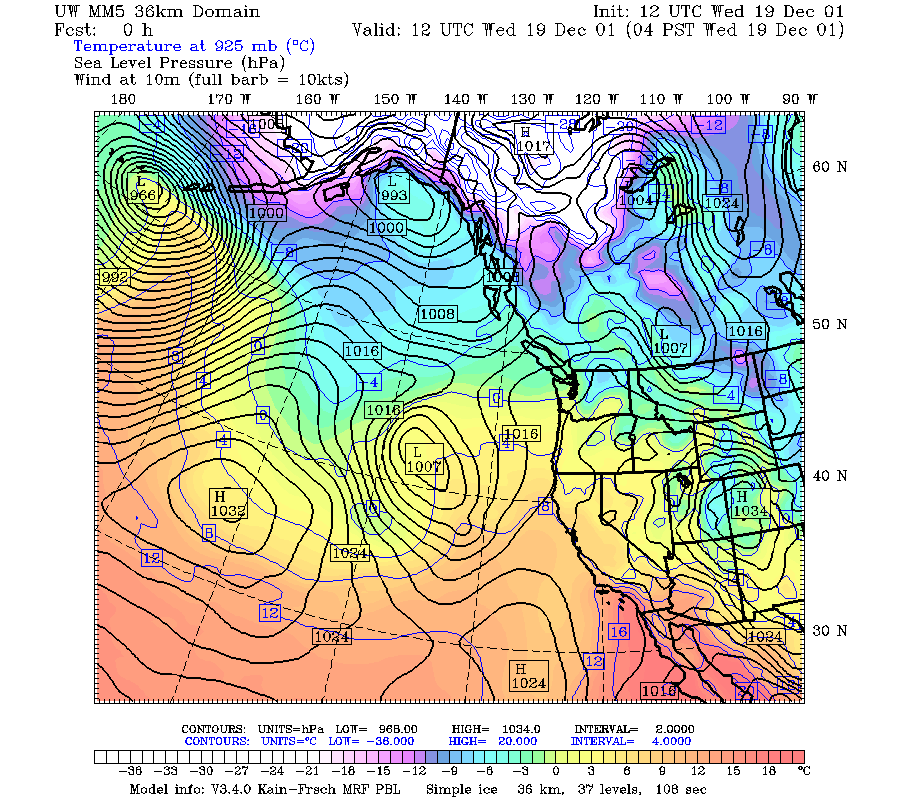
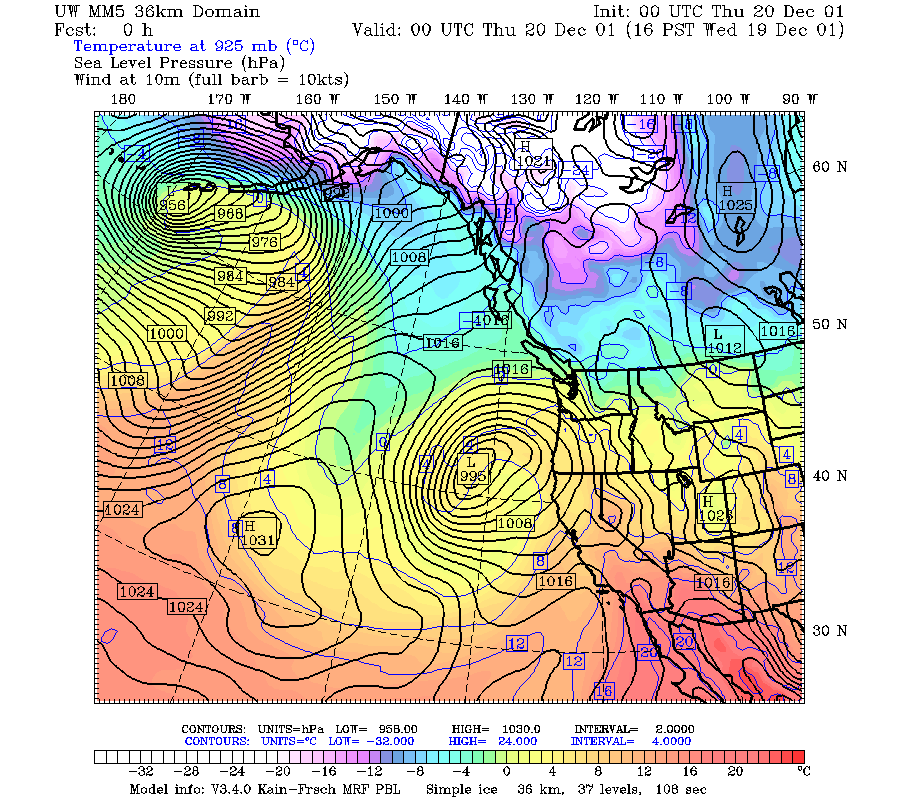
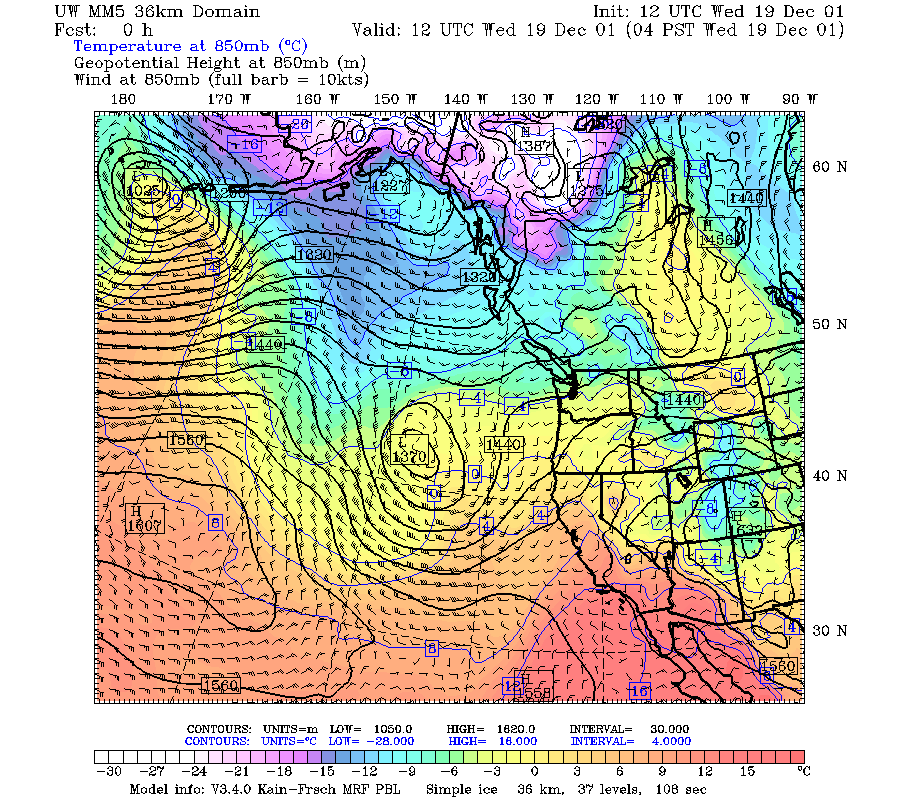
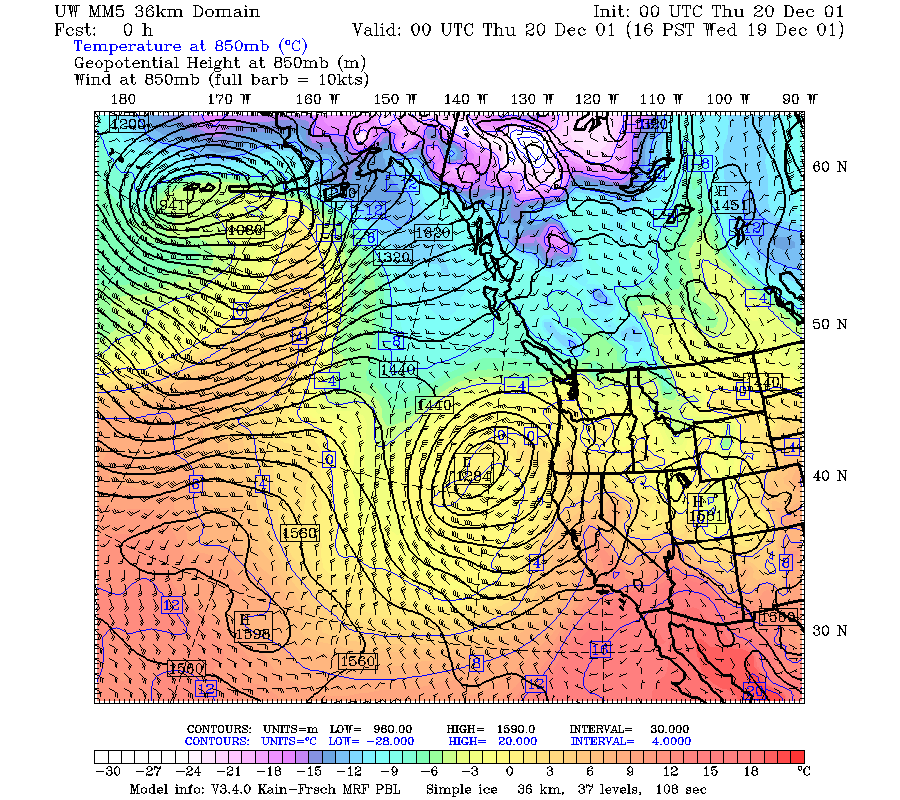
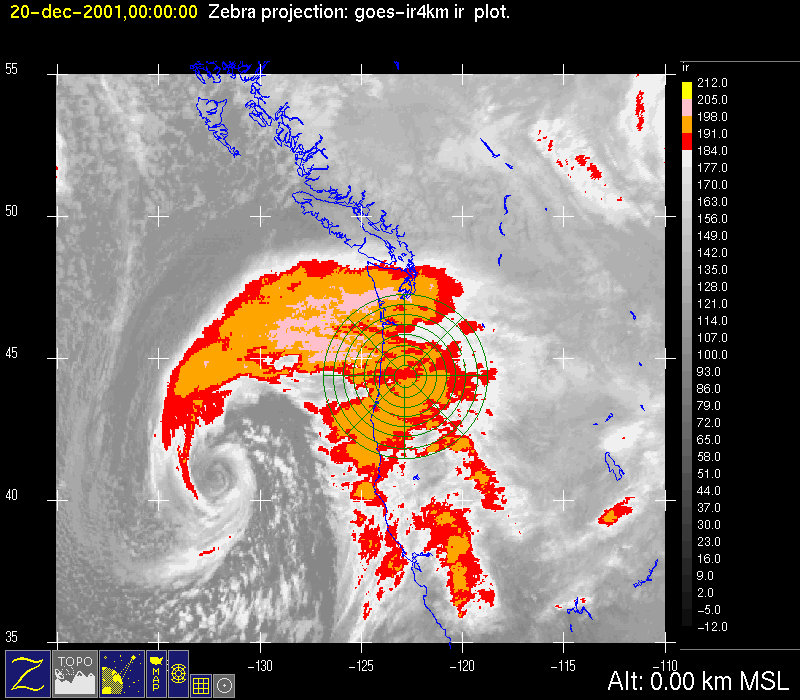
This case differed from all the previous IMPROVE II cases in that a low to the southwest of Oregon produce easterly flow over the study area, so that the eastern slopes of the Cascades became the windward slope of the terrain. Thus, the orographic enhancement occurred on the eastern rather than the western slopes when the easterly flow became predominant. At 500 mb, a well defined short wave trough was moving eastward, intensifying, deepening, and beginning to cut off between 19 December 1200 UTC and 20 December 0000 UTC ( Fig. 1a, Fig. 1b). As the intensifying low moved eastward, the 850 mb flow changed from weak southerly to strong east-southeasterly (Fig. 2a, Fig. 2b). The tongue of high relative humidity at 850 mb reached into the storm from 15 deg south (Fig. 3a, Fig. 3b). The sea-level pressure and temperature pattern showed a warm front moving over the study area during this time period (Fig. 4a, Fig. 4b).
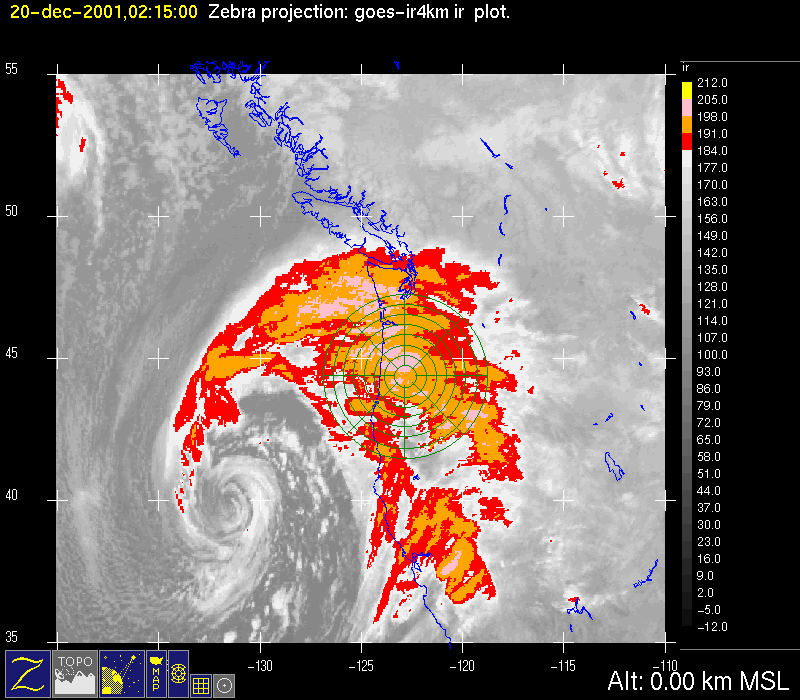
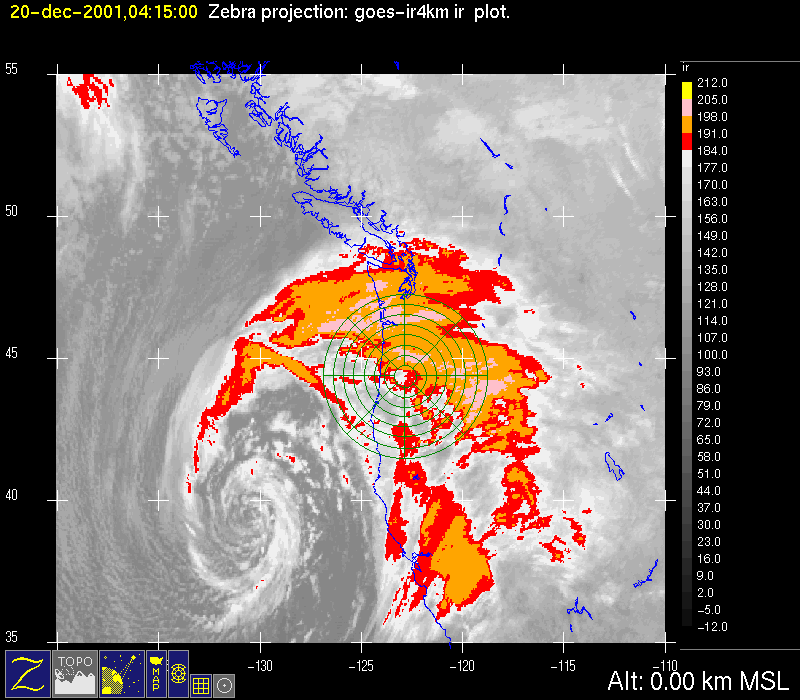
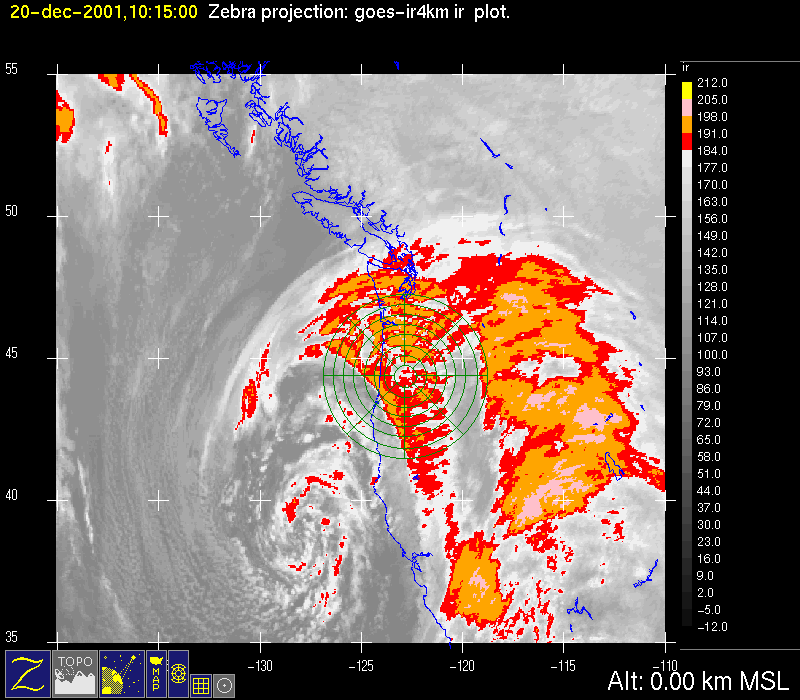
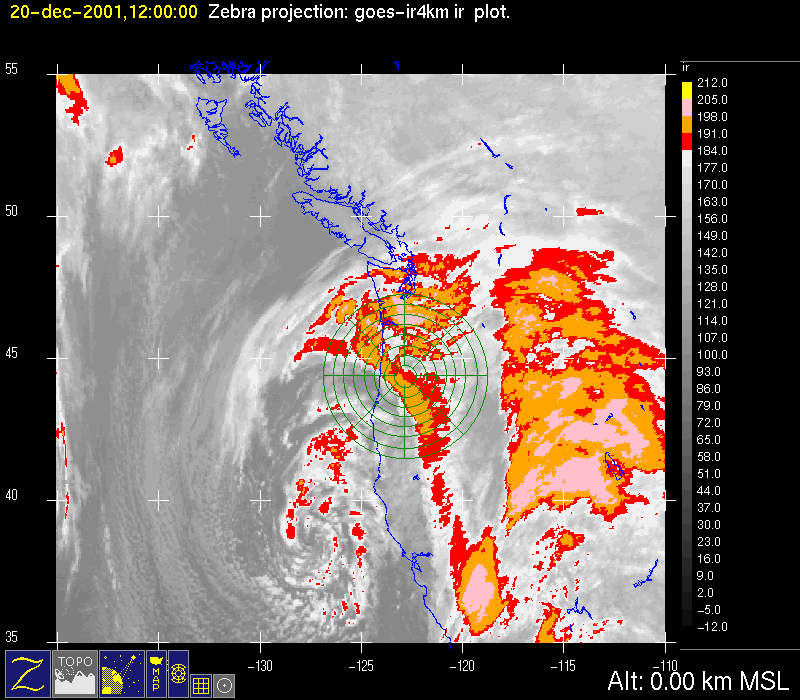
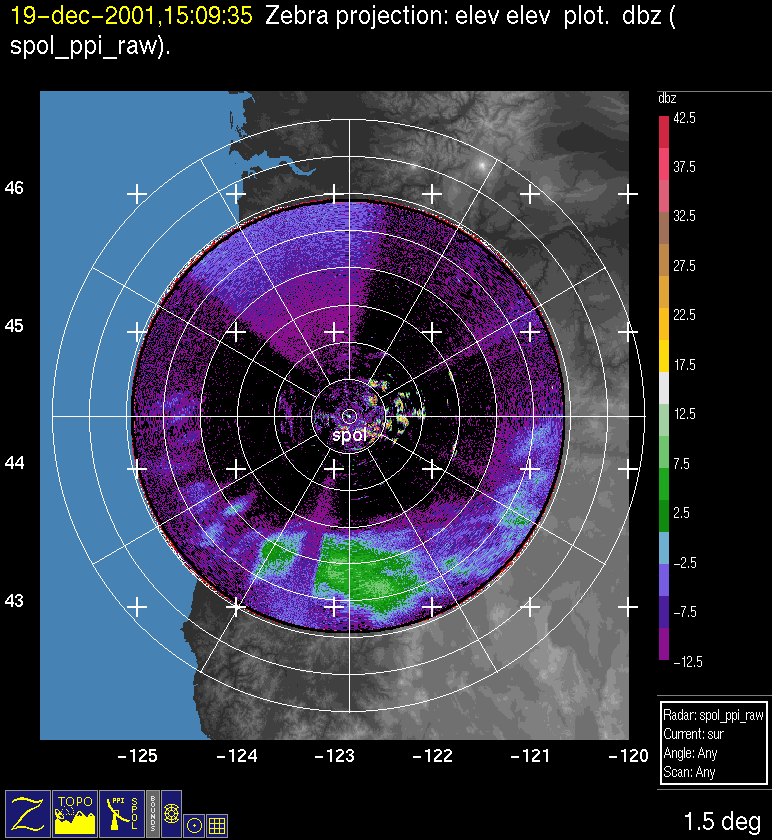
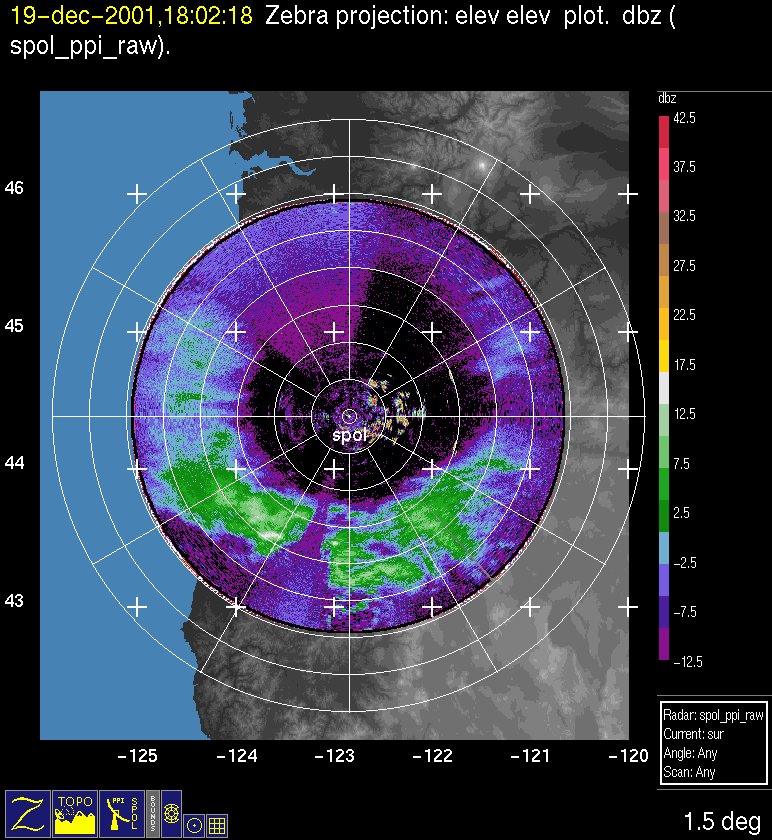
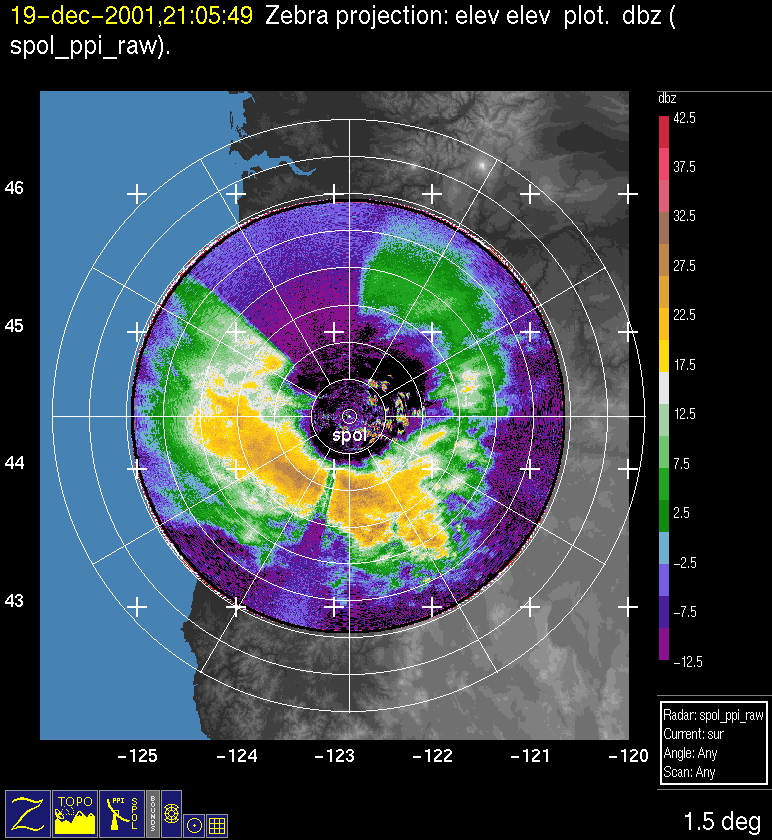
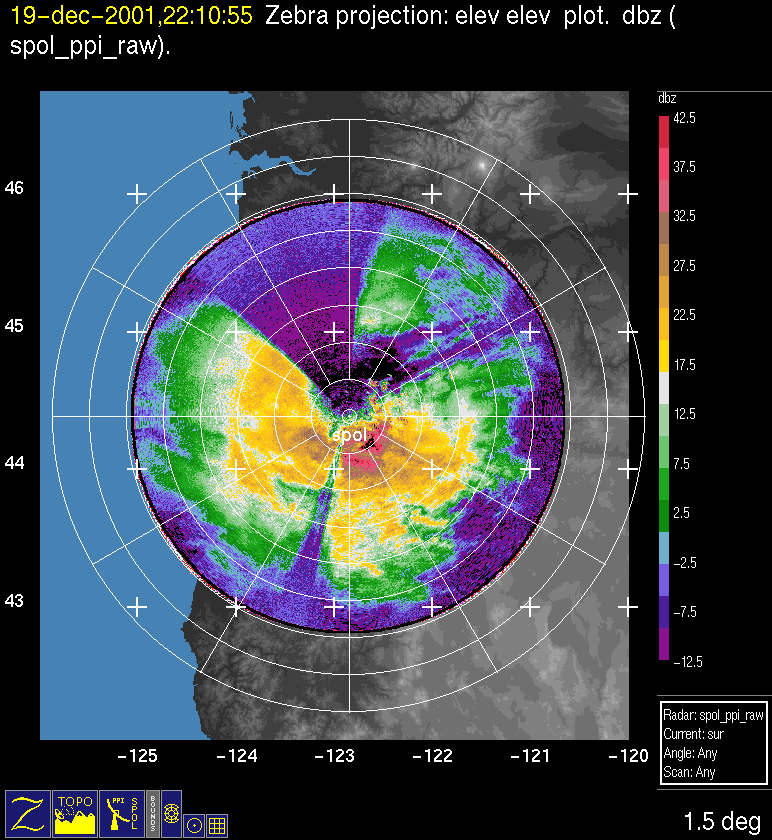
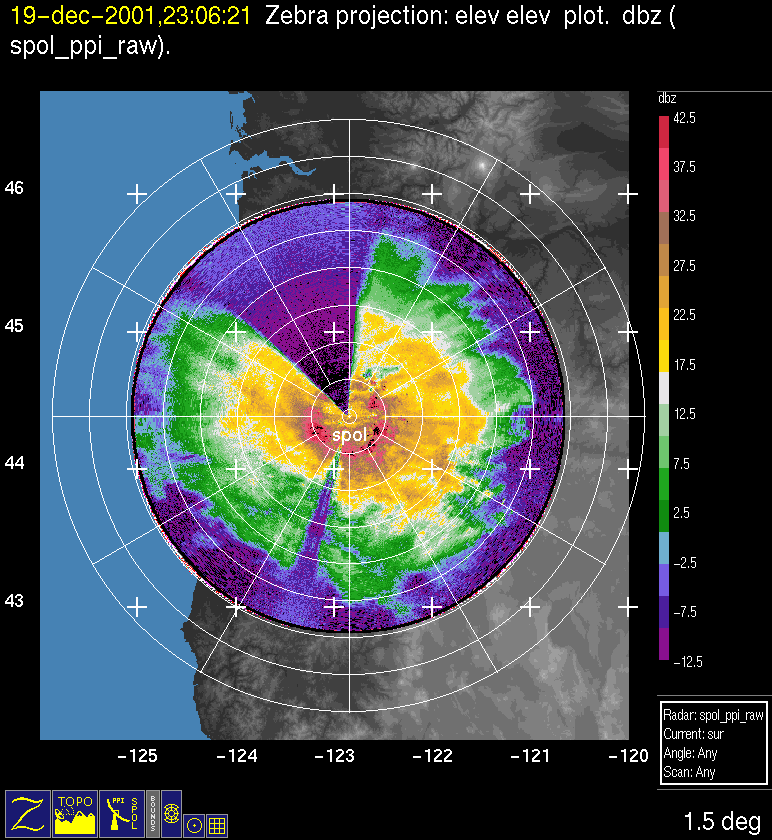
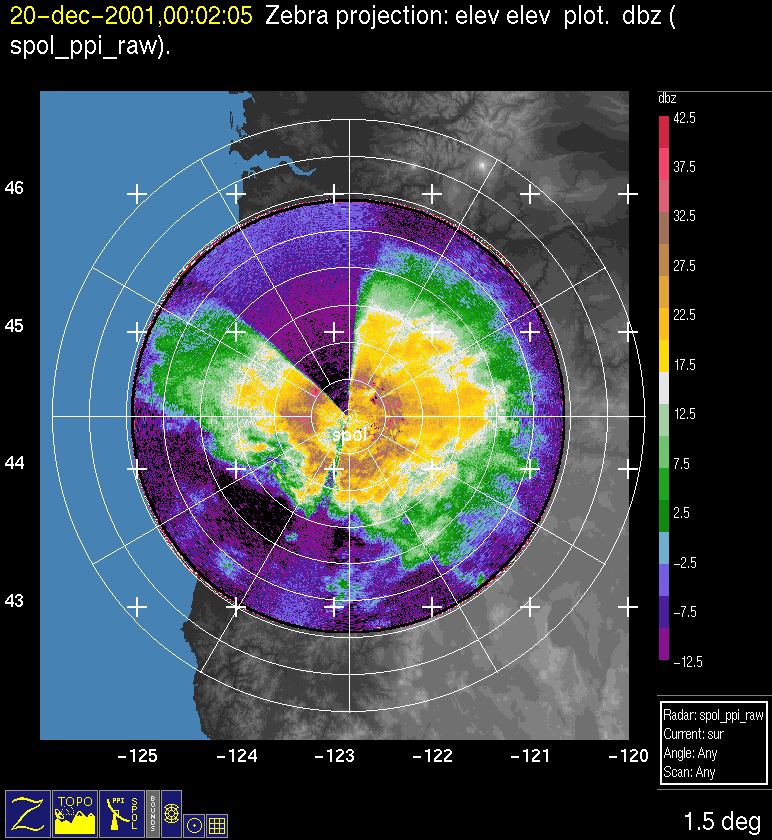
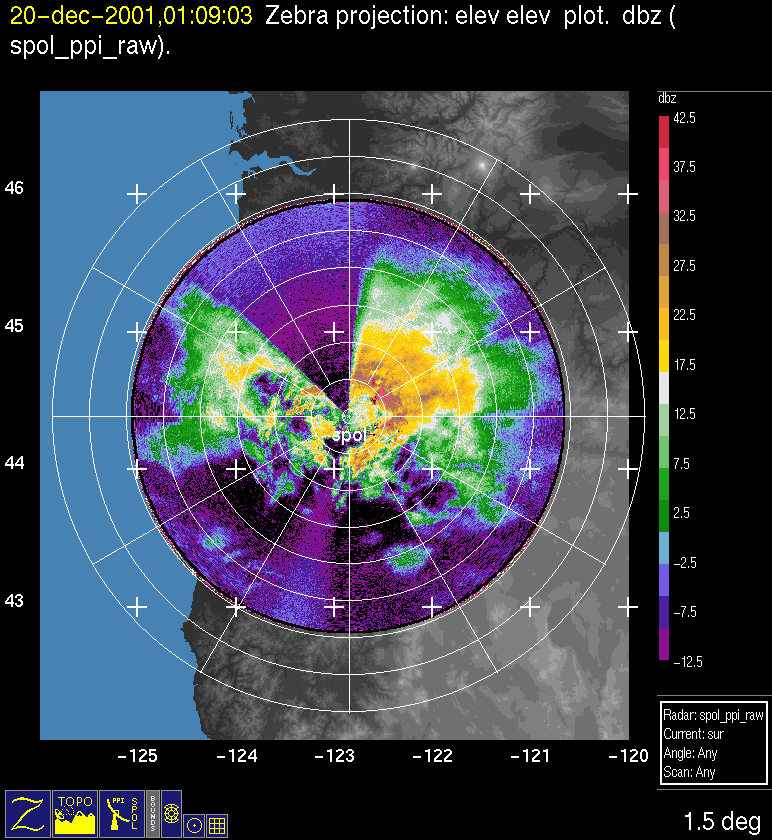
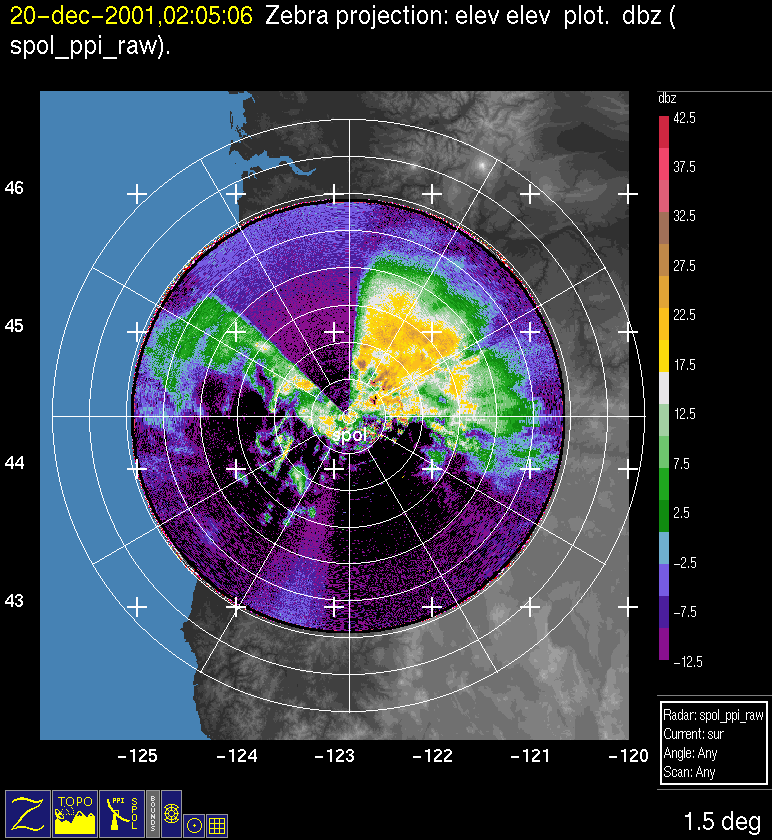
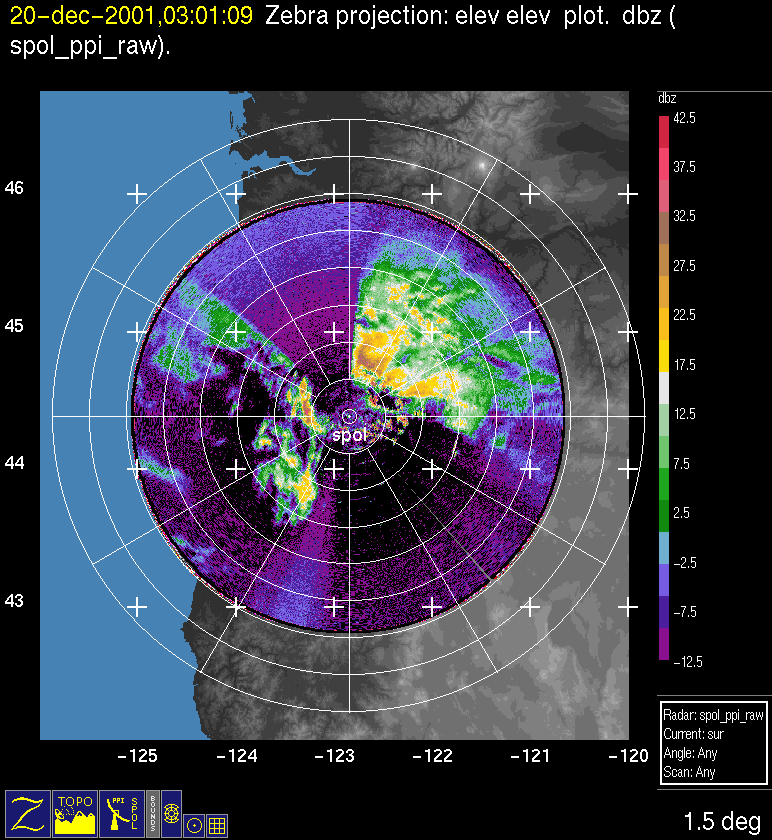
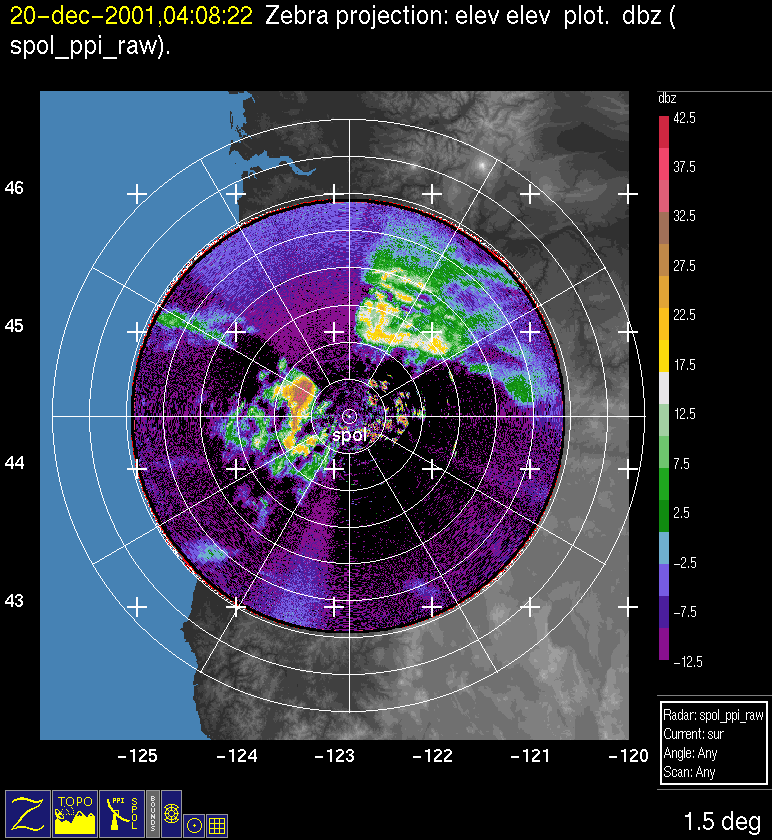
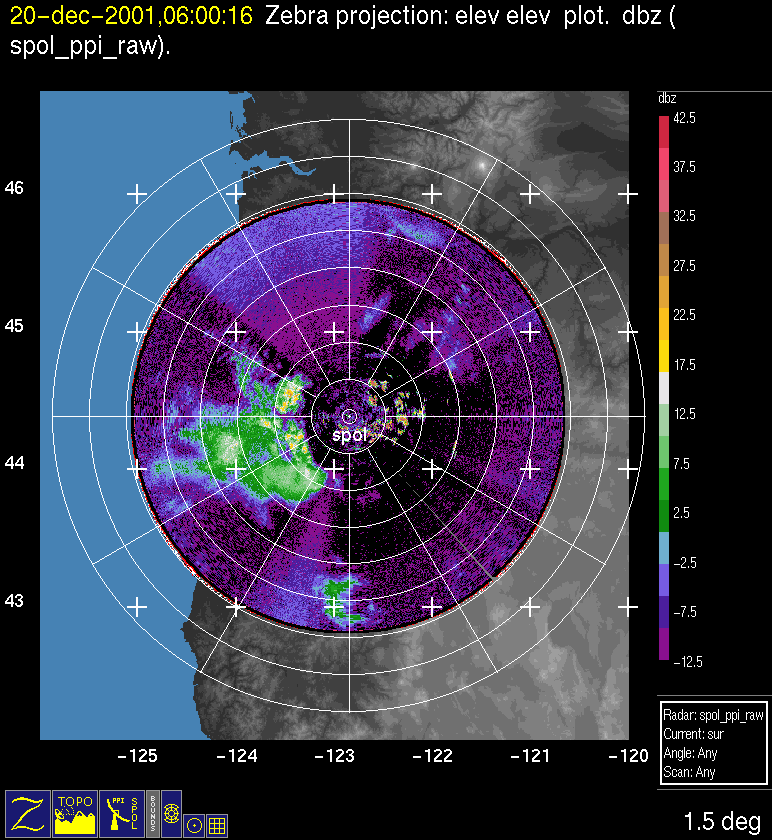
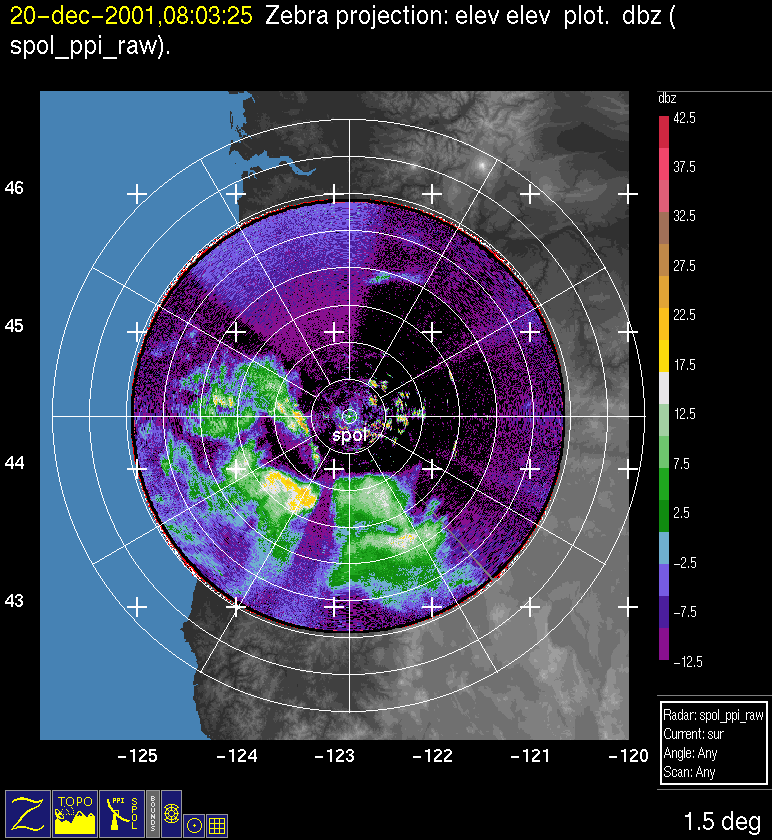
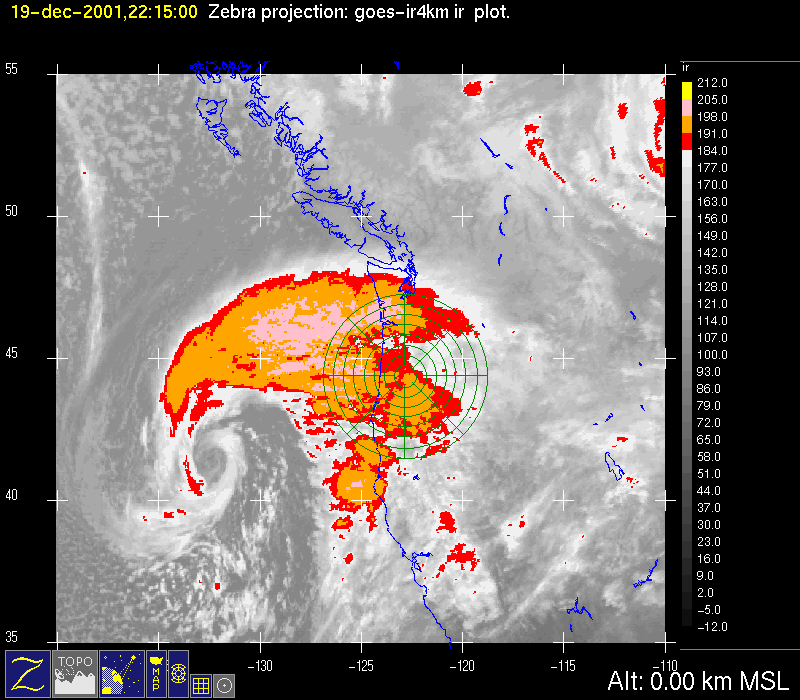
The Convair flew its first mission from 2229 UTC 19 December-0419 UTC 20 December. The infrared satellite data for 19 December 2200 UTC and 20 December 0400 UTC showed the warm-frontal clouds moving over the region during this time period (Fig. 5a, Fig. 5b, Fig. 5c, Fig. 5d). The Convair flew north-south legs both east and west of the crest of the Cascades to see the warm-frontal structure on both sides of the mountains. Before the aircraft reached the study area, the S-Pol showed a layer of precipitation aloft and gradually lowering (indicated by the shrinking circle of no echo around the radar at 1.5 deg elevation, Fig. 6a, Fig. 6b, Fig. 6c). At 2200 UTC, approximately the beginning of the Convair's first flight, the echoes reached the surface (Fig. 6d). At 2300 UTC, the echo appeared as a relatively featureless continuous layer of snow above a well defined intense bright band (at the first range ring in Fig. 6e). By 0000 UTC 20 December, the bright band was weaker and at a higher altitude, indicating general warming with the passage of the warm frontal region (Fig. 6f). By 0100 UTC, the echo was weakening and disappearing to the southwest of the radar, while the echo to the northeast was more continuous (Fig. 6g). From 0200-0300, the echo to the northeast weakened and more cellular echo appeared to the northeast (Fig. 6h, Fig. 6i), as the cold frontal part of the system approached (cf Fig. 5b).
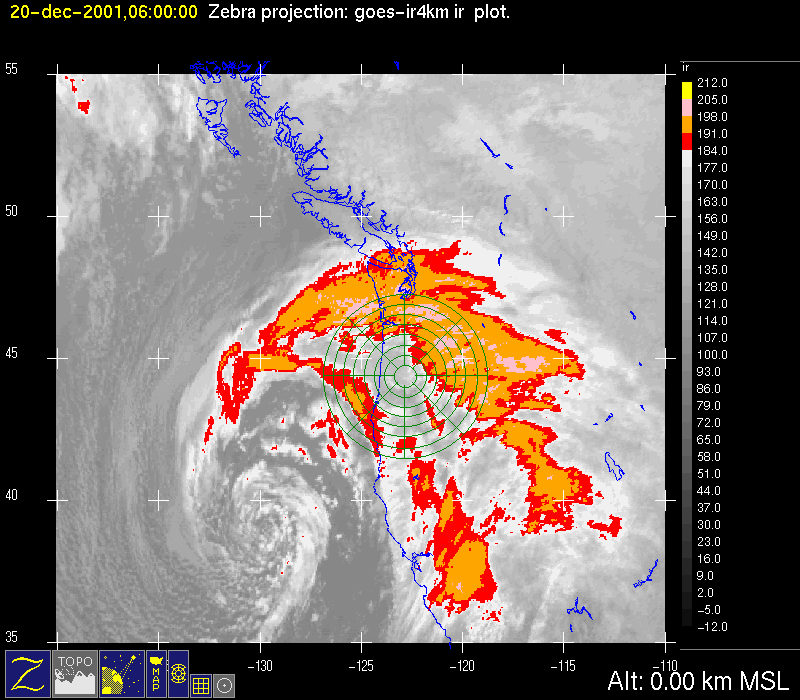
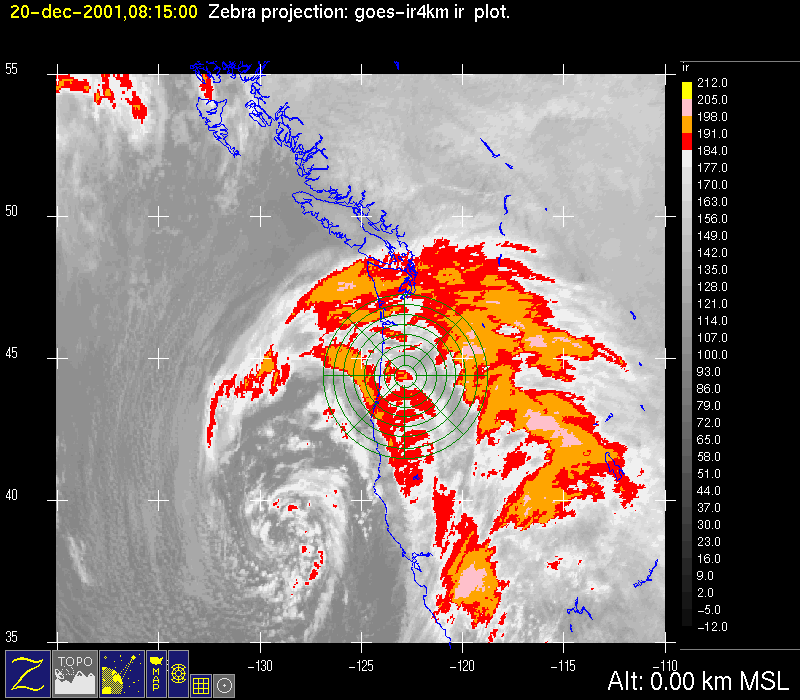
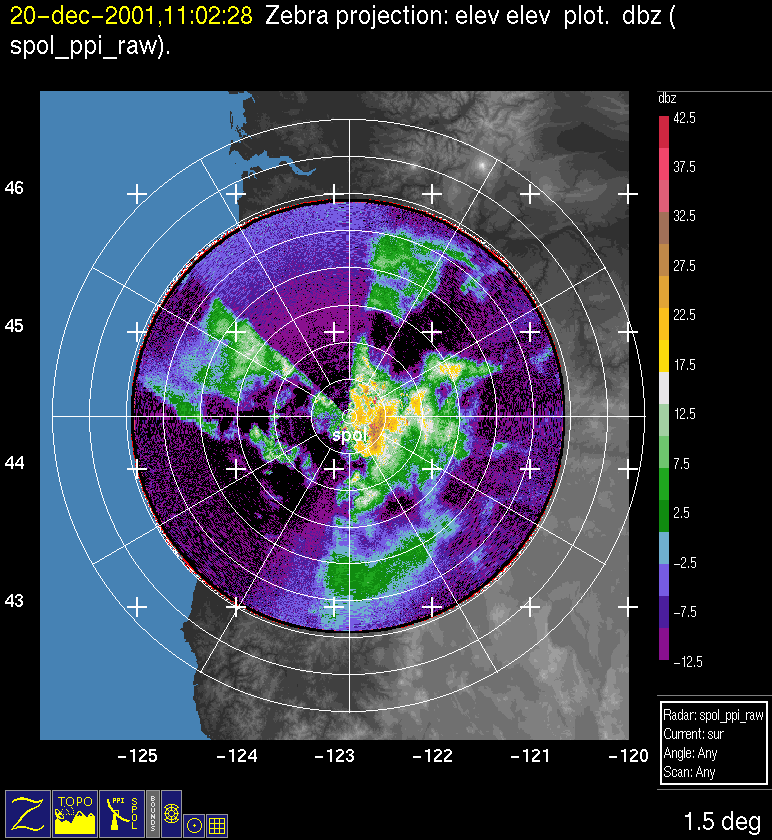
The Convair's second flight was from 0506-0609 UTC 20 December. The infrared satellite data for 0400 UTC-0600 UTC showed that the S-Pol radar was in a gap between warm-frontal clouds to the east of the mountains and cold-frontal clouds moving in from the west across the Oregon coast (Fig. 5d, Fig. 5e). At 0400 UTC, the S-Pol radar showed the warm-frontal precipitation aloft to the northeast of the radar, and convective (warm sector?) echo just west of the radar (Fig. 6j). At 0600 UTC, the warm-frontal echo to the northeast had disappeared, and a fairly continuous echo was moving in from the southwest (Fig. 6k) in association with the cold-frontal cloud band (Fig. 5e). From 0800-1200 UTC, the satellite imagery showed the cold frontal cloud band moving slowly across the radar area (Fig. 5g, Fig. 5h, Fig. 5i). The satellite images suggest that the frontal cloud band had embedded substructure in the form of transverse wavelike bands (esp. Fig. 5h), and the radar showed weak echo with embedded cellular structure (Fig. 6l, Fig. 6m).
Convair-580 Summary
UW Flight Number:
1902
Period of Flight:
2229 UTC 19 December-0419 UTC 20 December 2001
Main Accomplishment of Flight:
North-south oriented vertical profile from 18,000 to 8,000 ft west of Oregon Cascade crest. West-to-east cross-mountain track in southern edge of rainband. Truncated north-south stack in rainband east of Cascade crest. Landed in Eugene, Oregon.
Instrument Problems:
PMS 1-D cloud probe (?).
Flight Scientist:
Nick Bond
Approximate UTC Timeline (Local time= UTC-8 hours) Activity for UW Flight 1902:
2229 |
Engines on. |
2231 |
Out of blocks. |
2241 |
Takeoff. |
2253 |
No TANS/winds. |
2257 |
2-DC & HVPS working. |
2302 |
Winds now working 160˚ @ 5 m s–1 @ 576 mb. |
2322 Lat. 45˚45' |
. Winds 218˚ @ 20-25 m s–1. Possible significance of warm front aloft. |
2336 |
Decide to ascend to 18,000 ft. |
2340 |
Starting first southbound (18,000-16,000 ft). Wind 215˚ @ 22 m s-1, T ~–21˚C. Solid cloud. |
2348 |
Conversation with S-Pol radar operator indicates that legs should be shorten because of back edge of system approaching. |
0008 |
CPI not working; open ground visible below. |
0010 |
End of leg 1. |
0012 |
Start of leg 2 (north bound at 16,000 ft). |
0020 |
End of leg 2 (whole leg in precipitation). |
0023 |
Start of leg 3 (south bound 16,000-14,000 ft). Winds 205˚ @ 20 m s-1, T ~–14˚C, solid cloud. |
0027 |
End of leg 3 (steep descent). |
0029 |
Start of leg 4 (north bound @ 14,000 ft). |
0033 |
Heavier precipitation; bigger crystals. Wind 210˚ @ 22 m s-1. LWC 0.04 à 0.1 g m-3. |
0038 |
End of leg 4. |
0041 |
Start of leg 5 (south bound 14,000-12,000 ft). |
0049 |
End of leg 5. |
0050 |
Possible computer problem; displays not updating. |
0056 |
Data displays back. |
0058 |
End of leg 6. |
0100 |
Start of leg 7 (south bound 12,000 ft). |
0107 |
End of leg 7; descent at turn. |
0108 |
Start of leg 8 (north bound, 10,000 ft). Wind 212˚ @ 18 m s-1. T ~–5˚C. |
0116 |
End of leg 8. |
0120 |
Start of leg 9 (south bound 10,000-8,000 ft). |
0124 |
2-DC temp. down. |
0127 |
End of leg 9. |
0128 |
Start of leg 10 (north at 8,000 ft). Wind 185˚ @ 15 m s-1 but noisy. T ~–2˚ to –4˚C. Low LWC (0.05-0.1 g m-3). |
0132 |
Some chop |
0136 |
End of leg 10 (last north-south). Ferry to Pt. M. |
0141 |
Descending to 7,000 ft. |
0145 |
Moderate chop; near freezing level. |
0150 |
Near cloud base. |
0156 |
At Pt. M; lining up to cross mountain |
0202 |
Climb to 8,000 ft. |
0208 |
Begin climb to 10,000 ft. |
~0213 |
Turn and climb for north-south stack. |
0228 |
Start first run south bound (18,000-16,000 ft). |
0231 |
Wind 200 @ 14 m s–1. T ~–20˚C. Still in light precipitation. |
0236 |
Lighter precipitation in south end. |
0239 |
Start of second leg north (16,000 ft). Wind 210˚ @ 23 m s-1. T ~–17˚C. |
0251 |
End of second leg. |
0254 |
Start of third leg south (16,000-14,000 ft). Wind 212˚ @ 16 m s–1. |
0305 |
End of third leg. |
0307 |
Start of fourth north (14,000 ft). |
0311 |
Break in precipitation. |
0320 |
End of fourth. |
0322 |
Start of fifth south (14,000-11,000 ft). Wind 210˚ @ 17 m s–1. |
0326 |
Relatively heavy precipitation near 45˚10'. |
0332 |
End of fifth leg. |
0334 |
Heading north (descending to min ~8,000 ft). |
0340 |
Winds 125˚ @ 22 m s–1 at 8,000 ft. |
0341 |
End of descent to 8,000 ft. |
0345 |
Quasi-isothermal in climb from 8,000 to 11,000 ft; veering wind. |
0349 |
End of south bound climb. Ferry to Salem. |
0401 |
Mod. chop and precipitation. Over crest and foothills. |
0414 |
Landed at Eugene, Oregon |
0419 |
Engines off. |
UW Flight Number:
1903
Period of Flight:
0506-0609 UTC 20 December 2001
Main Accomplishment of Flight:
Transit flight from Eugene, Oregon, to Paine Field, Washington.
Instrument Problems:
PMS 1-D cloud probe (?).
Flight Scientist:
Nick Bond
Approximate UTC Timeline (Local time= UTC-8 hours) Activity for UW Flight 1903:
0506 |
Engines on. |
0514 |
Takeoff. |
0530 |
In light precipitation. |
0603 |
Landed. |
0609 |
Engines off. |
P-3 Summary
No flight
S-Pol Radar Summary
The S-Pol radar was run continuously in the same mode of operation for the entirelength of the field project.
Summary of Mobile Upstream Sonde Launches
Launch times at: Rowland, OR, Lat: 44.2800, Lon: -123.0650, Elev: 97 m
2240 UTC 19 Dec
0008 UTC 20 Dec
0306 UTC 20 Dec
0509 UTC 20 Dec
Summary of Leeside Sonde Launches
Launch times at: Black Butte Ranch, OR (a.k.a. ISS-3), Lat: 44.379, Lon: -121.679, Elev: 1027 m
2100 UTC 19 Dec
0300 UTC 20 Dec
0600 UTC 20 Dec
Summary of NWS Sonde Launches from Salem (SLE)
Launch times:
0000 UTC 20 Dec (standard)
0300 UTC 20 Dec (special)
0600 UTC 20 Dec (special)
Summary of Snow Crystal Ground Measurements
Measurement times:Every 15 minutes from
2145 UTC 19 Dec-0400 UTC 20 Dec (at Ray Benson Sno Park)
IOP 16, 22-23 Dec 2001
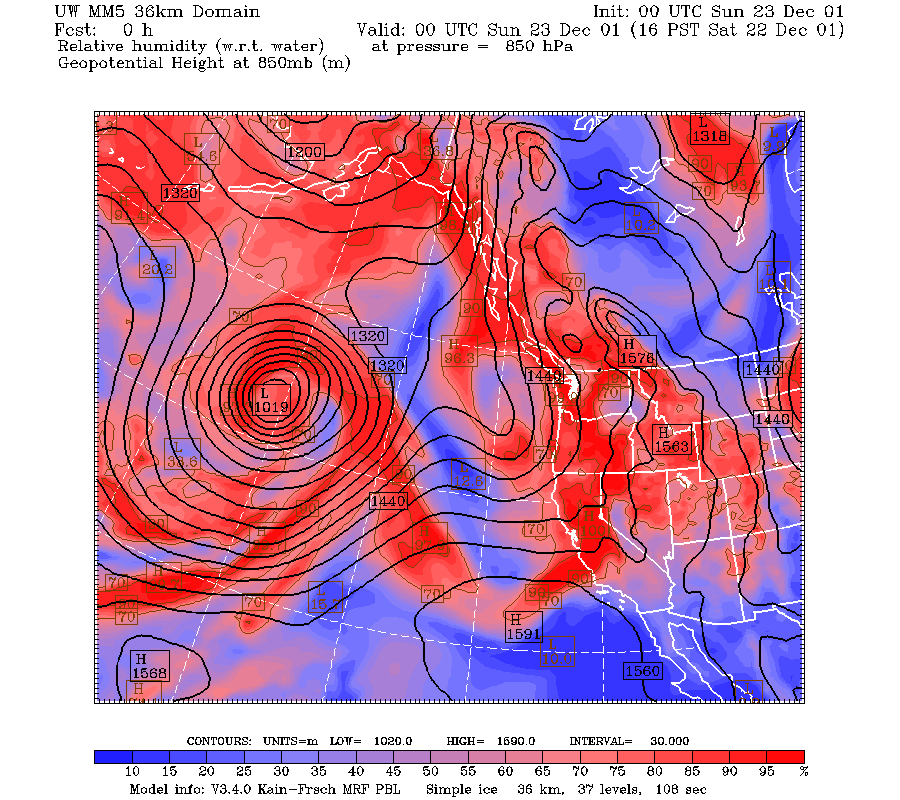
IOP 16: 22-23 December 2001
Time Period of IOP
1200 UTC 22 Dec-0000 UTC 23 Dec
Overview of IOP
A nearly cut-off short wave at 500 mb moved into Oregon during 1200 UTC 22 December and 0000 UTC 23 December 2001 (Fig. 1a, Fig. 1b). The wind at 500 mb turned from southerly to southeasterly during this period. The wind at 850 mb was southerly and weakening during this period (Fig. 2a, Fig. 2b). The tongue of high relative humidity reached southwestward to only about 20 deg north (Fig. 3a, Fig. 3b). The west-east gradient of sea level pressure was very strong at 1200 UTC but decreased during the period (Fig. 4a, Fig. 4b). This west-east gradient favored easterly flow through the Columbia Gorge.
The satellite imagery showed an occluded frontal cloud band moving across western Oregon from 1200-1500 UTC 22 December (Fig. 5a, Fig 5b, Fig. 5c). At 2100 UTC, a comma cloud was moving over western Oregon (Fig. 5d).
The Convair flew two flights between 1400 UTC and 2300 UTC. The Medford radar showed warm-frontal rainbands oriented NW-SE moving through western Oregon from 0900-1200 UTC (Fig. 5e, Fig. 5f). At 1500 UTC, the Medford radar showed the last warm-frontal rainband to the northeast of the radar, while the rainbands over and to the southwest of the radar were changing over to north-south oriented cold frontal rainbands (Fig. 5g). By 1800 UTC the cold-frontal rainbands were still evident but much weaker (Fig. 5h). At 2100 UTC postfrontal convective echoes, located just ahead of the comma cloud were detected to the southwest of the radar (Fig. 5i).
Convair-580 Summary
UW Flight Number:
1905
Period of Flight:
1459-1752 UTC, 22 December 2001
Main Accomplishment of Flight:
Weak warm-frontal rainband from 20,000 to 18,000 ft. Landed in Eugene, Oregon.
Instrument Problems:
PMS 1-D cloud probe (?).
Flight Scientist:
Nick Bond
Approximate UTC Timeline (Local time= UTC-8 hours) Activity for UW Flight 1905:
1459 |
Engines on. |
1509 |
Takeoff. |
1547 |
Hit clouds at ~46˚ north/123˚9'. |
1603 |
Broke out of clouds; still some small crystals from aloft. |
1612 |
Back in clouds; 2-DC temporarily out. |
1614 44˚31'/123˚35'. |
Winds 155-160˚ @ ~22 m s–1. (~5 m s–1 greater than forecast). |
1631 |
Turning for start of first leg; popped into clear briefly. |
1633 |
Start of leg 1 (northeast at 20,000 ft). Wind 168˚ @ 31 m s–1. T ~–27˚C. Sun dimly visible; only small crystals implying not much growth above. |
1648 |
End of leg 1; brighter here. |
1650 |
Start of leg 2 (southwest 20,000 à18,000 ft). |
1651 |
Dropping down to 18,000 ft due to traffic. |
1703 |
Ground becoming visible. |
1710 |
End of leg 2; shallow CBs ahead. |
1712 |
Start leg 3 (northeast 18,000-20,000 ft). |
1719 |
Intercepted cloud/precipitation. Wind 167˚ @ 25 m s-1. T ~–26˚C. |
~1728 |
End of leg 3. |
1732 |
After conversations with S-Pol radar operator decided to break off pattern and land at Eugene to wait for surface front. |
1749 |
Landed at Eugene Oregon |
1752 |
Engines off. |
UW Flight Number:
1906
Period of Flight:
1909-2300 UTC, 22 December 2001
Main Accomplishment of Flight:
1) Takeoff from Eugene, Oregon. North-south oriented profile from 20,000 to 10,000 ft in same system as UW Flight 1905.
2) Wind profile in Columbia Gorge. Landed at Paine Field, Washington.
Instrument Problems:
PMS 1-D cloud probe (?).
Flight Scientist:
Nick Bond
Approximate UTC Timeline (Local time= UTC-8 hours) Activity for UW Flight 1906:
1909 |
Engines on. |
1916 |
Takeoff. |
1931 |
In precipitation in vicinity of Santiam Pass. LWC = 0.1-0.2 g m-3. Descent in precipitation east of crest. |
1937 |
Beginning spiral ascent to 20,000 ft. |
1941 |
Leveling at 12,000 ft for traffic. |
2002 |
Getting bright above 18,000 ft. |
2004 |
First north-south run (north at 20,000 ft) near top. Wind 150˚ @ 16 m s–1. T ~–29˚C. |
2010 |
At north end; turning. |
2012 |
Start of second (south, 20,000 à 18,000 ft). |
2021 |
End of second; turning. |
2023 |
Third north-south (north at 18,000 ft). Wind 165˚ @ 18 m s-1. T ~–24˚C. |
2030 |
End of third; turning. |
2032 |
Start of fourth (south, 18,000-16,000 ft). |
2043 |
End of forth; turning. |
2045 |
Fifth north-south (north at 16,000 ft). Wind 170˚ @ 14 m s-1. T ~–20˚C. |
2052 |
End of fifth leg; turning. |
2054 |
Start of sixth (south, 16,000-14,000 ft). |
2104 |
Broke into clear slot. |
2106 |
Hit liquid H2O cloud at south end. |
2107 |
End of sixth; turning. |
2109 |
Start of seventh north-south (north at 14,000 ft). Wind 175˚ @ 12 m s-1. T ~–17˚C. |
2117 |
End of seventh leg (somewhat greater precipitation at north end. |
2119 |
Start eighth (south 14,000-12,500 ft). |
2126 |
Hit clear zone. |
2131 |
End of seventh leg. |
2134 |
Start eighth leg north-south (north 12,500 ft). Wind 225˚ @ 8 m s-1. |
2145 |
End of eighth leg. |
2146 |
Proceeding northeast and descending to 10,000 ft in very light precipitation. |
2152 |
Heading for Troutdale to do a missed approach. |
2202 |
Crossing crest at 45˚10'. Little precipitation reaching surface. |
2209 |
Winds into Troutdale at 4,000 ft, 185˚ @ 10 m s-1; 2,500 ft, 110˚ @ 15 m s-1. |
2213 |
Over runway 080˚ at 10 m s-1. |
2215 |
Rapid wind shift at 2,000 ft. with some turbulence. |
2216 |
Ferry to Paine Field. |
2257 |
Landed. |
2300 |
Engines off. |
P-3 Summary
No flight
S-Pol Radar Summary
The S-Pol radar was run continuously in the same mode of operation for the length of the field project.
Summary of Mobile Upstream Sonde Launches
Launch times at: Rowland, OR, Lat: 44.2800, Lon: -123.0650, Elev: 97 m
1720 UTC 22 Dec
1856 UTC 22 Dec
2016 UTC 22 Dec
Summary of Leeside Sonde Launches
Launch times at: Black Butte Ranch, OR (a.k.a. ISS-3), Lat: 44.379, Lon: -121.679, Elev: 1027 m
1500 UTC 22 Dec
1800 UTC 22 Dec
2100 UTC 22 Dec
Summary of NWS Sonde Launches from Salem (SLE)
Launch times:
1200 UTC 22 Dec (standard)
0000 UTC 23 Dec (standard)
Summary of Snow Crystal Ground Measurements
Measurement times: Every 15 minutes from
1500 UTC 22 Dec-2115 UTC 22 Dec (at Corbett Sno Park, Hoodoo Ski Lodge)
Summary of Flights and Types of Data for Improve-1
Summary of Flights and Types of Data for Improve-1 - UW Cloud and Aerosol Research Group
IMPROVE (University of Washington)
ISFS Operations at IHOP
Introduction
This document describes the operation and measurements of the Integrated Surface Flux Facility (ISFF) during the IHOP 2002 field experiment.
Measurement Sites
Nine ISFF Flux-PAM stations were deployed in 3 groups of 3 stations. Each group of three stations corresponded to an IHOP flight track. See the Table of Sites below, for site elevations, latitudes, and longitudes.
Stations 1-3, comprising the West leg, were aligned south to north in the Oklahoma panhandle.
Stations 4-6, comprising the Central leg, were aligned roughly west to east, southwest of Wichita, Kansas.
Stations 7-9, comprising the East leg, were aligned roughly west to east, southeast of Wichita.
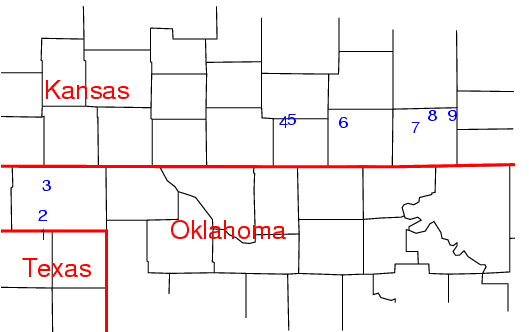
Driving Directions (and land owners):
Basic Site Instrumentation:
The basic instrumentation at each site consists of:
- Prop vane anemometer, RM Young 9101, for mean wind speed and direction at 10 m agl
- Vaisala 50Y Humitter to measure air temperature and RH; in NCAR aspirated radiation shield at 2 m agl
- Barometer, Vaisala PTB220B, with a Ser single-disk static pressure port
- MRI model 302/303/304 tipping bucket rain gauge, with Alter wind screen at sites 1-3
- Sonic anemometer, initially either Campbell CSAT3 or ATI-NUW
- Fast-response hygrometer, Campbell KH2O
- Net radiometer, REBS Q*7
- Incoming longwave (Eppley PIR) and shortwave (Eppley PSP or Kipp & Zonen CM 21) radiometers
- PAR (Photosynthetically Active Radiation) sensor, Li-Cor 190SA Quantum Sensor
- Infrared surface temperature sensor, Everest 4000.4GL
- Near-surface soil heat flux plate, REBS HFT-3
- Near-surface soil temperature (REBS) and water content ( Campbell Scientific CS-615) sensors
- Soil profile consisting of a Campbell Scientific 107 temperature sensor, a Campbell Scientific 229 heat dissipation matric water potential sensor and a Decagon ECH2O Dielectric Aquameter at 6 depths: 7.5, 15, 22.5, 37.5, 60, and 68-90 cm. The last (greatest) depth depends on the site and the fortitude of the installation crew.
Specific IHOP documentation for all ISFF sensors is found under Sensor Notes below.
Super-Site Instrumentation:
- Sites 1 and 9 each have 2 additional soil profiles.
- Sites 1, 8, and 9 each have 4-component radiation arrays (incoming and outgoing, longwave and shortwave radiometers).
- Sites 1 and 8 each have a fast-response CO2 sensor for measuring CO2 concentrations and fluxes. A Licor LI-7000 is at site 1 and a Licor LI-6251 at site 8. To support detailed post-processing of the high-rate CO2 data, these two sites will archive the entire, non-compressed data set from all sensors except radiation and soil profiles.
Table of Sites:
| Station# | Nearby Town | Latitude (deg min N) |
Longitude (deg min W) |
Elevation (m) |
Environment | Instrumentation |
|---|---|---|---|---|---|---|
| 1 | Booker TX | 36° 28.370' | 100° 37.075' | 872 | fallow | basic w/ CSAT3 sonic, 2 additional soil profiles 4 comp radiation LI-7000 CO2 high-rate data archival |
| 2 | Elmwood OK | 36° 37.327' | 100° 37.619' | 859 | grassland | basic w/ CSAT3 sonic |
| 3 | Beaver OK | 36° 51.662' | 100° 35.670' | 780 | sagebrush | basic w/ CSAT3 sonic |
| 4 | Zenda KS | 37° 21.474' | 98° 14.679' | 509 | grassland | basic w/ CSAT3 sonic |
| 5 | Spivey KS | 37° 22.684' | 98° 9.816' | 506 | winter wheat | basic w/ ATI-NUW sonic |
| 6 | Conway Spgs KS | 37° 21.269' | 97° 39.200' | 417 | winter wheat | basic w/ ATI-NUW sonic |
| 7 | New Salem KS | 37° 18.792' | 96° 56.323' | 382 | grassland | basic w/ CSAT3 sonic |
| 8 | Atlanta KS | 37° 24.418' | 96° 45.937' | 430 | grassland | basic w/ ATI-NUW sonic, 4 component radiation, LI-6251 CO2, high-rate data archival |
| 9 | Grenola KS | 37° 24.618' | 96° 34.028' | 447 | grassland | basic w/ ATI-NUW sonic, 2 additional soil profiles 4 component radiation |
ISFS IHOP Data Report
Sensor Notes
Following are notes on the deployment, operation, and post-project processing of data from each of the sensors. In general, these notes have been summarized from the field logbook. Additional details can be found in the individual logbook entries.
Prop vanes:
Prior to deployment of the stations, each of the propellors was spun manually to detect bad bearings; all of the prop vanes passed this test. After the field project, the prop vanes were operated in the NCAR Sensor Calibration Laboratory wind tunnel to determine the starting threshold of the propellors. With the exception of serial number 35500, the starting speeds were in the range of 0.3 - 0.77 m/s. For details, see logbook entry 317.
The post-project threshold starting speed for serial number 35500, located at site 2, was 2.2 m/s. By examining the ratio of prop-vane and sonic wind speeds, it appears that the prop-vane wind speeds at site 2 may have been degraded at low wind speeds as early as May 25th.
During a visit to site 8 on May 29th, it was noticed that the propellor bearings were noisy. The prop-vane speed head, which includes the bearings, was replaced around 17:00 CDT, May 31. By examining the ratio of prop-vane and sonic wind speeds, it is quite apparent that the propellor starting threshold approached 2 m/s as early as May 25th, and it also appears that the prop-vane wind speeds at site 8 may have been degraded for wind speeds below 2 m/s as early as May 14th. No attempt has been made to edit or correct the data to account for the high prop-vane wind speed thresholds found at sites 2 and 8.
At sites 5 and 6, the calibration coefficients stored in RAM for the prop-vane wind direction encoders were occasionally corrupted, causing the wind direction reading to become stuck at roughly 260 degrees. This problem was fixed in the field by simply cycling power on the prop vanes. The erroneous wind direction data have been eliminated from the Quality-Controlled (QC) data set provided to investigators. Since the prop-vane data are reported as orthogonal wind components (U,V) and the wind speed measurement was valid during these periods, an additional variable Spd = (U2+V2)1/2 was created to provide that data.
Hygrothermometers:
The Vaisala 50Y Humitters were calibrated in the NCAR Sensor Calibration Laboratory prior to the IHOP field program. The 50Y temperature sensors were calibrated over the range 0-45°C, and the relative humidity sensors were calibrated over the range 10-90 %RH at 15, 25, and 35°C. The calibration coefficients for temperature and relative humidity were entered into the EPROMs of the individual NCAR hygrothermometers, and the hygrothermometer microprocessors applied the coefficients to the 50Y output to produce the calibrated temperature and humidity data that was archived during the field project.
Following the field program, a second calibration data set was collected with each 50Y, and the hygrothermometer outputs using the pre-project calibration coefficients were compared to the laboratory standards. A summary of the results is found in logbook entry 316. In general the 50Y temperatures agreed with the laboratory standard within ±0.05°, the exception being s/n 001 deployed at site 4 and having an apparent offset on the order of -0.1°. The 50Y relative humidities agreed with the laboratory standards within ± 2 %RH, with the exception of s/n 003-005 deployed at sites 7, 3, and 2 and having maximum differences of 2.5-4 %RH.
Barometers:
Barometer data are missing at station 8 for two extended periods, May 10th at 15:00 - May 15th at 17:15 CDT and May 25th at 02:00 - 10:35 CDT. In order to calculate air density during those two periods, the atmospheric pressure at station 8 have been estimated with one of the following three formulas, depending on the availability of pressure data from sites 7 and 9:
P8 = (P7 + P9)/2 - 1.72 mb
P8 = P7 - 5.26 mb
P8 = P9 + 1.82 mb
The pressure offsets in each of the preceding formulas was calculated from IHOP data when it was available from all of the required barometers. A comparison of the measured and estimated values of P8 finds that the errors in the estimated values are generally considerably less than 1 mb. The mean absolute error of the first formula is 0.1 mb, while those of the second and third formulas are 0.2 mb.
Data edited when PAM mast in lowered position:
It was occasionally necessary to lower the mast on the ISFF remote stations, in order to service sensors mounted on the mast. During periods when the mast was in a lowered position, data from the prop vane, hygrothermometer, barometer, infrared surface temperature sensor, sonic, and fast response hygrometer have been be eliminated from the QC data set provided to investigators. The variable mastdown has been added to the data set. It is equal to 0 when the mast is in the raised position and 1 when the mast is in the lowered position.
Rain gauge:
False tips have been removed (replaced with 0) from the rain gauge data to the extent possible. These include both false tips generated during station service visits, as well as isolated tips that occur during apparently clear sky situations. The measured incoming long and short wave radiation was used to judge whether the sky was clear, and the intent was to err on the side of possibly including a false tip rather than deleting valid data. One apparent cause of the `clear sky' false tips is mice living in the rain gauge. The logbook notes that mouse nests and/or mice were found in the gauges at sites 1, 4, 5, 6, 8, and 9, while it was also noted that no evidence of mice was found at sites 3 and 7. No `clear sky' tips were detected at sites 2 and 3.
Sonic anemometers:
The sonic anemometers were mounted with their booms extending to the east of the PAM mast. It was planned to install the sonic anemometers at a height z determined by the geometry and path length of the sonic array and by the height of the vegetation, z = zs + D , where
- zs = 2.7 m for the CSAT3 sonic
- zs = 4.0 m for the ATI-K sonic
- zs = 4.6 m for the ATI-NUW sonic
- D = canopy zero-plane displacement, estimated as 2/3 the height of the vegetation
However, in some cases it was not possible to mount the sonic boom at exactly the planned height because it occurred at the same height as a joint in the PAM mast. The actual heights, above ground level, were
Sonic Heights:
| Site | 1 | 2 | 3 | 4 | 5 | 6 | 7 | 8 | 9 |
|---|---|---|---|---|---|---|---|---|---|
| Height, m agl | 2.5 | 3.43 | 2.7 | 2.6 | 5.0 | 4.9 | 2.7 | 4.6 | 4.7 |
These heights did not change during IHOP. The original deployment included only CSAT and ATI-NUW sonics, and when maintenance required replacing an ATI-NUW sonic by an ATI-K sonic, the sonic height was not changed. The CSAT sonics did not require maintenance during IHOP.
The sonic anemometer at site 6, ATI-K serial number 980202, output increasingly high wind speeds beginning around 16:15 CDT, June 17th. The sonic was replaced around 19:00 CDT, June 20th. Based on the data, the problem appears to have been a wind speed offset in the u and/or v paths of the sonic. Since the turbulent fluxes appear to be unaffected, only the mean horizontal wind components have been eliminated from the QC sonic data.
The sonic anemometer originally deployed at site 9, ATI-NUW serial number 7, had an intermittent failure of its "a" path. This sonic was replaced around 19:00 CDT on May 15th. The erroneous sonic data have been eliminated from the QC data set.
The sonic anemometer data have also been edited to remove data that both look anomolous and also have concurrent diagnostic warning flags set by the sonic firmware. For the CSAT3 sonics this required that both bits 14 and 15 in the fourth word of the data message were set high during at least one sample within a 5-minute period. These bits indicate poor signal lock (bit 14) and a difference in the speed of sound between the three measurement axes greater than 2.36 m/s, equivalent to about a 4°C difference in inferred temperature (bit 15). For the NUW and ATIK sonics this required that the number of pulses per data sample per axis dropped below the set value, generally 11 pulses per data sample.
The coordinates of the three-dimensional sonic wind data have been rotated during data post-processing to align the vertical axis of the sonic anemometers normal to the mean wind field and to align the horizontal axes with geographic coordinates (u is a wind from the west, v is a wind from the south). The tilt angles for each sonic have been estimated from its wind data using the planar fit technique. The tilt angles, as well as the calculated vertical velocity offset, are tabulated in the logbook for each sonic. This table also includes the azimuths of the sonic booms.
Calculation of Surface Roughness Length and Zero-Plane Displacement:
The surface roughness length, zo, and zero-plane displacement, D, are defined for a neutral wind profile by
U(z) = (u*/k)ln((z-D)/zo)
where U is the mean wind speed measured at height z (above ground level), u* is friction velocity, and k=0.4 is the von Karman constant. zo and D have been calculated for IHOP using the prop-vane and sonic wind speed measurements, along with the sonic measurement of friction velocity. Also included in the following table are values of 2/3 the vegetation height, h, measured during 4 or 5 spatial surveys taken periodically at each site between the beginning and end of IHOP, with each site survey composed of measurements at 14-18 locations. For most sites, the table lists the range, over the period of the project, of the mean vegetation height for each survey. For sites 5 and 6, the pair of h values are the average heights of the wheat crop before and after harvest.
Surface Roughness and Displacement Height:
| Site | 1 | 2 | 3 | 4 | 5 | 6 | 7 | 8 | 9 |
|---|---|---|---|---|---|---|---|---|---|
| z0, cm | 0.24 | 2.4 | 2.9 | 1.1 | 5.9 | 4.9 | 2.3 | 1.8 | 1.2 |
| D, cm | 1 | 86 | 40 | -13 | 156 | 126 | 2 | 55 | 37 |
| 2h/3, cm | 0 | 6-12 | 23-29 | 11-24 | 45, 16 | 41, 17 | 19-24 | 17-24 | 7-21 |
The values calculated for the roughness length are consistent with the perceptions of those who visited the sites. However the zero-plane displacement is commonly estimated to be 2/3 the height of the vegetation canopy. Thus, with the exception of site 1, the calculated values of the zero-plane displacement are not consistent with either the measured vegetation heights or the qualitative perceptions of those who visited the sites. Therefore, the displacement heights were taken to be 2/3 the height of the vegetation. The resulting values are listed in logbook entry 325.
Krypton Hygrometer:
The fast-response Krypton hygrometers (KH2O) were mounted on the same boom that holds the sonic anemometer. In order to minimize flow distortion at the sonic measurement paths, the Krypton hygrometers were mounted 30 cm closer to the PAM mast than the vertical path of the sonic anemometers, thus 30 cm west of the sonic vertical path. For the CSAT3 sonics, the KH2O was oriented vertically and mounted below the sonic boom. For the ATI-NUW sonics, the KH2O was oriented vertically and mounted on the north side of the sonic boom. For the ATI-K sonics, the KH2O was oriented horizontally and mounted immediately below the sonic boom. Additional processing has been applied to the water vapor fluxes derived from the sonic and KH2O data. These include:
- correction for oxygen contamination of the KH2O data
- application of the Webb correction
- correction for spatial separation between the sonic and KH2O sensors
Soon after the start of the project, it was discovered that water had infiltrated into the electronics of the KH2O and corroded the connector carrying the supply voltage. Subsequently, attempts were made to clean the connector, seal the electronics container, and eventually to replace the connector. The corroded connector caused various degrees of data contamination. The KH2O data at site 3 were particularly noisy until the connector was cleaned on May 22.
The KH2O data were also contaminated during transmission of data to the GOES satellite. Fortunately, the error in the computed water vapor fluxes is negligible. The median fractional error was found to be less than 1% and the median absolute error was found to be less than 10-4 m/s gm/m3, equivalent to a latent heat flux of 0.25 W/m2.
The KH2O data were edited to remove anomolous data. These data were identified by comparing the water vapor density measured by the Krypton hygromter, kh2o, to the water vapor density H2O calculated from the measurements of temperature, pressure, and relative humidity. KH2O data were deleted whenever kh2o was not correlated with H2O. After this editing based on mean values, stations 7 - 9 still had extended periods of low variance of the water vapor signal. In the case of stations 8 and 9 these periods ended when the krypton sensors were changed. The periods of May 14th - 24th (stn7), May 14th - June 8th (stn8), and May 27th - June 10th (stn9) will be removed from the final data set.
Calculation of Sensible, Latent, and Soil Heat Fluxes:
During post-processing, several corrections will be made to the sonic anemometer and krypton hygrometer data to obtain sensible and latent heat fluxes. These are:
- correction of the sonic temperature, derived from measurements of the speed of sound, for the effect of moisture
- correction of the krypton hygrometer data for UV absorption by oxygen
- application of the Webb correction to the water vapor flux
- correction for spatial separation between the sonic and krypton hygrometers
The soil heat flux G was measured with a heat flux plate at a depth of 5 cm, with the convention that an upward heat flux is positive. In order to obtain the soil heat flux at the surface, this measurement needs to be corrected with the subtraction of the energy storage in the overlying soil,
Gsfc = G5cm - zG dT/dt Cs
where Gsfc and G5cm are the heat fluxes at the surface and a depth of 5 cm, zG is the depth of the heat flux plate, dT/dt is the time rate of change of soil temperature in the top 5 cm, and Cs is the volumetric heat capacity of the soil. The latter is calculated as
Cs = rhos/rhom*1.9e6 + Qs*4.2e6 , Joule/(m3 °C)
where rhos is the soil bulk density, rhom is the density of mineral particles (2.65 gm/cm3), and Qs is the soil volumetric water content. The soil bulk density at each of the IHOP ISFF sites was measured by Richard Cuenca at Oregon State University. The IHOP ISFF measurements of the soil heat flux at 5 cm, the soil volumetric water content, and the soil temperature are described below. The soil bulk densities reported by OSU on October 30th, 2002, were
Soil Bulk Density:
| Site | 1 | 2 | 3 | 4 | 5 | 6 | 7 | 8 | 9 |
|---|---|---|---|---|---|---|---|---|---|
| rhos, gm/cm3 | 1.23 | 1.30 | 1.54 | 1.69 | 1.18 | 1.55 | 1.31 | 1.15 | 1.14 |
Infrared Surface Temperature:
The Everest infrared surface temperature (IRT) sensor was mounted at a height of 10 m on the PAM mast. It was oriented to point down to the north at an angle of 45° from the vertical. The sensor has a dial to select the emissivity that is used to interpret the measured radiative flux as a surface temperature. This dial was set to its full clockwise position, corresponding to an emissivity of 0.98. These instruments were calibrated by the manufacturer prior to the IHOP field program.
Prior to the field program, it was thought that soil surface temperatures would not fall below 0 °C. Consequently, surface temperature data were lost at site 1 roughly from 02:00 - 07:00 CDT on May 13th, and from 05:30 - 06:30 CDT on May 14th.
The Everest at site 1 had an intermittent noise problem, apparently due to a bad connector that was not repaired until the morning of June 22. The Everest connectors at sites 2-4 were improperly seated from June 1 until June 4. The bad data have been deleted from the QC data.
At site 1, the surface radiative temperature during the missing/bad periods can be calculated from the incoming and outgoing longwave radiation measurements. However, it should be noted that the bandwidth, field of view, and viewing angle of the pyrgeometers differ from those of the Everest IRT sensor.
The Everest data were contaminated by RF noise during the transmission of data to the GOES satellite. The contamination appears as an offset to the measured surface temperature. Since the transmission occurred for only 20 seconds every 5 minutes, it is found that the contamination of the 5-minute mean values is negligible. The induced offset in the 5-minute means is generally on the order of ± 0.1 °C or less, while the manufacturer's specification for the absolute accuracy of the sensor is ± 0.5 °C.
GOES contamination of serializer A/D channels:
IHOP was the second time (AOE was first) that a dedicated microprocessor, or "serializer", was used in-line with our sonic anemometers to digitize analog signals at a rate synchronous with the sonic serial data. This was done in order to eliminate the need for the EVE cpu to synchronize analog and sonic data for the computation of covariances, as well as to increase the analog digitizing resolution above that available with the standard EVE A/D.
While examining high-rate data recorded at sites 1 and 8, it was discovered on May 29 that use of the serializer imposed an offset on the digitized analog output during GOES transmissions (AOE did not use GOES), which occur for 20 seconds every 5 minutes. This affected the KH2O fast water vapor and Everest infrared surface temperature data. A summary of the logbook entries related to this problem is here. Within a day of discovering this problem, it was determined that the contamination was related to the physical proximity of the GOES transmitter and the serializers within the EVE box. After another day, it was determined that the contamination could be significantly reduced by shielding both the analog signal cables from the EVE front panel to the serializers and the power and signal cables to the GOES transmitter. During the following 3 days, the shielding was implemented on all 9 stations, as tabulated below:
| Station | Time [logbook entry] |
|---|---|
| 1 | 6/1 14:00 [173] |
| 2 | 6/1 15:30 [174] |
| 3 | 6/1 18:00 [175] |
| 4 | 5/31 12:30 [170] + 6/2 10:30 [178] |
| 5 | 6/2 11:30 [179] |
| 6 | 6/2 13:30 [180] |
| 7 | 5/31 17:00 [172] |
| 8 | 5/31 18:00 [172] |
| 9 | 6/3 12:00 [184, 188] |
In order to quantify the contamination at each site and for each analog sensor processed by the serializer, high-rate data was collected for 14-48 hours at each site, both with and without the RF shielding discussed above. This data was then processed to calculate 5-minute mean values, both including and excluding the 20-25 second interval of GOES transmission during each 5-minute period, and the contamination was determined from the difference between the two 5-minute means.
Radiometers:
Schematics, including serial numbers, of the ISFF radiometers and near-surface soil sensors used in IHOP are available at:
The long and short wave radiometers were run through a calibration sequence at NOAA in March and April, before IHOP. However, due to a heavy workload, NOAA was not able to send us the new calibration coefficients for the long and short wave thermopiles before the beginning of IHOP. Therefore we operated using the previous set of coefficients for all the radiometer thermopiles during the project. The thermopile calibrations are linear, so the correct values were applied to the averaged data in post-processing.
The long wave radiation has been calculated from pyrgeometer measurements as
Rlw = Rpile + SB*[T.case4 - B*(T.dome4 - T.case4)] - f*Rsw
Here Rlw and Rsw are the longwave and shortwave radiation fluxes, Rpile is the pyrgeometer thermopile output (voltage multiplied by a calibration constant to obtain radiative energy flux, W/m2), T.case and T.dome are the pyrgeometer case and dome temperatures, SB is the Stefan-Boltzmann constant, B is a coefficient obtained from the NOAA calibration, and f was determined from shading tests performed in the field.
The outgoing longwave radiometer at site 1 malfunctioned intermittently until it was replaced around 14:00 CDT, June 1. The net radiation, shortwave radiation, and longwave radiation data at site 9 were intermittently missing/noisy until the terminal screws in the data logger were tightened around 18:30 CDT, May 25. Where these data are obviously incorrect, they have been deleted from the QC data. (Where the net radiometer data are good, a comparison between the net radiometer and the sum of the incoming and outgoing shortwave and longwave radiometers was used to make judgements about the validity of the longwave and shortwave data.)
A crack was noticed along the lower margin of the upper net radiometer dome at Site 3 on June 13. The dome was replaced around 18:30 CDT June 17. A crack was noticed along the lower edge of the upper net radiometer dome at Site 8 on May 13. The radiometer was replaced around 18:00 CDT May 19.
Near-surface soil sensors:
Schematics, including serial numbers, of the ISFF soil sensors are included with those for the radiometers.
The soil water content and heat flux sensors were inserted into the soil horizontally at a depth of 5 cm. The soil temperature sensor has a length of 10 cm and was inserted into the soil at a depth of 5 cm and at an angle of approximately 30 degrees above horizontal to provide an average temperature for the upper 5 cm of soil. The calculation of the surface soil heat flux from these measurements is described above.
The output of the CS615 water content reflectometer depends primarily on soil volumetric water content. However, the response of the CS615 to soil moisture depends on soil clay content and electrical conductivity, and thus is best calibrated for each specific site. Data for in-situ calibrations of the CS615 sensors were collected during periodic site visits by means of nearby soil moisture measurements with a Trime hand-held time-domain refractometer. The Trime was re-calibrated by the manufacturer after the field program. The pre-calibration numbers showed that the instrument was well within the required accuracy during IHOP. For reference soil moistures of 2.8% and 44.2%, the Trime read 3.0% and 44%, respectively.
The Trime measurements spanned a significant fraction of the range of soil moisture encountered during the duration of the IHOP field program. In addition, laboratory measurements at zero soil moisture were made before and after the IHOP field project with the CS615 inserted into a container of dry glass beads. A linear, least-squares fit of the Trime/lab soil moisture data versus the CS615 output was then calculated for each site to obtain the calibrations used in post-project processing of the CS615 data. The root-mean-square of the residuals for these fits were on the order of 2-3% volumetric water content. Note that the response of the CS615 at site 1 appears to have shifted significantly after 19:40 CDT on June 20, and different calibrations are used before and after that date.
The soil heat flux sensor at site 1 was inoperative from 04:00 CDT, June 17, until 20:15 CDT, June 22, due to a chewed wire. The soil heat flux and soil temperature data at site 9 were intermittently missing/noisy until the terminal screws in the data logger were tightened around 18:30 CDT, May 25. Where these data are obviously incorrect, they have been deleted from the QC data provided to the investigators.
IHOP/ISFF Field Logbook
A computer-readable field logbook of comments by NCAR and other personnel is available in read-only html form.
Photographs
- Station 1
- Station 2
- Station 3
- Station 4
- Station 5
- Station 6
- Station 7
- Station 8
- Station 9
- Fauna
- Wichita
Data Coverage
Data Recovery Via GOES:
Real-time transmission of the 5-minute statistics via the GOES-East satellite provided about a 90% data recovery rate. More study is needed to determine why this was so low.
Merge of GOES and Local Storage:
The 5-minute statistics were also stored on a local flash disk at each station, and downloaded during maintenance visits to the station. The final data set consists of the merged GOES and local storage data sets, and provided a data coverage of nearly 100% at all stations.
Data Coverage by Station, May 10th - June 25th, 2002:
| Station | Total Records | GOES Recovery (%) | Final Coverage (%) |
|---|---|---|---|
| 1 | 13536 | 91.3 | 99.7 |
| 2 | 13536 | 90.7 | 99.9 |
| 3 | 13536 | 91.0 | 99.9 |
| 4 | 13536 | 89.5 | 99.9 |
| 5 | 13536 | 81.4 | 99.8 |
| 6 | 13536 | 87.4 | 100 |
| 7 | 13536 | 90 | 99.8 |
| 8 | 13536 | 77.7 | 98.9 |
| 9 | 13536 | 90.4 | 97.8 |
Other IHOP Web Documents
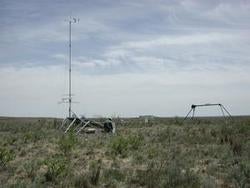
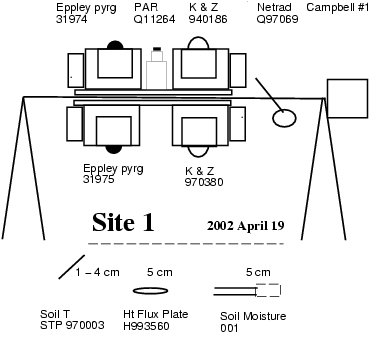
Data Policy
Data Set Documentation Guidelines
Data Submission Instructions
ARM IHOP Page
CAPS IHOP Research Group
GAPP Field Project
NCAR MM5
NCAR NEXRAD Scan Volume Logs
NCAR RAL IHOP Page
NOAA/SPC/NSSL Spring Program 2002
PSU ABL Group IHOP Page
SSEC/CIMS IHOP Page
SSEC/S-HIS IHOP Page
ELectra DOppler RAdar (ELDORA)
Integrated Surface Flux System (ISFS)