Search
CARI group data processing and review
|
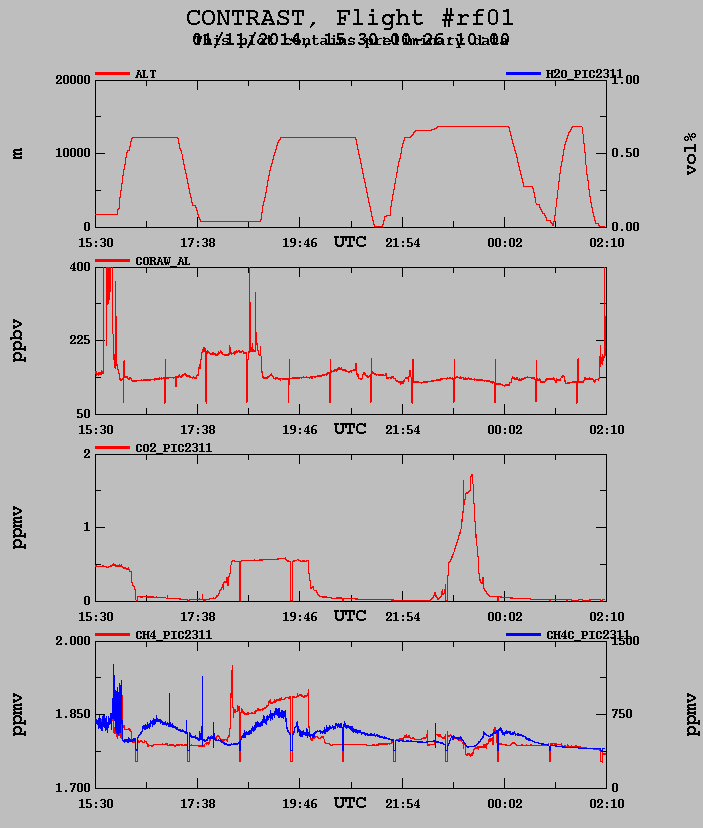
RF01 |
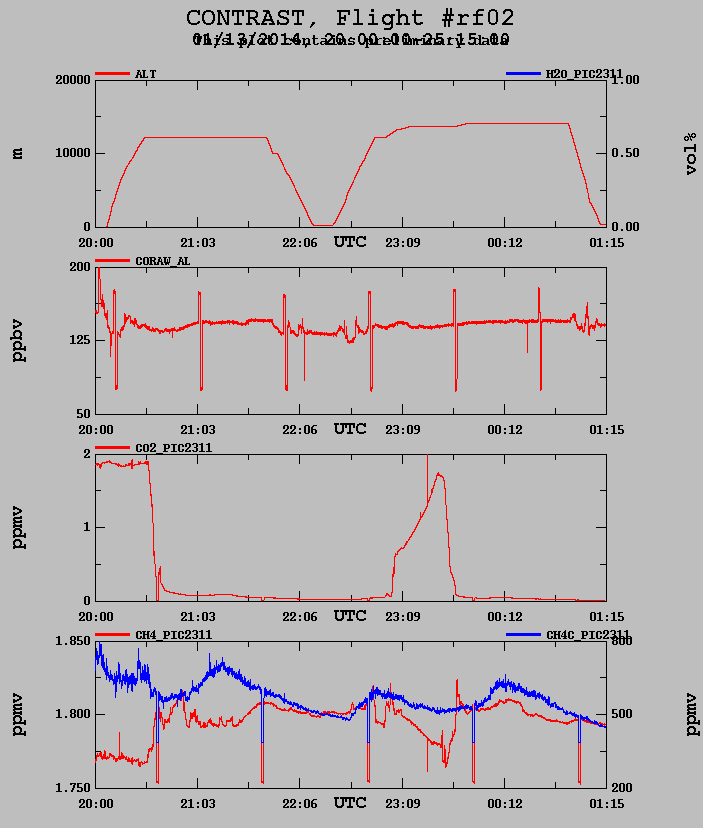
RF02 |
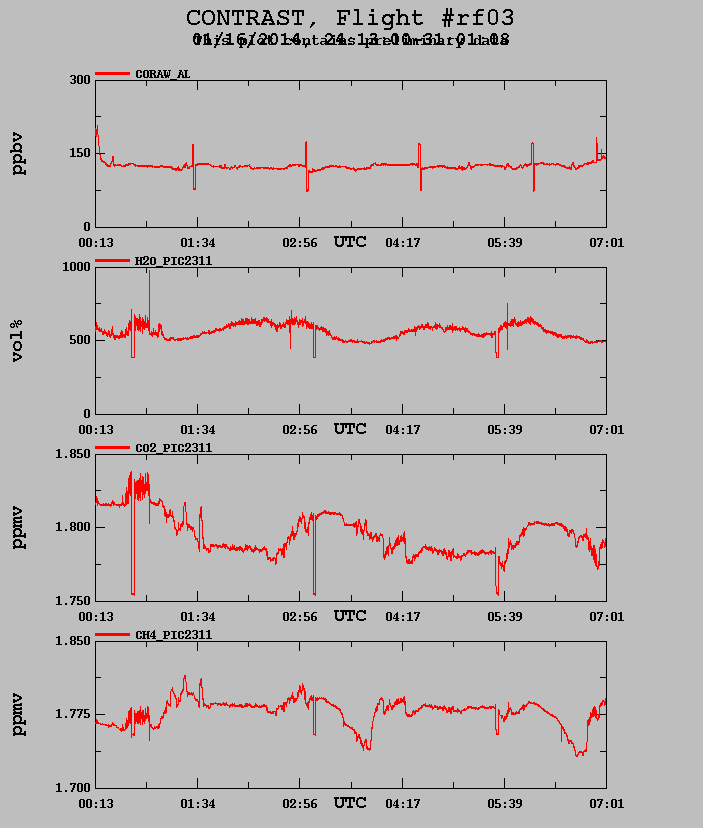
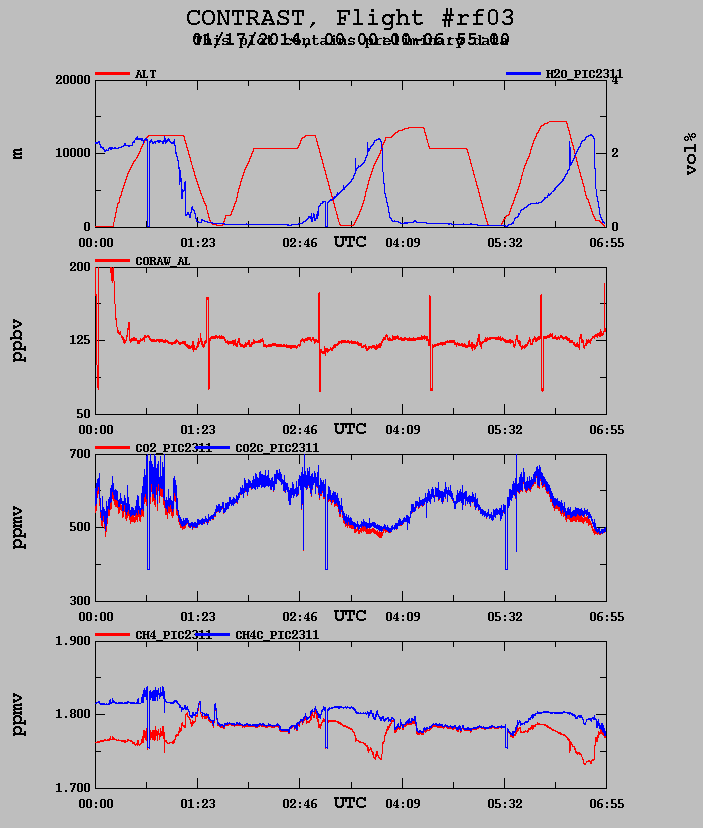
RF03 |
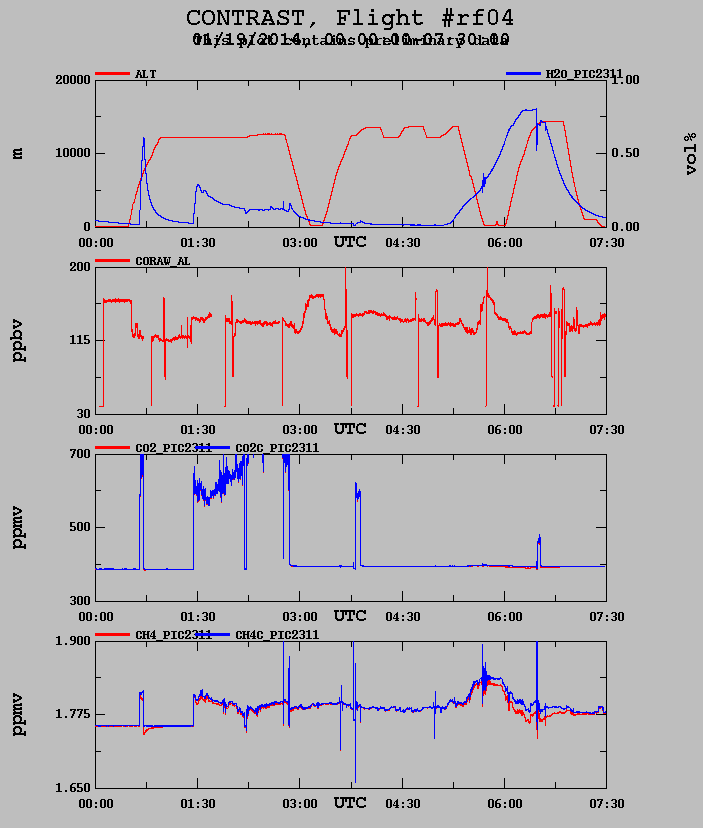
RF04 |
|
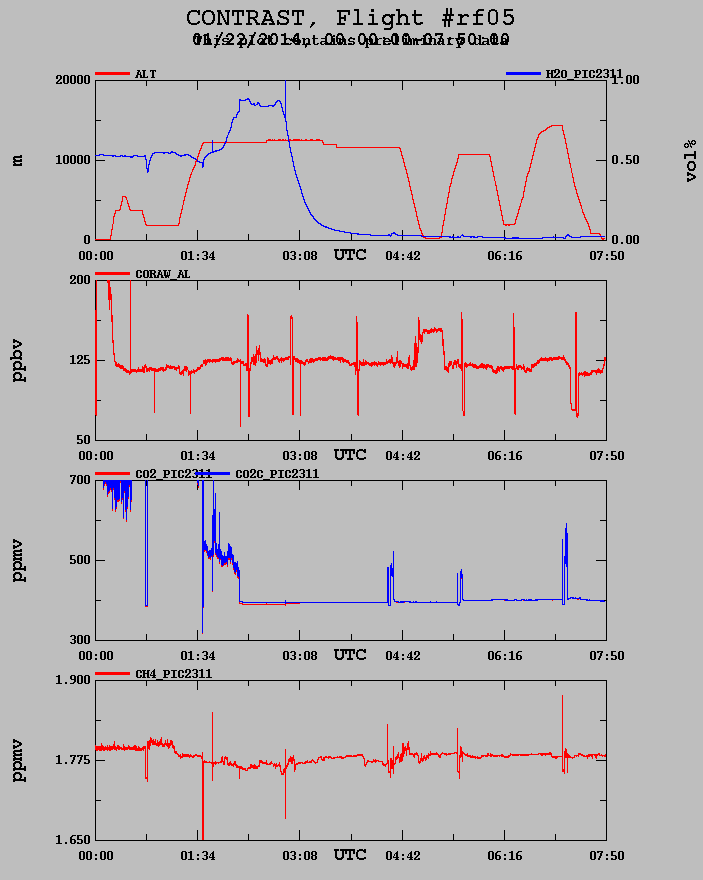
RF05 |
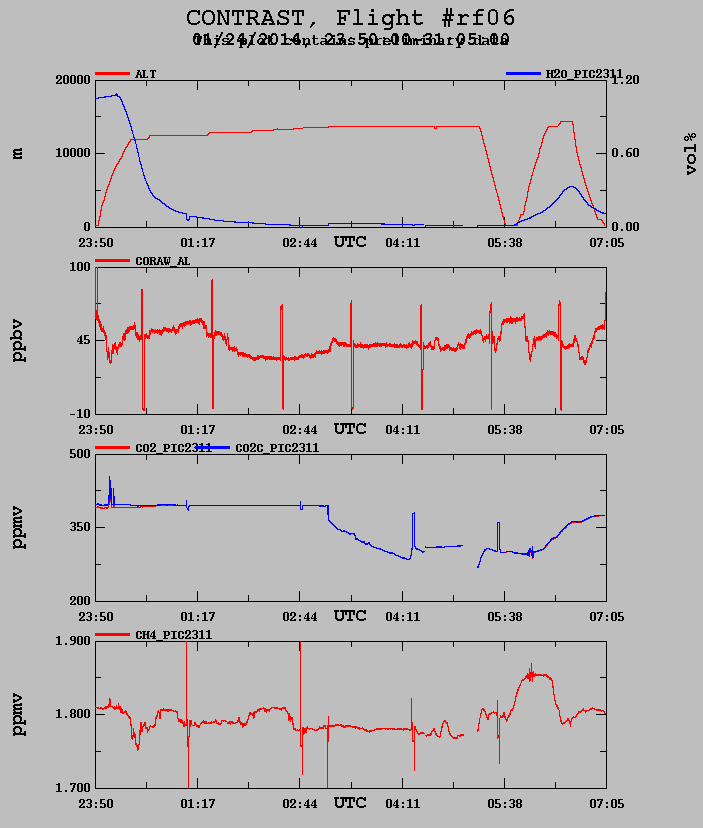
RF06 |
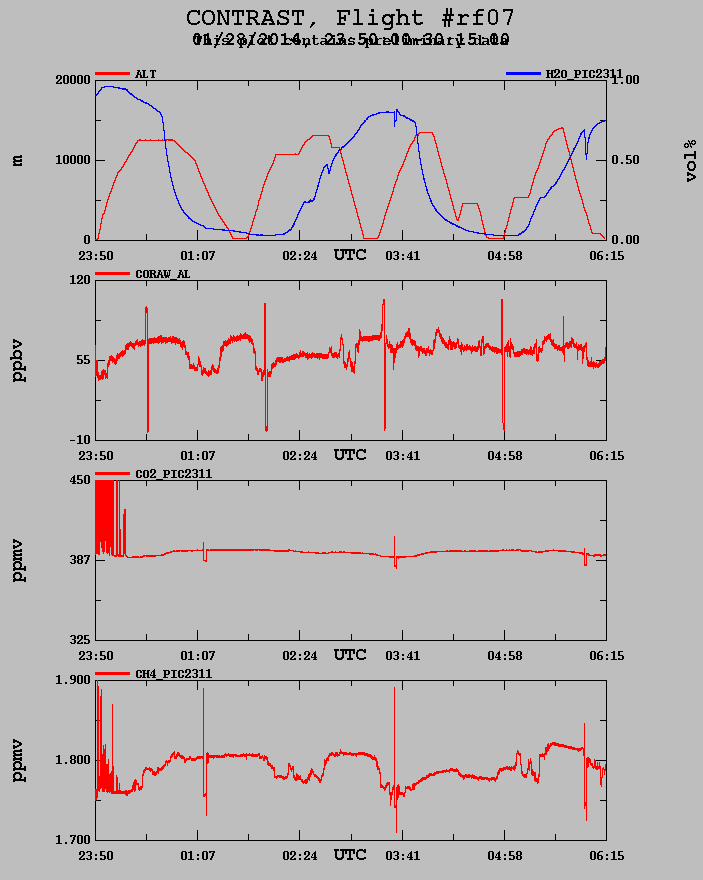
RF07 |
|
|
RF09 |
RF11 |
RF12 |
|
Dataset Documentation Requirements
CONTRAST Data Submission Instructions
Letter from the Project Manager
CONTRAST Digital Camera Images and Movie Notes
CONTRAST Project Manager Report
Quick Questions for CONTRAST PIs
CONTRAST Educational Resources
RF11
Dataset Documentation Requirements
CONTRAST Data Submission Instructions
Letter from the Project Manager
CONTRAST Digital Camera Images and Movie Notes
CONTRAST Project Manager Report
Quick Questions for CONTRAST PIs
CONTRAST Educational Resources
Field Project Perdigão
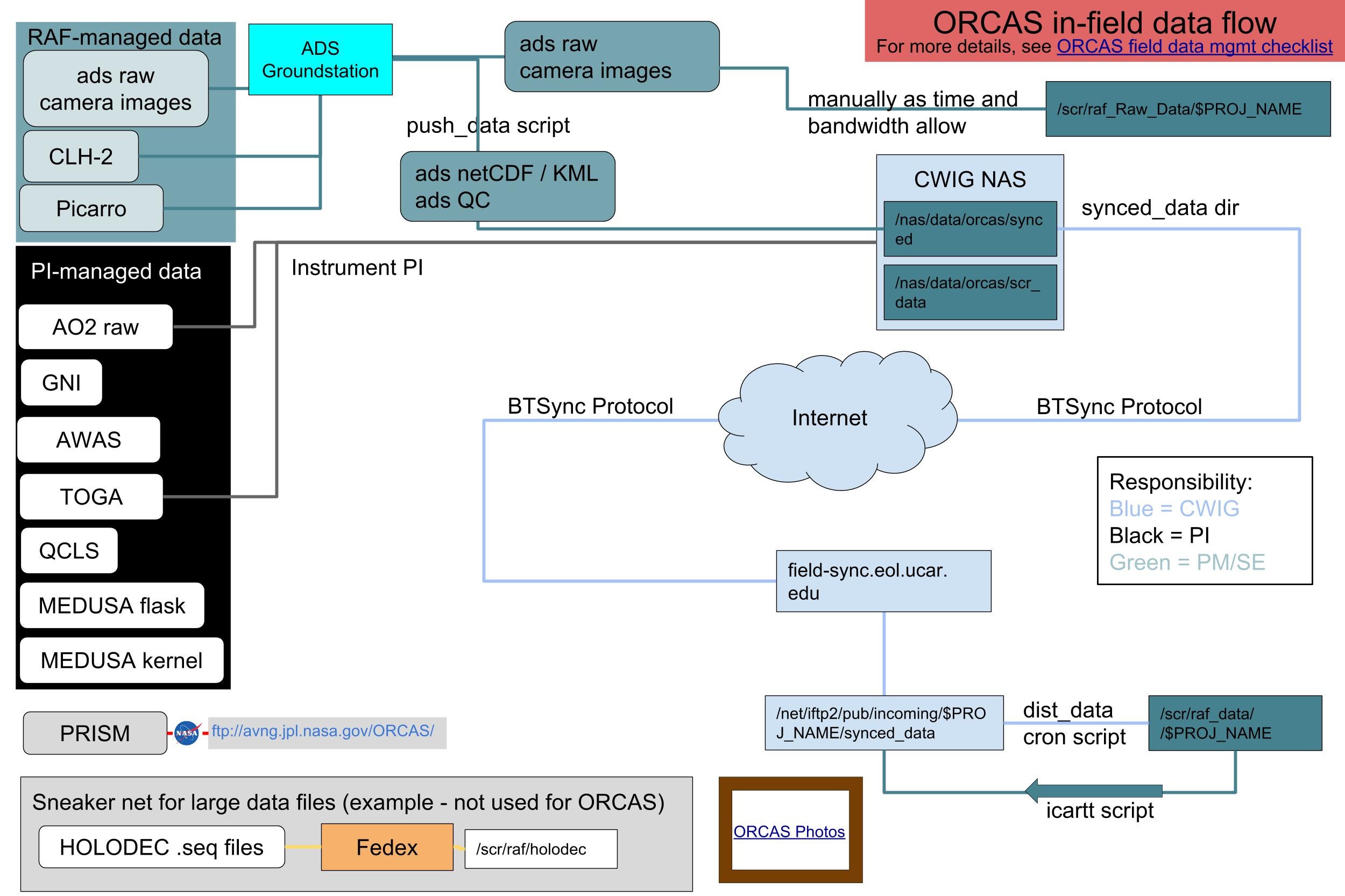
ORCAS Field Data Management
Letter from the Project Manager
ORCAS Digital Camera Imagery and Movie Notes
NCAR / Scripps Airborne Flask Sampler
Meetings & Presentations
Perdigão Planning Meeting (May 2016)
Perdigão Planning Meeting | 10-13 May 2016
Date: 10-13 May 2016 (Tuesday - Friday)
Location: Casa das Artes e Cultura do Tejo, Vila Velha de Rodão, Portugal
NOTE: The presentations are only accessible by Perdigão project participants.
| Day 1 | Tuesday, 10 May 2016 | |||
| Time | Duration | Topic | Chairperson |
| 08:30 - 10:30 | 2:00 | NEWA Steering Committee for the country representatives only | Jakob Mann |
| 09:30 - 10:30 | 1:30 | Registration | |
| 10:30 - 10:50 | 0:20 | Coffee Break | |
| 11:00 - 13:00 | 2:00 | Perdigão 2015 / Experience and results | Jakob Mann |
| 11:00 - 11:10 | 0:10 | Welcome | José Laginha Palma (UPORTO, Portugal) | |
| 11:10 - 11:40 | 0:40 | Scientific equipment, power layout, scanning patterns, and some results from the lidars. Staying in Perdigão for six weeks | Nikola Vasiljevic (DTU, Denmark) | |
| 11:40 - 12:10 | 0:30 | Induction zone measurements and modeling at the Enercon turbine at Perdigão | Alexander Forsting (DTU, Denmark) | |
| 12:10 - 12:25 | 0:15 | Wake measurements with long- and short-range scanners | Jakob Mann (DTU, Denmark) | |
| 12:25 - 12:40 | 0:15 | Logistics, transport and network at Perdigão 2015 | Per Hansen (DTU, Denmark) | |
| 12:40 - 12:55 | 0:15 | Local support, power supply, and hosting strange foreigners | José Carlos Matos (INEGI, Portugal) | |
| 12:55 - 13:10 | 0:15 | Failures at Perdigão 2015 + further discussions | Mike Courtney (DTU, Denmark) | |
| 13:00 - 14:00 | 1:00 | Lunch | |
| 14:00 - 16:00 | 2:00 | Perdigão 2015 / Computational results | José Laginha Palma |
| 14:00 - 14:15 | 0:15 | Computational modelling of Perdigão | José Laginha Palma (UPORTO, Portugal) | |
| 14:15 - 14:30 | 0:15 | Climate in Perdigão | Margarida Belo (IPMA, Portugal) | |
| 14:30 - 14:45 | 0:15 | Mesoscale modelling of Perdigão 2015 | Alex Dutriex (ATM-PRO, Belgium) | |
| 14:45 - 15:00 | 0:15 | Simulation of the atmospheric flow over Serra do Perdigão for real weather conditions (2015 June 10) | Carlos Rodrigues (UPORTO, Portugal) | |
| 15:00 - 15:15 | 0:15 | Stratified flows during June 10 2015 | Miguel Teixeira (UR, UK) | |
| 15:15 - 15:30 | 0:15 | LES modeling of Perdigão | Jacob Berg (DTU, DK) | |
| 15:30 - 15:45 | 0:15 | Terrain digitisation and terrain coverage | Teresa Simões (LNEG, Portugal) | |
| 15:45 - 16:00 | 0:15 | Grid resolution study of RANS at Perdigão | Dalibor Cavar and Andrea Bechmann (DTU, DK) | |
| 16:00 - 16:20 | 0:20 | Coffee Break | |
| 16:20 - 16:50 | 0:30 | Travel (Vila Velha de Ródão - Perdigão) | |
| 16:50 - 18:50 | 2:00 | Perdigão / Site visit | |
| 18:50 -19:20 | 0:30 | Travel (Perdigão to Figueira) | |
| 19:20 - 21:20 | 2:00 | Dinner (Figueira and Foz do Cobrão) | |
| 21:20 - 21:50 | 0:30 | Travel (Figueira - Foz do Cobrão) | |
| 21:20 - 21:50 | 0:30 | Travel (Figueira - Vila Velha de Ródão) | |
| 21:20 - 21:50 | 0:40 | Travel (Figueira - Herdade da Urgueira) | |
| Day 2 | Wednesday, 11 May 2016 | |||
| Time | Duration | Topic | Chairperson |
| 09:00 - 10:30 | 1:30 | Presentation of the experimental layout in Kassel (Aug-Dec 2016) experiment and final planning | Paul Kühn | |
| 10:30 - 10:50 | 0:20 | Coffee Break | |
| 10:50 - 12:20 | 1:30 | Perdigão 2017 / Presentations (Part I) | Julie Lundquist |
| 10:50 -11:20 | 0:30 | U.S. Participation | Joe Fernando (Notre Dame University, USA) | |
| 11:20 - 11:35 | 0:15 | Tethered Lifting System Measurements of Stable Boundary Layers | Julie Lundquist (University Boulder, USA) | |
| 10:35 - 11:45 | 0:10 | Coupling WRF with LES: initial developments | Alexandre Silva Lopes and José Laginha Palma (UPORTO, Portugal) | |
| 11:45 - 12:00 | 0:15 | Horizontal scanning of two wind components at the Østerild test station | Jakob Mann (DTU, Denmark) | |
| 12:00 - 12:15 | 0:15 | Notre Dame/ARL Collaborative Research on Microscale Features of Gap and Slope Flows | H.J.S. Fernando, Chris Hocut, Ed Creegan and Laura Leo (Notre Dame Univ and U.S. Army Research Laboratory, USA) | |
| 12:15 - 12:30 | 0:15 | Using Scanning Lidar, Fixed Lidar and Tower Measurements to Characterize Interactions between Wind Turbine Wakes and Terrain-Induced Flow Regimes | Rebbeca Barthelmie (Cornell University) | |
| 12:30 - 12:45 | 0:15 | Boundary Layer Observations with the Collaborative Lower Atmospheric Mobile Profiling System (CLAMPS) | Petra Klein (University of Oklahoma, USA) | |
| 12:45-13:00 | 0:15 | Large-eddy Simulation of the Stable Boundary Layer over Complex Terrain | Tina Chow (University of California, Berkeley, USA) | |
| 13:00 - 14:00 | 1:00 | Lunch (Restaurante Estalagem das Portas de Ródão) | |
| 14:00 - 16:00 | 2:00 | Perdigão 2017 / Presentations (Part II) | Tina Chow |
| 14:00 - 14:15 | 0:15 | Tower sensor configuration | Steve Oncley (NCAR, USA) | |
| 14:15 - 14:30 | 0:15 | Use of Combo Probes for Stratified Turbulence Measurements | Eliezer Kit (Tel Aviv University, Israel) | |
| 14:30 - 14:45 | 0:15 | Enercon's point of view on the Perdigão Experiment | Michael Brüdgam (Enercon, Germany) | |
| 14:45 - 15:00 | 0:15 | Using Scanning Lidar, Fixed Lidar and Tower Measurements to Characterize Downslope Flow | Sara Pryor (Cornell University, USA) | |
| 15:00 - 15:15 | 0:15 | WINDSP: a management tool and a data archive | Daniel Gomes and José Laginha Palma (FEUP, Portugal) | |
| 15:15 - 15:25 | 0:10 | UAVs or not? | Sérgio Ferreira and João Tasso (FEUP, Portugal) | |
| 15:25 - 15:40 | 0:15 | Power Grid | José Carlos Matos (INEGI, Portugal) | |
| 15:40 - 15:50 | 0:10 | Weather forecasting and daily reports | Pedro Viterbo (IPMA, Portugal) | |
| 15:50 - 16:00 | 0:10 | Conclusions /Summary | |
| 16:00 - 16:30 | 0:30 | Coffee Break | |
| 16:30 - 17:10 | 0:40 | Perdigão 2017: Science Plans - Planning of Working Group session (Science plans) | Joe Fernando, Jakob Mann and José Laginha Palma |
| 17:10 - 17:50 | 0:40 | Perdigão 2017: Data - Planning of Working Group session (Data) | Mike Courtney, Steven Oncley and João Correia Lopes |
| 17:50 - 18:30 | 0:40 | Perdigão 2017: Resources and Logistics - Planning of Working Group session (Logistics) | Alison Rockwell, Jose Carlos Matos, Per Hansen |
|
18:30 - 19:00 |
0:30 | Revieweing of list of topics and preparation of Working Group sessions (Day 3) | José Laginha Palma |
| 19:00 -19:20 | 0:30 | Break | |
| 19:20 - 19:35 | 0:15 | Walk to Bar Vila Portuguesa (Vila Velha de Ródão) | |
| 19:35 - 21:35 | 2:00 | Dinner (Vila Velha de Ródão) | |
| 21:35 - 22:05 | 0:30 | Travel (Figueira - Foz do Cobrão) | |
| 21:35 - 21:50 | 0:15 | Travel (Figueira - Herdade da Urgueira) | |
| Day 3 | Thursday, 12 May 2016 | |||
| Time | Duration | Topic | Chairperson |
| 08:00 - 10:30 | 1:30 | Working Group Meetings (Sessions I) Science plans, Data, Resources and Logistics | Various |
| 10:30 - 10:50 | 0:20 | Coffee Break | |
| 10:50 - 11:50 | 1:00 | Working Group Meetings (Sessions II) Science plans, Data, Resources and Logistics | Various |
| 11:50 - 12:20 | 0:30 | USA Embassy visit | |
| 12:20 - 12:50 | 0:30 | Travel from Casa das Artes to Herdade da Urgueira | |
| 12:50 - 13:00 | 0:10 | Welcome remarks | |
| 13:00 - 14:00 | 1:00 | Lunch (Restaurante at Herdade da Urgueira) | |
| 14:00 - 16:00 | 2:00 | Working Group Meetings (Sessions III) Science plans, Data, Resources and Logistics | Various |
| 16:00 - 16:30 | 0:30 | Coffee Break | |
| 16:30 - 18:30 | 2:00 | Working Group Meetings (Sessions IV) Science plans, Data, Resources and Logistics | Various |
| 18:30 - 19:00 | 0:30 | Working Groups: summary and conclusions | Various |
| 18:30 - 19:00 | 0:20 | Break | |
| 19:40 - 21:40 | 2:00 | Dinner (Herdade da Urgueira) | |
| 21:40 - 22:10 | 0:30 | Travel (Figueira - Foz do Cobrão) | |
| 21:40 - 21:55 | 0:15 | Travel (Figueira - Vila Velha de Ródão) | |
| Day 4 | Friday, 13 May 2016 | |||
| Time | Duration | Topic | Chairperson |
| 09:00 - 11:00 | 2:00 | Perdigão 2017 / Conclusions (I) | Jakob Mann |
| 11:00 - 11:20 | 0:20 | Coffee Break | |
| 11:20 - 12:50 | 1:30 | Perdigão 2017 / Conclusions (II) | Jakob Mann |
| 12:50 - 13:00 | 0:10 | Farewell | |
| 13:00 - 14:00 | 1:00 | Lunch | |
| 13:00 - 14:00 | 2:00 | Site visit (Final check-up, if necessary) | José Laginha Palma |
| 16:00 - 16:20 | 0:20 | Coffee Break | |
| 16:20 - 18:20 | 2:00 | Free | |
| 18:20 - 18:30 | 0:10 | Closure | |
Perdigão Planning Meeting (May 2016)
HIAPER Aircraft Ops
The DC3 field project makes use of two instrumented aircraft platforms and ground based observations to characterize the impact of deep convective systems on the composition and chemistry of the mid latitude troposphere and lower stratosphere. The observations are conducted in three locations -- northeastern Colorado, central Oklahoma and northern Alabama -- in order to gather data on different types of storms with different boundary layer compositions and convective environments, and to improve the odds for suitable storms for the study. Significant ground based observations infrastructure already exists in these areas. The infrastructure will be used to characterize the physical and dynamical characteristics of the storms, and to provide information used to guide the research aircraft as storms evolve.
Specifically, the DC3 field program intends to:
- Quantify and characterize the convective transport of fresh emissions and water vapor to the upper troposphere within a few hours of active convection, investigating storm dynamics and physics, lightning and its production of nitrogen oxides, cloud hydrometeor effects on scavenging of species, surface emission variability, and chemistry in the anvil.
- Quantify the changes in chemistry and composition in the upper troposphere (UT) after active convection, focusing on the 12-48 hours after convection and the seasonal transition of the chemical composition of the UT.
DC-3 will use observations from a variety of platforms to improve the understanding at the process level. The results are intended to allow for testing and improvements of parameterization schemes in large-scale models. By conducting observations in Colorado, Oklahoma and Alabama, DC3 will investigate the differences resulting from high-cloud base storms, super-cell storms and subtropical air mass thunderstorms. The general target will be isolated deep convective clouds. The aircraft observations will be combined with ground-based radars, lightning networks and sounding systems to further characterize the storms and their environments.
DC3 will include use of the NASA DC-8. In addition DC3 may include several other aircraft, e.g., a storm-penetrating A-10 aircraft, all TBD.
A project of this size will require a major operations planning effort to develop and implement efficient operational strategies and procedures, coordination with Air Traffic authorities, provision of information to/from the aircraft and ground bases during operations. The project will also significantly benefit from a comprehensive data management strategy.
Data Set Documentation Guidelines
Data Submission Instructions
DC3 Data Policy - Final
DC3 Education & Outreach Page
6 Quick Questions
Platforms & Instruments
Science Team
Educational Resources
DC3 In the News
DC3 Blog
DC3 Teacher's Workshop
Outreach Calendar
DC3 EO Summary Report
NCAR ACOM (formerly ACD) DC3 Page
NASA SEAC4RS Project Website
Toolsets for Airborne Data (TAD)
ARM Facilities Website
NASA Lidar Applications Group
Logos
NIDAS Resources
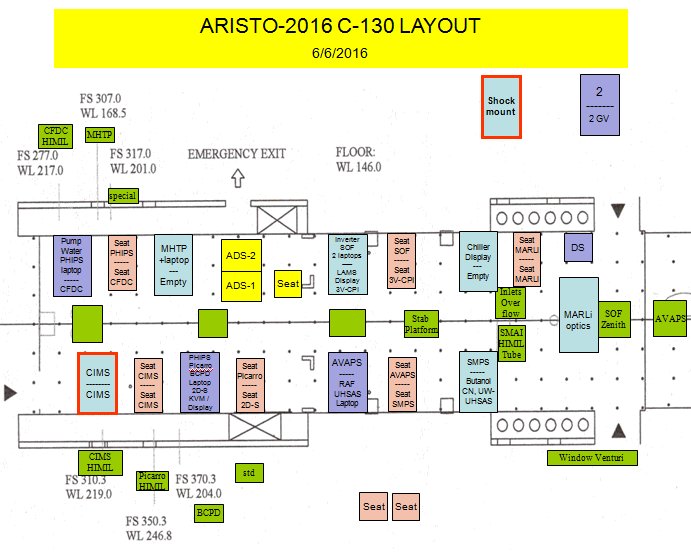
ARISTO-2016 C-130 Floor Plan
Letter from the Project Manager
ARISTO Data Submission Guidelines
ARISTO-2016 Investigator Reports