Main navigation

NCAR Logo
Earth Observing Laboratory
Contact Us
  • Who We Are
    • About EOL
    • EOL Organization
    • Career and Internships
    • Contact EOL
  • Platforms & Instruments
    • Research Aircraft
    • Airborne Instrumentation
    • Ground-based Instrumentation
    • Request FARE Instrumentation
  • Field Programs
    • All EOL Field Programs
    • Field Campaign Schedules
  • Our Services
    • Field Program Support Services
    • Project Management
    • Education & Outreach
    • Local Weather and Webcams
  • Data & Software
    • Data Services
    • EOL Field Data Archive (DMS)
    • EOL Field Catalog (DMS)
    • Conventions and Standards
    • Software Center
    • ASPEN
  • Research & Development
    • APAR
    • LOTOS
    • Calibration Laboratory
    • EOL Research Publications
    • Design and Fabrication Services
  • News & Events
    • EOL in the News
    • EOL Seminar Series
    • EOL Workshop Series
    • EOL Conferences/Workshops/Events
    • 2026 AVAPS Group Meeting
    • FARE Users Workshop 2023 Archives
Contact Us

Breadcrumb

  1. Home
  2. ORCAS
  3. ORCAS Field Data Management
ORCAS Field Data Management

ORCAS Field Data Management Checklist

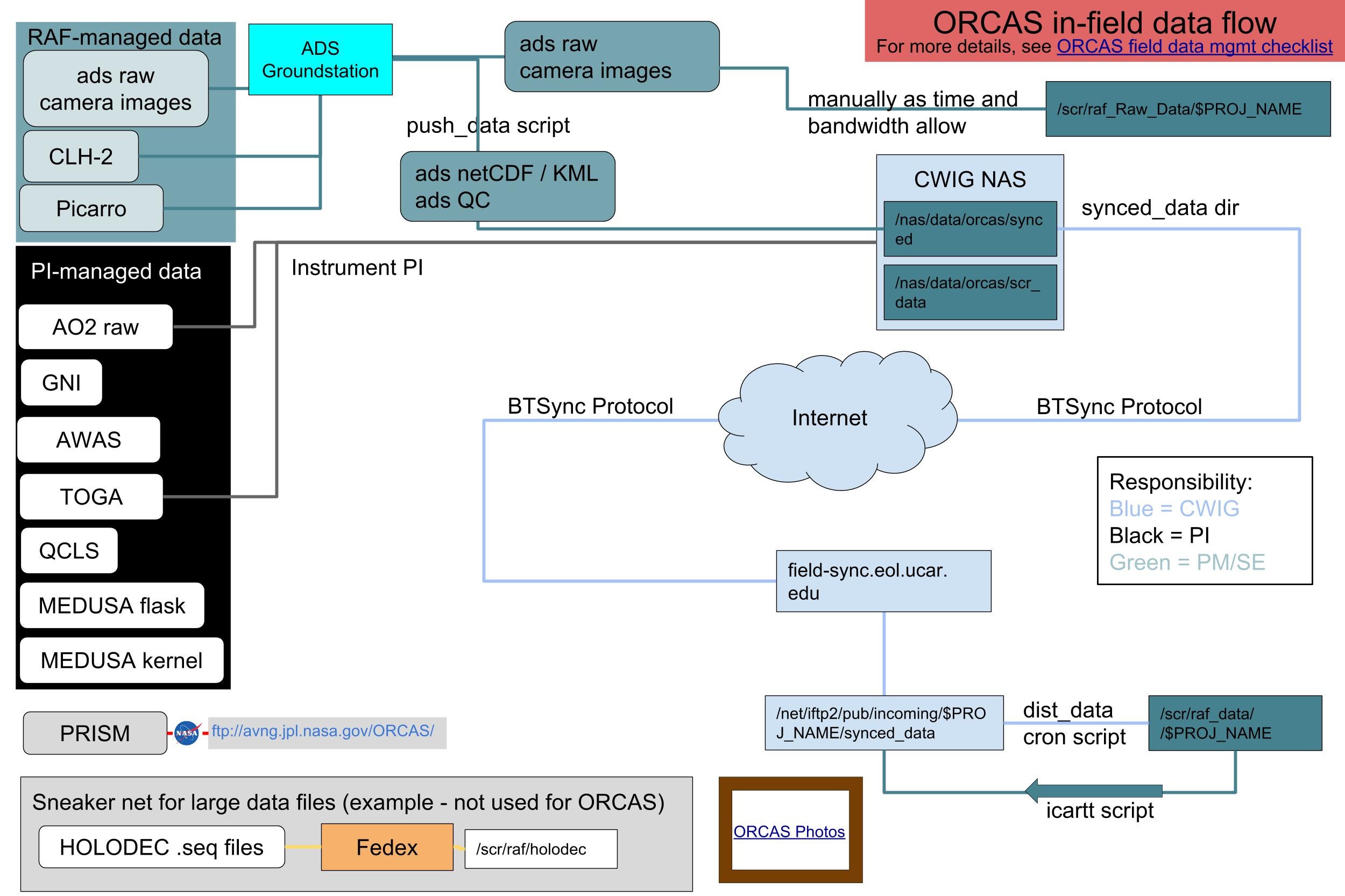
ORCAS in-field data flow - with CWIG support (NAS)

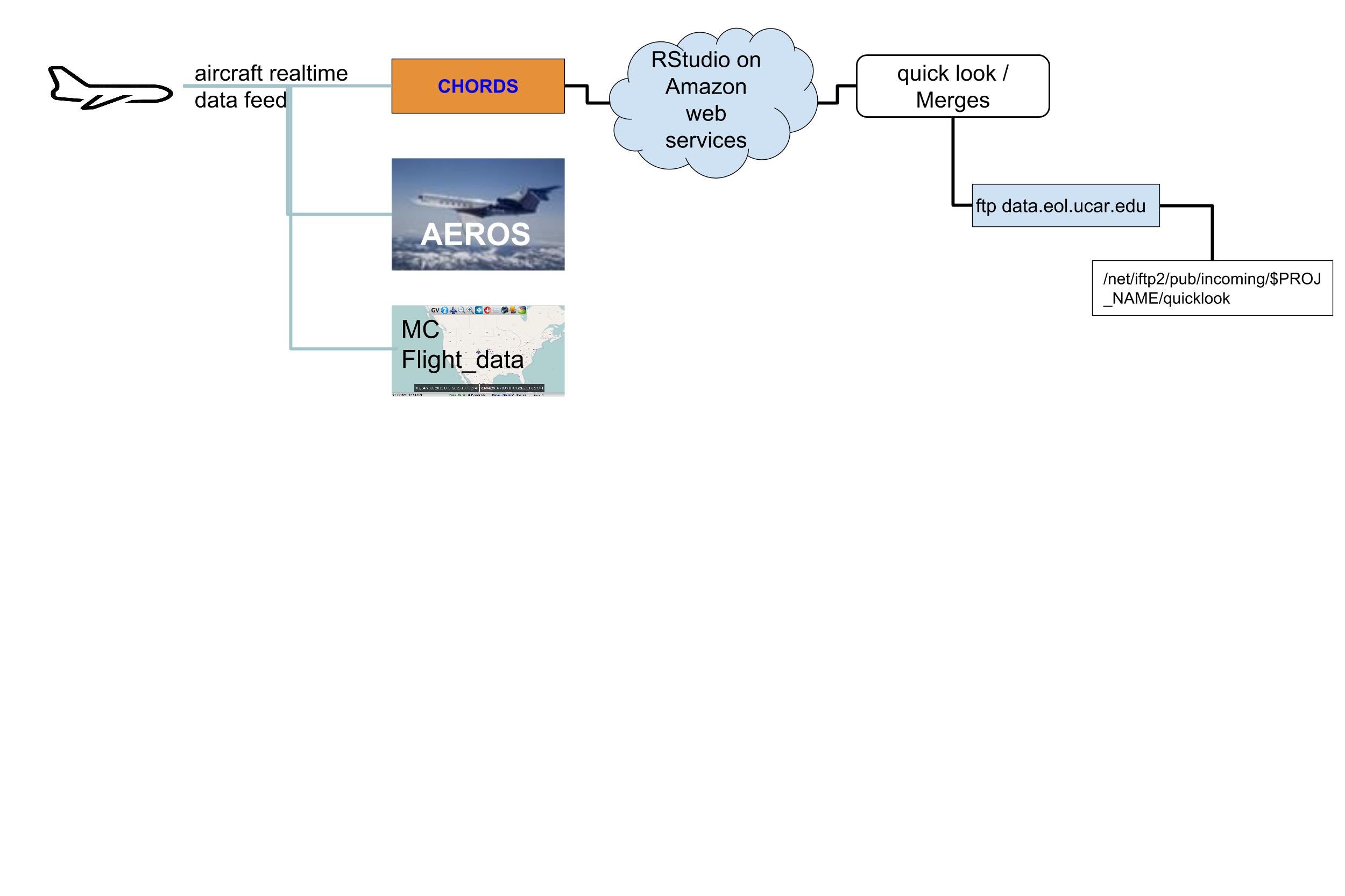
ORCAS Real-time Data feeds

push_data.py flow diagram


Images
ORCAS in-field data flow - with CWIG support (NAS).jpg
ORCAS Real-time Data feeds.jpg
push_data.py flow diagram.jpg
ORCAS Publications

ORCAS Publications

Data Access

ORCAS Data Access

Field Catalog

ORCAS Field Catalog

ORCAS Data Documentation

Letter from the Project Manager

ORCAS Digital Camera Imagery and Movie Notes

Project Manager Report

RAF Bulletins

ORCAS Data Policy

ORCAS Data Fair-Use Policy

DOI Guidance for Authors

ORCAS Data Submission Guidelines

ORCAS Data Readme Guidelines

ORCAS GV Information

ORCAS GV Floor Plan

ORCAS GV Wing Stores

ORCAS GV Deployment Schedule

ORCAS Flight Hours

ORCAS OPERATIONS

Nominal Flight Plans

ORCAS Safety Form

ORCAS Instruments

ORCAS Aircraft Instruments

Airborne Oxygen Instrument

NCAR / Scripps Airborne Flask Sampler

Trace Organic Gas Analyzer

Quantum Cascade Laser Spectrometer

Advanced Whole Air Sampler

Giant Nuclei Impactor

NASA Prism

NOAA/CU Picarro

ORCAS Meetings and Presentations

ORCAS Meetings

ORCAS Presentations

ORCAS General Logistics

Shipping and Customs

ORCAS Email List

ORCAS Education & Public Outreach

Quick Questions for ORCAS PIs

ORCAS Science Team

ORCAS Operations Team

ORCAS Aircraft Instruments

ORCAS Educational Resources

Follow the NSF/NCAR Research Aircraft in Real Time

ORCAS Google Hangout

ORCAS in the News

ORCAS Logos

ORCAS EOL Info (Staff Only)

Personnel Schedule

Facilities & Instruments

NSF NCAR HIAPER Gulfstream GV
NSF NCAR

  • NSF NCAR Homepage
  • ACOM | Atmospheric Chemistry Observations & Modeling
  • CGD Laboratory
  • CISL | Computational & Information Systems
  • EdEC | Education, Engagement & Early-Career Development
  • EOL | Earth Observing Laboratory
  • HAO | High Altitude Observatory
  • MMM | Mesoscale & Microscale Meteorology
  • RAL | Research Applications Laboratory

UCAR

  • UCAR Homepage
  • Community Programs
  • Education & Training
  • For Staff
  • Government Relations & External Engagement
  • Member Institutions
  • Tech Transfer & Engagement
  • University Collaboration

EOL

Follow us on social media

For Staff

  • Website Login
  • NCAR/UCAR Help Desk
  • EOL on Sundog

© 2026 UCAR

  • Privacy
  • Cookies
  • Web Accessibility
  • Terms of Use
  • Copyright Issues
  • Sponsored by U.S. NSF
  • Report Ethics Concern
  • Staff Login
Postal Address: P.O. Box 3000, Boulder, CO 80307-3000 • Shipping Address: 3090 Center Green Drive, Boulder, CO 80301
NSF Logo

This material is based upon work supported by the NSF National Center for Atmospheric Research, a major facility sponsored by the U.S. National Science Foundation and managed by the University Corporation for Atmospheric Research. Any opinions, findings and conclusions or recommendations expressed in this material do not necessarily reflect the views of the U.S. National Science Foundation.