Search
HIPPO In the News
 Swinging CO2 Levels Show the Earth is 'Breathing' More Deeply
 Cientistas fazem mapeamento inedito de gases na atmosfera
 Pole-to-Pole Research Flights Document Greenhouse Gases
 First Global Portrait of Greenhouse Gases Emerges from Pole-to-Pole Flights
 Fifth and Final Pole-to-Pole Aircraft Study of Greenhouse Gases is Underway
 HIPPO Takes to the Skies: Measuring Earth's Atmospheric Constituents
 Fourth Pole-to Pole Airborne Study of Greenhouse Gases and Black Carbon
 HIAPER Pole-to-Pole Observations
 The Final Climate Frontiers
 New Zealand Association of Science Teachers
 Jet Reveals Atmosphere's Secrets
 HIPPO fly-past measures CO2 from Wollongong as part of a global mission
 Pole-to-Pole air trek collects valuable air samples
 Greenhouse Gas Probe
 US research plane measures gas over Otago
 Scientists in Christchurch to sample our atmosphere
 US jet tests gas levels in sweep of NZ atmosphere
 Testing Our Air
 Is it a bird? a plane? No, it's a low flying hippo
 How Scientists Are Trying to Solve the Carbon Riddle
 Global Warming Study To Take To The Sky
 Flying HIPPO!
 Plane sampling atmosphere lands in Anchorage after Arctic flight
 NOAA Scientists Fly to the Ends of the Earth to Measure Greenhouse Gases
 Mission to Curb Global Warming to take Flight
 NCAR research jet ready for takeoff
 Sampling While Soaring
 Jetting Their Way to a Better Understanding of Global Warming
 Pole-to-Pole Flight Finds CO2 Piling Up Over Arctic
 Scientists Aboard High Tech Jet Sample CO2 Pole-to-Pole
 First Glimpse of Greenhouse Gases Come Into View
 NIWA in Global CO2 Project
 Mission Aims to Better Understand Climate Change
HIPPO in the News
HIPPO-2 received considerable attention from the media both in the U.S. and along the route. Interviews were taken by newspapers and news channels in Boulder, Rarotonga, Cook Islands and in New Zealand. Here are some of the links:
Rarotonga Herald, Cook Islands,
TV3, Christchurch, and
Otago Daily Times, Christchurch.
Publication or Paper Parameterization retrieval of trace gas volume mixing ratios from Airborne MAX-DOAS
Air Sample Inlets
Air Sample Inlets for RAF Aircraft
(Dave Rogers, update Jan-2011)
EOL/RAF supports a variety of air sample inlet types, including simple goosenecks, solid diffuser, forward-facing cone, and others. RAF also flies custom inlets such as the Low Turbulence Inlet (LTI) and the University of Wyoming heated inlet and others. In support of airborne research projects, RAF will configure the air sample inlets, install them and help connect them to instruments. To support the HIAPER aircraft, a new inlet was designed and built. It is called the HIAPER modular inlet (HIMIL) because its components can be customized to meet special needs. HIMIL is available with two heights in order to sample outside of the flow boundary layer (more info). The tall version HIMIL has inlet tip 28 cm from aircraft skin, and short version tip is at 19 cm. This web page describes RAF's support for inlets and configuration options for the HIMIL.
HIMIL
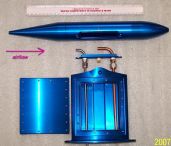
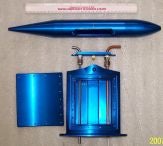
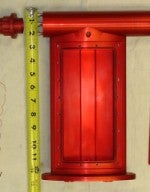
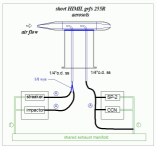
| The HIMIL is a flow-through type with diffusing nozzle upstream and converging nozzle downstream. Photos show the separated components and interior. For the PACDEX project, four HIMIL inlets were used on HIAPER. A schematic view of their configurations and connections to instruments is shown in the graphic.
1, 2, or 3 sample tubes can be installed within one HIMIL. These tubes can be of different composition, and they can face upstream or downstream. Typical interior piping is stainless steel with diameters of 1/4" and 5/16" o.d. These tubes can feed one or more instruments. |
click for larger view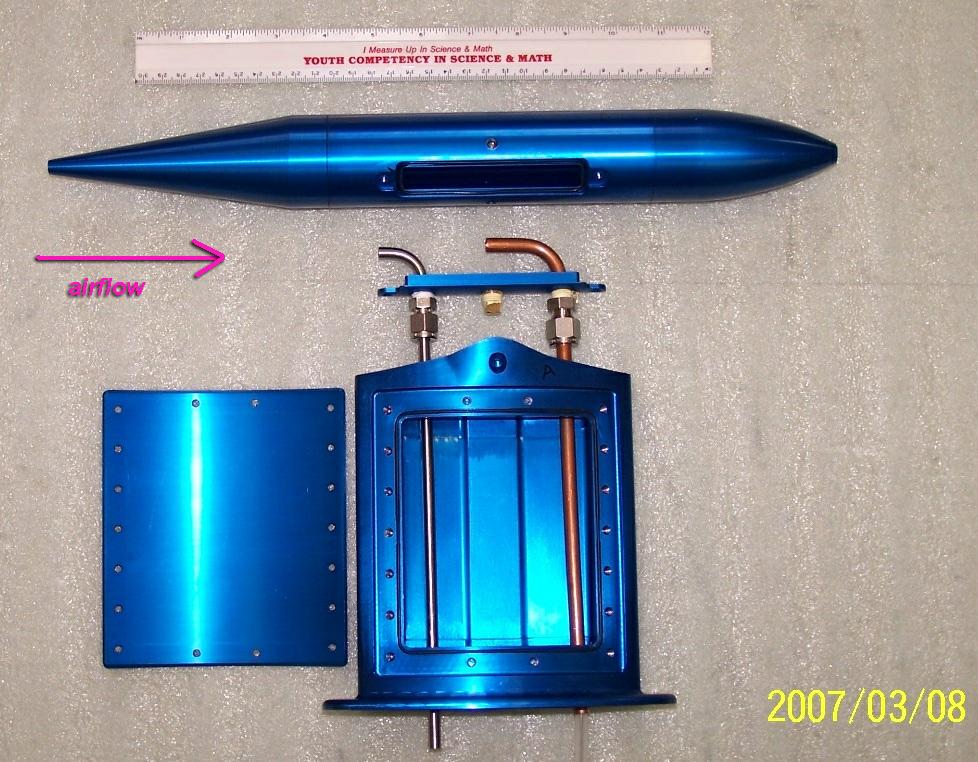 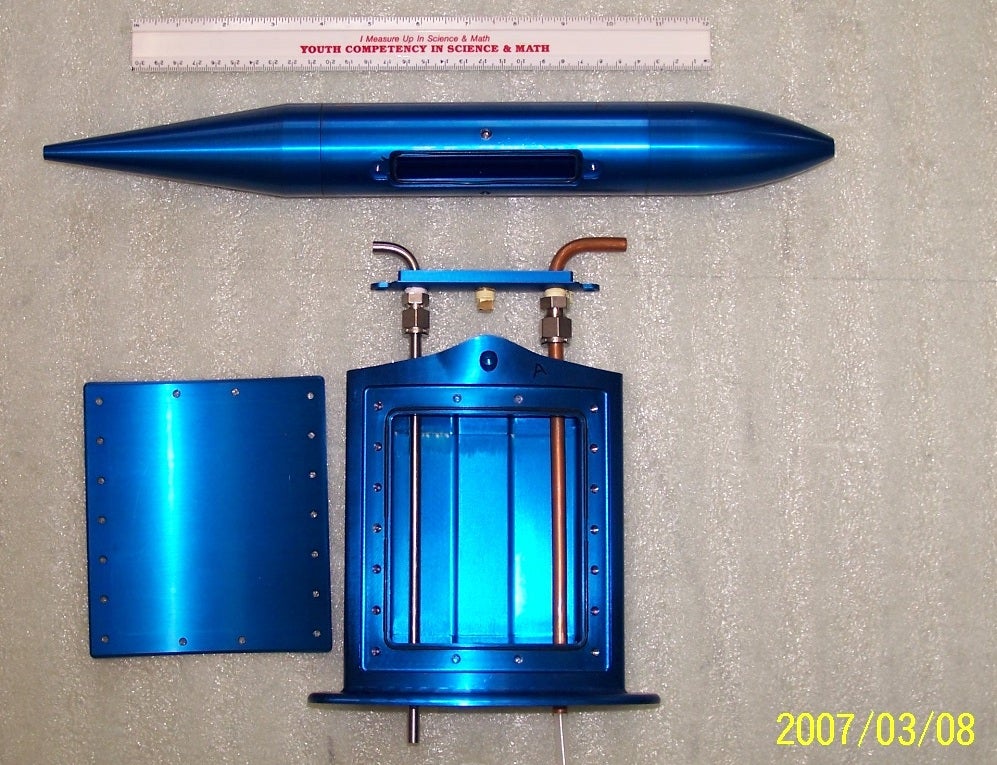 |
tall HIMIL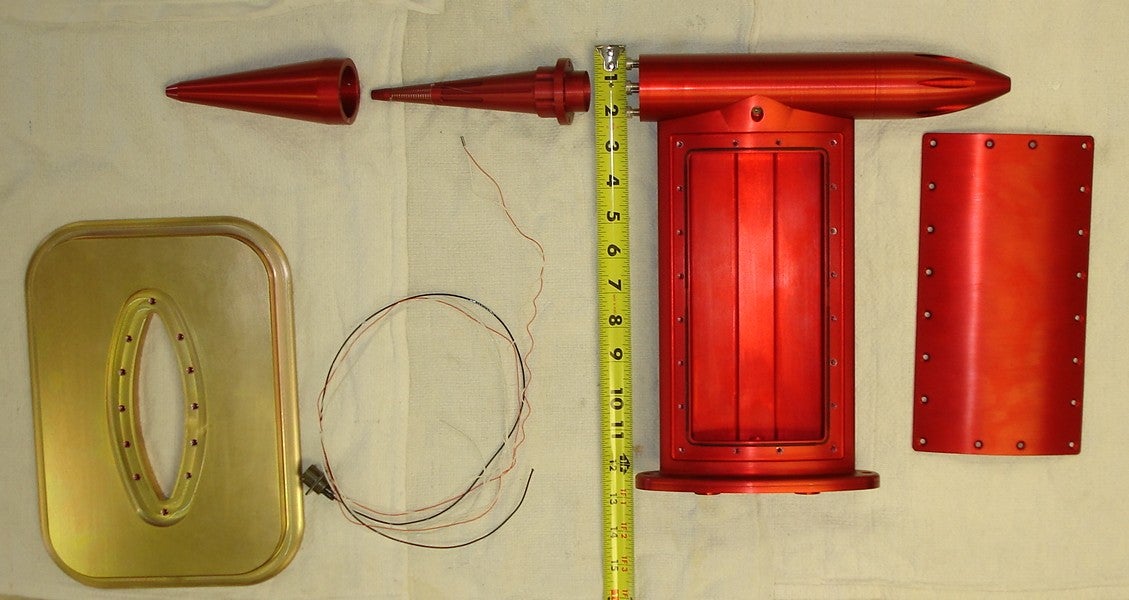 |
click for larger view 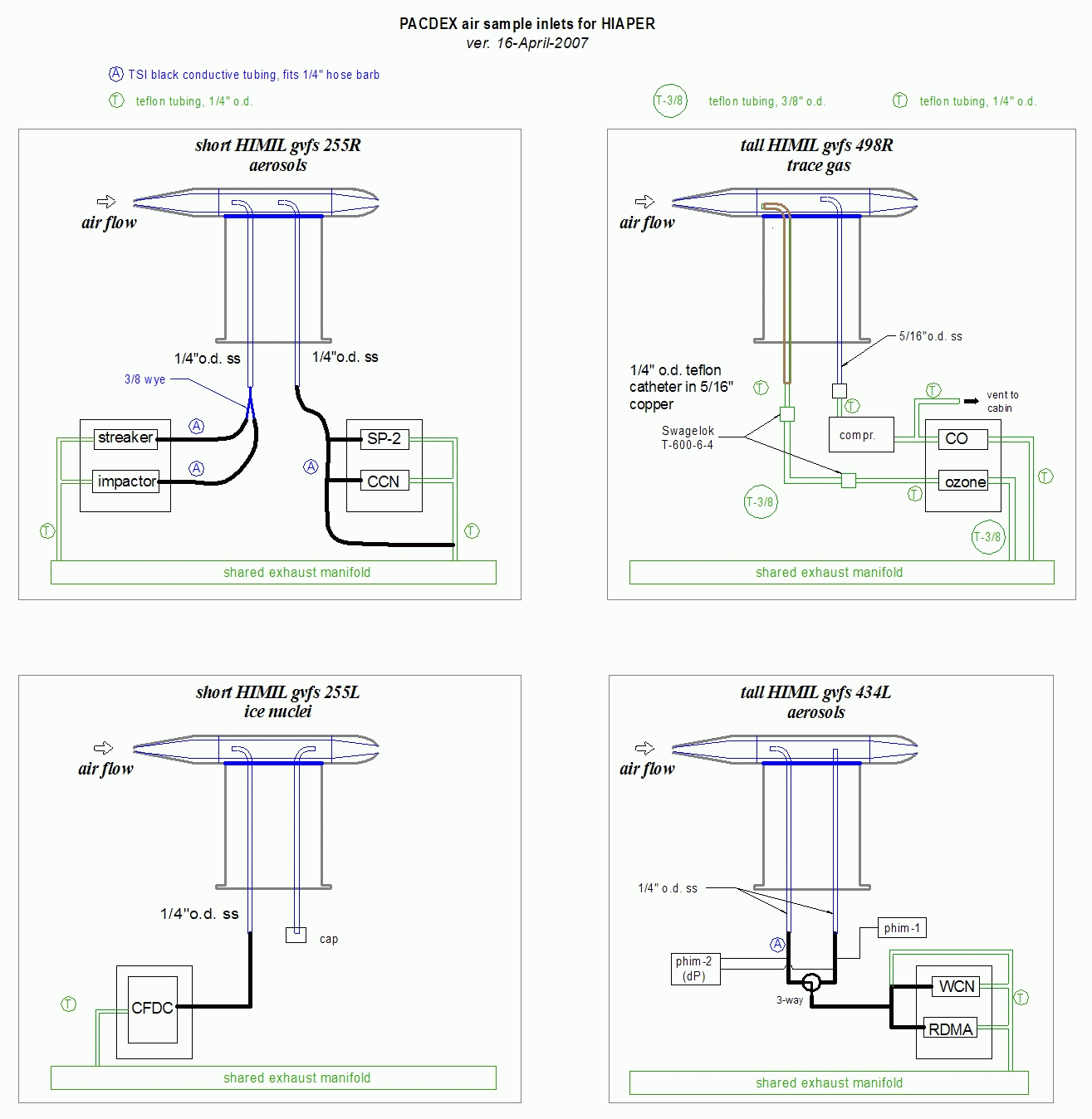 |
Basic cleaning of the stainless steel tubing is done by pulling through a swab of acetone-soaked Kim-Wipe. Any additional or specialty cleaning is the responsibility of the instrument investigator. Note that RAF has some data from a CO instrument that indicates a very large interference seemingly caused by some residue in the HIMIL. The origin of this interference may be due to acetone softening the sealant of the red dye that was used when the aluminum was anodized and later cleaned.
Icing of inlets in supercooled water clouds
| At typical research speeds for HIAPER, there will be ~15 to 20°C dynamic heating of the air as it adjusts to the aircraft speed. This heating can evaporate volatile components of aerosols. It also helps prevent icing of the inlet tip. There is also active electrical resistance heating of the inlet tip to prevent rime ice accumulation in supercooled water clouds. The tip temperature is regulated to maintain +5°C. Electrical heating can be switched off if desired.
Even with dynamic heating and a heated tip, it is possible for supercooled water to pass the tip, impact on the interior sampling tube and accumulate as rime ice, because the inner tubes are not heated. This problem may be recognized by a reduction in sample pressure. Monitoring of sampling pressure is therefore suggested in order to determine if this problem occurs. There may be additional dynamic pressure inside the HIMIL, depending on the orientation of internal sample tubes (pointing uptream, downstream or orthogonal to the flow) and sample pumping rates through those tubes. |
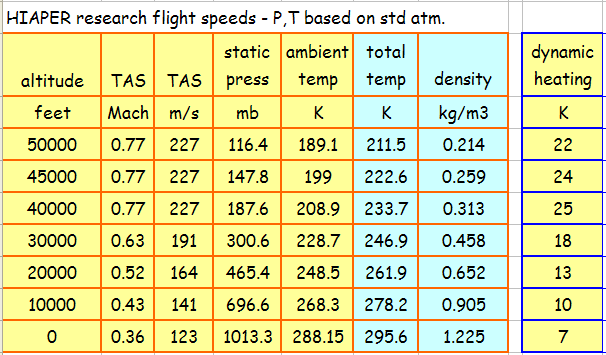 |
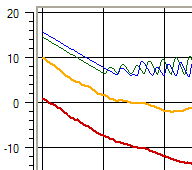
inlet temperatures during flight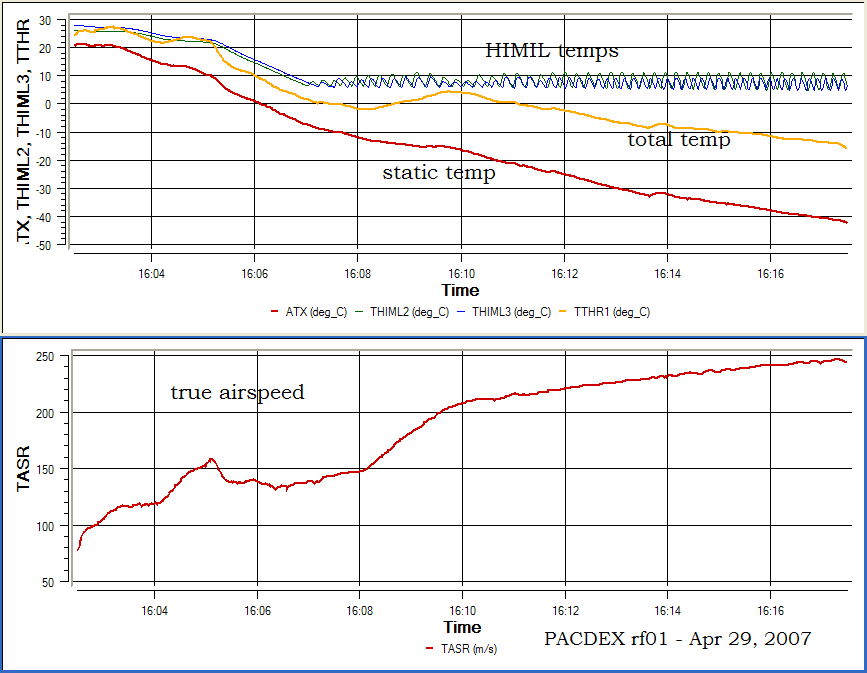 |
Passing Efficiency of Aerosol Particles
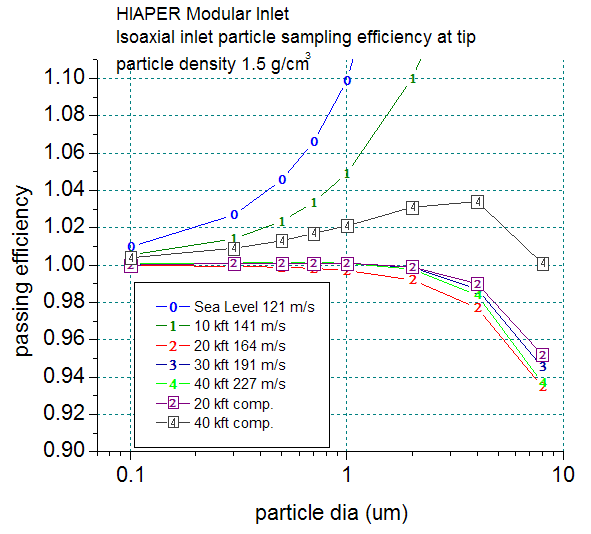
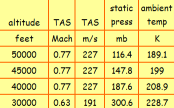
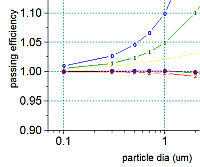
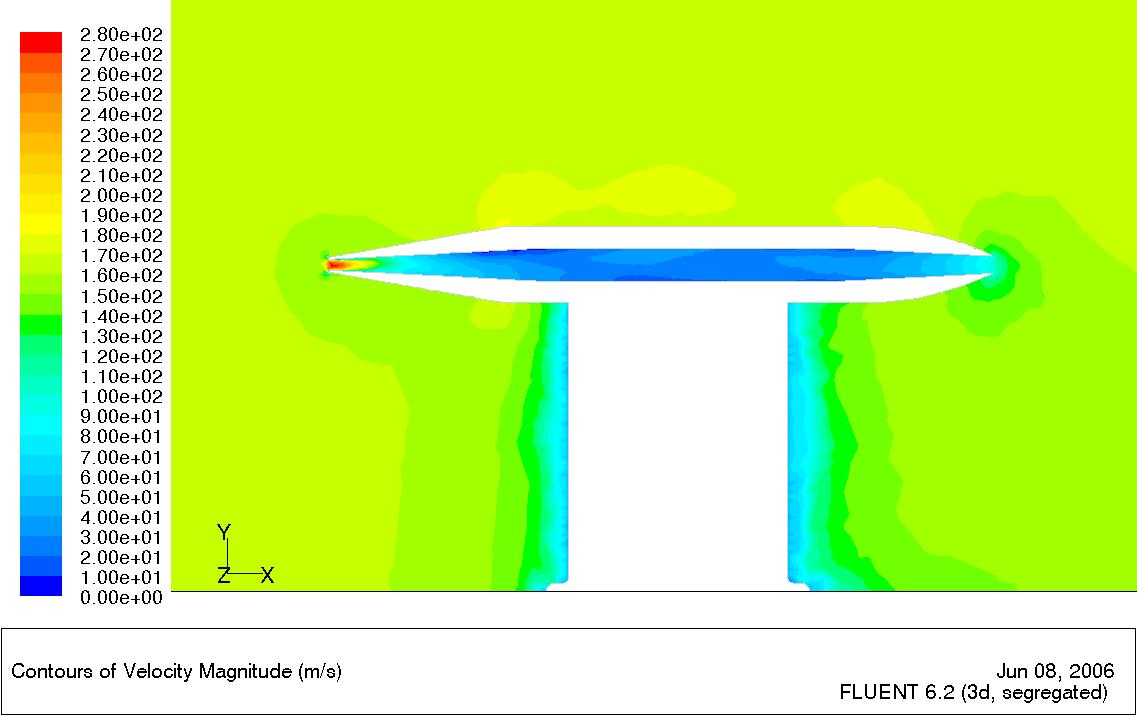
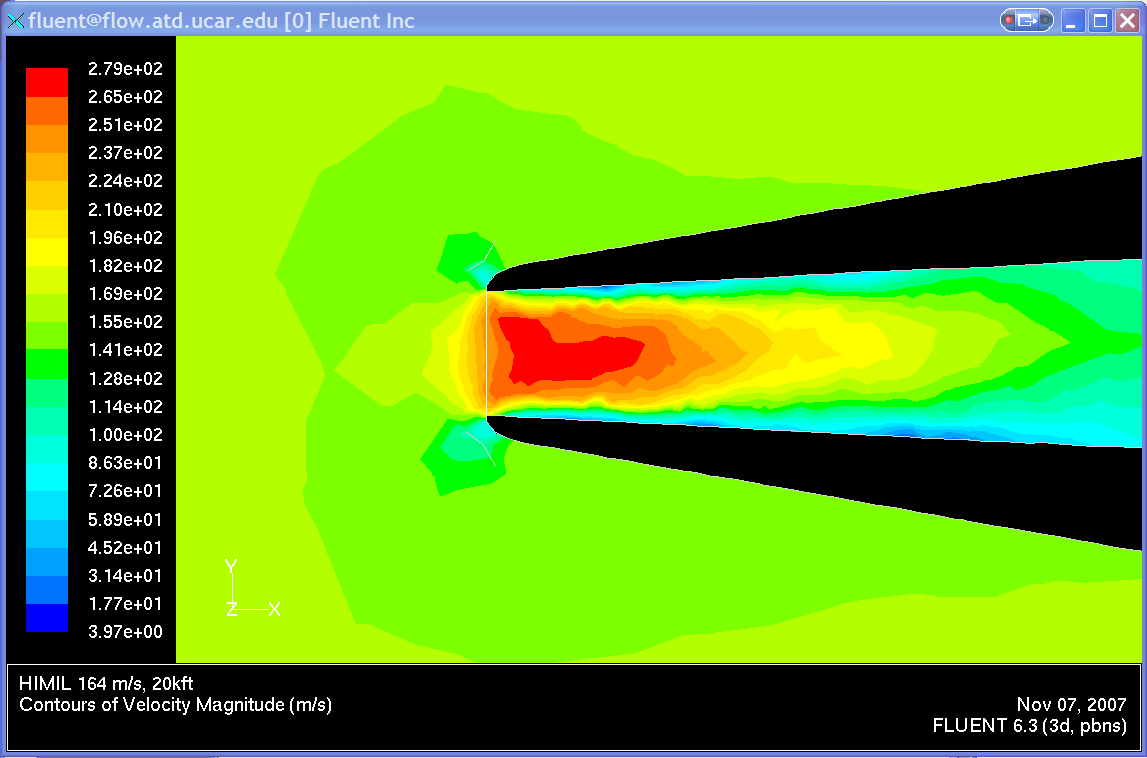
| Particle passing efficiency for the tip of the HIMIL was estimated by modeling the flow for conditions from sea level to 40 kft and research airspeeds appropriate for the GV at each altitude. Modeling was done with FLUENT software for both incompressible flow (k-omega turbulence scheme) and compressible flow (sstKW turbulence). The velocity at the inlet tip face was then used with Paul Baron’s spreadsheet to estimate the inlet sampling efficiency for aerosol particles of mass density 1.5 g/cm3. The calculations suggest ~100% passing of 1µm diameter particles from the tip to the inside of the HIMIL. The difference between incompressible and compressible flow appears to be small. Once past the tip, there are other effects of interior sample tubes, flow rates and downstream bends and fittings leading to instruments that will affect the sampling efficiency.
ref AeroCalc spreadsheet web site, (cgs units row 576, “Inlet efficiency for an isoaxial horizontal sharp-edged inlet.”) |
(click for larger view)
|
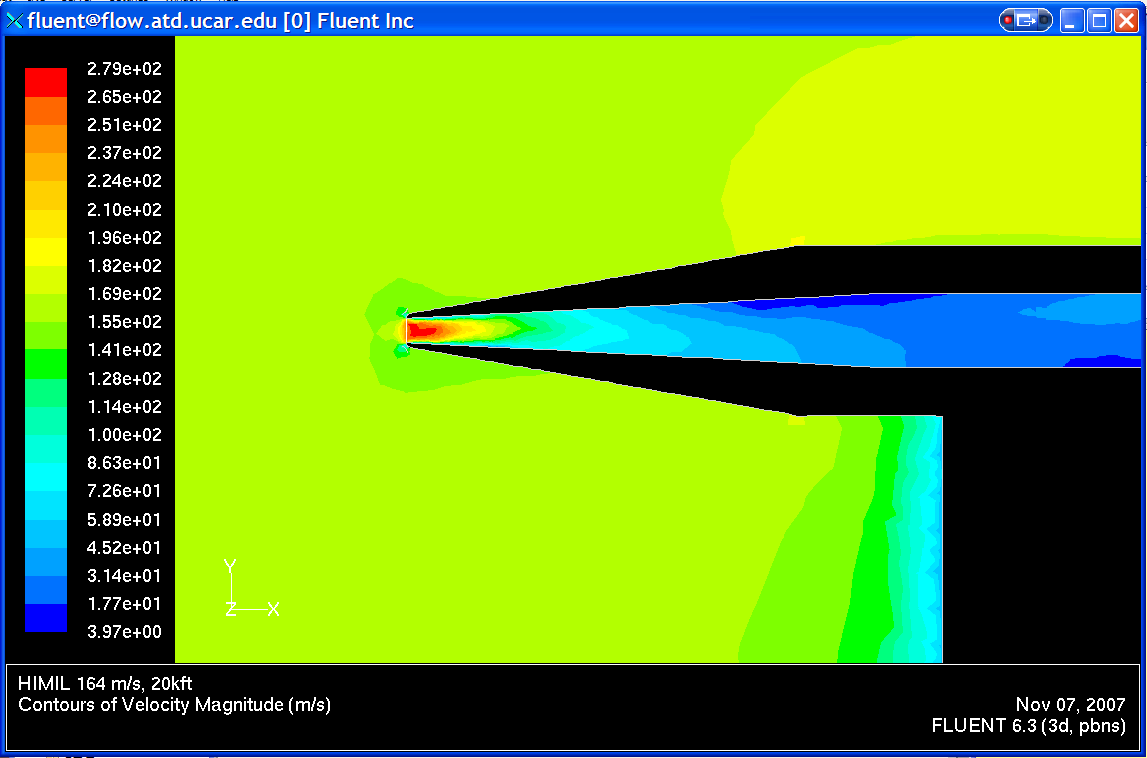
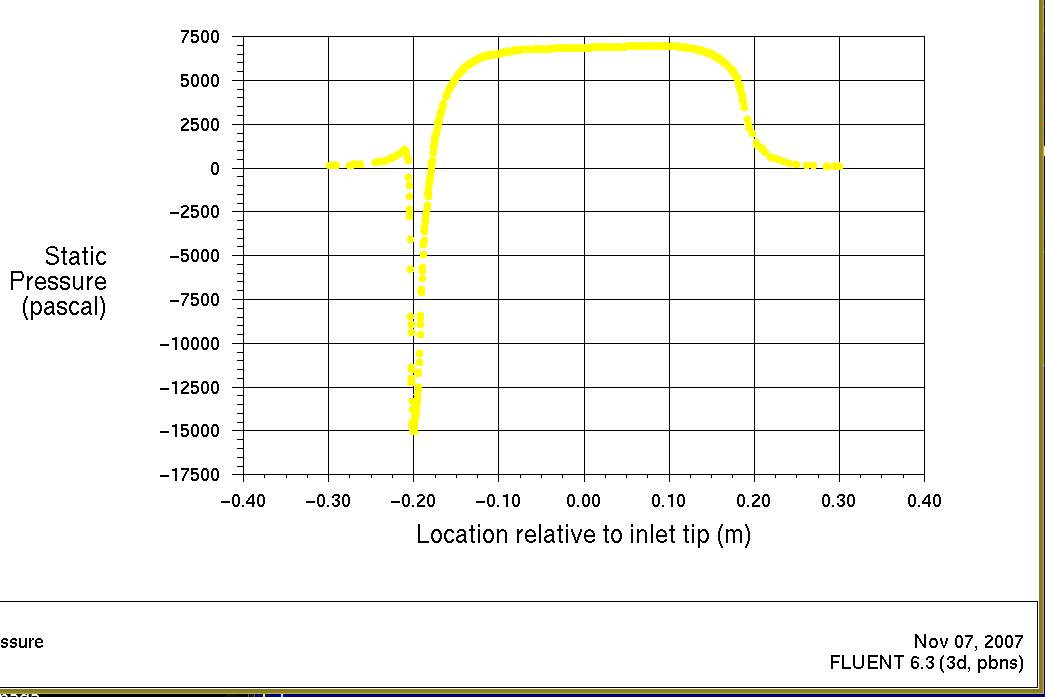
| Flow modeling studies at RAF are investigating the flow and thermodynamic fields for air sampling. Initial results show the interior velocity field when the ambient velocity is 164 m/s (typical for HIAPER at an altitude of 20 kft). Particle trajectory studies are part of this work. |
velocity (click for larger view) velocity at tip
velocity in diffuser pressure along axis