Search
Quick Questions for WE-CAN PIs
| Tell us about WE-CAN and what it is that you're studying? |
The Western Wildfire Experiment for Cloud Chemistry, Aerosol Absorption and Nitrogen (WE-CAN) study aims to better understand the chemistry of wildfire smoke, and is based in Boise, Idaho from 22 July - 31 August 2018. The project is funded by the U.S. National Science Foundation (NSF) and supported by the National Center for Atmospheric Research (NCAR). The project is led by Principal Investigators from Colorado State University, the University of Washington, the University of Colorado at Boulder, the University of Montana, and the University of Wyoming. U.S. Federal Agency collaborators include NOAA and NASA.
Understanding the chemistry in western wildfire smoke has major ramifications for air quality, nutrient cycles, weather, and climate. The main objectives of WE-CAN are to systematically identify and quantify the emissions from western wildfires and to understand how smoke plumes evolve over the first 24-hours after emission.
The team is focused on three sets of scientific questions related to wildfire smoke plumes: 1) reactive nitrogen, 2) particles, and 3) cloud development and chemistry.
| Science Objective | Motivation |
| To increase understanding of the amount and types of reactive nitrogen within smoke plumes. | Reactive nitrogen includes all forms of nitrogen that are biologically, photochemically, and radiatively active within the environment. Reactive nitrogen in wildfire smoke plumes influences air quality as well as how nitrogen is deposited back into the ecosystem. |
| To quantify and understand emissions and evolution of fine particulate matter mass and optical properties in wildfire smoke. | There is no consensus regarding how the amount, composition, and interactions of smoke particles with sunlight change with fire conditions and during transport downwind of a fire. Fine particles from wildfires have significant impact on human health and climate. |
| To identify how wildfire smoke plume particles of different ages affect the behavior and formation of liquid and ice clouds. | Particles from wildfires affect cloud formation and development. Smoke can be scavenged and chemically processed by cloud droplets, thus changing the composition of the smoke particles. |
| What is unique about studying wildfire smoke plumes versus other types of smoke plumes (i.e., factories, smog, etc.)? |
 |
|
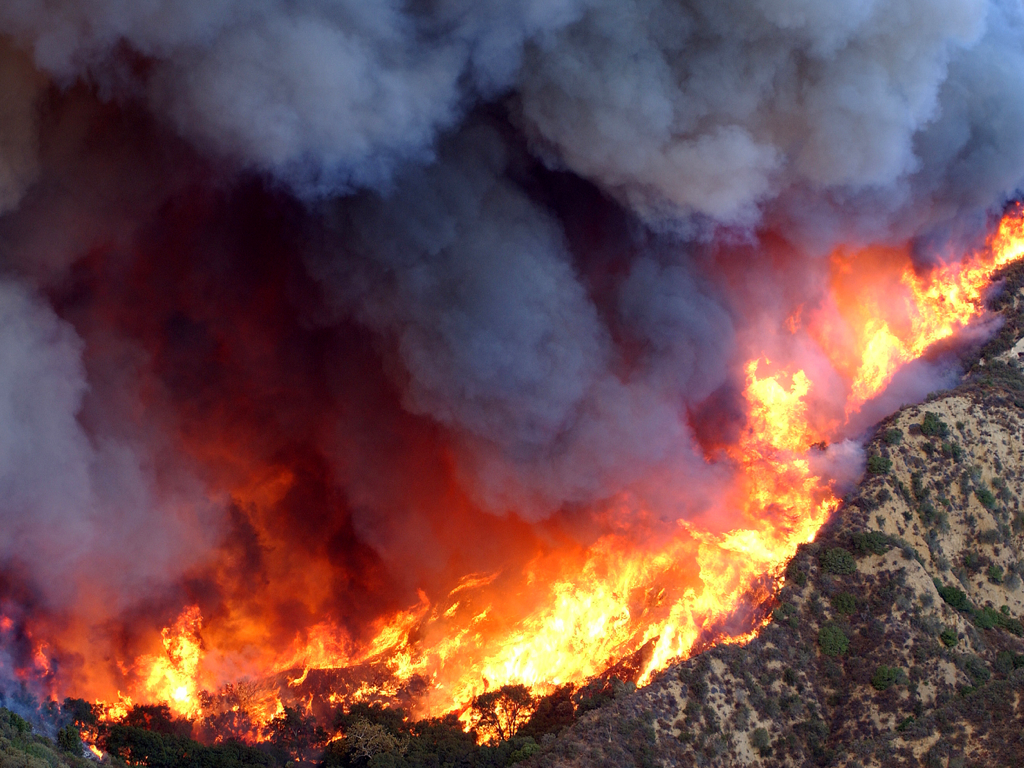
A wildfire charges up a mountain slope, producing thick, black smoke filled with chemicals and aerosols. Click to enlarge image. Image from Wiki Commons.
|
Power plants, major roadways and cities don’t move! Wildfires can range in size and severity. How long they will last and where they will inject smoke into the atmosphere depend on many factors and are therefore difficult to predict. These factors make sampling wildfire smoke, even with a platform as nimble as the NSF/NCAR C-130 challenging. Despite the challenges associated with doing so, studying wildfire smoke is important.
Wildfire occurances in the western U.S. have increased over last three decades, with higher frequency, longer duration, and extended seasons. Climate driven changes in aridity is likely to favor more fires in the western U.S. It is predicted to continue increasing over next half century as a result of warmer climate. While pollution emissions from traditional sources (i.e. vehicles, power production) are expected to decline due to successful regulations, the importance of wildfire smoke as a major source of air pollutants could continue to grow.
| What are the societal benefits of a project such as this? |
Exposure to wildfire smoke has been associated with a suite of adverse health effects, and WE-CAN will document the emissions and evolution of air pollutants in smoke plumes. The WE-CAN observations will also improve our ability to predict storms and rainfall in smoke-filled environments. Finally, smoke particles impact local and global climate and WE-CAN observations will help us better understand the extent of warming and cooling caused by smoke particles. Smoke from wildfires is a global issue, therefore understanding its behavior and impact has great benefit across the globe.
| Tell us more about the importance of studying reactive nitrogen in wildfire smoke plumes? |
 |
|
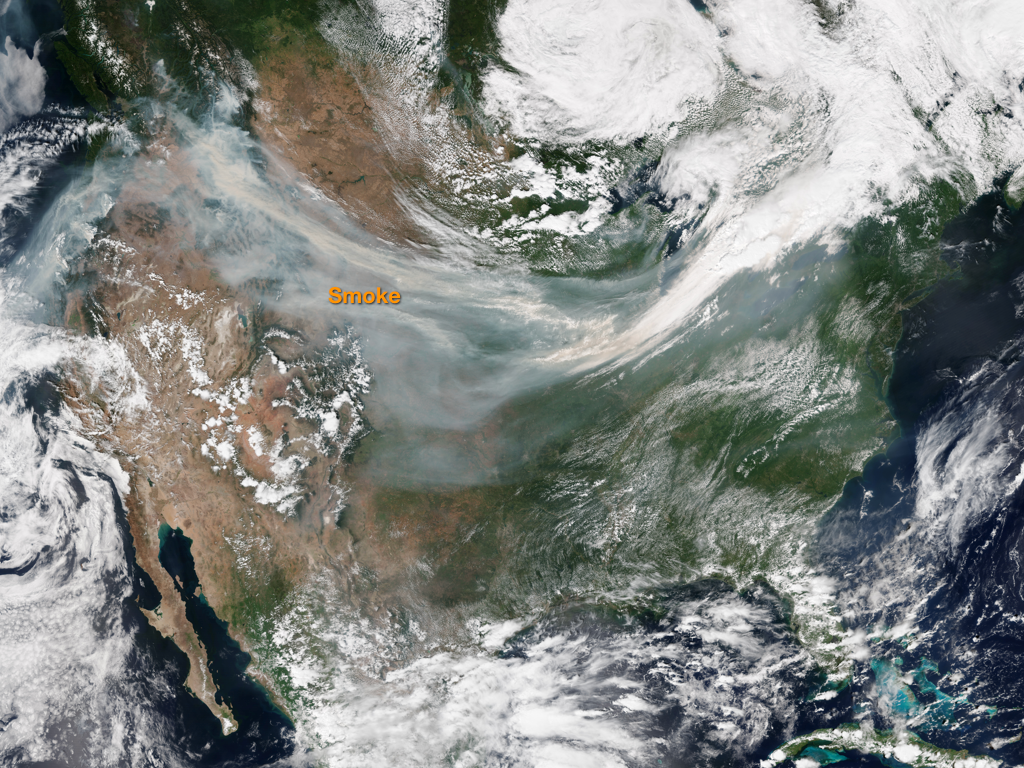
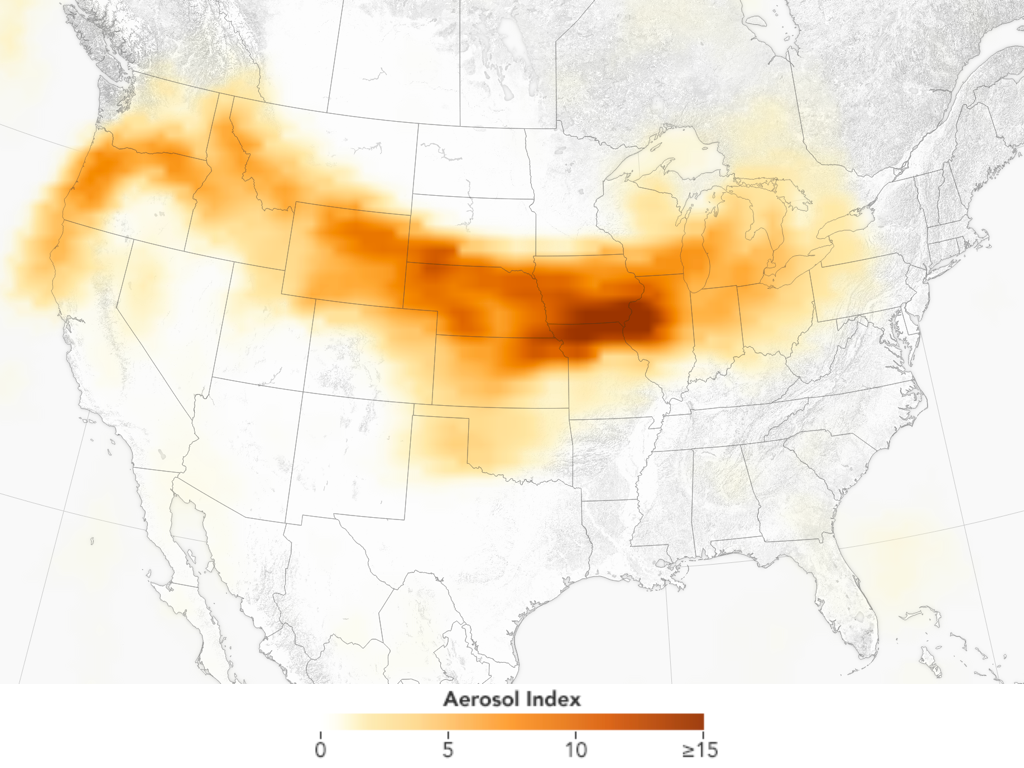
The Ozone Mapper Profiler Suite (OMPS) on Suomi NPP collected data on airborne aerosols as they were swept by winds from west to east across the continental United States. Click to enlarge images. Images by NASA Earth Observatory,y Joshua Stevens and Jesse Allen, using Suomi NPP OMPS data provided courtesy of Colin Seftor (SSAI) and VIIRS data from the Suomi National Polar-orbiting Partnership.
|
The change in characteristics over time and formation of new reactive nitrogen compounds determine the chemical reactions that occur within the plume, as well as those that occur downwind. These changes are key to understanding the amount and eventual form of nitrogen that is returned back to the ecosystem.
Nitrogen emitted from fires in a form that is chemically combined with oxygen (i.e. NOx [NO and NO2]) can contribute to ozone (O3) formation as the plume ages. Better quantifying biomass burning emissions of NOx from fires will become increasingly important for prediction of ozone as human-produced U.S. NOx emissions decrease with increased emission regulations.
NOx is the dominant reactive nitrogen species emitted during flaming combustion and ammonia (NH3) is the dominant reactive nitrogen species emitted during smoldering. There is evidence of considerable amounts of emissions of NH3 from biomass burning. Though there is no consensus regarding how biomass burning NOx emission estimates from North American fuels, we know substantially more about the emissions of NOx than for ammonia or other nitrogen containing species. It is important to understand all forms of reactive nitrogen in smoke because they have different implications for air quality and nitrogen deposition.
| Why is it important to understand the optical properties of particle in smoke plumes? |
Black carbon particles (i.e., soot) are the largest atmospheric absorber of visible light and are thought to be the largest human-caused activity driving warming of the Earth’s climate after carbon dioxide (CO2) and possibly methane (CH4). The largest source of black carbon globally is thought to be wildfires, but wildfires also emit other organic particles with different chemical composition that scatter and absorb light differently than black carbon. The relative importance of absorption versus scattering from these particles remains uncertain. This is important for scientists to resolve because this is a major source of uncertainty in climate models.
| How can smoke from wildfires affect cloud formation? |
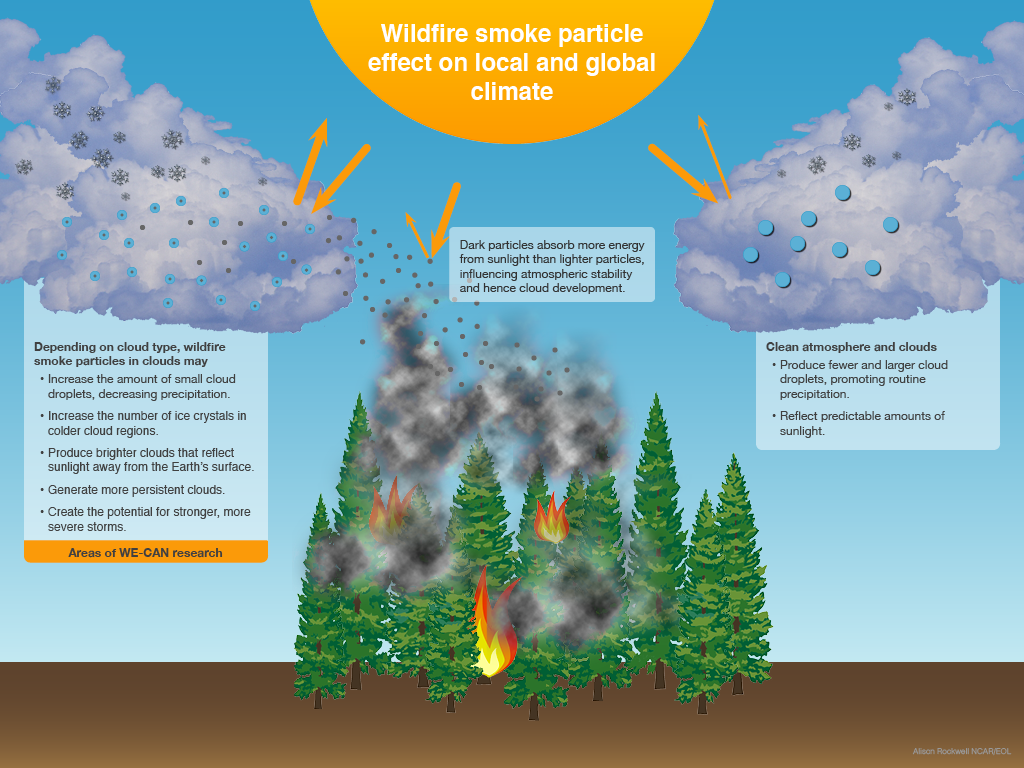 |
|
Click diagram to enlarge.
|
The immense numbers of particles lofted from wildfires will be ingested by developing clouds and storms as the smoke is carried by winds. Depending on atmospheric conditions and the physical and chemical properties of smoke particles, more dense clouds of smaller droplets may form, which are more reflective and persist longer, cooling the regional atmosphere. The smaller droplets may decrease the efficiency of precipitation from shallow clouds and invigorate convection in deeper/colder clouds. At the same time, fires can be large sources of particles on which ice can form, effectively “seeding” the clouds with more ice crystals, potentially resulting in increased precipitation.
| Why did you select Boise, Idaho as the base of operations? |
 |
|
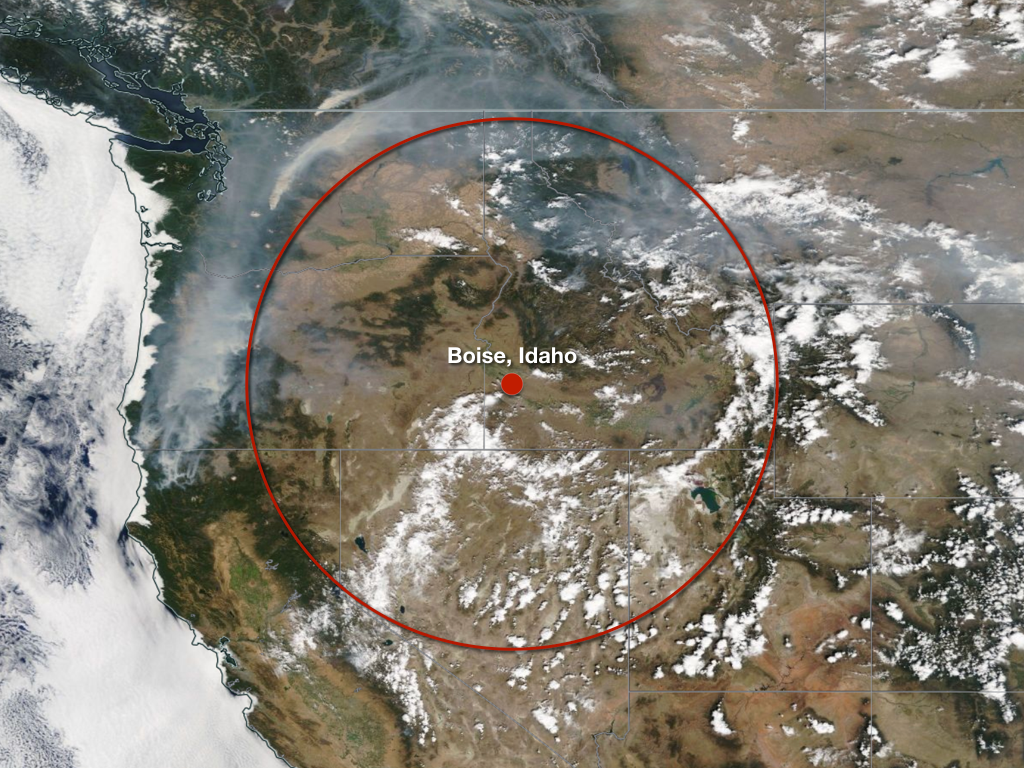
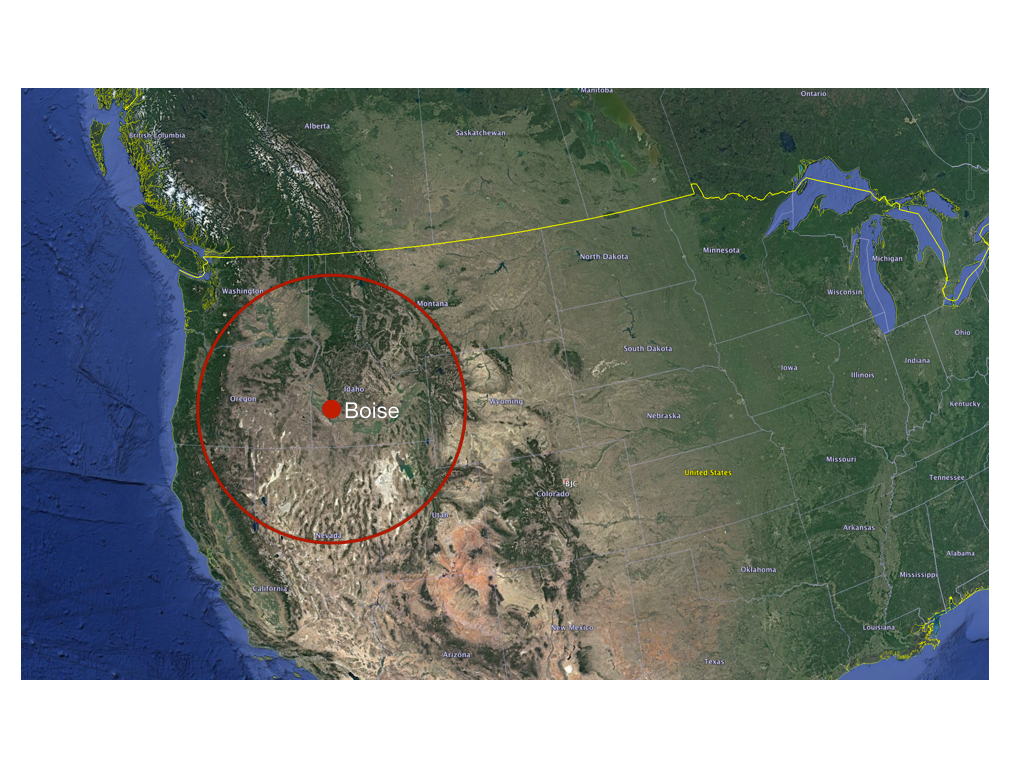
The red circle shows about a 2-hour flight range from Boise, Idaho. Click to enlarge image. Image by NCAR/EOL.
|
Boise, Idaho is the ideal operations base due to its central location to western wildfires. Based on the past occurrence of major wildfires during July and August, we expect sufficient fire activity within a 1-2 hour flight of Boise, ID to sample a variety of fires over the course of a 6-week intensive field mission.
The Boise Airport offers the necessary resources to support the operations of the NSF/NCAR C-130, the main research platform for the project. A runway long enough to support the take-off and landing of a fully loaded C-130 is a top requirement, as well as access to fuel.
| How are data being collected? |
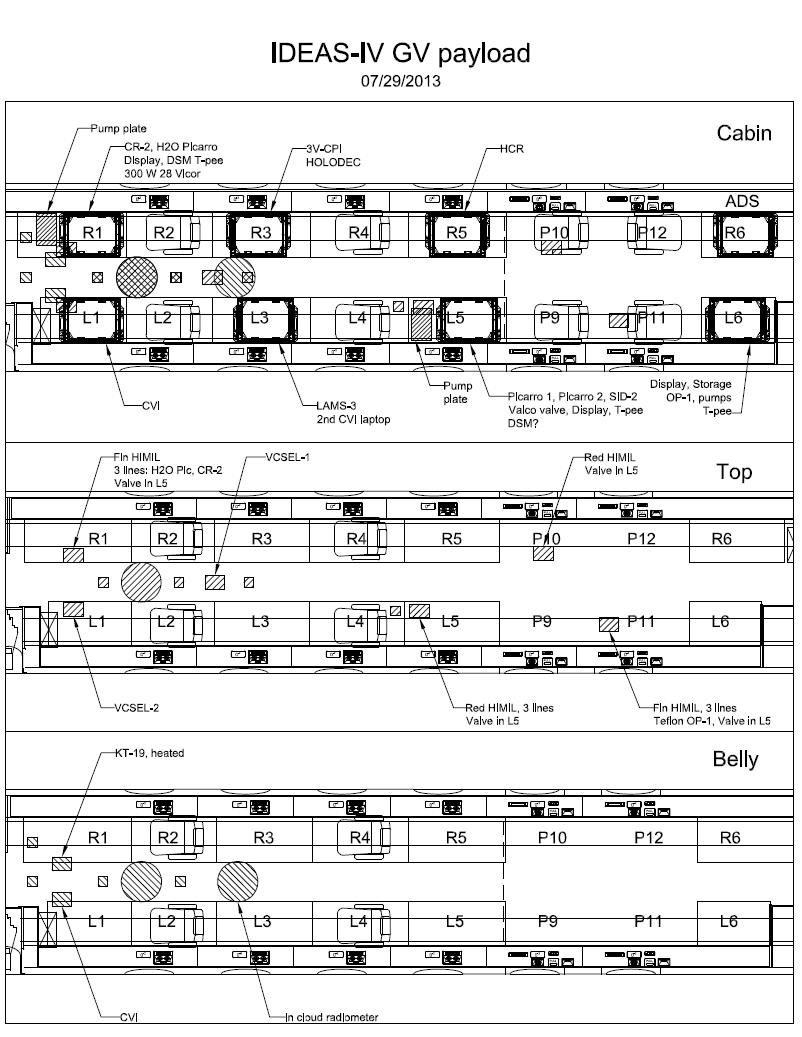
WE-CAN is using the NSF/NCAR C-130 research aircraft, essentially a flying laboratory, to conduct 16-18 research flights within about a 350 mile radius of Boise, Idaho during the six-week project.
The NSF/NCAR C-130 is owned by the Natioanl Science Foundation and managed and operated by specialized staff in the Earth Observing Laboratoy.
The C-130 originally served as a cargo plane, so it is able to carry a large payload of instruments while also having a range of more than 1500 miles and the ability to fly between 1000 – 15,000 feet in altitude. These aspects are important in order to fully characterize the atmospheric chemistry of smoke plumes, because smoke can be injected into the atmosphere at many altitudes, and pollutants in smoke can be transported by the wind over large distances.
As part of WE-CAN, the C-130 is carrying a suite of state-of-the-art instruments designed to measure a range of trace gases, fine particles, cloud microphysics, and standard meteorological parameters such as temperature, radiation, and winds.
» Learn more about the NSF/NCAR C-130

WE-CAN Science Team
| Collaborating Organizations |
|
|
 |
| Collaborating Universities |
 |
 |
 |
 |
 |
| WE-CAN Principal Investigators |
Emily Fischer | Colorado State University
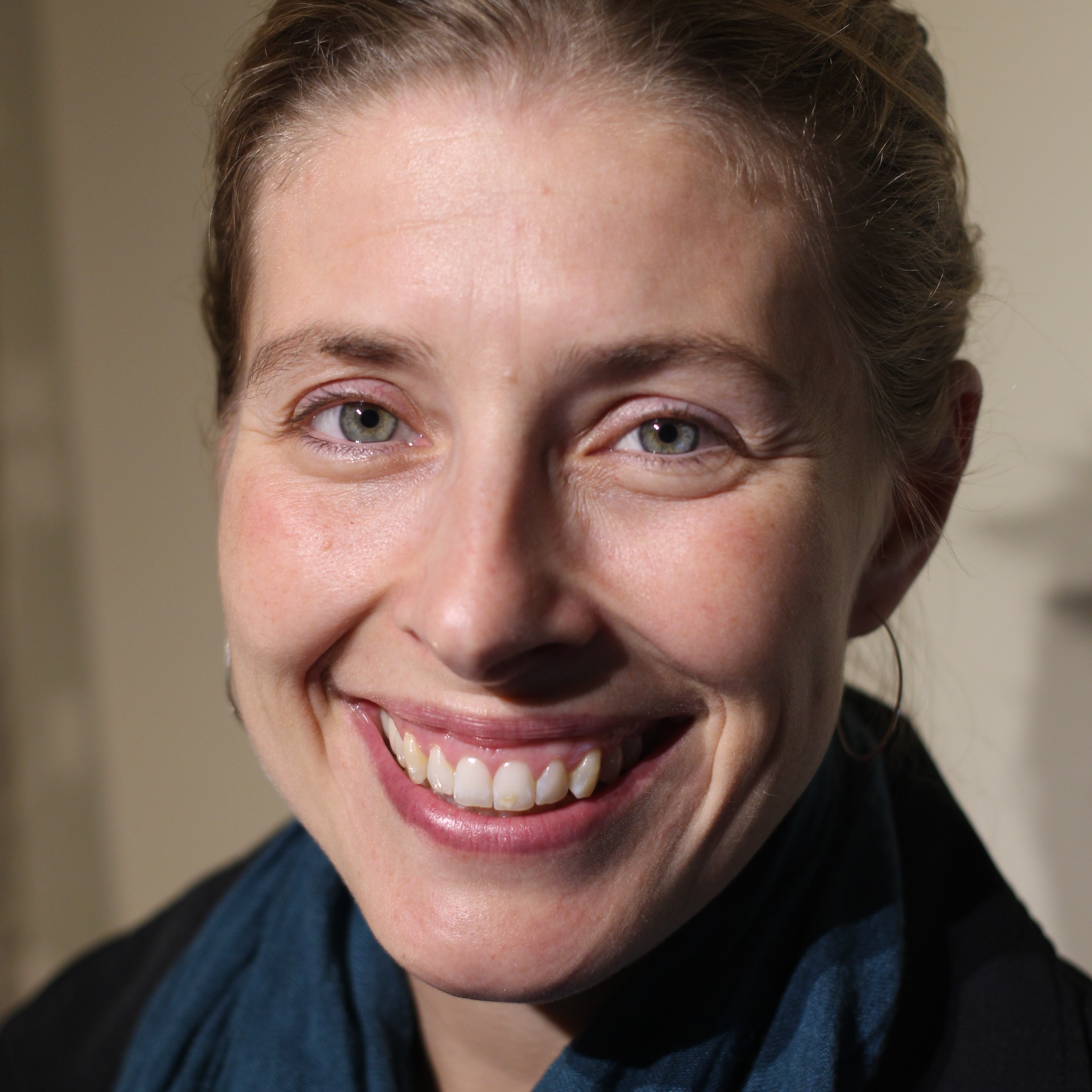 Dr. Emily Fischer is currently an Assistant Professor in the Department of Atmospheric Science at Colorado State University (CSU). Prior to joining the CSU faculty she was a NOAA Climate and Global Change Postdoctoral Fellow and a Harvard University Center for the Environment Postdoctoral Fellow. She studies how air pollutants move in the atmosphere, and how non-traditional pollution sources impact air quality. Her research group is currently focused on the air quality impacts of wildfire smoke and oil and gas development. Dr. Fischer also leads a major national research project on the recruitment and retention of women in the geosciences.
» Read more
Jeffrey Collett Jr. | Colorado State University
 Dr. Collett’s research interests include pollution processing by clouds and fogs, sources and sinks of atmospheric reactive nitrogen, aerosol chemistry, air quality impacts from unconventional oil and gas development, emissions and transformation of smoke from wild and prescribed fires, and aerosol impacts on regional haze and visibility. Dr. Collett is Chair of the Atmospheric Chemistry Committee of the American Meteorological Society and serves on the Board of the International Fog and Dew Association.
» Read more
Paul DeMott | Colorado State University
 Dr. DeMott's interests at CSU lie in the area of aerosol-cloud interactions, particularly ice phase transitions of atmospheric particles for conditions present in various regions of the troposphere, including layer clouds in winter, cumulus clouds, and cirrus clouds. The goals of my research are to understand the way that the physical, chemical, and biological makeup of certain aerosols of natural or anthropogenic origin determine the formation of ice crystals (precursors of precipitation) in clouds and in turn how clouds impact the distribution and nature of ice nucleating particles in the atmosphere. This information is important to the fundamental issue of how aerosols affect climate indirectly by impacting the radiative properties of clouds, latent heating of the atmosphere, and precipitation.
» Read more
Delphine Farmer | Colorado State University
 Dr. Farmer’s research focused on combining instrument development and advanced analytical chemistry, with atmospheric science and physical chemistry, to understand air pollution and climate-relevant processes.
» Read more
Frank Flocke | NCAR Atmospheric Chemistry Observations and Modeling Laboratory
 Dr. Flocke has been working as a scientist in the Atmospheric Chemistry Observations and Modeling (ACOM) Laboratory at the National Center for Atmospheric Research (NCAR) for over 20 years. He came to NCAR from the Institute for Tropospheric Chemistry at Research Center Jülich in Germany after receiving his Ph.D. from the Bergische Universität Wuppertal in 1992.
Using mainly aircraft measurements, Frank has been involved in research in the field of air quality, pollution transport and chemical interactions and transformations of anthropogenic and natural emissions, and how these processes change the chemistry and composition of the troposphere.
» Read more
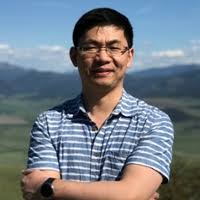
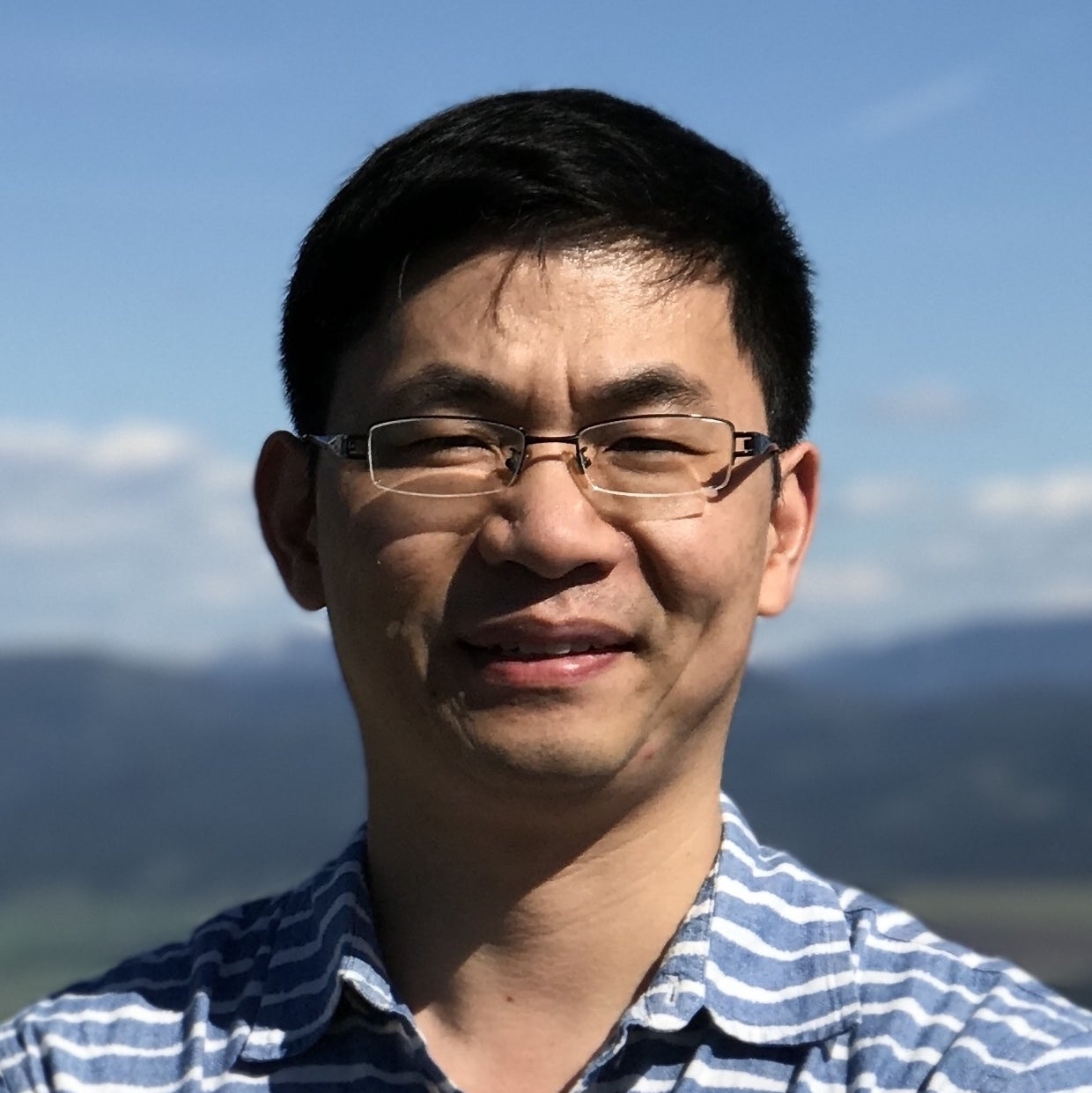 Dr. Hu aims to improve understanding of the chemical composition of the atmosphere, and how it is influenced by human activities and natural processes. We use a combination of field observations and atmospheric modeling to investigate the origins, chemistry, and transport of key air pollutants, and their implications for environment and climate. Current research projects focus on global tropospheric ozone budgets, land-atmosphere exchange of volatile organic compounds, and long term changes of trace gases in the atmosphere.
» Read more
Sonia Kreidenweis | Colorado State University
 Dr. Kreidenweis' research interests are in atmospheric aerosols and their impacts on visibility and climate and together with her group has published over 175 peer-reviewed articles in these subjects. She is a member and has held office in the American Association for Aerosol Research and the American Meteorological Society, and has been elected to Fellow in both. She was named a University Distinguished Professor in 2014.
» Read more
Shane Murphy | University of Wyoming
 The Murphy research group makes novel field measurements with cutting edge instrumentation that advance the science of atmospheric chemistry, aerosols, and climate. Measurements are made from our groups’ mobile laboratory and from airborne platforms. The group has two focus areas: 1.) Absorbing Aerosols and 2.) Methane and volatile organic compound (VOC) Emissions from Energy Development.
» Read more
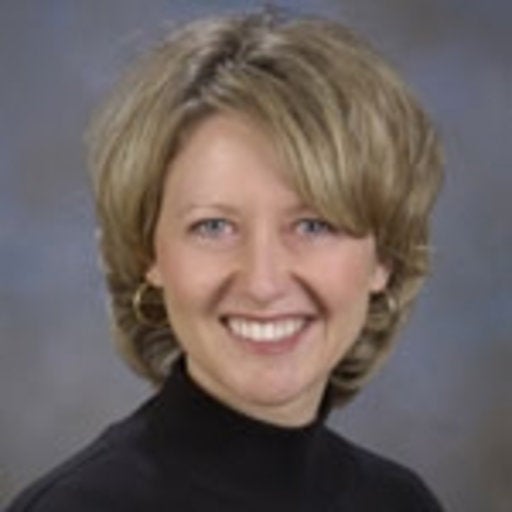
Amy Sullivan | Colorado State University
 Dr. Sullivan has been working with a new, inexpensive, and robust method to measure smoke marker compounds, such as levoglucosan, using high-performance anion-exchange chromatography with pulsed amperometric detection (HPAEC-PAD). This approach offers numerous advantages over traditional methods, including extraction of the filter directly in water and the ability to directly analyze the filter extract for levoglucosan. One of the current applications of this method is on source samples collected at the Fire Science Laboratory in Missoula, MT. This work is being performed in order to generate much needed smoke source profiles that could be used to assess the contribution of wildfires and prescribed fires to the total organic carbon concentrations.
» Read more
Joel Thornton | University of Washington
 Joel Thornton is an atmospheric scientist that studies the sources, transformations, and impacts of atmospheric aerosol particles which affect health, visibility, and climate. A particular focus is to understand the coupling between reactive trace gases, such as nitrogen oxides and volatile organic compounds, and the evolution of aerosol particle size and composition. These couplings give rise to complex responses in aerosol particle distributions to changes in natural or anthropogenic emissions and atmospheric conditions. Professor Thornton's research group uses state of the art airborne instrumentation to measure reactive trace gases that drive aerosol formation and growth.
» Read more
Darin Toohey | University of Colorado Boulder
 Dr. Toohey's research addresses the role of trace gases and aerosols on climate, atmospheric oxidation, and air quality. We prinarily develop instruments for in situ measurements from the ground, balloons, and aircraft. We have participated in more than 50 field campaigns to examine topics such as stratospheric ozone depletion over the Arctic, the impact of rockets on stratospheric chemistry, long-range transport of pollutants, and the role of aerosols in modification of cloud properties. In addition to many sites throughout the continental United States, we have conducted work in Alaska, Hawaii, Antarctica, Norway, Sweden, Spitsbergen, New Zealand, Australia, Mexico, Chile, South Korea, and the U.S. Virgin Islands.
» Read more
Susan van den Heever | Colorado State University
 Dr. van den Heever’s research interests lie in storm microphysical and dynamical processes, which she explores primarily through the use of high-resolution numerical modeling. She is interested in understanding the impacts of aerosol particles on various storm characteristics including updrafts and downdrafts, precipitation amounts and intensity, mixed- and ice phase processes, and storm outflow boundaries. Dr. van den Heever is the Co-Chair of the Global Energy and Water Exchanges (GEWEX) Aerosol Precipitation initiative, and a board member of The International Commission on Clouds and Precipitation and the Aerosol, Cloud, Precipitation and Climate working group.
» Read more




GV Floor Plan