Search
Educational Resources
RETI 2011 : Climate Science Classroom Activity
Several climate science lesson plans were developed by science teachers involved with the Research Experience Teachers Institute (RETI) program, sponsored by University of Northern Colorado and NCAR.
The HIPPO project was used as one base example of real climate science being conducted. Teachers incorporated the HIPPO project into their curriculum as a means for students to gain a better understanding of the scientific process, current research in climate science, and to connect the students with scientists in the field.
Explore the RETI 2011 climate science curriculum projects.
AGU Geophysical Information for Teachers (GIFT) Workshop 2011
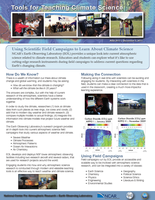
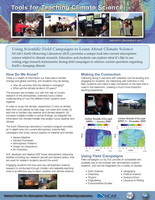
Using Scientific Field Campaigns to Learn About Climate Science
Presented by Alison Rockwell, Vidal Salazar, Becca Hatheway, and Sarah Bruemmer
This workshop provided information about how scientists use large scale field campaigns to collect data about the Earth's atmosphere in order to learn more about climate science. The hands-on activities allow teachers and students to analyze climate data sets and gain a better understanding of how climate models work.
Presentation:
Classroom Activities:
Twenty Questions and Answers About the Ozone Layer : 2010 Update
Ozone QA Download NOAA Earth System Research Laboratory's Twenty Questions and Answers About the Ozone Layer, it's a fabulous addition to any Earth science curriculum.
HIPPO Outreach & Media Events
HIPPO II - Christchurch, New Zealand
November 11, 2009
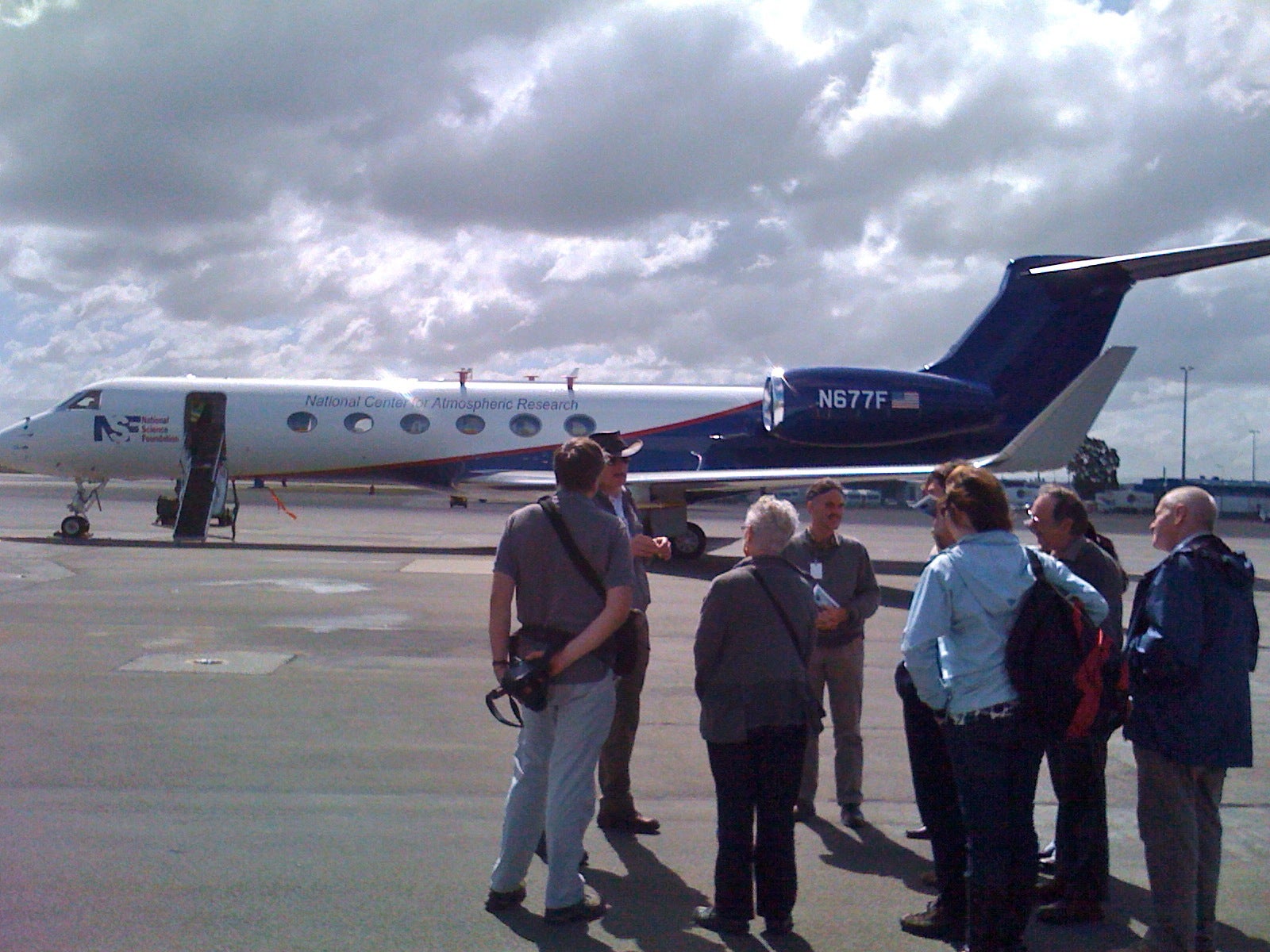
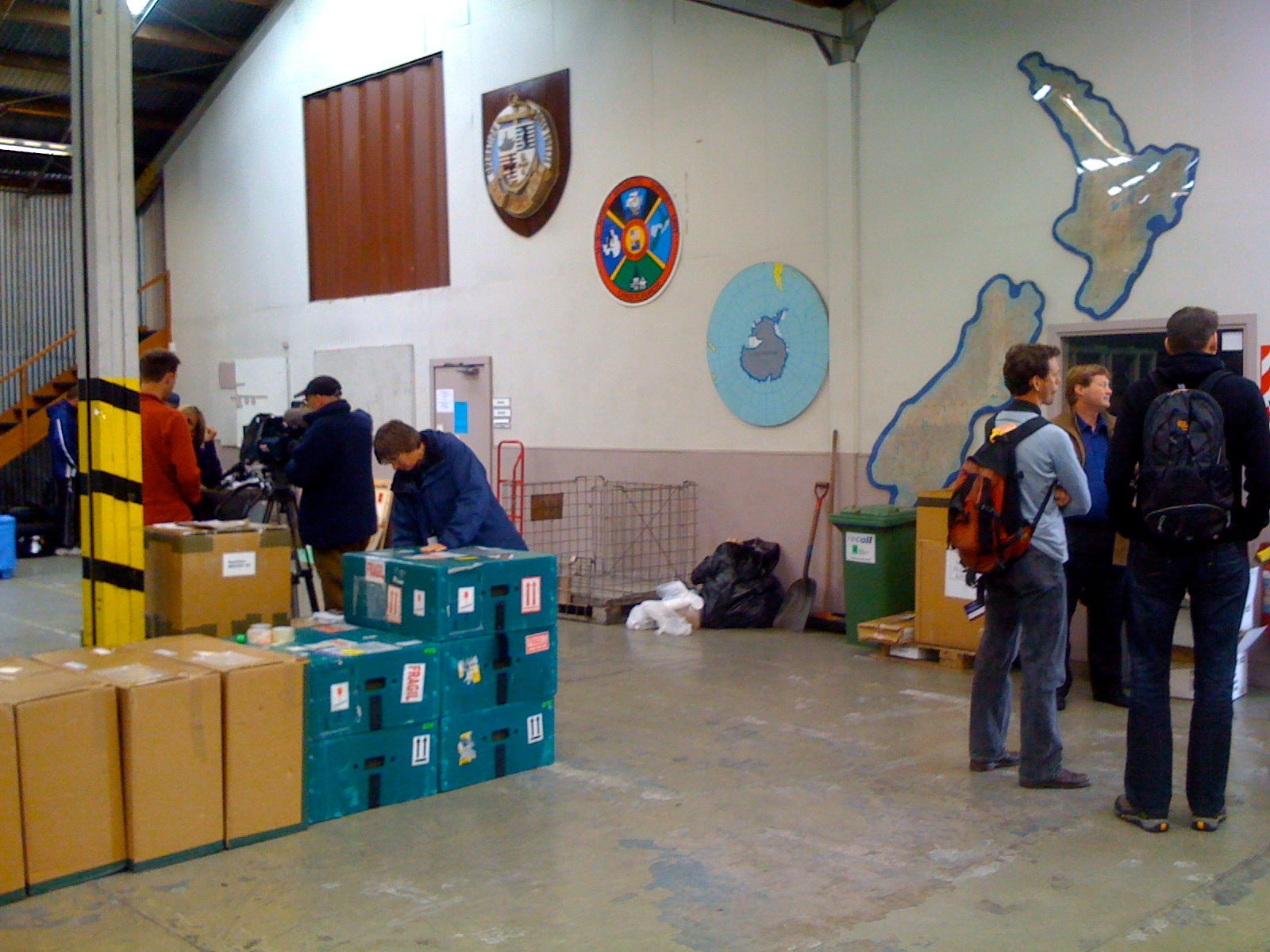
The NSF/NCAR HIAPER Gulfstream V (GV) and the HIPPO project were enthusiastically welcomed to Christchurch, New Zealand by the media and by many related organizations, including the National Institute for Water and Atmospheric Research (NIWA), the University of Canterbury, NSF local representatives and the International Antarctic Center.
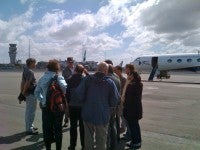
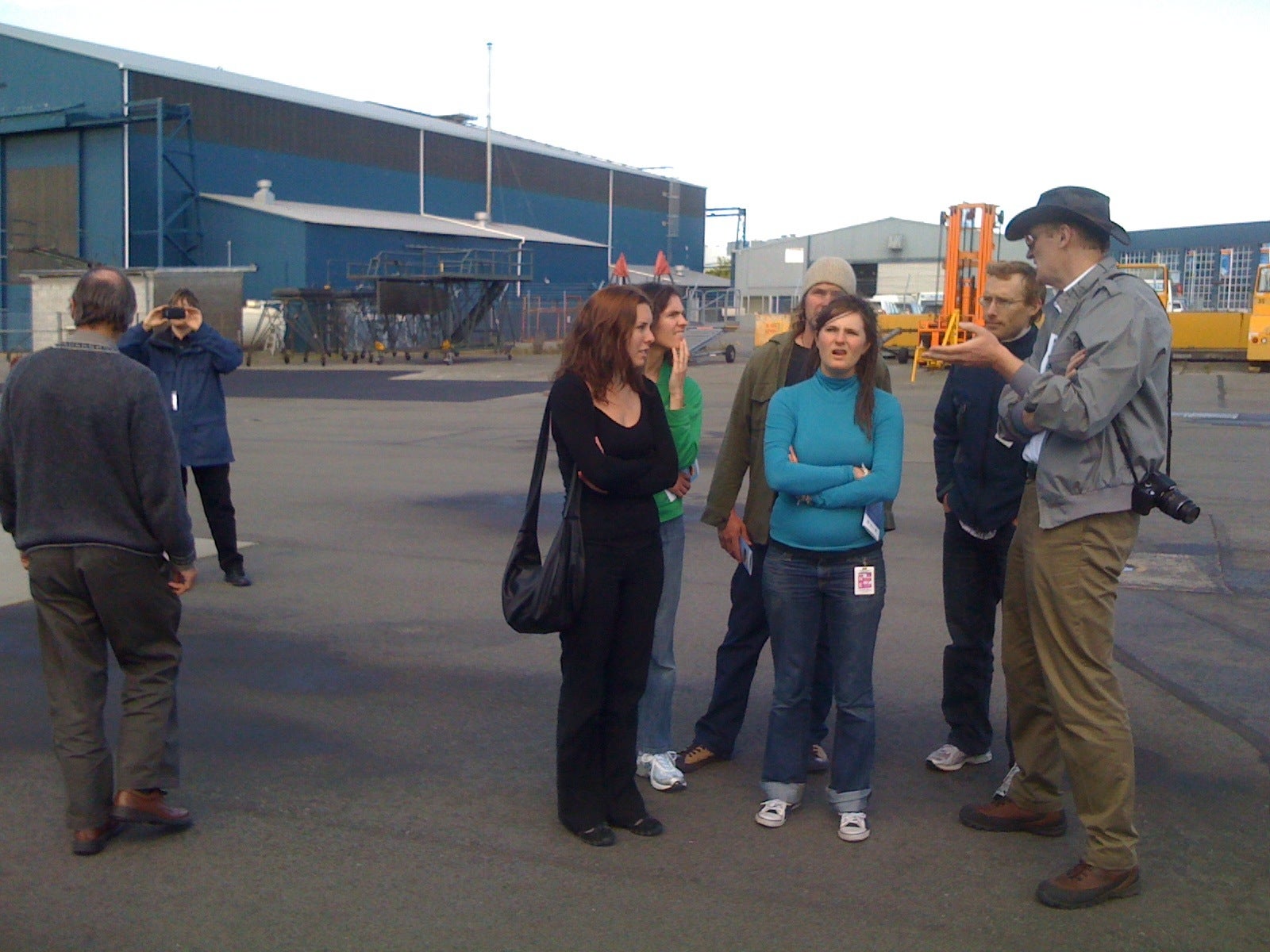
Almost half of the attendees were students from the university's Chemistry and Physics Departments from the University of Canterbury. Additional help from the NIWA Media Advisor was greatly appreciated and brought in many people associated with NIWA, as well as local news and radio stations, and newspapers. The event flier was also sent out to about a dozen local secondary schools, however due to the timing of school vacations, many groups were unable to attend. Visitors from the International Antarctic Center rounded out the guest list.
The media was particularly excited to cover this event due to the fact that the during the inbound flight to Christchurch, HIAPER did a fly-over of NIWA’s Lauder observatory to compare baloon versus airborne measurements. New Zealand's Scoop posted a media statement by NIWA called Is it a bird? a plane? No, it’s a low flying hippo , that did a superb job explaining the science behind HIPPO and how it is supporting related research by NIWA. Other media coverage included New Zealand's Channel 3 (TV3) that put together a fantastic clip called Scientists in Christchurch to sample our atmosphere and aired on their nightly news. TVNZ played a wonderful clip titled US research plane measures gas over Otago. Additionally, the NZ Herald posted an article US jet tests gas levels in sweep of NZ atmosphere that clearly outlines the atmospheric science research that the GV is conducting.
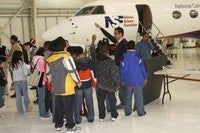
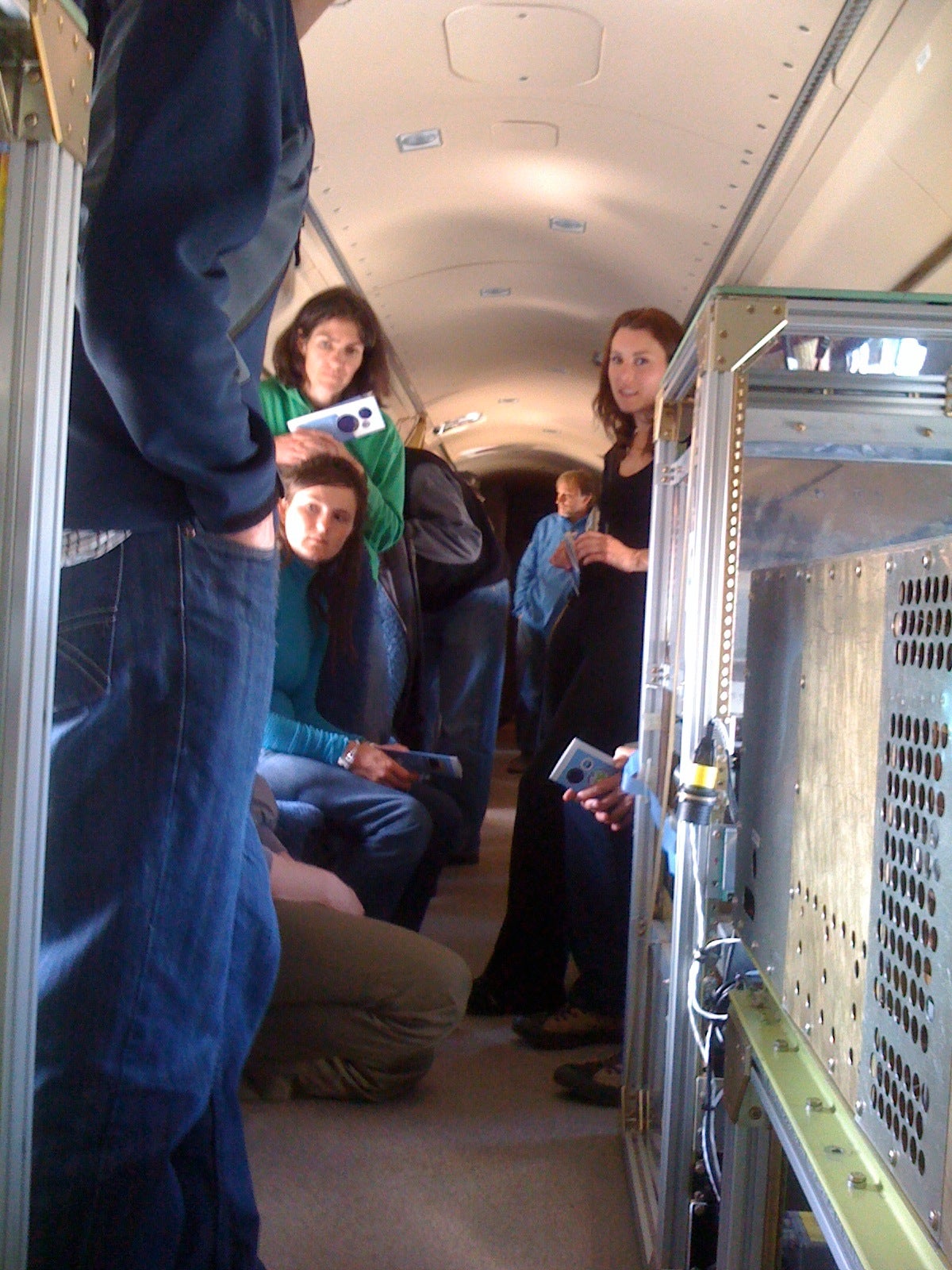
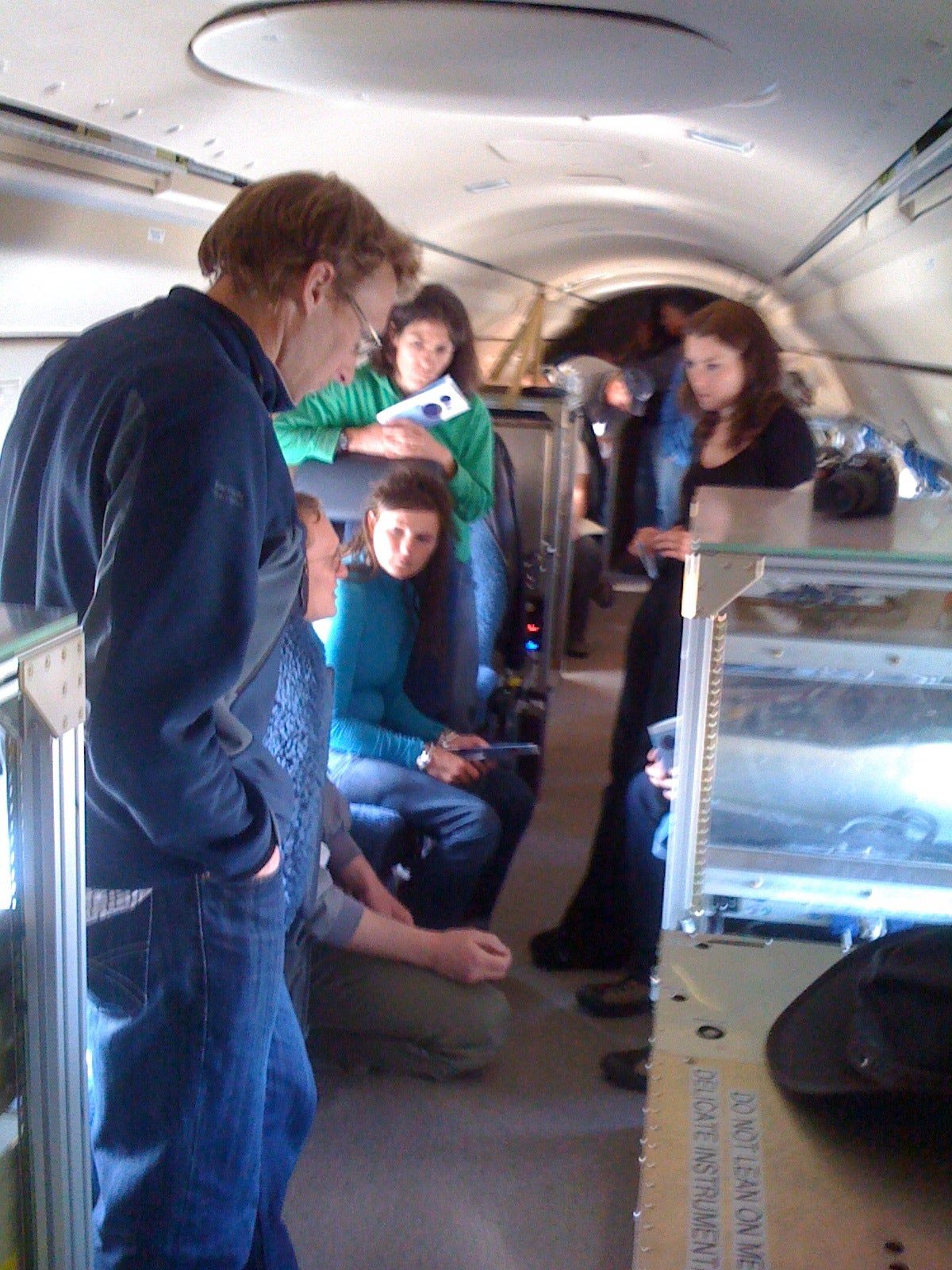
The NSF/NCAR GV was open to the public on Wednesday, November 11, as well as the before mentioned institutions, and we had about 40 visitors, including 15 university students. The NSF/NCAR GV crew, plus a few EOL staff, who flew to New Zealand to assist with ground operations, assisted with the event. The visitors were able to talk one-on-one with the scientists and project coordinators, as well as get on board the NSF/NCAR GV and see the sampling instruments first-hand and learn more about the important science that EOL is supporting.
The HIPPO Outreach Event in Christchurch had a great turnout and received positive feedback from all who were involved. Providing this event for the local community proved to be a wonderful experiential learning opportunity for students and other interested parties to learn more about atmospheric science and aviation research. Thank you to all who participated in this fantastic event!
HIPPO II - Anchorage, AK
November 3, 2009: 2pm-4pm
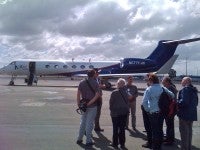
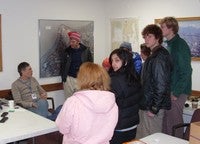
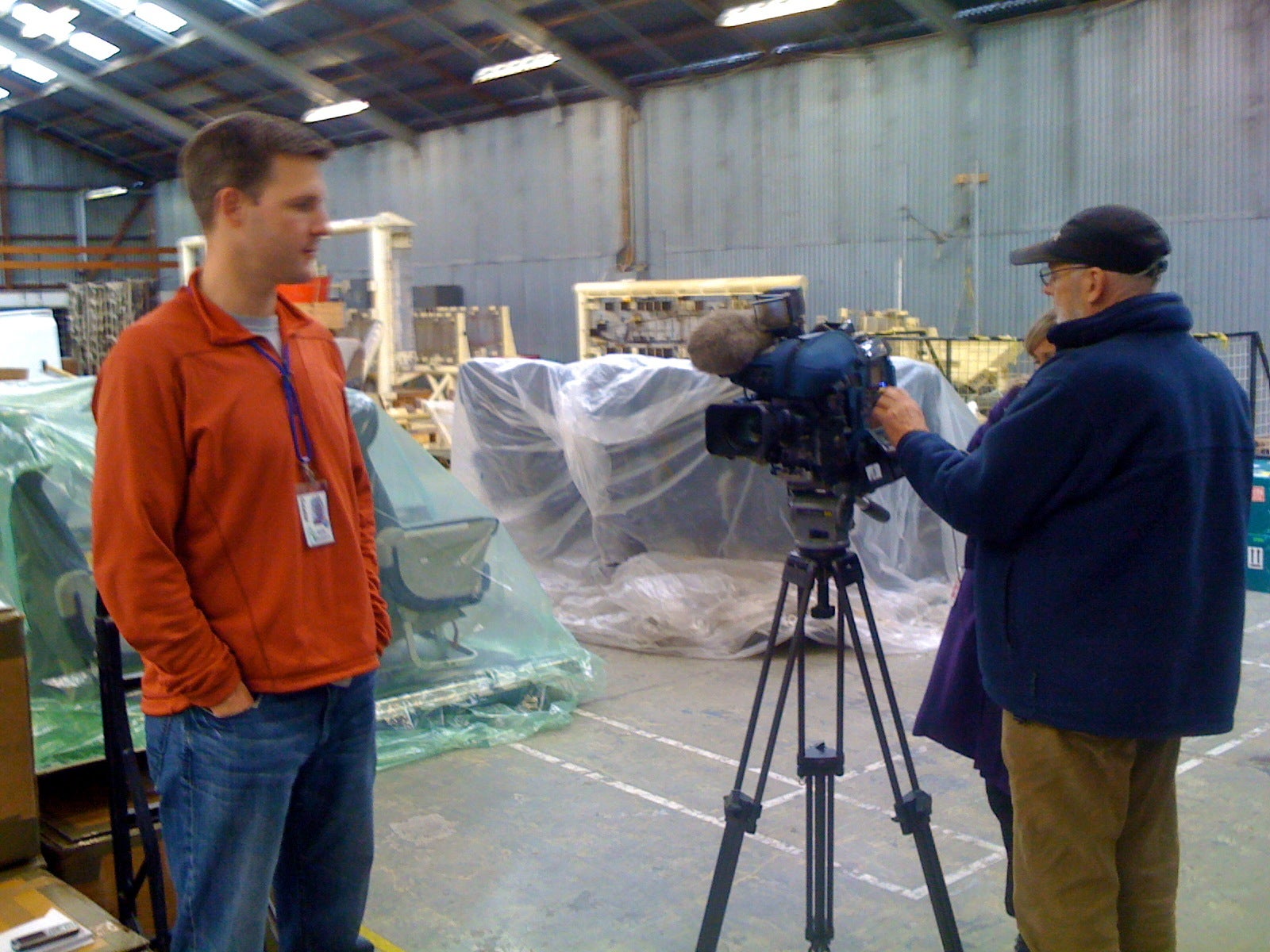
A group of eight students and a professor from Alaska Pacific University’s Environmental Studies program, a news crew from the local NBC station and an independent writer joined the HIPPO outreach event in Anchorage, Alaska. The smaller, more intimate setting allowed for everyone to fully engage in this wonderful learning opportunity and talk one-on-one with the research scientists, project coordinators and the flight crew. NCAR/EOL invited students from many school groups and organizations, however with the delays in HIPPO project and date change of the outreach event made it difficult for all of those who wanted to attend. The attendees were given the opportunity to climb onboard the NSF/NCAR GV and to ask questions about aviation research, instruments and the science EOL is supporting.
The local Anchorage NBC news station, Channel two KTTU, covered the event and posted a news story, Plane Sampling Atmosphere Lands in Anchorage After Arctic Flight, which reports on the research that HIPPO is conducting. They also had a brief piece on the HIPPO project on their Tuesday, November 3, 2009 6:00 Evening News broadcast.
Visitors were encouraged to follow the HIPPO project by going to the website as well as following the research project on Facebook.
The HIPPO Outreach Event in Anchorage had a fewer than expected visitors, however the target audience of the HIPPO project, university level students, was definitely met. We will continue to seek more opportunities to engage university level students in the EOL Field Project Services missions. Providing this event for the local community proved to be a wonderful experiential learning opportunity for students to learn more about atmospheric science and aviation research. Thank you to all who participated in this fantastic event!
HIPPO II - Broomfield, CO
October 21, 2009 : 2pm-4pm
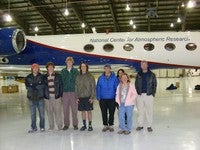
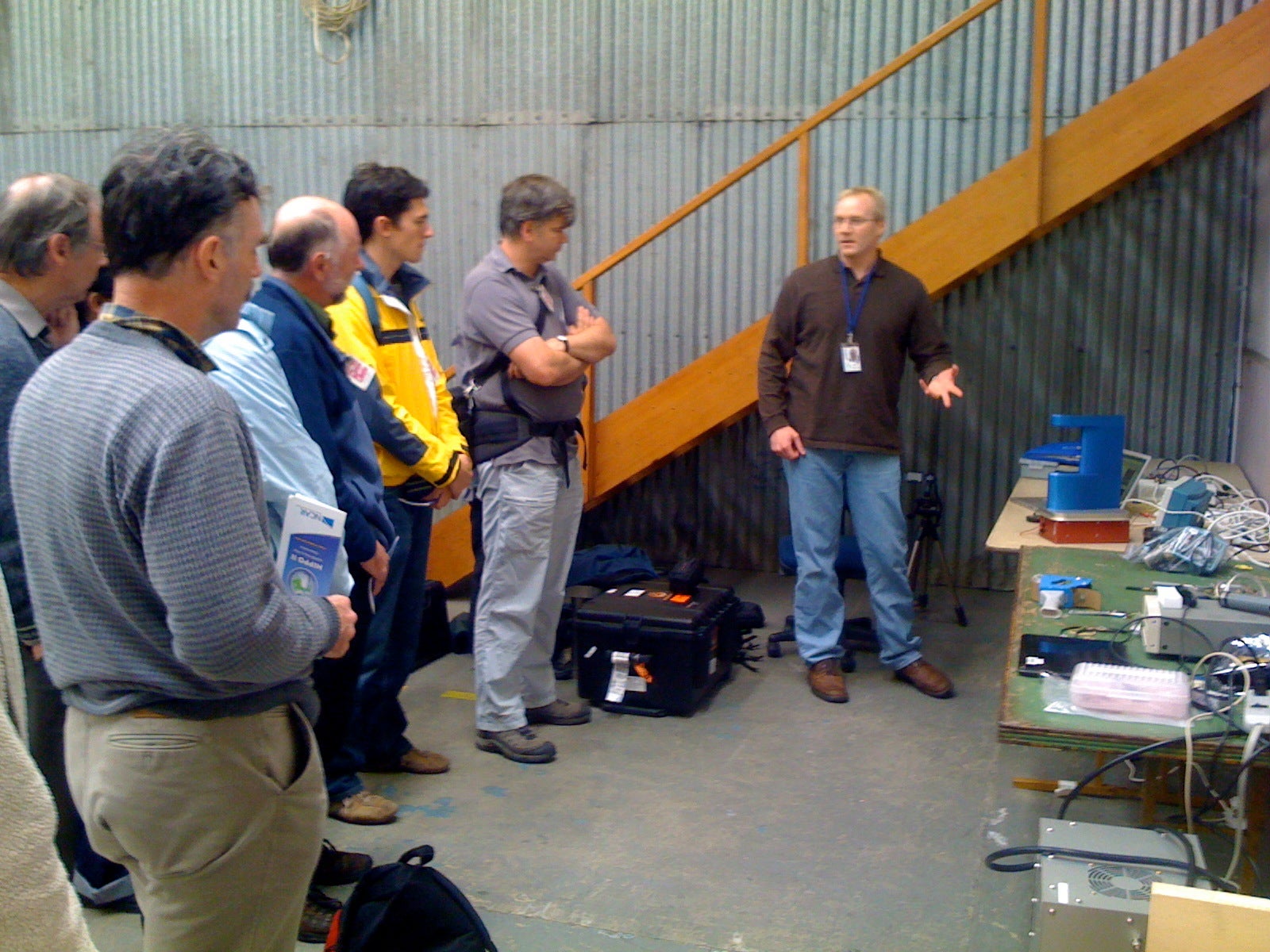
Thank you to all who joined us for a wonderful event on Wednesday, October 22, 2009. The 2-hour open-house and outreach and education event held at NCAR’s Research Aviation Facility (RAF) in Broomfield, CO was a huge success. NCAR/EOL invited students to come and learn more about the HIPPO project. Students were also given the opportunity to climb onboard the NSF/NCAR GV and to ask questions about airplanes, instruments and the science EOL is supporting.
Overall we had about 60 visitors of all ages, the majority of them being kids of elementary school age. Nine NCAR staff assisted with the event. Among the visitors were a group of eleven minority students from Vaughn Elementary School in Aurora, CO, who thoroughly enjoyed themselves and even got to watch the NSF/NCAR C-130 take-off for a test flight for another upcoming field campaign!
EOL staff and many of the HIPPO visiting scientists who were working on the G-V were all very accommodating, patient and understanding during the 2-hour event. They were busy working on their instruments and preparing for another test flight scheduled the following day, as Pavel and other NCAR staff were bringing visitors onto the aircraft in small groups. The E&O group did not interfere with their work.
While visitors were getting tours of both the inside and outside the GV, the Principal Investigators for the HIPPO project, Steve Wofsy and Britt Stephens, gave several interviews about the importance of the research that HIPPO will be conducting in the upcoming weeks, while Vidal Salazar was also interviewed by the Spanish speaking media (Univision and Telemundo) about the importance of bringing minorities into science.
The HIPPO Outreach Event at RAF had a great turnout and received positive feedback from all who were involved. Providing this event for the local community proved to be a wonderful experiential learning opportunity for kids of all ages to learn more about atmospheric science and aviation research. Thank you to all who participated in this fantastic event!
HIPPO Press Release
Pole-to-Pole Flights Provide First Global Census of Greenhouse Gases
Contacts:
David Hosansky, NCAR/UCAR Media Relations
303-497-8611
hosansky@ucar.edu
Rachael Drummond, NCAR/UCAR Media Relations
303-497-8604
rachaeld@ucar.edu
October 31, 2009
BROOMFIELD--A team of scientists is embarking on the second of five missions from the Arctic to the Antarctic aboard an advanced research aircraft, the latest stage in a three-year project to make the most extensive measurements of carbon dioxide and other greenhouse gases to date. The findings will help scientists determine where and when greenhouse gases enter and leave the atmosphere, a critical prerequisite for taking steps to curb global warming.
“This mission is providing us with amazing data about carbon dioxide and other greenhouse gases from all over the world,” says Britton Stephens, a scientist with the National Center for Atmospheric Research (NCAR) and one of the project’s principal investigators. “This will lead to improved predictions about greenhouse gases and enable society to make better decisions about climate change.”
The three-year campaign relies on the powerful capabilities of a specially equipped Gulfstream-V aircraft, owned by the National Science Foundation (NSF) and operated by NCAR. The research jet, known as the High-performance Instrumented Airborne Platform for Environmental Research (HIAPER), has a range of about 7,000 miles (11,000 kilometers), which allows scientists to traverse large regions of the Pacific Ocean without refueling, gathering air samples along the way. Researchers will take the jet from an altitude of 1,000 feet (300 meters) above Earth’s surface up to as high as 47,000 feet (14,000 meters), into the lower stratosphere.
The project, HIAPER Pole-to-Pole Observations (HIPPO), brings together scientists from organizations across the nation, including NCAR, Harvard University, Princeton University, the University of Miami, the Scripps Institution of Oceanography, and the National Oceanic and Atmospheric Administration. NSF and NOAA are funding the project.
-----Building a global picture-----
The flights on the second HIPPO mission will take the research team from Colorado to Alaska and the Arctic Circle, then south across the Pacific Ocean to New Zealand and Antarctica. In all, the jet will travel almost 30,000 miles during the 27-day mission. The first HIPPO mission in January took somewhat similar flight paths. However, by flying at different times of year, the scientists will take a range of seasonal snapshots of concentrations of greenhouse gases.
The research will help answer such questions as why atmospheric levels of methane, a potent greenhouse gas, have tripled since the Industrial Age and are on the rise again after leveling off in the 1990s. Scientists will also analyze other gases and particles in the atmosphere that can affect temperatures by influencing clouds or the amount of solar heat that reaches Earth’s surface.
“We’re flying this wonderful plane all over the globe and taking a slice out of the atmosphere to see what’s in it,” says principal investigator Steven Wofsy of Harvard. “It’s the first time we’ll be able to see the whole globe all at once in great detail. This is giving us a completely new picture of how greenhouse gases are entering the atmosphere and being removed from it, both by natural processes and by humans.”
“This is the first time that anyone has systematically tried to map the distribution of carbon dioxide and related gases from the Arctic to the Antarctic and from the surface to the upper atmosphere,” says Ralph Keeling of Scripps, another principal investigator. “Oceanographers have been doing similar mapping of the ocean for decades. But for the atmosphere, the approach is revolutionary. Each day we get a snapshot of another piece of the world. We are assembling a global picture, flight by flight.”
-----Tracking an invisible gas-----
One of the major challenges in climate science is tracking the approximately 30 billion tons of carbon emitted each year from motor vehicles, factories, deforestation, and other sources. About 40 percent of this invisible gas accumulates in the atmosphere, with the rest apparently being absorbed by oceans and terrestrial ecosystems.
Flying from pole to pole will enable the HIPPO team to study how logging and regrowth in northern boreal forests and tropical rain forests, as well as changes in upper atmospheric winds around Antarctica, are affecting levels of carbon dioxide (CO2) in the atmosphere. The research will also provide a baseline against which to evaluate the success of efforts to curb carbon dioxide emissions and enhance natural CO2 uptake and storage.
This task of balancing the “carbon budget” is gaining urgency as the world moves toward agreements to limit greenhouse gases. Some countries or regions could be rewarded with carbon credits for taking steps such as preserving forests believed to absorb carbon dioxide.
“Huge sums of money could exchange hands based on where the carbon appears to be going,” NCAR’s Stephens says.
-----A flying laboratory-----
Scientists have used ground stations and a few satellites to determine the global average concentration of CO2 concentrations in the atmosphere. But ground stations can be separated by thousands of miles, which hinders their ability to measure CO2 in specific locations. And the limited views from satellites do not enable scientists to make regional measurements.
Many of the instruments aboard HIAPER have been designed especially for the HIPPO project. They will enable scientists to measure CO2 and other gases across the planet in real time, instead of collecting a limited number of samples in flasks and bringing them back to the lab for later analysis.
“Essentially, we have a flying laboratory that we’re taking around the world, sucking in air and doing the measurements as we go,” Stephens says.
“By using the unique capabilities of the research jet, we are gaining tremendous insights into the atmosphere,” says Anne-Marie Schmoltner, who is helping to oversee the project as NSF section head for lower atmosphere research. “Scientists who work with computer models will be busy for years using this information to refine our understanding of atmospheric processes and the role of greenhouse gases.”
The University Corporation for Atmospheric Research manages the National Center for Atmospheric Research under sponsorship by the National Science Foundation. Any opinions, findings and conclusions, or recommendations expressed in this publication are those of the author(s) and do not necessarily reflect the views of the National Science Foundation.
Frequently Asked Questions
- What are the scientific objectives of the proposed project?
- What are the hypotheses and ideas to be tested?
- What previous experiments of similar type have been performed by you or other investigators?
- How will the instruments/platforms requested be used to test the hypotheses and address each of the objectives?
- What results do you expect and what are the limitations?
- How far will the Gulfstream V travel?
- Where will the GV land to refuel and resupply?
- What is the flying altitude range of the GV?
- How is HIPPO supported?
- How can I get the data or collaborate with the PIs?
What are the scientific objectives of the proposed project?
The scientific questions motivating HIPPO focus on (1) understanding the global sources and sinks for CO2, CH4, and other carbon cycle gases, and more broadly (2) determining large-scale rates of tracer transport in the atmosphere. The principal questions are:
- What are the rates for vertical exchange, mixing within a hemisphere, and inter-hemispheric transport, and how do these transport processes interact with source distributions to produce concentration gradients for key species (CO2, CH4, CO, O2) in the carbon cycle and for tracers used to diagnose the carbon cycle (SF6, HCFCs, CO2)? We will address this question by obtaining the first set of high-definition, seasonally resolved, global tracer data, nearly pole-to-pole and surface-to-tropopause, and interpreting the observed tracer distributions and fluxes with the GEOS-CHEM global 3-D chemical transport model and other diagnostic analysis tools.
- How do vertically resolved tracer data provide new constraints on global inverse models for sources and sinks of CO2 and related gases? We will use HIPPO data, plus remote sensing, with the GEOS-CHEM model to estimate global sources and sinks of CO2, CH4, and CO. We will specifically assess the performance of models in the TRANSCOM suite, all of which simulate well the observed concentrations of trace gases at the surface but give very different results above the surface.
- What is the role of the Southern Ocean in global budgets of CO2 and O2? HIPPO data for CO2, the O2:N2 ratio, and the Ar:N2 ratio, will be assessed and inverted using GEOS-CHEM.
- How can we establish tracer “clocks”, and determine age spectra, for air in the Tropical Tropopause Layer and global remote troposphere? We will use our seasonally varying tracers in the tropics above 14 km ( = 46 kft) in a Green’s-function analysis of this question.
- What is the climatology of global pollutants in remote regions of the atmosphere? Data for tracers of biomass burning and industrial pollution will define the climatology of pollution in hitherto unstudied regions of the atmosphere, including the vertical gradients needed to interpret satellite data (e.g. MOPITT, SHCIAMACHY, AURA suite, OCO).
What are the hypotheses and ideas to be tested?
We will quantify the sources of major carbon cycle and greenhouse gases by region at the global scale. Hypotheses to be tested include, as examples:
- Nothern mid-latitude terrestrial ecosystems are a major sink for CO2.
- The Southern Ocean is a major sink for CO2 and the driver for global seasonality of the O2:N2 ratio
- Amazonia is a major source region for CH4, CO, and N2O.
- Upper tropospheric data can be used to falsify models used to derive inverse analysis of the global carbon cycle.
What previous experiments of similar type have been performed by you or other investigators?
Our team has 15 years of experience in airborne measurement of trace gases, including CO2, CO and many other gases. The most recent was the CO2 Boundary Layer Regional Airborne Study (COBRA-Maine) in 2004, “Continental, Landscape, & Ecosystem Scale Fluxes of CO2, CO and Greenhouse Gases (NSF ATM-0221850—Biocomplexity in the Environment [BE] 1/1/03—12/31/06,) PIs: S. C. Wofsy, P. R. Moorcroft, Harvard; CO-Is: D. Hollinger (USFS), J. C. Lin (Harvard; current Colo State), C. Gerbig (Harvard; current MPI Jena), A. Andrews (NOAA ESRL). This program of observations and modeling measured a suite of gases similar to the proposed suite for HIPPO during ~200 hours of flying the Wyoming King Air over northeastern North America.
In 2003 we flew "COBRA-North America" (NASA sponsored) using the UND Citation 2, twice covering the race track pattern from Colorado to Medford, OR, Campbell River BC, Edmonton, AB, Thompson, MB, Fraserdale, ON, Yarmouth, NS, Portsmouth, NH, Teterboro, NJ, Baltimore MD, Indiana, Park Falls, WI, and return to Jeffco. In addition a number of regional flights were flown, again with a similar set of tracers compared to HIPPO.
We have also flown almost 500 hours of measurements on the NASA ER-2, WB-57F, and stratospheric balloons, making very accurate CO2 measurements.
Almost all of the instrumentation on the HIPPO payload inherit the legacies of these flight programs. Thus our sensors are automated, very robust, and require no in-flight operator. In fact, the sensors do not allow in-flight intervention. They are built to exacting specifications for high-perfomance aircraft operations.
None of the previous experiments had global extent, and consequently none could address the scientific questions of HIPPO. These measurement programs were focused on regional and continental scale observations and science questions.
The data will be analyzed using the GEOS-CHEM model, driven by assimilated wind fields: We will undertake extensive data analysis and conduct comprehensive GEOS-CHEM simulations using GEOS-5 meteorological fields for the flight years, focusing on diagnostic and inverse studies.
- Identifying transport model error : The range of species measured by HIPPO provides a unique opportunity to characterize errors in vertical and inter-hemispheric transport. We will identify sources of transport error using a range of methods including the residual relative error (RRE) (difference between model and observations after subtracting mean model bias).
- Observed and Modeled Species Correlations: Concentration correlations between tracer species provide information on common sources/sinks and on atmospheric transport. Our previous analysis of CO2:CO correlations showed the utility of these enhancement ratio constraints in partitioning combustion and biospheric CO2 fluxes in a coupled CO2:CO inverse analysis. Using measured and modeled correlations among the suite of HIPPO tracers, we will identify constraints on common sources and sinks to address the questions of the Northern mid-latitude and Southern Ocean sources and sinks for CO2 and O2.
- We will use correlations among species to help define the error covariance matrices for multiple-species inversions.
- Inverse Analyses for Carbon Cycle Sources and Sinks. We will use GEOS-CHEM in Bayesian synthesis inversions to identify the value added of vertically resolved HIPPO data in constraining CO2 and other tracer fluxes. Our initial analysis will follow TransCom3 methodology [e.g. in selection of source regions, see Gurney et al. 2002; Gurney et al. 2003], enabling comparison of our inversions with the many TransCom inversions, which were restricted to use GLOBALVIEW-CO2 surface data. We plan:
- A ‘Base-Case’ inverse analysis using the GLOBALVIEW-CO2 surface data for the HIPPO period, obtaining estimates of annual mean and monthly fluxes, then
- Inversions that incrementally add constraints from HIPPO data; i.e., (1) vertically resolved CO2 measurements, and (2) other tracer species (e .g., O2/N2, CO).
We will also conduct inversions using different versions of GEOS assimilated meteorology, as well as the GISS GCM transport fields, to assess sensitivity to transport parameterizations. The diverse species measured simultaneously in HIPPO offer new inversion strategies to address carbon cycle issues. For example, partitioning of thermally and biologically driven oceanic CO2 exchange can be addressed using measurements of CO2, O2/N2 and Ar/N2 in a parameter estimation analysis focused on underlying processes. Such questions will be ripe for future efforts.
- We will carry out tagged tracer releases to assess tropospheric age spectra at HIAPER altitudes.
What results do you expect and what are the limitations?
The deliverables for HIPPO will be:
- Publicly available global data sets for CO2, O2:N2 ratio, 13CO2:12CO2, CH4, CO, N2O, CFCs, HFCs, HCFCs, O3, PAN, and other tracers. There will be five or six missions over 2 years spanning the seasonal cycle, covering almost pole-to-pole and the full depth of the troposphere, through the Central Pacific and the East Pacific.
- Tests of global models used to assess the distribution of sources and sinks of CO2 over the globe, using these data.
- Analysis of the seasonal exchange of O2 with the oceans.
- Assessment of CO2 and O2 exchange in the Southern Ocean.
- Analysis of transport and mixing rates in the TTL.
- Green’s functions for the vertical propagation of the seasonal cycle through the middle and upper troposphere.
- New constraints on global sources and sinks for CH4 and other gases.
- Climatology of pollution layers in the global atmosphere.
There will be limitations imposed by our inability to measure more frequently, over a longer period, at more longitudes.
How far will the Gulfstream V travel?
The NSF/NCAR HIAPER GV will travel almost 30,000 miles (48,000 kilometers) during the 27 day mission.
Where will the GV land to refuel and resupply?
The NSF/NCAR HIAPER GV will land in a few pre-arranged locations where it can be refueled, have any needed maintenance performed, get resupplied, as well as give the flight crew and scientists a rest.
The locations are:
- Boulder, Colorado
- Anchorage, Alakska
- Kona, Hawaii
- Nadi, Fiji
- Christchurch, New Zealand
- Rarotonga, Cook Islands
What is the flying altitude range of the GV?
The GV can fly up to altitudes of just over 45,000' and as low as 1000'. This ability to fly at such high and low altitudes is one of the reasons this particular type of aircraft was chosen for atmospheric studies. The range of altitude gives scientists a very broad "view" into the composition of the Earth's atmosphere.
HIPPO is supported by the National Science Foundation (NSF) and its operations are managed by the Earth Observing Laboratory (EOL) of the National Center for Atmospheric Research (NCAR). Its base of operations is EOL's Research Aviation Facility (RAF) at the Rocky Mountain Municipal Airport (RMMA) in Jefferson County, Colorado.
How can I get the data or collaborate with the PIs?
Please contact the HIPPO Principal Investigators if you would like to access the data or inquire about collaborating with them.
- Dr. Steven Wofsy
- Dr. Britton Stephens
Real Time Data
A number of real time products will be available on the ground during research flight. These include the GV track and instrument data for GoogleEarth; a browser version of the instrument data; and data visualization using Aeros.
Real-Time Flight Position in Google Earth
To use, open the file in Google Earth and check the desired checkbox. The GV tracking will be updated automatically once the flight takes off. Real time variables can be viewed by using the most common check boxes, or click on the folder name itself to display the full list of variables available, then select one from the list. Please note that the full list of variables is not updated automatically as we add new variables to the data feed, so re-load the KMZ file every few days to make sure you can see the new variables (if any). Adjust transparency of the overlays as desired. Real time satellite imagery can be enabled by selecting the appropriate checkbox.
Browser Data Access
Selecting variables from the list will display them as a strip chart. The charts will not refresh automatically, so use your browser's "Refresh" function to update the plots. Access data here. The list of variables displayed using this method is dynamic and is automatically updated every flight, so you will be able to see all variables transmitted to the ground during the current flight.
Aeros Software
Use right mouse click in the Aeros window after connecting the RT-GROUND database to add new graphs, variables etc. Download Aeros Software here. Aeros is the most flexible way of viewing the GV data in real time, it allows to zoom in, out, select time intervals to display; it will show data as time series, X-Y plots, 3D flight track and many other ways but is only available for Windows or Linux at this time. Aeros is built around mouse clicks: to start working with Aeros, right-click to add items, right-click on existing items to modify them, etc. We hope you will find Aeros intuitive and easy to use.
Real Time Digital Imagery
The GV is equipped with a forward looking digital camera. The imagery from this camera is used to reconstruct the conditions along the flight track, identify cloud entry times, cloud base altitude etc. We are sending reduced size images to the ground every two minutes and these images are available as they are received from the HIPPO Global field catalog.
Field Catalog
HIPPO Global Field Catalog is a collection of data products, status reports and operation plans. Some real time data may also be available there, including not only the data from the GV (such as real time digital images from the wing mounted camera) but also semi-RT satellite imagery and model products.
You can also see the approximate location of the GV on FlightAware. Please realize that FlightAware does not use any data feeds from the GV and does not always provide an accurate real time position. Also, if the airplane is flying under Visual Flight Rules (VFR), the flight track will not be visible on FlightAware.
Data provided in real time should not be used in any publication as they are preliminary and will change after proper quality control. Even after formal data release these data should only be used with proper acknowledgment of the NSF and project researchers.
Data Set Documentation Guidelines
Data Submission Instructions
HIPPO-1 HIAPER Documentation Summary
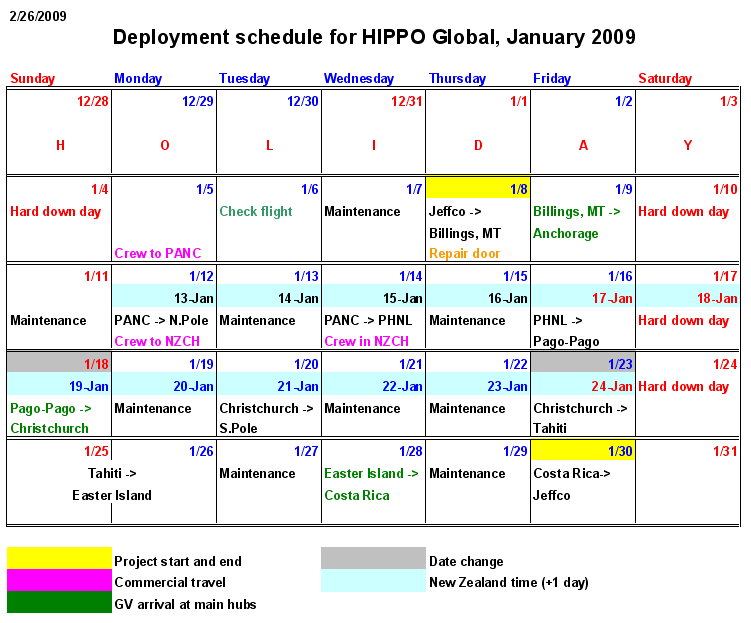
Mission Schedule
This schedule reflects changes that were necessitated by the replacement of the damaged pressure seal on the baggage door of the GV (1/7/2009) and by repairs to the main cabin door latch (1/8/2009). Currently, the entire schedule is shifted back by two days.
Please refer to the Work Schedule for more details. The schedule below is a general plan, and daily changes may occur that are not reflected in the table below. They will eventually make it into the schedule but the table is harder to keep current, so the last minute changes are here.
Data Set Documentation Guidelines
Data Submission Instructions
HIPPO-1 HIAPER Documentation Summary