Search
SOCRATES Public Open House

|
Research Aircraft Saturday, 10 February, 11:00 - 2:00 PM In collaboration with Hobart International Airport |
 Visit the NSF/NCAR HIAPER Gulfstream V Research Aircraft
Free, family-friendly event, no tickets necessary
This “flying laboratory” is involved with an atmospheric research project that is based in Hobart from 15 January - 26 February 2018. The project, called SOCRATES, is studying the interactions between clouds and particles naturally produced by the ocean, such as sea salt and biogenic particles.
You will have the opportunity to:
» Talk with mission scientists, engineers, and other project staff
» Explore the aircraft and instrumentation
» Learn why Tasmania is a unique location for this type of atmospheric science research
Directions to Gate Access at Airport
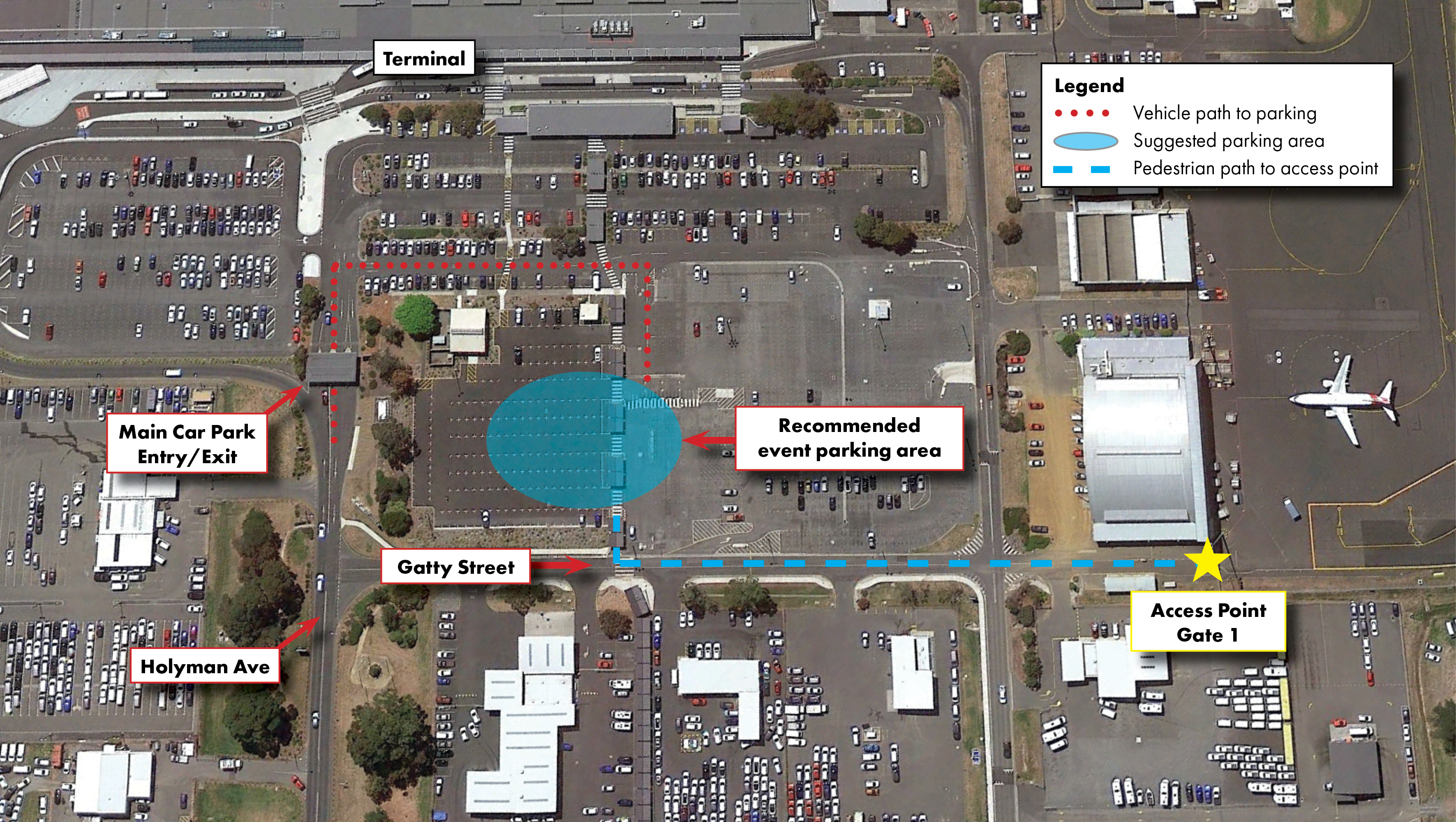
Park in the Hobart Airport Main Car Park. Access into the event is via Emergency Gate 1 at the end of Gatty St. After parking in the Main Car Park, pedestrians should proceed to the access point by walking south along Gatty Street to Gate 1.
One free parking voucher per car park ticket will be issued. For safety reasons, please bring no more than 3 children per adult and closed-toe shoes are required.
For more information about the Public Open House, please email Alison Rockwell.
SOCRATES Media Event
|
Atmospheric Science Research Project Media Event Saturday, 10 February, 10:00-11:00 AM Hobart International Airport |
Visit the NSF/NCAR HIAPER Gulfstream V Research Aircraft
This “flying laboratory” is involved with an atmospheric research project that is based in Hobart from 15 January - 26 February 2018. The project, called SOCRATES, is studying the interactions between clouds and particles naturally produced by the ocean, such as sea salt and biogenic particles.
This hour is reserved for press to interview scientists and other project staff one-on-one, obtain factual information about the research aircraft, as well as have the opportunity to take pictures both inside and outside the aircraft. A public open house event will be from 11:00 - 2:00 pm the same day.
You will have the opportunity to:
» Interview mission scientists, engineers, and other project staff
» Take pictures of the aircraft and instrumentation
» Learn why Tasmania is a unique location for this type of atmospheric science research
Directions to Gate Access at Airport
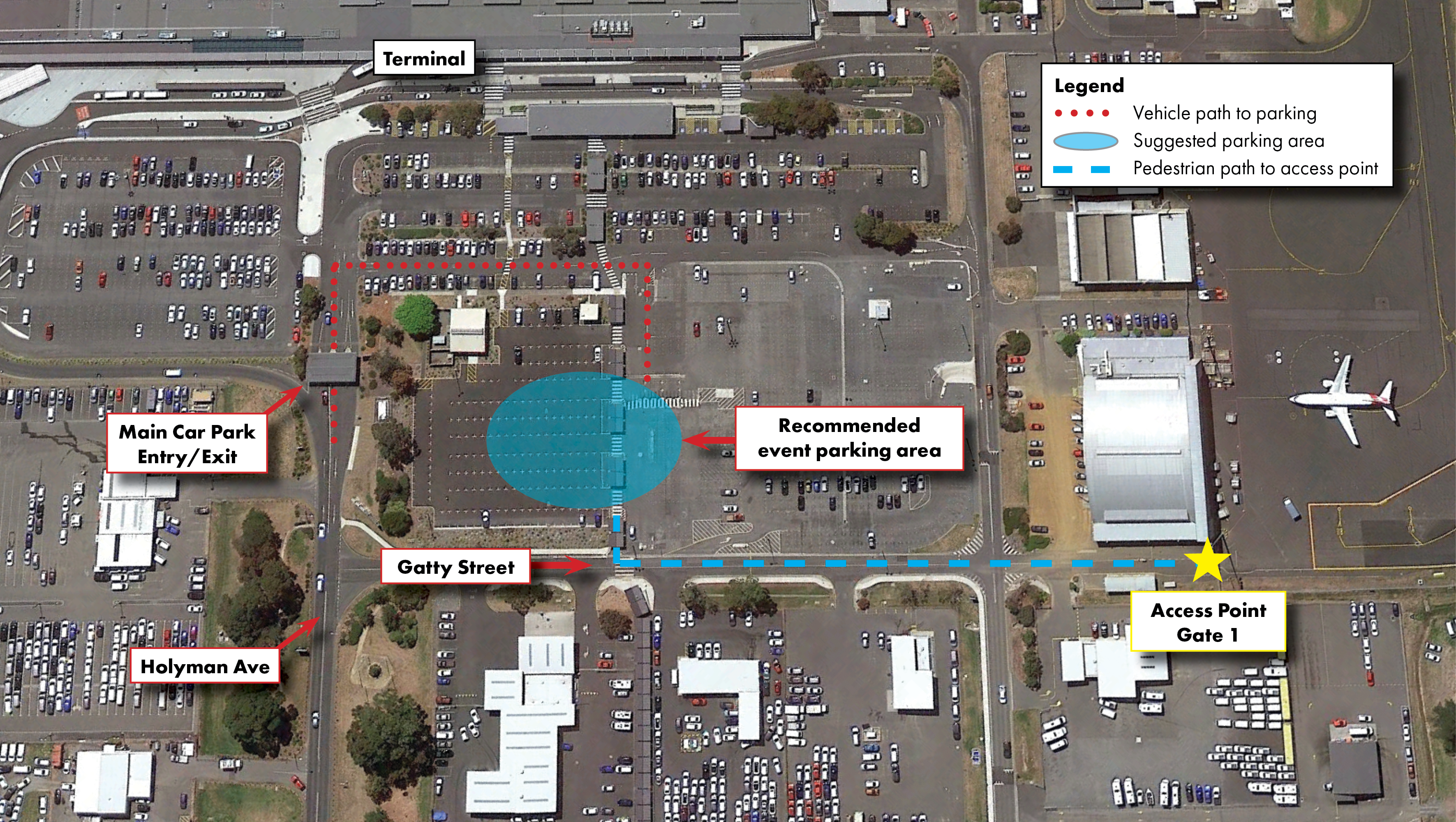
Park in the Hobart Airport Main Car Park. Access into the event is via Emergency Gate 1 at the end of Gatty St. After parking in the Main Car Park, pedestrians should proceed to the access point by walking south along Gatty Street to Gate 1. One free parking voucher per car park ticket will be issued. For safety reasons, closed-toe shoes are required.
Please see the SOCRATES Media Kit for detailed information and stock photos of the NSF/NCAR HIAPER Gulfstream V research aircraft.
For more information about the SOCRATES Media Event, please email Alison Rockwell.
Flight Hours
Education Goals and Activities
The primary goal of the education component of this project was to significantly advance student understanding of weather radar theory and applications through the operation of a cutting-edge research radar and analysis of the data collected. The primary focus of the proposed project was on the 9 students enrolled in Radar Meteorology, a course for upper-level undergraduate majors and graduate students in the University of Nebraska–Lincoln (UNL) Meteorology-Climatology program of the Department of Earth and Atmospheric Sciences. UNDEO 5 achieved the primary education goal through the following. Students in Radar Meteorology,
- Identified a question that could be answered with data collected by the DOW during the project.
- Developed an experiment design using the DOW to collect data necessary for his/her (their) research project.
- Crafted an abstract that described the questions and hypotheses and proposed the experiment design to address them.
- Presented their proposed projects to the class.
- Were trained by Alycia Gilliland (CSWR) to operate the DOW.
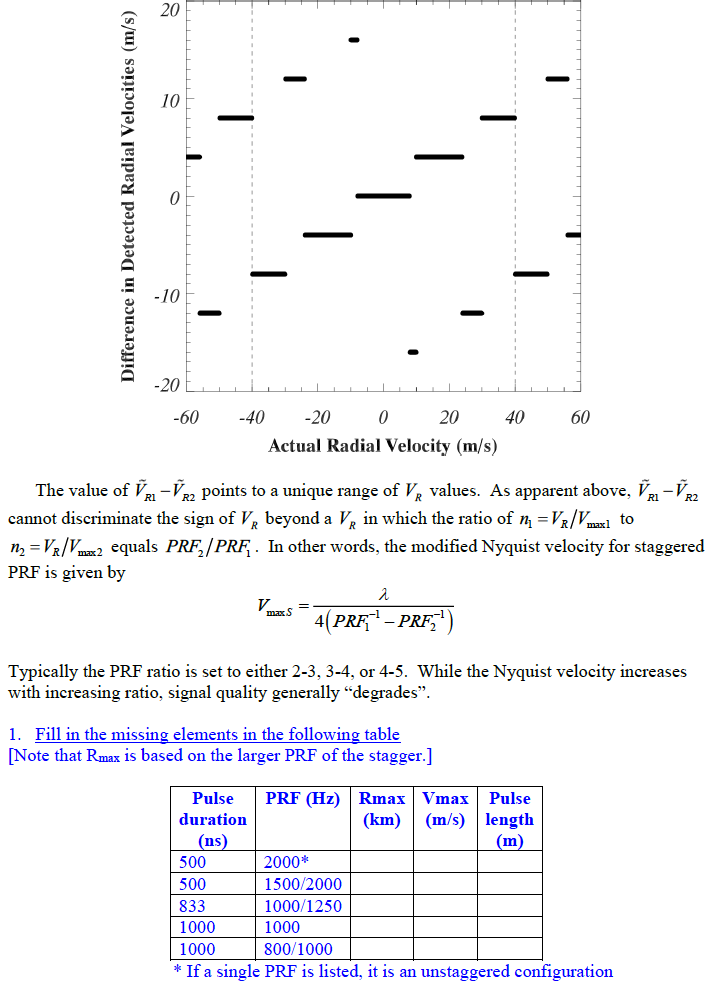
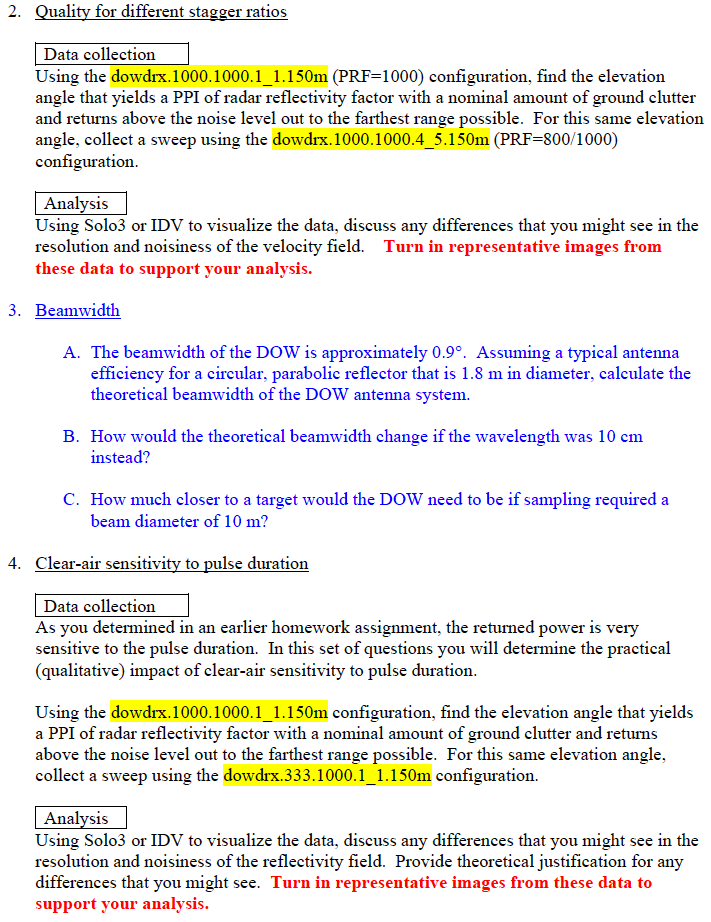
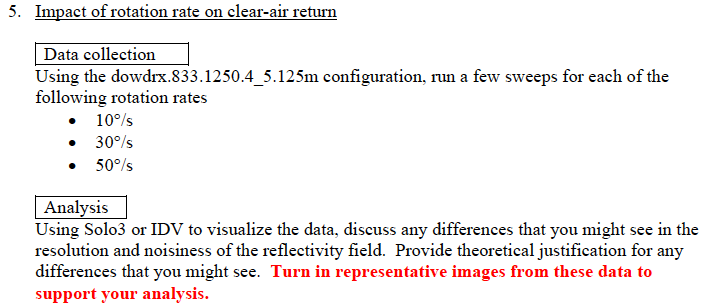
- Completed a “lab” exercise that used the DOW to explore fundamental concepts in radar theory.
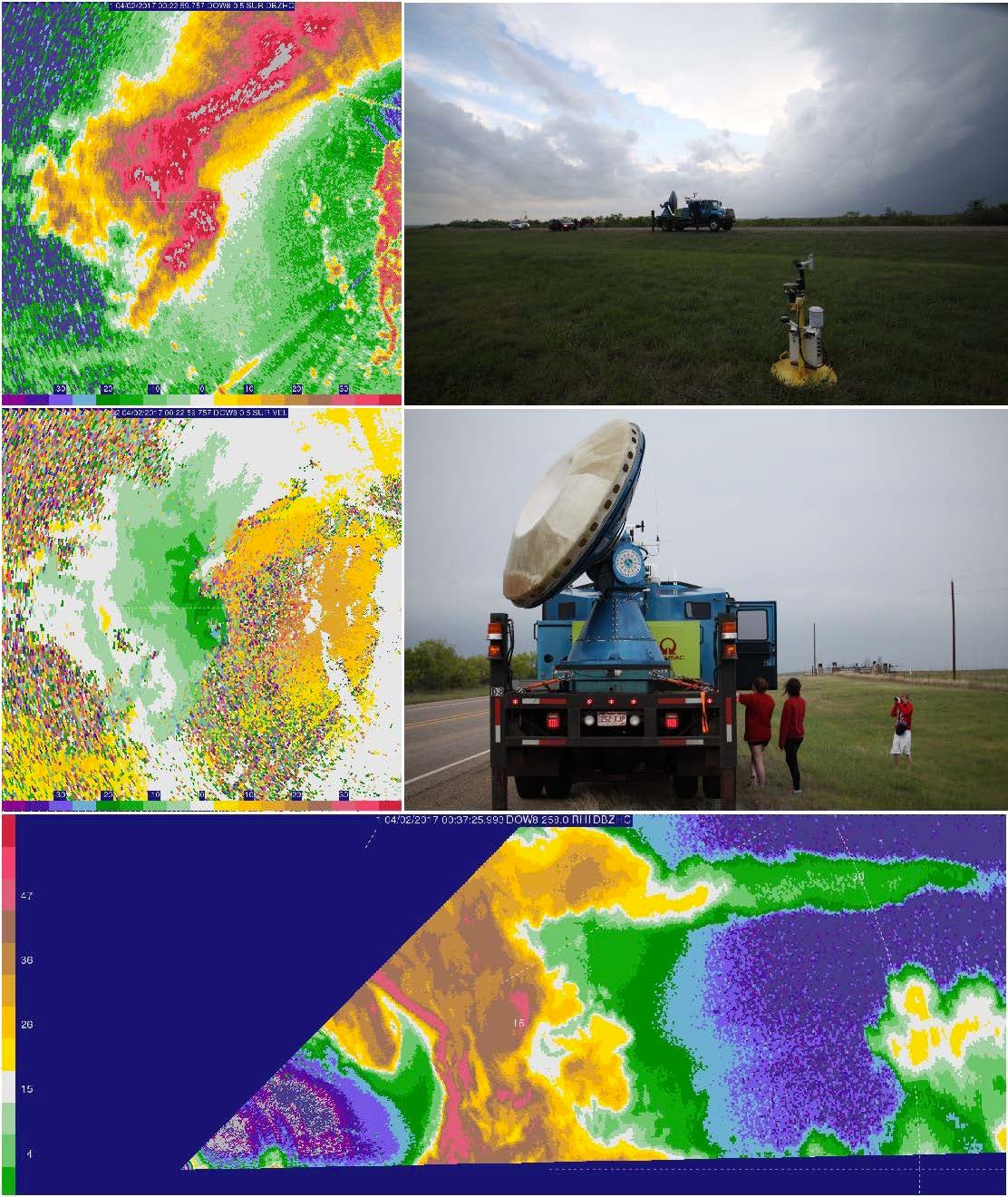
- Operated the DOW during the primary field deployment near Brady, TX on 1 April.
- Processed and analyzed the data collected
- Presented a brief description of their use of the scientific method to students in the general-education Weather and Climate course.
- Synthesized their results into final term papers.
Individual graduate students and undergraduates in small groups were tasked with developing research projects that dealt with questions/hypotheses related to airmass boundaries and/or thunderstorms; meteorological phenomena that are ubiquitous in the central and southern plains in early April. Students were given the freedom to determine the specific focus of their project but all projects were vetted by Dr. Houston in his review of their project abstracts, submitted 2 weeks prior to the DOW’s arrival on campus. Research topics were generally focused on basic concepts in radar meteorology. This simplicity was necessary for students to complete the work in the short time following the IOPs. The list of the 2017 student project topics follows:
- Thunderstorm Outflow Boundary and Density Current Sensitivity to a Mobile Doppler Radar Vertical VAD Profile
- Characteristics of the Gust Front Nose
- Velocity Structures in Cold Pool Heads
- Impact of Proposed Cottonwood Wind I Project on WSR-88D Radar Products: An Observational Study
- Verification of Thunderstorm Outflow Structure Modeling using X-band Radar and Surface Observations
After receiving feedback on their abstracts, students presented their projects to the class in 5-minute oral presentations. Dr. Houston then developed deployment and scanning strategies that would yield data that could best satisfy every project objective. These strategies were disseminated to the class and adjustments were made based on student feedback.
DOW-8 arrived on campus on 26 March and the training for DOW operations commenced on Monday the 27th. The training was administered by Alycia Gilliand, CSWR Technician. Every student in Radar Meteorology was trained to operate the radar. The training covered basic DOW operation including powering up the radar; scheduling, configuring, and visualizing radar scans; and powering down the radar.
Two IOPs took place during UNDEO 5 (Table 2). Radar operations during the deployments were performed by the students working in shifts.

IOP-1 (Figure 1) took place northwest of Brady, TX (~50 mi east of San Angelo, TX) and focused on a supercell and attendant gust front. The IOP consisted of two deployments both of which used shallow surveillance sweeps, large angle surveillance sweeps for VAD calculations, and RHIs. The first deployment was in the path of the supercell and involved ~30 min of data collection. The second deployment was south of the supercell and involved 74 min of data collection. In-situ near-surface observations of temperature, moisture, pressure, and wind were also collected by one of UNL’s Integrated Mesonet and Tracker (IMeT) vehicles.
IOP-2 took place the following week near the Eclipse Wind Farm in Guthrie County, IA. Three deployments were executed and involved sector scans across the wind farm.
A second goal of the education component of UNDEO 5 was to enhance understanding of weather radars amongst non-major undergraduate students enrolled in the University’s Weather and Climate course, a general-education course in the Meteorology-Climatology program. This was achieved through the development and administration of mini-lecture and in-class-exercise that …basic knowledge of weather radars and highlights two concepts: ground clutter vs. clear-air returns and the differences between mobile research radar and surveillance radars. Both the mini-lecture and in-class-exercise utilized visualizations of data collected during UNDEO 5.
The third goal for the education component was to promote the scientific literacy of non-major undergraduate students enrolled in Weather and Climate while piloting a program that will be expanded to general-education meteorology courses at local colleges including Doane University and Nebraska Wesleyan University in future UNDEO projects. Improved scientific literacy was facilitated through exposure to the methods adopted by Radar Meteorology students in executing their micro research projects. Each Radar Meteorology student/group was tasked to present a 5-minute general-education-level talk to the Weather and Climate students. They were allotted two content slides: in the first slide, students were asked to demonstrate how they used their experiment to test their hypothesis; in the second slide the students were asked to teach a basic concept in radar meteorology that incorporates results from, or techniques used in, their micro research project.
To maximize the engagement of the Weather and Climate students during the presentations, they were asked to vote for the micro research project that did the best job of connecting experiment design to hypotheses. The Radar Meteorology student with the winning project received 1 bonus point on his final project grade.
Outreach
The goals of the outreach component of UNDEO 5 were to 1) demonstrate NSF investments in basic science and support for facilities like the DOWs, 2) engage with K-12 students to initiate or fuel interest in STEM, and 3) contribute to increasing public scientific literacy.
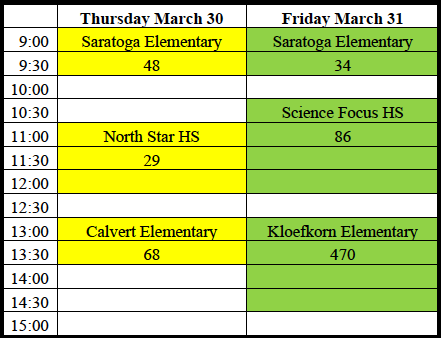
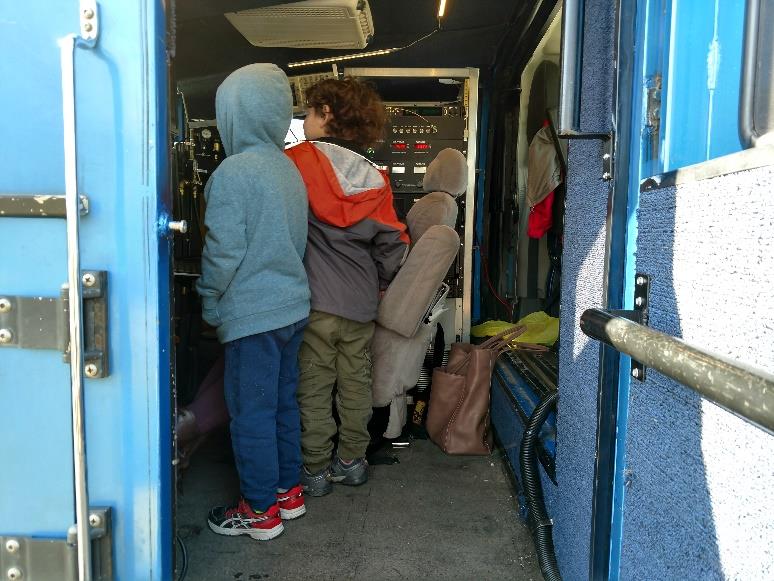
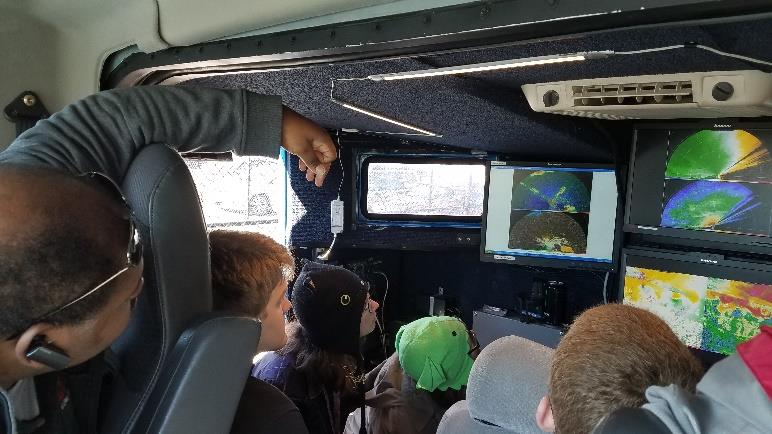
DOW-6 reached 735 K-12 students in the Lincoln Public School (LPS) system via six separate exhibitions at three elementary schools and two high schools (Table 3). DOW-6 was also exhibited to ~120 preschoolers at the UNL Children’s Center (Figure 2) and to ~70 undergraduate students in Weather and Climate (Figure 2). DOW-6 also figured prominently in an outreach event designed by the PI and associated with the Nebraska State Museum’s Investigate: Second Saturday Science Lab. This exhibition reached over 100 members of the general public, ~60 of whom had direct interaction with the DOW.
Assessment of Student Learning
The success of UNDEO 5 and identification of opportunities for improvement were assessed using the following vehicles:
- Anonymous survey of Radar Meteorology students
- Graded assessments in Radar Meteorology
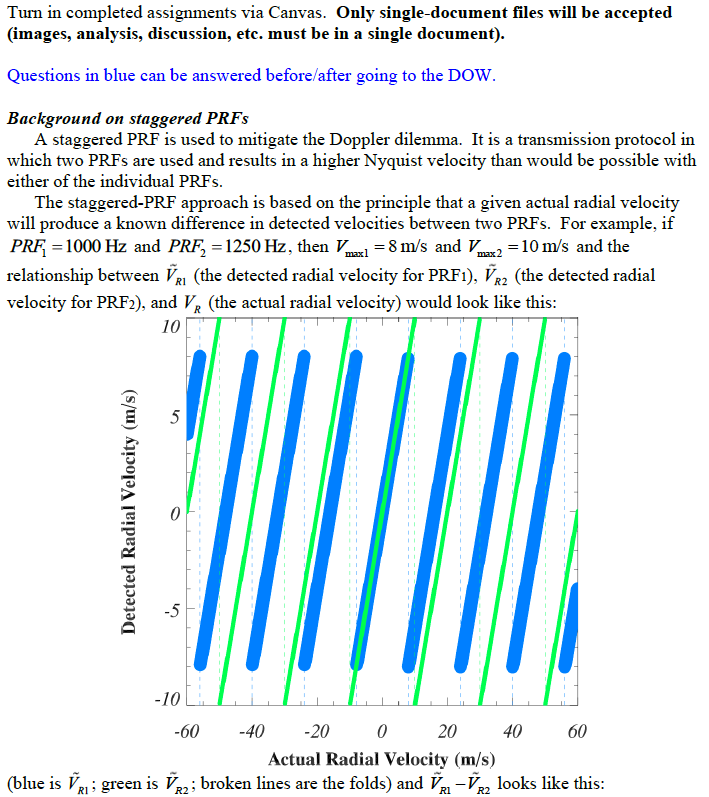
- The “lab” exercise used appears in Table 5.
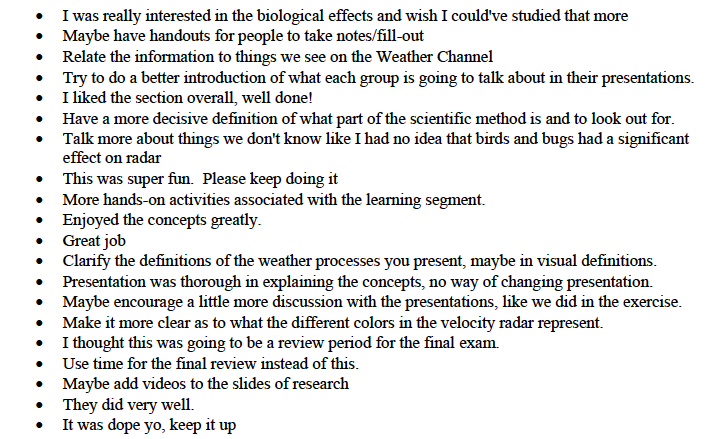
- Anonymous survey of Weather and Climate students who participated in the active learning exercise and observed student presentations
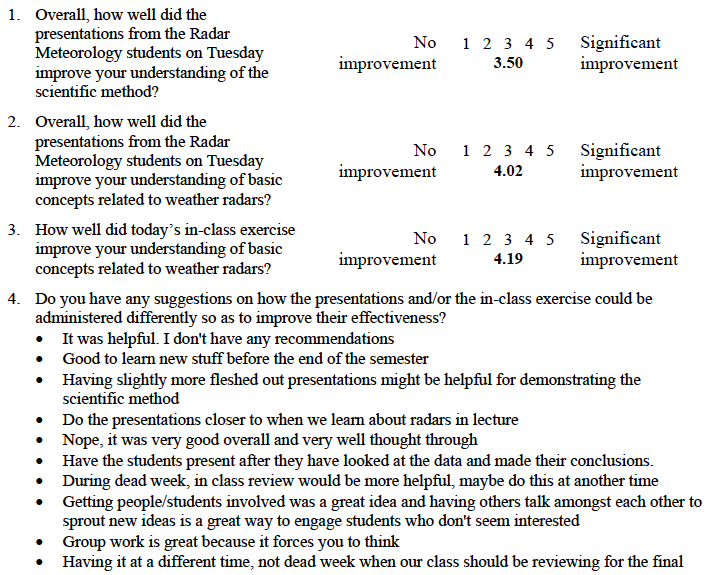
- Students were asked to evaluate how well the student presentations and in-class exercise improved their understanding of the scientific method and basic concepts related to weather radar. They were also asked for suggestions to improve the effectiveness of this component. The survey, average results, and suggestions are included in Table 6.
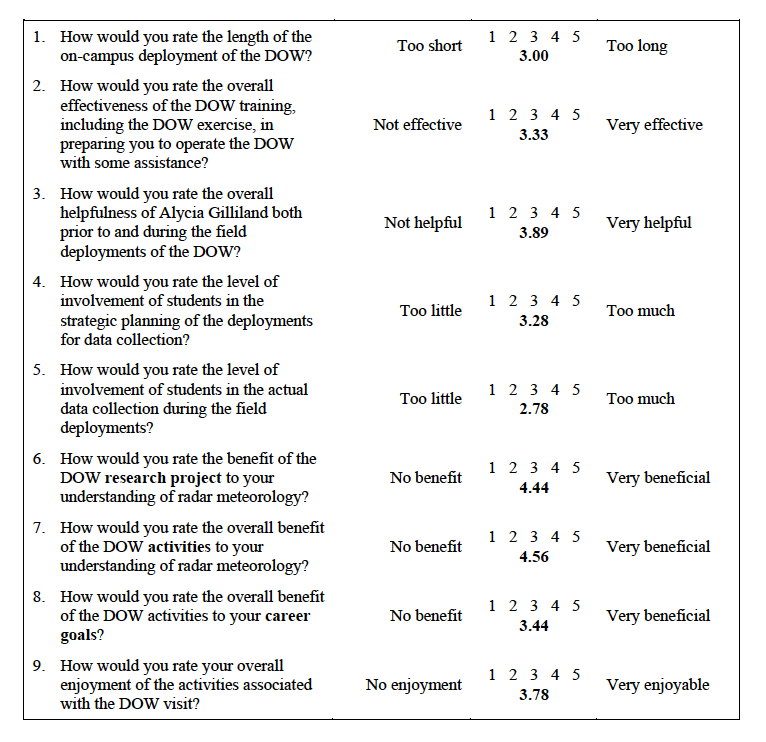
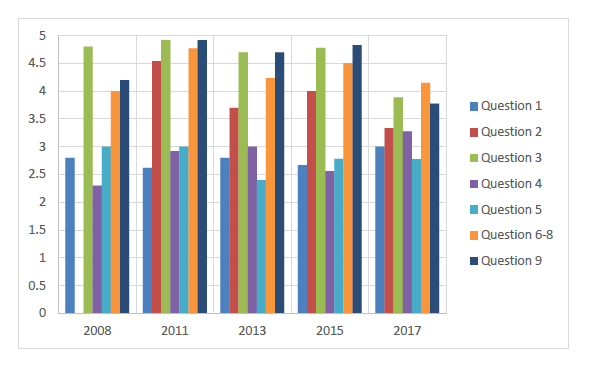
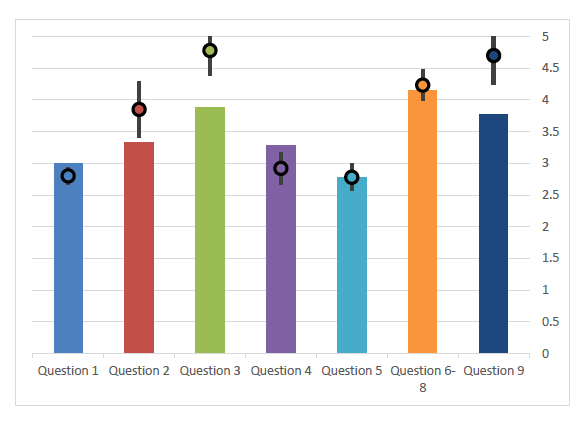
to the median (circles) and standard deviation (whiskers) across all years.
|
METR 463/863 DOW Exercise |
|
|
  |