Search
Publication or Paper Role of a Cross-Barrier Jet and Turbulence on Winter Orographic Snowfall
Publication or Paper Directional Wave Spectra Observed during Intense Tropical Cyclones.
SOCRATES Photo Gallery
ARTSE Summary Overview
| Atmospheric Response to a Total Solar Eclipse (ARTSE) |

Principle Investigators: W. Scott Gunter
Where: Dept. of Earth and Space Sciences, Columbus State University
When: 21 August 2017
Facility: NCAR Integrated Surface Flux System (ISFS)
Overview
The 21 August 2017 total solar eclipse presented a tremendous and relatively rare opportunity for both hands-on educational activities and atmospheric boundary layer research. To take advantage of this opportunity, the Earth and Space Sciences Department at Columbus State University (CSU), collaborating with the Coca Cola Space Sciences Center (CCSSC), developed project ARTSE: Atmospheric Response to a Total Solar Eclipse. The principal goal of this project was to provide students with hands-on experience in meteorological fieldwork, computer programming, and low-level data analysis all while collecting meaningful data and experiencing a truly incredible event. To achieve these goals, CSU requested two National Center of Atmospheric Research (NCAR) Integrated Surface Flux System (ISFS) stations to be deployed in the path of totality through an NSF-sponsored educational deployment. This field deployment was done in concert with a Selected Topics atmospheric science course offered at CSU. Students enrolled in the course participated in the field deployment and learned about instrumentation, computer programming and data analysis over the course of the Fall 2017 semester. In additional to the educational experience for a small class of CSU students, this project (and the event upon which it was focused) allowed for multiple opportunities for community outreach both locally and at the deployment site. After providing a brief review of the deployment itself, this report documents the educational and outreach activities completed during project ARTSE. The impact of the project, as well as future activities, will then be discussed prior to the final summary.
Deployment Review
While the eclipse itself lasted only a few hours, the ARTSE deployment spanned the entire Fall 2017 semester. This section details the multiple components of the project, including the field deployment, the educational activities, and the outreach opportunities.
Field Deployment
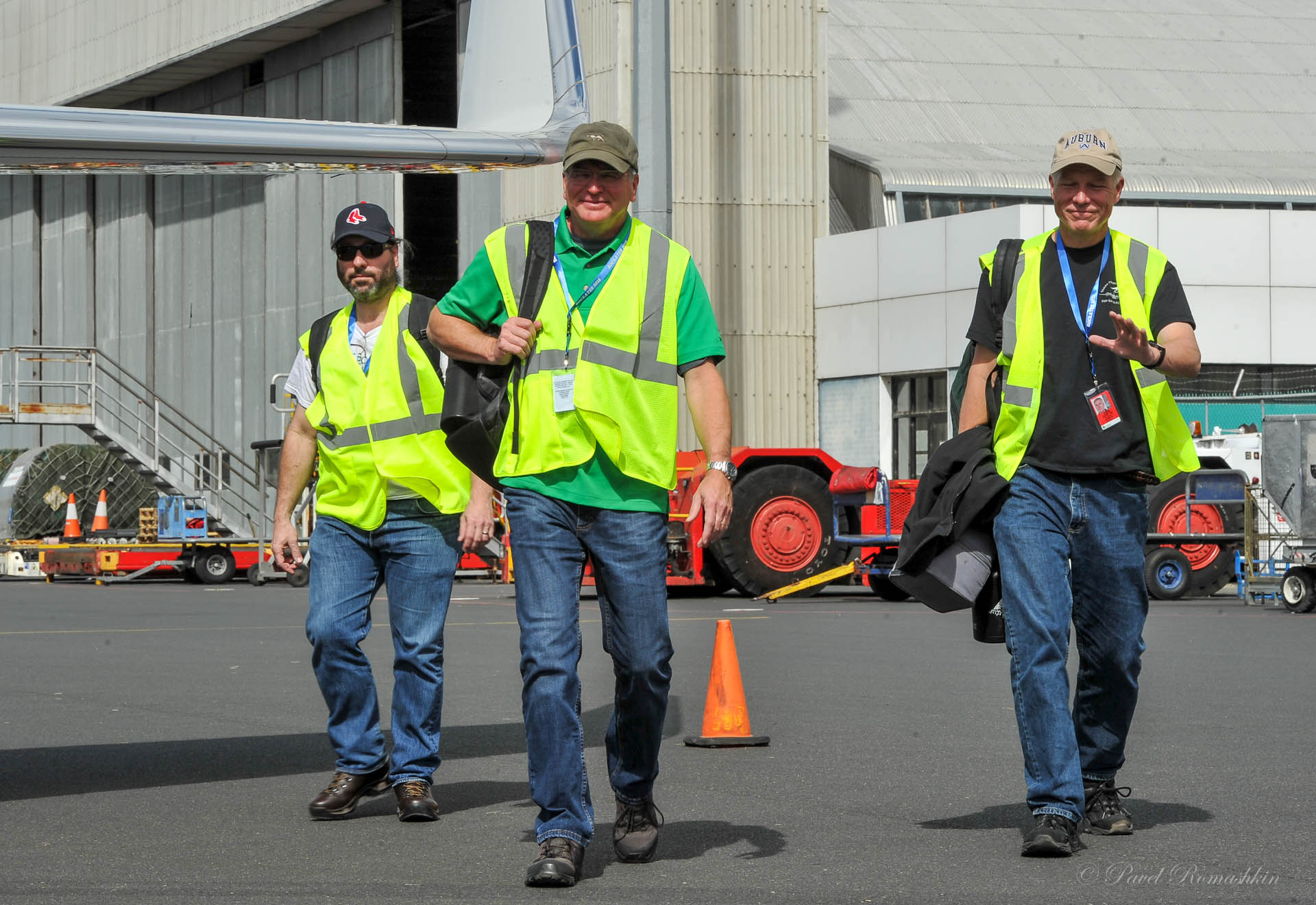
The ISFS stations were deployed to Central Nebraska several days prior to the eclipse. Nebraska was chosen as the deployment site to reduce the probability of cloud cover obscuring the eclipse as well as provide more opportunities to find sites with good exposure for flux measurements. One ISFS station was deployed at the Stuhr Museum of the Prairie Pioneer in Grand Island, Nebraska. The second stations was originally going to be deployed at the Central Nebraska Regional Airport, but the restrictions in place at the airport for this event necessitated finding an alternate location for the ISFS tower. Fortunately, an employee at the National Weather Service in Hastings, Nebraska offered some open pasture land approximately 50 km northwest of the site in Grand Island. The CSU contingent (composed of 7 students, the PI, and 3 employees of CCSSC) arrived in Grand Island on Saturday 19 August and were able to assist NCAR employees Matt Paulus and John Militzer with the deployment of the Stuhr Museum station (Figure 1). For many students, this was their first experience with complex meteorological instrumentation. Thus, the entire process was thoroughly (and patiently) explained and demonstrated by the NCAR employees while still allowing students to participate. Both stations were deployed and collecting data before 20 August 2017 and remained operational through August 22 2017. As the Stuhr Museum was hosting a community-wide eclipse-viewing event, the deployment also included a TV monitor to which data from both stations were streamed. On the day of the eclipse, CSU students, as well as members of the community, were able to watch the meteorological variables recorded by the flux stations change in real time.
a.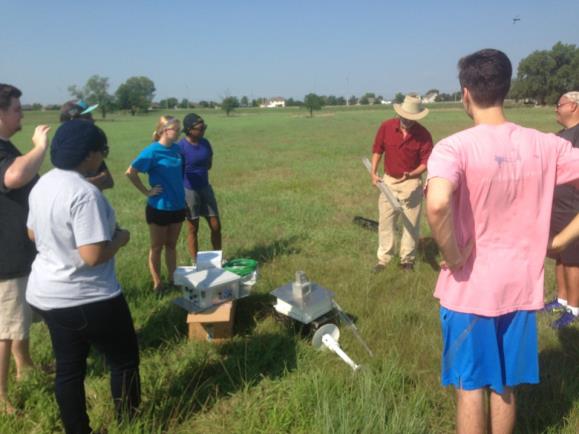 b.
b. 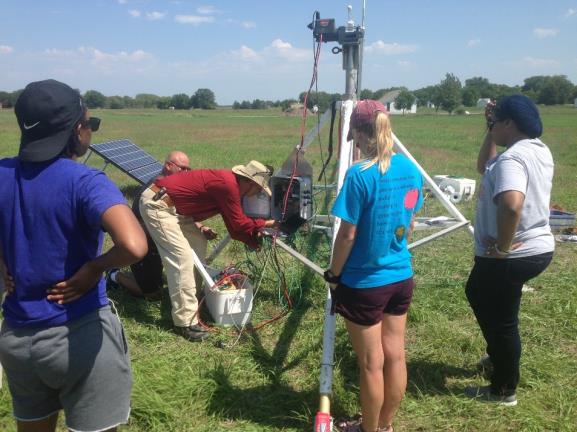 c.
c. 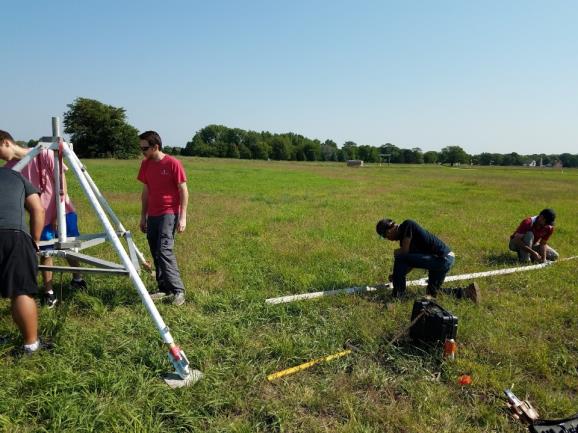 d.
d. 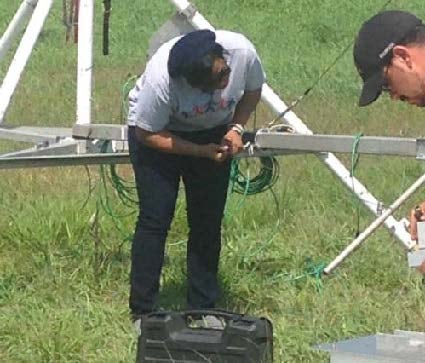
Figure 1. ATSC 5555 students helping with the deployment of the ISFS tower at the museum.
Educational Activities
After the field deployment, the primary educational activity was the Selected Topics course, ATSC 5555. Using the ISFS stations as a model, the seven students enrolled in this course (mostly Earth and Space Science Majors) were taught about each instrument as well as exposure and sampling considerations. Another component of the course was an introduction to computer programing. Students were engaged in hands-on learning through examples and laboratory assignments in CSU’s engineering lab (Figure 2). Given the capabilities of the lab and the instructor’s experience, MatLab was the language that was taught to the students. The students progressed through several laboratory assignments and gained some experience in programming before the ARTSE ISFS data were received from NCAR on 26 October 2017. After receipt of the data, the students furiously worked on processing the data before presenting at the ESS departmental seminar on 9 and 16 November to over 30 of their peers and professors. Several slides from each presentation are included below (Figure 3). The presentation sparked several great discussions, particularly around the response of the near surface temperature (Figure 4a) as well as the response of CO2 (Figure 4b) to eclipse totality.
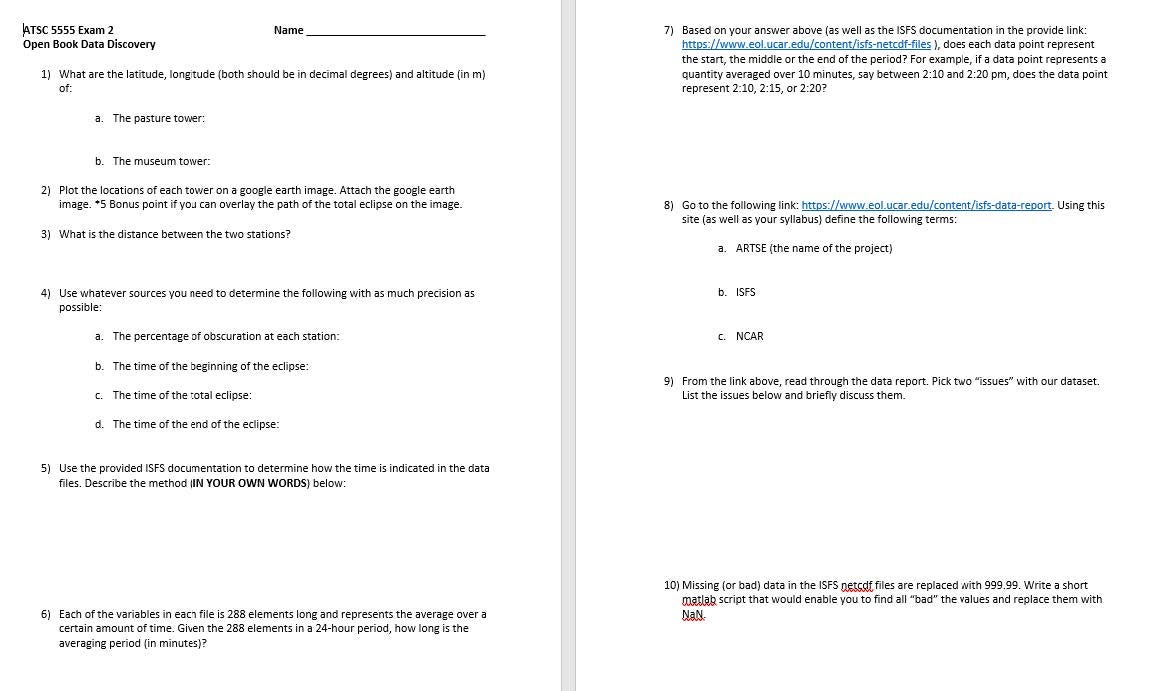
Figure 2. Example of an ATSC 5555 class assignment geared toward learning more about the ARTSE data. This assignment was given shortly after the data were received.
a. 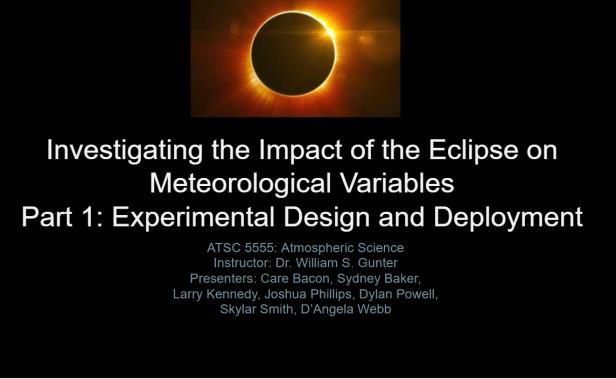 b.
b. 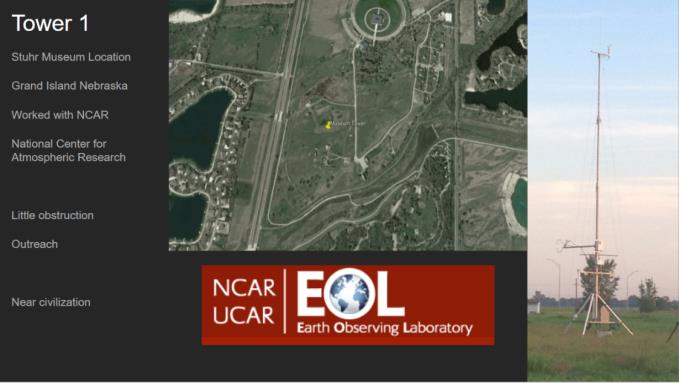 c.
c. 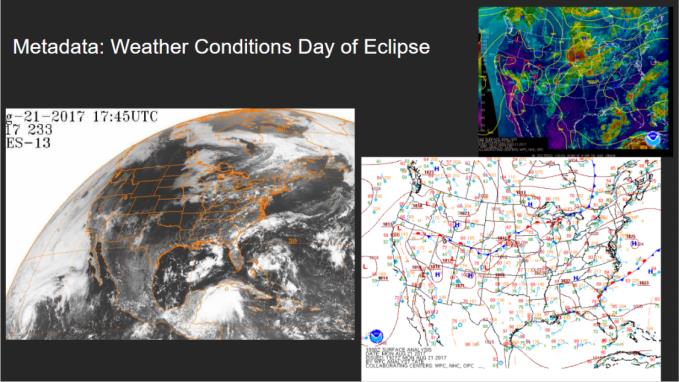 d.
d. 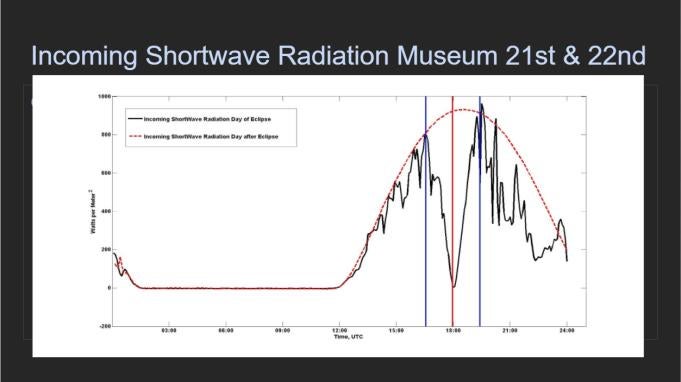
Figure 3. Slides from ATSC 5555 presentations on 9 November (a & b) and 16 November (c & d).
a. 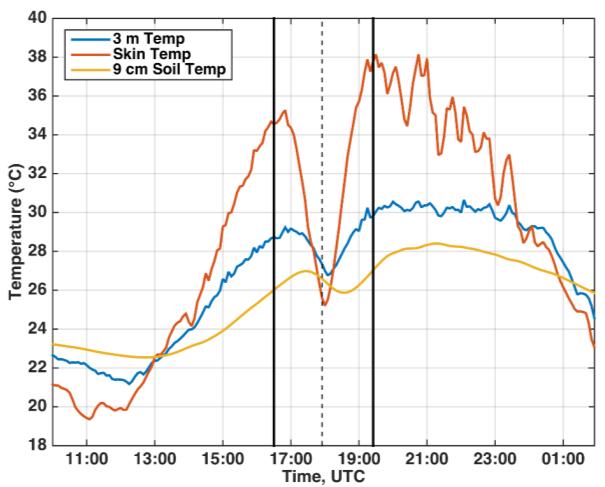 b.
b.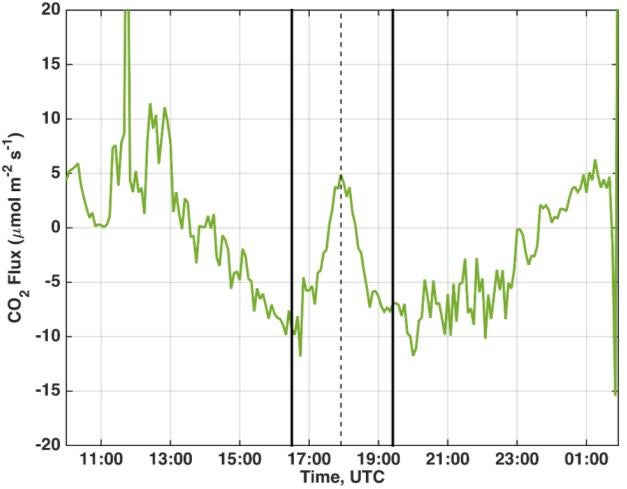
Figure 4. Evolution of various measures of temperature (a) and carbon dioxide flux (b) on the day of the eclipse.
Outreach and Research Activities
Given the national scale of the eclipse, outreach opportunities were a significant component of the ARTSE project. These opportunities included several media interviews of the PI and students prior to and during the event. Additionally, the PI was invited to discuss the project at the 2017 Eclipse Community Showcase in Boulder, Colorado, on 21 July 2017. Attendance to this event allowed the PI to connect with other scientist also studying the eclipse. Perhaps the best example of project-related outreach was the eclipse-event hosted by the Stuhr Museum on 21 August 2017 called, “The Gem over the Prairie Eclipse Event”. Museum officials reported that over 8,000 people attended this event (Figure 5). The ISFS station, as well as CSU and NCAR personnel, were near the main stage and not far from the eclipse-viewing field. This location promoted many visitors to walk by our station where they could see the tower in the distance, examine a TV monitor with data plots, and learn about the science from CSU and NCAR personnel. In addition to the information station for the flux tower, the PI of the project was of offered an opportunity to speak in the museum-designed program during the event. In this program, the project PI and John Militzer from NCAR discussed the meteorological science and instrumentation of the project to a crowd of several hundred a few hours prior to totality.
While ARTSE was designed to primarily support educational and outreach opportunities at CSU and in Nebraska, the quality and uniqueness of the data have also supported some low-level research. Stemming from the analysis of the ATSC 5555 students, the PI developed and presented a poster describing the initial results of ARTSE at the 2018 American Meteorological Society Annual Meeting in Austin, Texas, on 8 January 2018.
a. 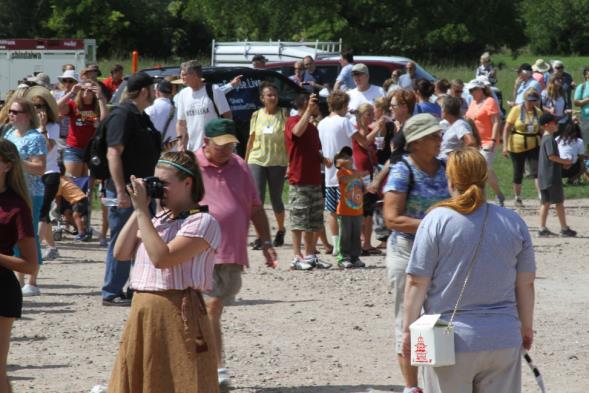 b.
b. 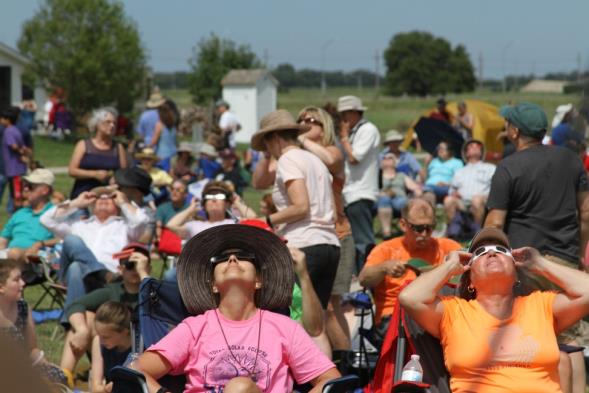 c.
c. 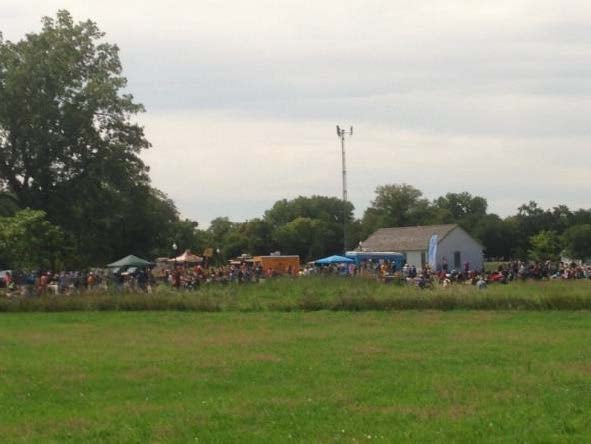 d.
d. 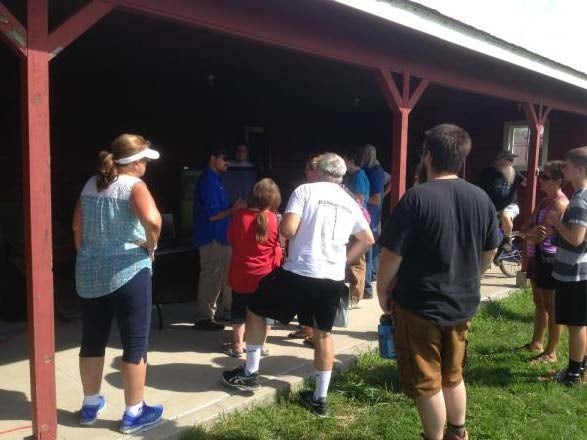
Figure 5. Images from the Gem over the Prairie Eclipse event. Images a & b courtesy of the Stuhr Museum of the Prairie Pioneer. Museum visitors lined up in front of food trucks across from the deployment site (c). Museum visitors learning about ARTSE on the day of the eclipse (d).
Project Evaluation and Lessons
The most relevant components of the education deployment for the Fall 2017 semester were the field deployment and the execution of the ATSC 5555 Selected Topics in Atmospheric Science course. The field deployment was a success for both educational and scientific objectives. The students jumped right in and helped with the deployment of the museum tower, asked a lot of questions and acquired the hands-on experience that was desired for them. Similarly, the outreach at the museum was a success. The students were able to interact with many people. Several of the students were even interviewed by a local news station. In their comments at the end of the course, the students spoke very positively about the trip. When the students were asked what they liked about the course, the responses included:
- “Learning and developing a knowledge to understand how the boundary layer weather variables react to each other.”
- “Collaborating with the guys from CSU's CCSSC and NCAR.”
- “The trip was definitely the best part, but the class was good too.”
The course itself was implemented as planned, but the students didn’t seem to get as much out of the course itself. For one, there was likely too much expected of the students over the course of one semester. This idea is discussed further in the next section. Second, the data were not received until the end of October due to a processing issue. While this issue likely could not have been avoided, it did reduce the amount of time students were able to spend with the data.
While this deployment was designed to enhance student education, much was learned on the part of the PI as well. The following are brief takeaways from execution of the course itself:
- More should have been done to assess the success of the experience prior to the end of the class. For example, a pre-course / post-course assessment and an instructor designed questionnaire for students regarding their opinion of the course, could have been implemented.
- Use an open source programming language (e.g. Python) instead of a cost-prohibitive one. Such a change would have allowed students to spend more time with the data outside of the computer lab (which was frequently occupied).
- More independent background reading should have been required and students should have been held accountable for the reading.
- Perhaps less time should have been spent on the fundamentals of programming and more time on data analysis. While the former is very important, it was just too much information for one class when combined with the other material that was presented (especially for students with no prior knowledge).
The students themselves also came up with some lessons for future eclipse-centered field deployments. These included:
- “… do a soil test to know what of soils are present.”
- “…set up more towers in more varied locations. We could have tried setting up towers in more arboreal locations, like forests.”
- “ …Collect data from a couple more locations along totality …”
- “…focus on CO2 levels and crops for agricultural productivity loss…”
Summary
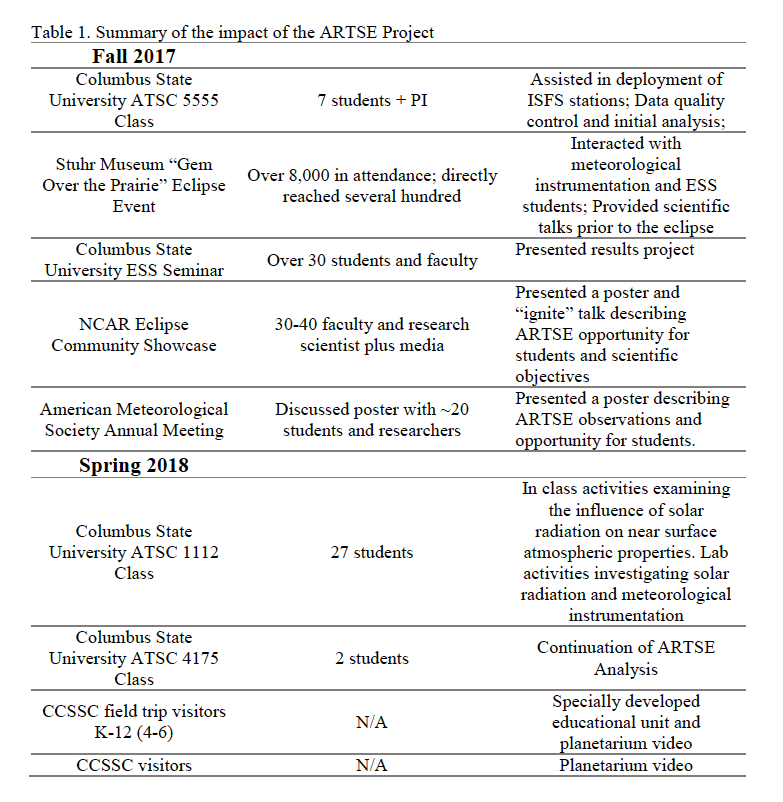
The ARTSE project provided a tremendous opportunity to enhance the education of undergraduate students while taking advantage of a unique outreach opportunity during a nationally recognized event. Though the scale of this educational deployment was relatively small (both from a resource and temporal perspective), efforts were made to reach as many people as possible. See Table 1 for a detailed breakdown of the ARTSE impact. Overall, this deployment was a success both in terms of the field deployment and the course. The students learned about complex meteorological instrumentation, helped deploy the instrumentation, performed low-level analysis on the collected data, and presented the results of the analysis in a public forum. Further, the collected data will continue to be used to enhance undergraduate and K-12 education through incorporation into CSU courses and CCSSC offerings. Both the students and PI were very grateful for this opportunity that would have not have been possible for us otherwise.