Search
Field Project ARTSE
Concept to Creation: Observational Instrument Design and Development
Since the 1960s, NCAR’s Earth Observing Laboratory (EOL) has successfully managed numerous instrument developments and field projects. Each is different and requires a specific set of skills, expertise, planning, and instrumentation. Likewise, instrument development has been an integral part of EOL’s mission for decades and is an important way in which the laboratory supports the scientific community. Such a culture of innovation fosters a plethora of ideas and inventions. How are these ideas taken from the minds and notebooks of scientists and engineers and made into reality? EOL’s Design and Fabrication Services (DFS) plays a major part in this process.
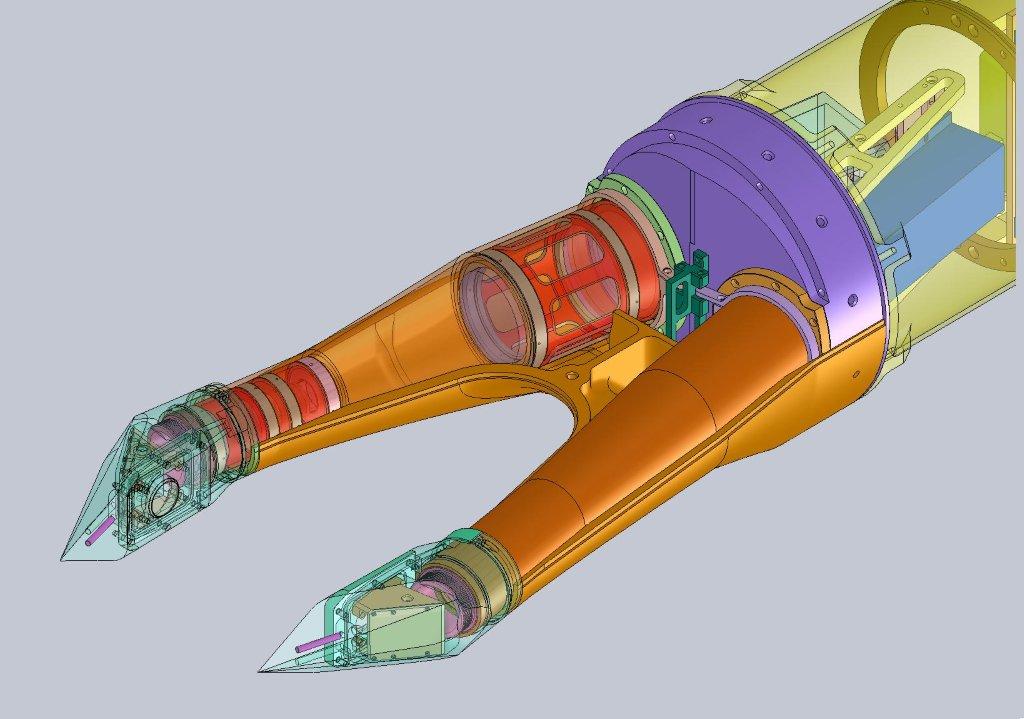 DFS’ expertise lies in four areas. Its mechanical design engineering services design, analyze, and develop creative and original work used to manufacture a wide variety of instruments for a surprisingly diverse set of customers (more on that later). Their fabrication services use computer-aided manufacturing (CAM) to create custom and unique instruments from many different types of materials, including aircraft-grade aluminum, titanium, stainless steel, and engineered polymers. Perhaps least known, DFS’ logistics support performs several different functions, including certified crane operation for all of NCAR (even for international field projects), packing and shipping instruments/materials for field campaigns, surveying for and setting up the S-Pol radar, painting, and equipment repair. Lastly, DFS also provides procurement services, meaning that they manage all material stock, certifications, and job estimates as efficiently as possible. Procurement specialist, Brad Foote, handles all procurement, shipping, and outside services for all projects within DFS. “Brad’s expertise in locating and ordering flight hardware and materials enables DFS engineers to concentrate on the design knowing Brad will have the parts ready in time to meet their customer’s schedule,” said Facility Manager Jim Ranson.
Not only is DFS partially responsible for cementing EOL as a hotbed of atmospheric science innovation, but those in the facility are able to offer their services to other laboratories within NCAR and also the atmospheric science community, as long as the funding originates from the National Science Foundation or another government agency in support of scientific research. Below are some examples of the instruments and setups DFS has fabricated, manufactured, and/or designed for EOL, NCAR, and the atmospheric science community.
EOL:
- The entire S-Pol radar setup, except the antenna

- The Laser Air Motion Sensor (LAMS)
- HIAPER Cloud Radar (HCR)
- NSF/NCAR GV AVAPS® dropsonde system
- Water Vapor Differential Absorption Lidar (WV DIAL)
- Holographic Detector for Clouds (HOLODEC)
- HIMIL inlets
NCAR:
- Solar tracker for ACOM
- X-pol mount system trailer for RAL
- Sunrise gondola for HAO (original build and rebuild)
- A microburst demonstration exhibit for UCAR’s Mesa Lab
- Video ice particle sampler MMM
Community:
 Lidar beam steering units for the Army and NIST
- Vertical Cavity Laser Hygrometer (VCSEL) for Princeton University
- Parabolic and flat reflectors for Colorado State University (CSU)
- Gulfstream 550 wing stores for the German Aerospace Center (DLR)
- HIMIL aircraft inlets for NASA
- GlobalHawk Dropsonde system for NOAA
- Ice nucleation chambers for CSU

Many in the atmospheric science community look to DFS for mechanical engineering, design, and fabrication because of the expertise of those in the facility. One of those experts is machine shop supervisor, Karl Schwenz. He has worked in DFS for 17 years, so he understands the abilities of those in the facitiliy and the instrument design process. He said the staff at DFS is what sets them apart. “We have a pretty amazing crew,” said Schwenz. “The most unique thing about DFS is the instrument makers’ ability to have input on the outcome of a project.” Since the instrument makers have been working on atmospheric science instruments for so long, they have the ability to suggest changes to their customers to save them time and money. They understand what they are building and the context of the instrument’s use. “Empowerment is a wonderful thing, and we do that here,” said Schwenz.
DFS has the ability to perform end-to-end design and fabrication for many projects that are funded by the National Science Foundation. For more information about the facility or to request they build something for your project, please see their webpage or contact Jim Ranson.
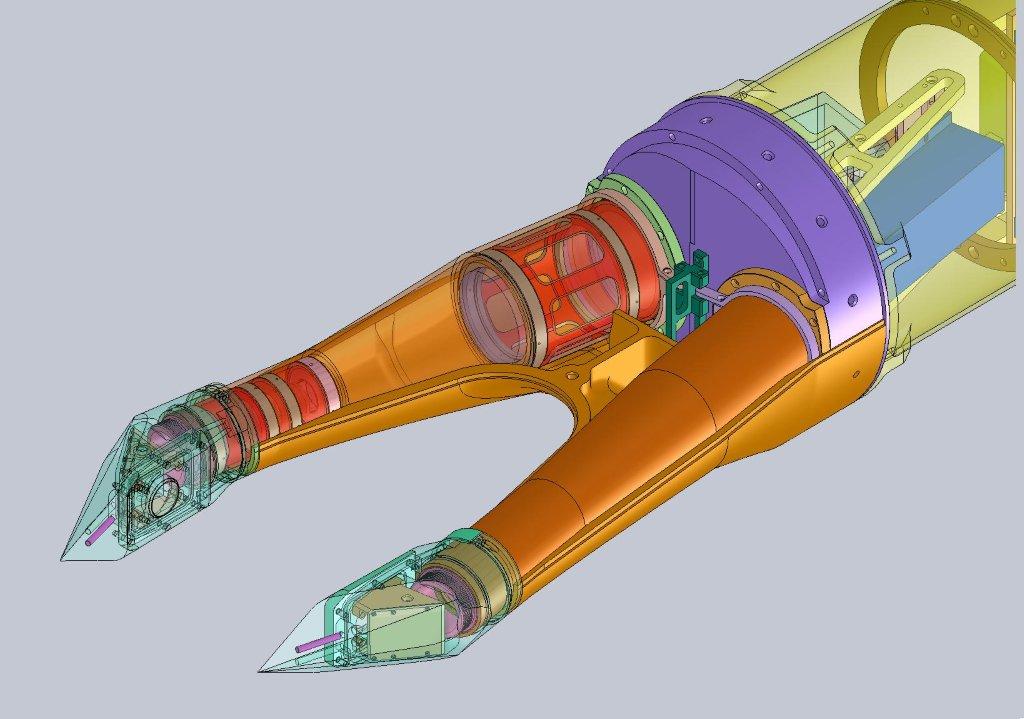


GV Floor Plan
The payload and aircraft ops require the following staff to be onboard:
- 1 for SP2-Ozone
- 1 for PANTHER, UCATS and NWAS
- 2 for QCLS, one of these is also mission scientist
- 1 for O2, MEDUSA
- 1 RAF mechanic
- 1 ADS technician / safety officer
- 1 RAF project manager
-------------------------------
8 total seats in the back.
Wing stores: The project will fly with 4 PMS instruments: RWI: MTP; RWO: UHSAS; LWI: CDP; LWO: 25 um 2D-C.
EOL's Patents: A Culture of Innovation
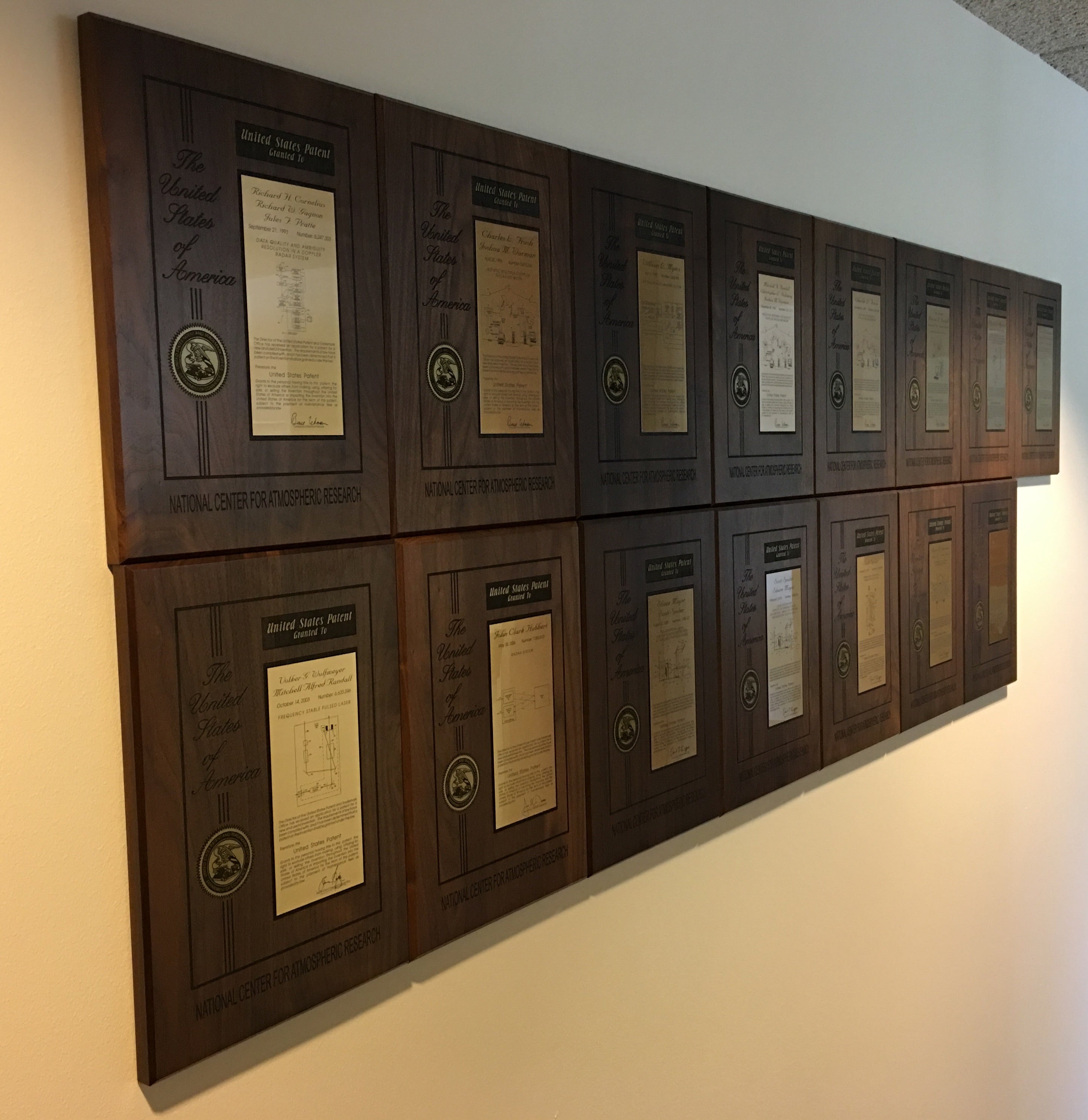
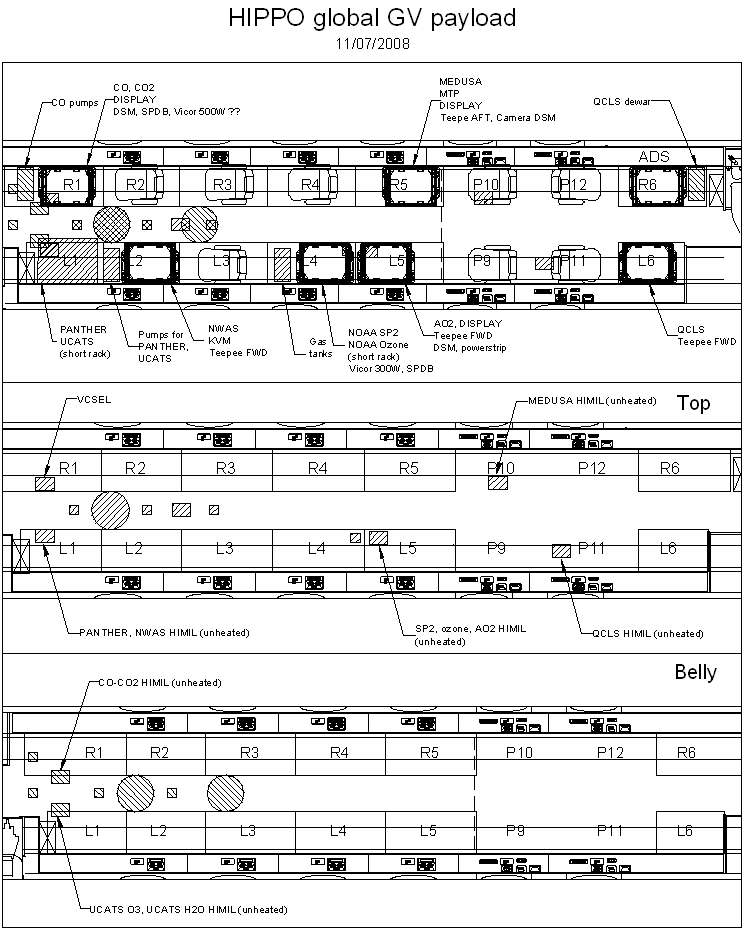
Working at EOL is a unique experience. In how many places throughout the world are engineers and scientists physically building original hardware and software tools that change the way we understand the atmosphere, climate, and observational sciences? There are not many, and, incredibly, EOL is one of them. The number of patents that originate in this laboratory is an obvious indicator of its culture of innovation. One walk by the EOL Director’s Office, where several of the patents are displayed, should indicate that something special happens in EOL.
What is a patent?
 A patent is a legally enforceable right to exclude others from making, using, and/or selling an invention; they have been issued by the United States government since 1790. Nearly every consumer product holds and/or licenses at least one patent, including the device you are viewing right now.
UCAR’s Office of the General Counsel hosts on its website a list of those patents issued to UCAR staff that are currently available for licensing. Of the 62 unique UCAR patents listed, 27 were issued to staff in EOL or ATD (Atmospheric Technology Division, a predecessor of EOL). Kelly Coleman is a paralegal/legal administrator at the Office of General Counsel. Her wide eyes and animated personality show her excitement for innovation - she has seen quite a bit since starting her tenure here in 1996. “We really enjoy working with EOL. The Lab is one of the most ambitious” she said. “We appreciate their work and their positive view of what they’re doing.” Over it's rich history, EOL/ATD has accounted for a total of 40 patents focused on a broad range of inventions with several centered on lidar, dropsonde, and bistatic radar technology.
EOL’s abundance of patents does not indicate the ease of obtaining one, which is no trivial task. Walk into EOL engineer Scott Spuler’s office, and you’re greeted by a warm smile, an impressive electric bicycle, and his patents mounted low on the wall with Spuler’s name and meticulous drawings etched in metal. All of his patents are related to remote sensing, so he knows something about the process of obtaining a patent at UCAR. “It’s not a lot different from writing a peer-reviewed journal article,” said Spuler. “But different in that you focus more on the process and how you make it work.” Patenting original work begins with an invention disclosure, which includes writing up the technological part of the software, technique, or physical invention. Then, the inventor must work with a lawyer at UCAR’s Office of General Counsel to broadly cover what the invention does, find if others have done it, and have pictures drawn (no color allowed). Once a patent application is submitted, a patent examiner performs his or her own check to see if other inventions have any overlapping claims of the patent in question. If so, it is sent back for revision, often multiple times. The entire process, from finishing the invention to receiving the patent, usually takes a few years.
Why Obtain a Patent?
 Why do engineers and scientists at a non-profit research laboratory go through process of getting a patent? Usually, patents are obtained so that the research can continue without others claiming the technology and/or selling it rather than distributing it responsibly for the greater good of the observational science community. Another important reason for patents is the ability to efficiently transfer technology from NCAR to, for example, a commercial company. EOL’s AVAPS®, a dropsonde system that measures vertical profiles of atmospheric variables, is currently licensed to Vaisala and used by the U.S. Air Force Hurricane Hunters, the UK Met Office, and many others. This licensing can yield royalties as well. It is important to note that such technology transfer is enabled by the implementation of the Bayh-Dole Act in the 1980s, which allows a federally funded organization to pursue ownership of an invention, rather than turning that ownership over the the federal government, as was previously the case. Lastly, an invention disclosure or patent is an excellent way to show that the funding provided for a project has been fruitful - potentially leading to further funding.
Evolution and Revolution in Scientific Research and Development
When asked what is unique about EOL and its culture of innovation, laboratory Director Vanda Grubišić turns to three words: evolution, revolution, and agility. “All three of these words apply to our developments. The evolutionary development is very agile, as it is linked with the deployment side of things,” said Grubišić, referring to EOL’s numerous and varied field deployments. “We respond agilely to scientists’ needs by fine tuning and evolving our observing systems.” On the other hand, Grubišić said, when prompted by technological advances, EOL engages in revolutionary developments, whereby our engineers are quite agile in adopting new technologies and applying them to designing new observing systems. The water vapor differential absorption lidar (WV DIAL), a water vapor profiling instrument using optical technology, is an excellent example of such revolutionary technology that stems from recent advances in semiconductor diode lasers. The Airborne Phased Array Radar (APAR) is another such development, which represents an application of phased-array antenna technology to an airborne dual-Doppler and dual-polarization weather radar. Both of these are coming together in a laboratory that hosts an intersection of science and engineering.
Seeding Innovation
The UCAR President has recently formed an Innovation Council and has invited representation from all NCAR Laboratories. According to Scott Rayder, Senior Advisor to the UCAR President, the Council's purpose is to normalize, streamline, and seed innovation across all of UCAR. Twelve staff from across UCAR and NCAR are members of the Innovation Council, including engineer Matt Hayman from EOL. “EOL has a tremendous role to play [in innovation]. It is a treasure trove of observational tools,” said Rayder. The laboratory’s track record of innovation through patents should help EOL play a vital role on the Council.
EOL’s many patents are an example the laboratory’s innovative spirit. “The long list of patents is a clear indication of EOL, and prior to it, Atmospheric Technology Division (ATD), being vibrant environments that promote and foster innovation,” said Grubišić.
EOL Patents:
|
Title |
Patent Number |
Date Issued |
Inventor(s) |
| Regression Filter for Radar Data | 10,914,828 | 2021-02-09 | Hubbert, John |
| Diode Laser Based High Spectral Resolution Lidar | 10,797,998 | 2020-10-06 | Spuler, Scott; Hayman, Matthew; Morley, Bruce; Eloranta, Edwin (Univ of Wisconsin) |
| Micropulse Differential Absorption Lidar | 10,605,900 | 2020-03-31 | Spuler, Scott; Repasky, Kevin (Montana State Univ); Nehrir, Amin (NASA) |
| Analog Photon Counting | 10,473,521 | 2019-11-12 | Hayman, Matthew; Spuler, Scott |
| Poisson Ensemble Inversion | 10,379,024 | 2019-08-13 | Hayman, Matthew |
| Calibration of Aircraft Instruments Using a Laser Sensor | 10,352,813 B2 | 2019-07-16 | Spuler, Scott; Spowart, Mike; Richter, Dirk; Cooper, William A. |
| A System and Method to Measure an Atmospheric Thermodynamic Profile with a Compact All-Fiber and Eye-Safe Lidar | 10,295,672 B2 | 2019-05-21 | Abari; Farzad Cyrus Foroughi; Spuler; Scott |
| Method and System for Generating a Distance Velocity Azimuth Display (DVAD) | 9,851,441 B2 | 2017-12-26 | Lee, Wen-Chau; Jou, Jong-Dao |
| Aircraft Expendable Instrument Launch Detector System | 9,753,183 | 2017-09-05 | Hock, Terry |
| Dual-Polarized Radiating Patch Antenna | 9,520,655 | 2016-12-13 | Salazar Cerreno, Jorge Luis |
| Method and System for High Volume Sample Rate Holographic Particle Measurement | 8,634,074 B2 | 2014-01-21 | Fugal, Jacob |
| Optical Multi-Pass Cell | 8,508,740 B2 | 2013-08-13 | Richter, Dirk |
| Radiometer Including a Cleaning System |
8,182,613 B2 |
2012-05-22 | Semmer, Steve R.; Richter, David; Oncley, Steve; Delany, Tony; Schwenz, Karl T. |
| Self-orienting Embedded In-situ Flux System | 7,949,481 B2 | 2011-05-24 | Poulos, Gregory; Semmer, Steven R.; Fox, Jack; Militzer, Gordon M. |
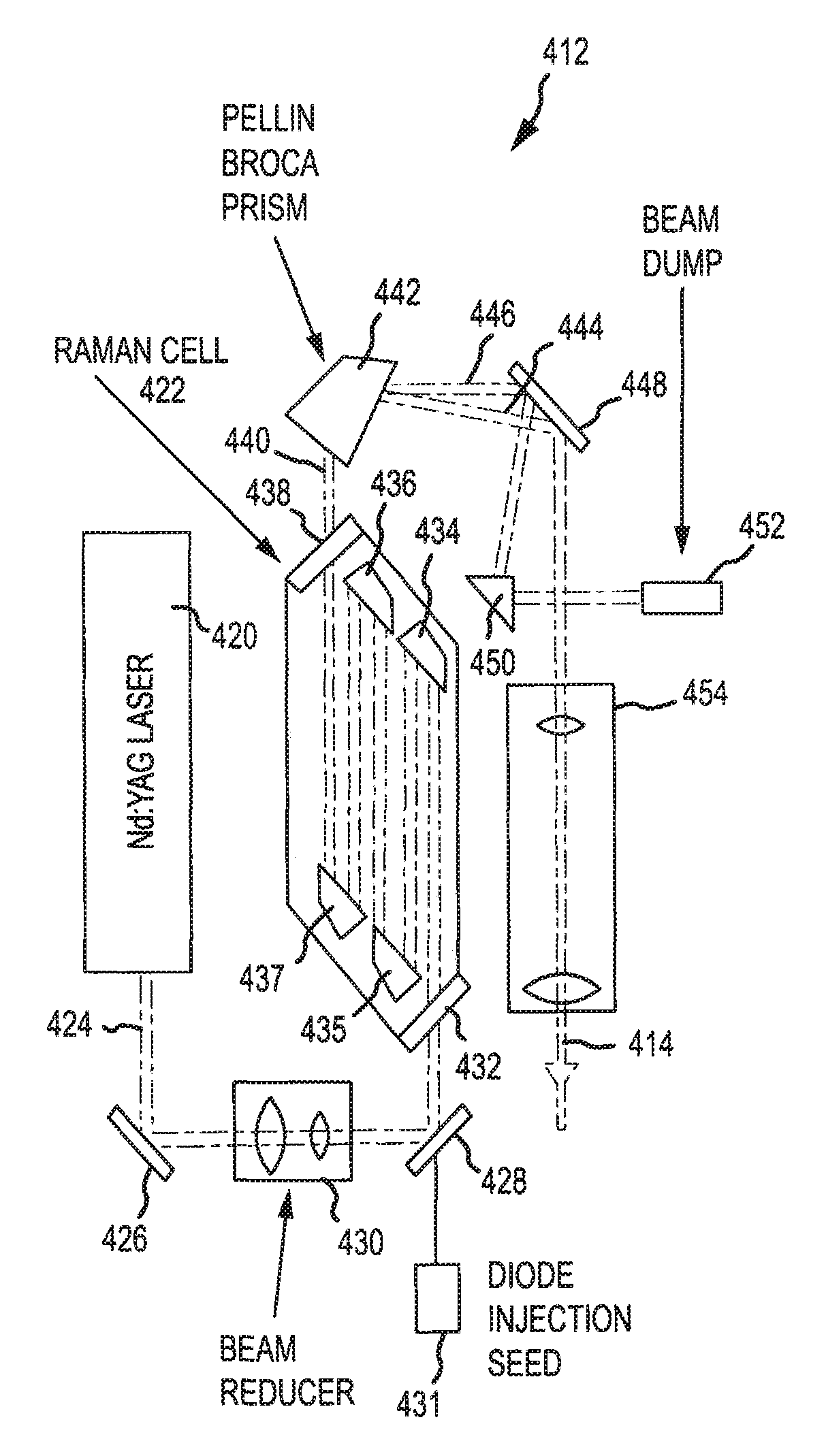
| Raman Cell for High Power Applications | 7,869,469 | 2011-01-11 | Spuler, Scott |
| Precision Polarization Optimized Optical Beam Processor | 7,869,127 | 2011-01-11 | Richter, Dirk |
| Method for Generating a Representation of an Atmospheric Vortex Kinematic Structure | 7,728,760 B2 | 2010-06-01 | Lee, Wen-Chau; Jou, Jong-Dao (NTU) |
| Method and Apparatus for Clutter Filtering Staggered Pulse Repetition Tim Signals | 7,728,765 B1 | 2010-06-01 | Hubbert, John; Gray, Grant; Meymaris, Gegory |
| Lidar System for Remote Determination of Calibrated, Absolute Aerosol Backscatter Coefficients | 7,656,526 B1 | 2010-02-02 | Spuler, Scott; Mayor, Shane |
| High Pulse-Energy, Eye-Safe Lidar System | 7,583,364 | 2009-09-01 | Spuler, Scott; Mayor, Shane |
| Polarization Lidar for the Remote Detection of Aerosol Particle Shape | 7,580,127 | 2009-08-25 | Spuler, Scott; Mayor, Shane |
| Radar System | 7,053,813 B1 | 2006-05-30 | Hubbert, John C.; Chandrasekar, V. (CSU) |
|
Frequency Stable Pulsed Laser |
2003-10-14 |
Randall, Mitchell A.; Wulfmeyer, Volker G. |
|
| Bistatic Radar System for Centralized, Near-Real-Time Synchronized, Processing of Data to Identify Scatterers | 6,462,699 B2 | 2002-10--08 | Wurman, Joshua M.; Randall, Mitchell A.; Burghart, Chris D. |
| Bistatic Radar Network Having Incoherent Transmitter Operating in a Scanning Mode to Identify Scatterers | 6,456,229 B2 | 2002-09-24 | Wurman, Joshua M.; Randall, Mitchell A.; Burghart, Chris D. |
| Radar System Having Multiple Simultaneously Transmitted Beams Operating in a Scanning Mode to Identify Scatterers | 6,377,204 | 2002-04-23 | Randall, Mitchell A.; Wurman, J. |
| Recoverable Airborne Instrument Platform | 6,144,899 | 2000-11-07 | Howard, Ken; Egle, Davis; Babb, Michael; Douglas, Mike |
| Facility for Preparing and Deploying Sounding Devices | 5,636,480 | 1997-06-10 | Dean K. Lauritsen; Sigvard J. Stenlund |
| Radar Acquisition System | 5,589,833 | 1996-12-31 | Mitchell A. Randall; Eric Loew |
| Portable Intelligent Whole Air Sampling System | 5,553,508 | 1996-09-10 | Walter F. Dabberdt; Kenneth D. Norris; Steven R. Semmer; Anthony C. Delany; Jack R. Fox |
| Integrated Control System for Preparing and Deploying Sounding Devices and Managing Telemetry Therefrom | 5,548,283 | 1996-08-20 | Charles L. Martin |
| Low Cost Telemetry Receiving System | 5,486,835 | 1996-01-23 | Terrence F. Hock |
| Receiver Antenna for Bistatic Doppler Radar Network | 5,471,211 | 1995-11-28 | Mitchell A. Randall; Christopher L. Holloway; Joshua M.A.R. Wurman |
| Receiver for Bistatic Doppler Radar Network | 5,469,169 | 1995-11-21 | Charles L. Frush; Joshua M.A.R. Wurman |
| Bistatic Multiple-Doppler Radar Network | 5,410,314 | 1995-04-25 | Charles L. Frush; Joshua M.A.R. Wurman |
| Data Quality and Ambiguity Resolution in a Doppler Radar System | 5,247,303 | 1993-09-21 | Richard H. Cornelius; Richard W. Gagnon; Jules F. Pratte |
| Dual Path Ultraviolet Hygrometer | 5,227,636 | 1993-07-13 | Ronald L. Schwiesow |
| Self-Guided Recoverable Airborne Instrument Modules | 5,186,418 | 1993-02-16 | Dean K. Lauritsen |
| Balloon Parachute | 5,149,019 | 1992-09-22 | Sigvard J. Stenlund |
| Conditional Sampling Technique for Flux Measurement | 5,067,356 | 1991-11-26 | Joost A. Businger |
| Method & Apparatus for Inflating Balloons & for Deploying a Load Suspended Therefrom | 4,529,018 | 1985-02-16 | Ernie Lichfield |