DYNAMO
Dynamics of the Madden-Julian Oscillation

There is considerable evidence for the importance of the MJO in weather and climate (e.g., hurricane activity, U.S. West Coast flooding events, and ENSO), and in their seamless prediction. But our ability of simulating and predicting the MJO is severely limited due to model misrepresentation of processes key to the MJO. Development, improvement, validation of parameterizations for weather and climate models critically rely on in situ observations. A lack of in situ observations in the region of the tropical Indian Ocean has impeded the progress on the study of MJO, especially its initiation. All these point to an urgent need of a field observation campaign in the tropical Indian Ocean region with a focus on the MJO and tropical intraseasonal variability in general.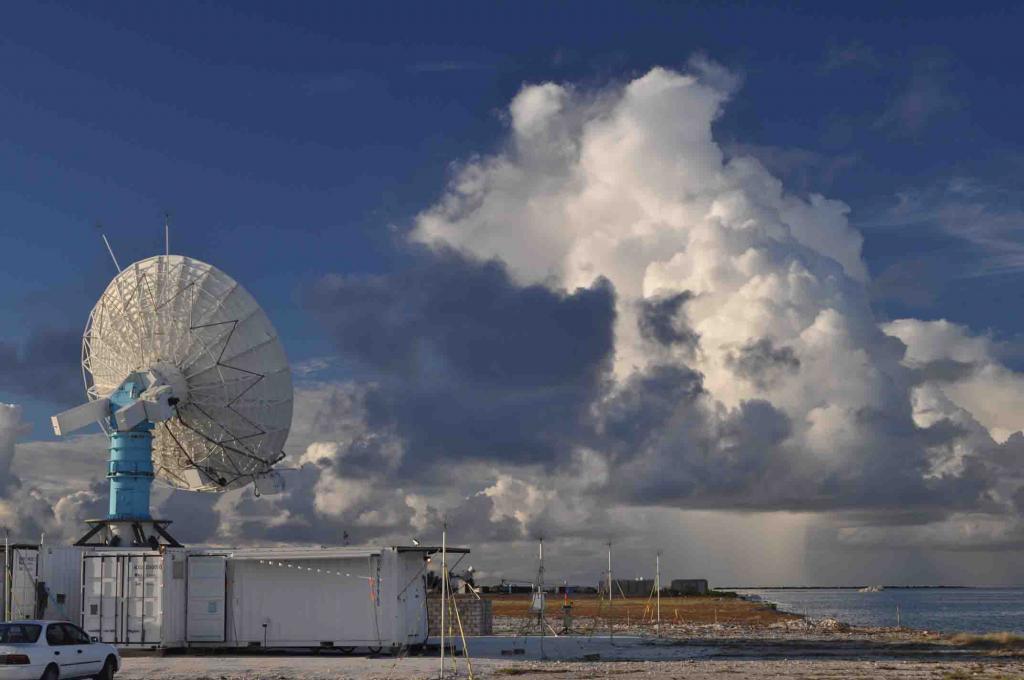 The US research, operations and applications communities are poised to join CINDY2011, an international field program that will take place in the central equatorial Indian Ocean in late 2011 - early 2012 to collect in situ observations to advance our understanding of MJO initiation processes and to improve MJO prediction. DYNAMO is the program that organizes the US interest of partaking in CINDY2011. The DYNAMO campaign will be augmented by other field programs (AMIE, HARIMAU, PAC3E-SA, ONR air-sea interaction) also taking place in late 2011 - early 2012. The integrated observation data set from these programs will cover MJO events at different stages of their life cycle with complimentary observational emphases. The opportunity to be an integrated part of these coordinated programs to maximize the value of observational products makes the timing of late 2011 - early 2012 critical for DYNAMO.
The field campaign of DYNAMO/CINDY2011 consists mainly of a sounding-radar array formed by research vessels and island sites and enhanced moorings inside and near the array. Information on the facilities participating can be found here. The design of the field campaign and the selection of observational objectives (e.g., vertical profiles of moistening and heating, structure and evolution of cloud and precipitation processes, surface fluxes, atmospheric boundary-layer and upper-ocean \ turbulence and mixing) have been and will continue to be guided by the DYNAMO modeling activities, which provide hypotheses on potentially crucial processes of MJO initiation. DYNAMO field observations will serve as constraints and validation for models to quantitatively test these hypotheses. This integrated modeling-observational approach will be pursued by a proposed climate process team (CPT) and will lead to targeted information to assist model improvement.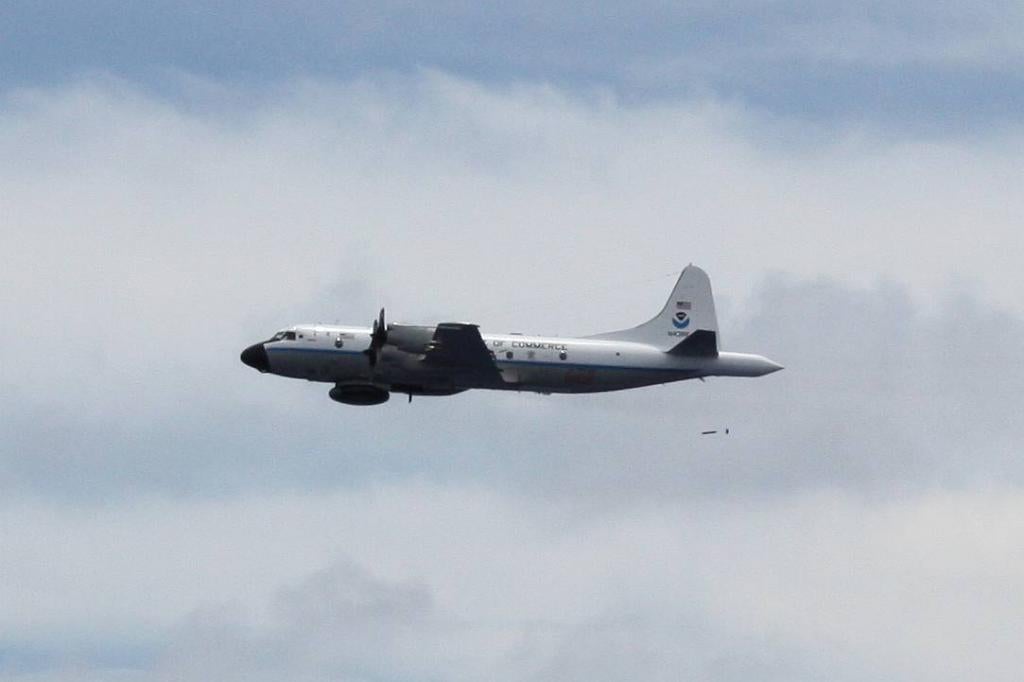 The expected outcome of DYNAMO will be (i) a unique in situ data set available to the broader research and operations communities, (ii) advancement in understanding of the MJO dynamics and initiation processes necessary for improving MJO simulation and prediction, (iii) identification of misrepresentations of processes key to MJO initiation that are common in models and must be corrected to improve MJO simulations and predictions, (iv) provision of baseline information to develop new physical parameterizations and quantify MJO prediction model improvements, and (v) enhanced MJO monitoring and prediction capacities that deliver climate prediction and assessment products on intraseasonal timescales for risk management and decision making.
The CINDY campaign data archives are housed by JAMSTEC. They include data from the R/V Mirai cruise which had the following instrumentation onboard: Cryogenic Frostpoint Hygrometer (CFH) and Ozone Sounding, NIES Mie-scattering lidar, Ceilometer, disdrometer, GPS Precipitable Water, Air-Sea Eddy Flux, Surface Meteorology, Scanning 5GHz Doppler Radar, CTD, Shipboard and Mooring ADCP, LADCP, Shipboard XCTD, Biogeochemical Sampling, MAX-DOAS CO, NO2, Ozone, and AOD, thermosalinograph, Multi-narrow Beam Echo Sounder (MBES), gravimeter, Turbulence Microstructure Acquisition Profiler (TurboMAP), stable water isotope, and Magnetometer (STCM). They also include data from the R/V Sagar Kanya cruise which had the following instrumentation onboard: Surface meteorology and CTD.
The AMIE campaign data archives are housed by DOE ARM. Their instrumentation included Ceilometer, Sunphotometer, ECMWF Analysis, GNDRAD (Ground Radiometers on Stand for Upwelling Radiation), HSRL (High Spectral Resolution Lidar), KASACR (Ka-Band Scanning ARM Cloud Radar), KAZR (Ka ARM Zenith Radar), MET (Surface Meteorological Instrumentation), MFRSR (Multifilter Rotating Shadowband Radiometer), MPL (Micropulse Lidar), MWR (Microwave Radiometer), Rain Gauge, SKYRAD (Sky Radiometers on Stand for Downwelling Radiation), Balloon-Borne Sounding System, TSI (Total Sky Imager), Video Disdrometer, and XSACR (X-Band Scanning ARM Cloud Radar), Cimel Sunphotometer (CSPHOT), Eddy Correlation Flux (ECOR), Surface Meteorological (MET), Multifilter Rotating Shadowband Radiometer (MFRSR), Rain Gauge, Radar Wind Profiler (RWP), Surface Energy Balance System (SEBS)
Principal Investigator
- Chidong Zhang RSMAS
DYNAMO Project Office
- Jim Moore, NCAR/EOL
DYNAMO Data Management
- EOL Archive NCAR/EOL/DMS