An innovative weather instrument developed at the U.S. National Science Foundation National Center for Atmospheric Research (NSF NCAR) could be a solution for improving severe weather prediction.
NSF NCAR EOL is supporting a pioneering research effort to make first-ever direct measurements of how thunderstorms generate gravity waves that propagate into the stratosphere
EOL provides specialized and scalable services to the research community in support of atmospheric field programs. Services include data management, project management, and operations center support.
EOL offers comprehensive data management, archival, and stewardship services to the observational research community. NSF-funded research teams rely on EOL to facilitate the implementation of tailored and comprehensive data management plans for field campaigns.
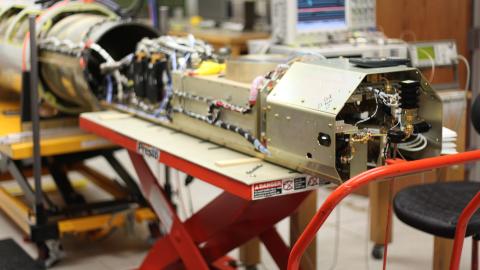
Scientific programs from all over the world rely on the capabilities of EOL's Design and Fabrication Services to create innovative engineering solutions and highest quality machining and repair services of new and existing highly-specialized instrumentation used on every imaginable platform.
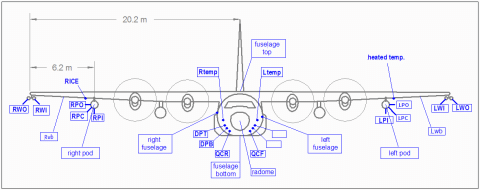
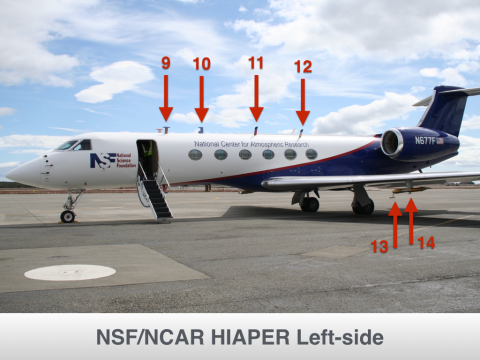
The NCAR Earth Observing Laboratory (EOL) offers a comprehensive suite of standard airborne instrumentation used on our NSF/NCAR C-130 and Gulfstream V. The measurements cover a wide range of variables such as ambient temperature, static and dynamic pressure, total and potential temperatures, relative and specific humidity, and various wind components (horizontal, vertical, and gust) This instrumentation is vital for collecting high-quality data on atmospheric conditions, enhancing our understanding of atmospheric geosciences..
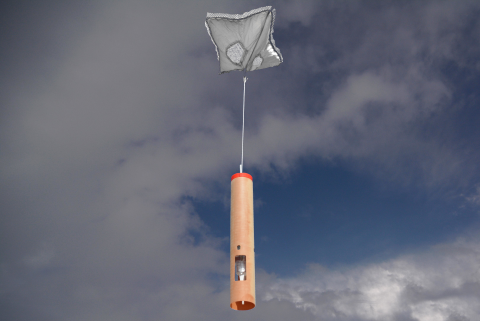
The AVAPS™ (Airborne Vertical Atmospheric Profiling System) Dropsonde System revolutionized atmospheric research and weather forecasting. This innovative system deploys GPS dropsondes from aircraft, capturing high-resolution vertical profiles of ambient temperature, pressure, humidity, and wind conditions. The receiving system onboard the aircraft processes the data in real time and allows further analysis by the operator and scientists onboard. AVAPS has been instrumental in improving weather forecasts, particularly for severe weather events such as hurricanes, by providing precise observations over remote areas like oceans and polar regions. The AVAPS system is deployed on many research aircraft, including the NSF/NCAR GV, the NSF/NCAR C-130, and the University of Wyoming King Air.
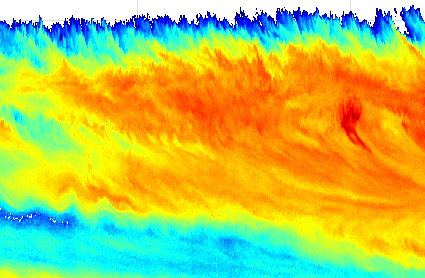
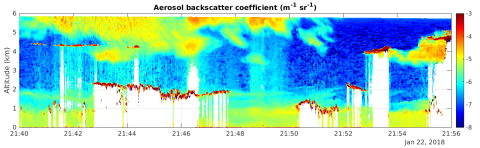
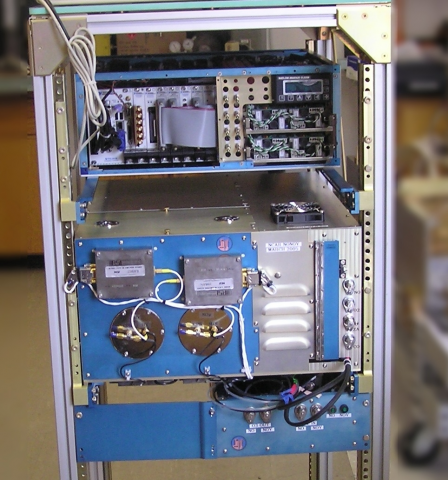
NCAR's Earth Observing Laboratory (EOL) operates and maintains various state-of-the-art remote sensing instruments used for atmospheric research. These instruments include radar and lidar systems that provide detailed measurements of atmospheric conditions. The S-PolKa radar, a dual-polarization, Doppler radar, can be used to measure precipitation and provide detailed data on the microphysical properties of clouds. The High Spectral Resolution Lidar (HSRL) is used for profiling aerosols and clouds, offering valuable insights into their structure and composition. The Integrated Sounding System (ISS), which combines multiple sensing technologies such as surface meteorology, radiosondes, and wind profiling radars to deliver comprehensive atmospheric observations.
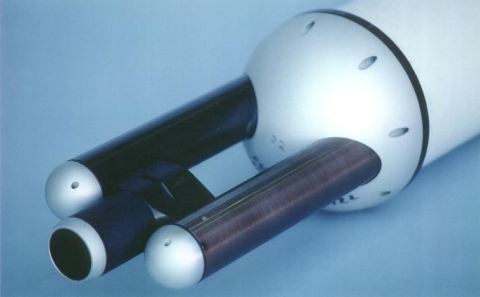
A variety of instruments make up the in situ cloud probe suite, to allow measurement of the full size range of cloud particles, from small droplets to large hydrometeors. The suite includes forward scattering spectrometers, optical array probes, liquid water hot wires, and indicators of icing conditions. These instruments provide such measurements as concentration and area as a function of particle size, liquid water content, and presence of supercooled liquid. Specialized instruments, like HOLODEC, also provide higher resolution imagery of the cloud particles for distinguishing particle phase and shape. The combined observations from this suite allow for in depth study of cloud microphysics and provide critical insights into the processes governing cloud dynamics and precipitation, enabling better predictions and modeling of weather and climate systems
NCAR EOL’s radiative instruments can measure a range of parameters including infrared and shortwave (solar) irradiance, which are crucial for understanding atmospheric radiation balance and cloud radiative effects. Specific instruments include the Wintronics KT19.85 radiation pyrometer for remote surface and sky temperatures, the CMP22 Pyranometer for solar irradiance, and the CGR4 Pyrgeometer for infrared irradiance. Additionally, the HIAPER Airborne Radiation Package (HARP) provides high-resolution measurements of actinic flux and spectral irradiance, essential for climate research and atmospheric studies
NCAR EOL provides various airborne aerosol measurement instruments. Specific instruments include the Wintronics Ultra-High Sensitivity Aerosol Spectrometer (UHSAS), which measures the size distribution of aerosol particles, the Condensation Nuclei Counter (CN), and an array of aerosol sampling inlets such as the counterflow virtual impactor (CVI). These measurements are essential for studies related to cloud formation, radiation balance, and aerosol dynamics in the atmosphere.
The NSF/NCAR aircrafts support a comprehensive suite of instruments designed to provide in-depth analysis of atmospheric gases. Key instruments include the Airborne Carbon Dioxide (CO₂), Methane (CH₄), Carbon Monoxide (CO) and fast ozone. These instruments play a crucial role in understanding atmospheric composition and the impacts of various gases on climate and air quality.
The NCAR Earth Observation Laboratory provides a comprehensive suite of airborne instrumentation to measure the state of the atmosphere. These instruments, many of which are standard, use a variety of physical principles to measure state parameters such as temperature, pressure, humidities, and 3-D winds. For most parameters, multiple instruments are offered, providing redundancy, resiliency, and resolutions to fit scientific needs.
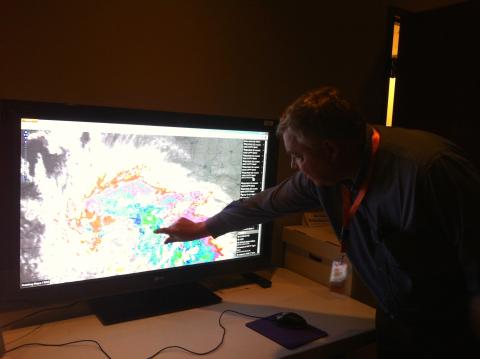
The EOL Field Catalog is a suite of tools that provide support for the documentation of observational field project operations, mission planning, cross-project collaboration, real-time situational awareness, communication with and direction of remote instrument platforms and post operations product review and playback.
The EOL Field Data Archive contains publicly available data from atmospheric research campaigns conducted by the National Science Foundation (NSF) and other agencies since about 1967. Data from research instrumentation operated by NCAR and other organizations and investigators are collected.
EOL’s Data Policy follows the open data guidelines set forth by the U.S. Office of Science and Technology Policy (OSTP) and by NSF NCAR’s sponsor, the National Science Foundation (NSF).
The EOL Seminars are held on Tuesdays from 3:30-4:30 pm MT. Most of the seminars are in-person on the NCAR Foothills Laboratory campus with all seminars also webcast for virtual participants.
The seminar co-coordinator is Sarah Woods (sfwoods@ucar.edu). Please contact us if you have questions, would like to present a seminar, have a visitor who would like to present a seminar, or have a suggestion for a seminar speaker or topic that we should cover.
EOL offers comprehensive data management, archival, and stewardship services to the observational research community. NSF-funded research teams rely on EOL to facilitate the implementation of tailored and comprehensive data management plans for field campaigns.
At a user's request, EOL's Project Management Office (PMO) can provide organization, management structure, and overall coordination for campaigns led by individuals and/or teams of scientists. In collaboration with the project's key investigators, program officers, and facility providers, PMO can coordinate and streamline all necessary support activities to meet program, science, and project requirements with the most efficient use of resources.