ISARRA / INFUSSE 2026 Field Campaign
Picture a fleet of aerial drones deployed on predefined missions to collect atmospheric data to better understand current weather conditions and provide crucial inputs for weather forecasts. This is the shared vision of the International Society for Atmospheric Research using Remotely piloted Aircraft (ISARRA), a group of researchers who gather annually to discuss the newest developments in weather-sensing uncrewed aircraft systems (UAS) technology and share results from recent field campaigns. This year, they met at Embry-Riddle Aeronautical University (ERAU) in Daytona, Florida, for their conference and associated flight week. The scientific focus of the flight week activities was to resolve variations in the development of sea breezes along the Florida coast that influence the timing and location of afternoon thunderstorms and lightning.
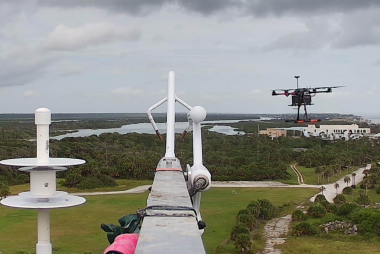
EOL’s Integrated Surface Flux System (ISFS) team deployed one of its 32-m telescoping towers to support the campaign, providing a trusted reference point against which UAS-based measurements of wind, temperature, humidity, and turbulence could be validated. All participating multirotor and fixed wing aircraft flew in the vicinity of the tower, which was instrumented at three levels with sonic anemometers, gas analyzers, barometers, and aspirated temperature and humidity sensors. The tower also carried the same sensor package flown on some of the participating UASs, mounted away from any potential influence of the UAS itself, so that UAS and tower measurements could be directly compared. A webcam on the tower verified each UAS’ position relative to the topmost instrument level.
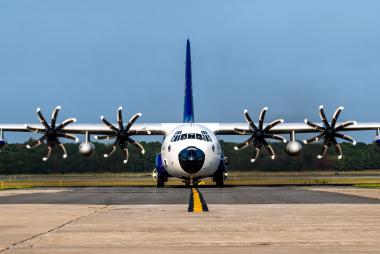
Teams from U.S. universities, NOAA’s National Severe Storms Laboratory, commercial companies, and international participants including the German Aerospace Center (DLR) and the University of Bergen, Norway, then joined forces for the 2026 ISARRA Northern Florida UAS Sampling of the Shoreline Environment (INFUSSE) campaign. Over the course of flight week from 30 August to 2 September 2026, the combined fleet flew more than 600 UAS missions in five days, observing the diurnal evolution of the sea breeze along the Florida coast just south of St Augustine, along with the convective initiation it triggered.
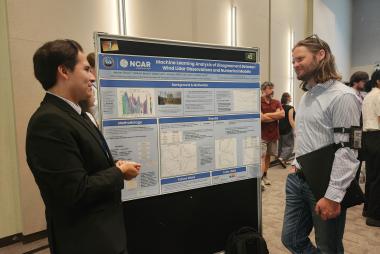
Strong student involvement from ERAU, the University of Oklahoma, Oklahoma State University, the University of Kentucky, and the University of Colorado, Boulder was central to the campaign’s success, and the data collected from the ISFS tower will continue to serve classes and student research projects in the years ahead, extending the campaign's impact well beyond flight week itself.
Here are some links to other writeups:
https://www.linkedin.com/feed/update/urn:li:activity:7503935307978035201/
https://bsky.app/profile/ncar-ral.bsky.social/post/3mv72thfjk22t
https://ral.ucar.edu/news/more-600-uas-flights-capture-floridas-coastal-sea-breeze
https://erau.edu/about/news-and-stories/news/predicting-sea-breezes-with-drones-embry-riddle-collaborators-map-coastal-weather-phenomenon