Mowing the Lawn with a Gulfstream V: Airborne Remote Sensing for Methane Quantification

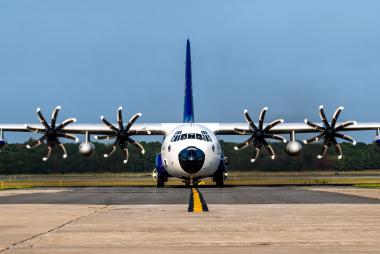
From mid-September to early October 2025, EOL’s Research Aviation Facility supported the Methane Emissions Quantification at scale using the MethaneAIR Imaging Spectrometer (MAIRE25) project, based in Austin, Texas. The campaign used the NSF NCAR Gulfstream V (GV) research aircraft to remotely measure methane concentrations in the atmosphere.

The GV payload during MAIRE25, showing the downward looking spectrometer and control rack (Photo: Jason Houston)
MethaneAIR, the primary instrument, captures infrared images of sunlight reflected from Earth’s surface at wavelengths between 1592 and 1680 nm - covering key methane absorption features. Originally developed as a precursor to the MethaneSAT satellite instrument, MethaneAIR was supported by the Environmental Defense Fund (EDF) and private philanthropic partners. The airborne instrument has played a crucial role in developing retrieval and data processing techniques to convert reflected sunlight measurements into total column methane estimates, and ultimately, into quantitative methane emission maps.
The campaign was led by Dr. Steven Wofsy of Harvard University. MAIRE25’s objectives are to improve the ability to quantify methane emissions over large regions, understand how they are distributed among different sources, and determine why they vary in time and space. Reducing methane emissions can mitigate climate risks, improve air quality and human health, and reduce costs for companies and governments alike. Significant uncertainties remain about global emission rates — including their absolute magnitude, the relative contributions from oil and gas operations, agriculture, landfills, and natural sources, the balance between large point sources and smaller distributed ones, and the impact of intermittent high-volume releases on total emissions and how best to measure them.
Austin, Texas was chosen as the project base due to its proximity to a diverse mix of methane sources. Flights targeted the Permian-Delaware Basin, the Haynesville Shale Formation, and other smaller regions in Texas and Oklahoma. MAIRE25 builds on earlier airborne campaigns with MethaneAir conducted in 2019, 2021, 2022, and 2024.
A primary goal of MAIRE25 was to conduct intercomparisons with satellite-based instrumentation, particularly the MethaneSat satellite. However, MethaneSat – launched in March 2024 – ceased operations in June 2025 following a communications failure. Fortunately, intercomparisons to other methane-detecting satellites currently in orbit remain feasible despite their reduced precision and lower spatial resolution and coverage compared to the MethaneAir and MethaneSat instruments.
Flying at GV research altitudes, the MethaneAir instrument is uniquely powerful, measuring methane concentrations within about 10 parts per billion and mapping them at very high spatial resolution of 6 m x 25 m, while also sampling a wide swath up to 5 km wide. This combination of precision and coverage makes it possible to detect small, scattered sources as well as integrated emissions across much larger regions. MAIRE25’s data will help guide the design and calibration of future methane-sensing satellite instruments.
Instrument Twins

The two identical MethaneAir instruments on the NSF NCAR GV and the IO Aerospace Lear rest up after their ferry flights to Austin (Photo: Jasna Pittman)
MAIRE25 also featured a unique partnership: an identical MethaneAIR instrument was mounted on board an EDF-funded Learjet 35 owned and operated by IO Aerospace. Having two aircraft flying similar patterns allowed for direct intercomparisons to evaluate measurement accuracy, and also greater temporal and spatial coverage to better capture intermittent methane releases. On research days, the Learjet typically flew two four-hour flights, while the GV conducted a single flight mission of up to nine hours. Throughout the project, the aircraft conducted research flight days up to three days in a row in the same region, with the same flight tracks, to further support the detection of intermittent sources.
To construct maps of methane concentrations over a region, the aircraft flew in a pattern known in the airborne remote sensing community as “mowing the lawn” - parallel racetrack-like flight lines offset slightly each pass (Figure 1). It will take time for researchers to process and analyze the data, but the resulting maps will shed new light on where methane is coming from, how much is being released, and how best to target reductions. Examples from earlier MethaneAIR campaigns already show the power of this approach: detailed methane maps that reveal not just hot spots but also the underlying patterns that drive emissions across a landscape (Figure 2).
Massive Amounts of Data

Figure 1. GV flight track from MAIRE25 RF02 over the Delaware Basin in West Texas and southern New Mexico
The MAIRE25 payload was relatively light for a GV mission, with just two instruments: the MethaneAir infrared spectrometer and a downward looking visible camera. But while the equipment was minimal, the data output was anything but. A nine-hour GV flight generated approximately 3 TB of data. That’s the equivalent of more than 500 high-definition movies. Transferring that much data is non-trivial and presents a serious logistical challenge. Uploading just one flight’s worth of data from a project hotel would have taken over a week. To solve this, the MAIRE25 team partnered with colleagues at the University of Texas at Austin, using their high-speed network to transfer each flight’s data in a matter of just a few hours. The MAIRE25 measurements constitute a landmark data set, one that will be invaluable for guiding future research community efforts to measure and monitor methane emissions.

Figure 2. Example column-average methane measurements from MethaneAir (Miller et al., 2024)
A few relevant MethaneAir publications:
- Detection and quantification of methane plumes with the MethaneAIR airborne spectrometer
- Methane retrieval from MethaneAIR using the CO2 proxy approach: a demonstration for the upcoming MethaneSAT mission
- Level0 to Level1B processor for MethaneAIR
- Methane point source quantification using MethaneAIR: a new airborne imaging spectrometer>